Africa's Energy Renaissance
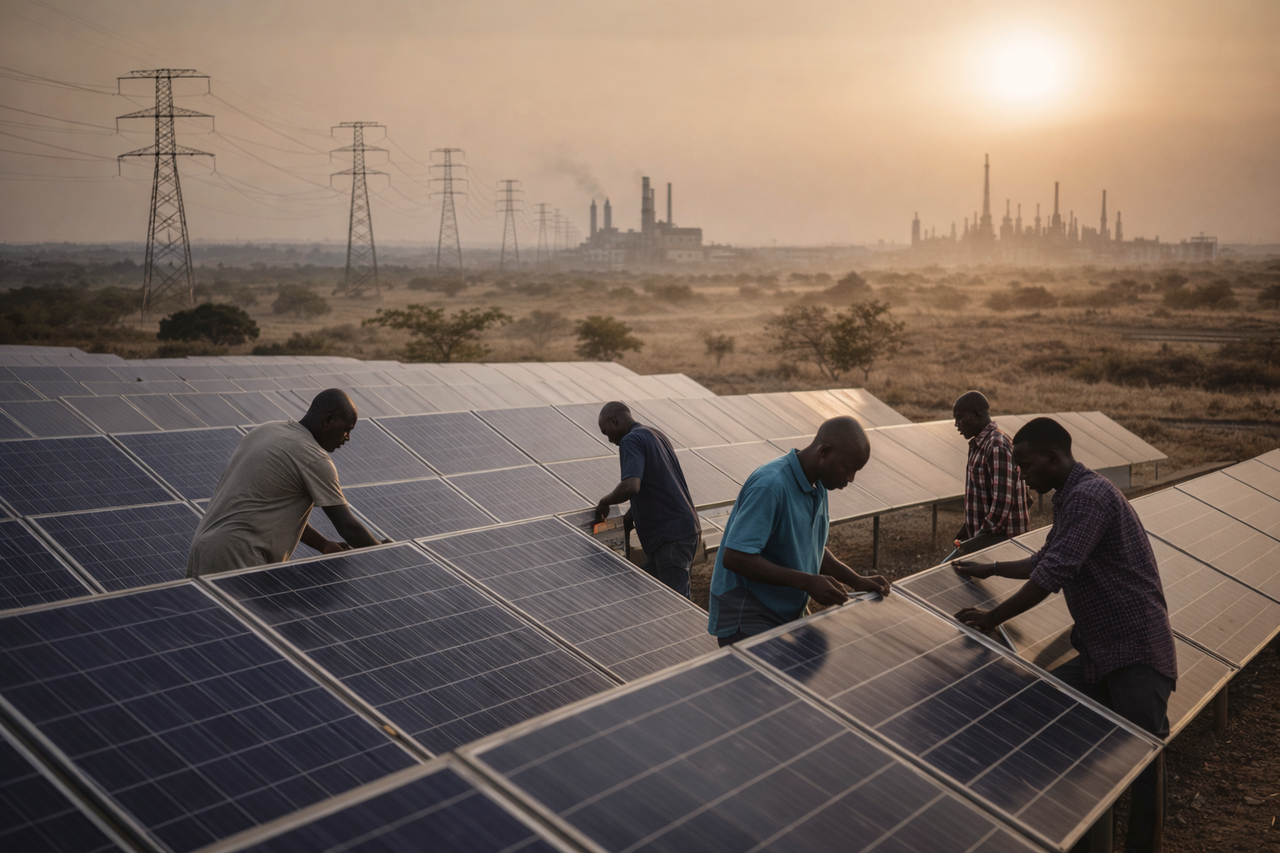
Energy poverty remains the starting point
Any serious discussion of Africa's energy prospects must begin with a blunt reality: energy poverty remains the continent's central development constraint. More than 600 million Africans lack access to electricity. Even amongst those connected to the grid, supply is often intermittent, unreliable and expensive. In many countries, firms report power outages as a greater obstacle to growth than taxation, regulation or corruption.
This matters because electricity is not merely a social good; it is an economic multiplier. Without power, productivity stalls. Manufacturing remains shallow. Agricultural value chains cannot scale. Cold storage, irrigation, fertiliser production and transport logistics all depend on reliable energy. No country has industrialised without first electrifying. Africa's dilemma, therefore, is not whether to pursue development or decarbonisation, but how to sequence them.
The illusion of plenty
Africa holds around 7 per cent of global oil reserves and roughly the same share of proven natural gas. Nigeria, Angola, Algeria, Libya and Mozambique sit atop hydrocarbons that should, in principle, guarantee energy security. Yet several of these countries import refined fuel, liquefied petroleum gas, or even electricity. Nigeria, the continent's largest oil producer, has repeatedly faced fuel shortages and imports the majority of its refined petroleum. Angola, a major crude exporter, relies on imported fuel for domestic consumption.
This is not a contradiction of geology; it is a failure of autonomy. Resource ownership without refining capacity, pipeline networks, storage, and grid integration does not produce energy security. It produces dependence, often on the very markets to which raw resources are exported. The result is perverse: countries rich in oil and gas remain vulnerable to global price swings, currency shortages and supply disruptions, because they lack the infrastructure and institutional frameworks to convert resources into domestic resilience.
Nigeria: Africa's largest oil producer (1.7 million barrels per day) yet imports 90% of refined petroleum. Domestic refineries operate below 10% capacity. Result: fuel queues, black markets, and dollar shortages for imports.
Angola: Third-largest oil producer, exports crude but imports refined products. Luanda residents pay premium prices for fuel shipped from refineries abroad that process Angolan crude.
Mozambique: Massive offshore gas reserves (100+ trillion cubic feet) being developed for LNG export. Meanwhile, 80% of Mozambicans lack electricity. Domestic gas distribution infrastructure minimal. Export revenues flow to government and multinationals whilst households cook with charcoal.
Why energy investment keeps missing its target
Africa does not lack energy plans. It lacks alignment. Over the past two decades, governments have announced hundreds of power projects: dams, gas plants, solar parks, transmission corridors. Many reappear in budget speeches year after year, renamed, resized, or "relaunched". Fewer are completed on time. Fewer still operate at full capacity. The reason is not simply corruption, though corruption matters. It is incentive distortion.
Energy projects attract large capital flows, consultants, procurement contracts and political visibility. They are ideal vehicles for rent extraction. Development spending becomes concentrated where deals are easiest to monetise rather than where energy needs are most urgent. This explains why some countries pursue grand hydroelectric dams whilst neglecting grid maintenance, or build export-oriented LNG terminals without domestic gas distribution. The optics are impressive. The sockets remain empty.
When incentives reward announcement over execution, energy policy becomes theatrical. Capacity is promised, not delivered. Feasibility studies multiply. Meanwhile, businesses invest in diesel generators and households revert to charcoal.
Corruption is not the whole story
Blaming corruption alone obscures deeper constraints. Energy systems are complex. They require long planning horizons, legal certainty, technical expertise and stable financing. Many African states struggle with these fundamentals. Post-colonial settlement left fragmented infrastructure designed for extraction, not integration. Railways, ports and pipelines were built to move resources outward, not to connect domestic markets. Borders cut across ecosystems and supply chains. Regional power pools exist largely on paper.
Legal frameworks often deter long-term investment. Power-purchase agreements are rewritten. Tariffs are politicised. Currency convertibility is uncertain. Climate risk is rising, yet mitigation frameworks are weak. Floods damage dams. Drought reduces hydropower. Heat strains transmission lines. Insurance markets remain thin. Logistics compound the problem. Poor roads, insecure corridors and underdeveloped ports raise costs. In conflict-affected regions such as Libya, Sudan, and parts of the Sahel, energy infrastructure becomes a target. War destroys not only assets but confidence.
These constraints mean that even when financing exists, execution falters. Capital retreats. Projects stall. Energy poverty persists.
The rentier trap returns
At the heart of Africa's energy dilemma lies a familiar political economy: the rentier state. Where governments rely on resource rents rather than taxation, accountability weakens. Energy revenues flow to elites, not systems. Public investment becomes discretionary. Citizens become consumers of subsidies, not stakeholders in institutions. Oil and gas amplify this dynamic. They generate large, concentrated revenues that can sustain governments without broad-based economic growth. When prices fall, states scramble. When prices rise, reform is postponed.
Energy abundance, without discipline, reproduces fragility. This is why several African producers experienced growth without transformation. It is also why diversification remains elusive. The rentier model creates political incentives that prioritise short-term extraction over long-term capacity building. Infrastructure investment competes with elite consumption. Technical education is neglected. Institutional quality deteriorates.
Yet something is changing
Despite these constraints, it would be wrong to dismiss Africa's energy trajectory as static. Significant progress is underway, uneven, fragile, but real. Ethiopia's Grand Renaissance Dam, though politically contentious, represents a scale of ambition rarely seen in African infrastructure. Morocco's Noor solar complex demonstrates how renewables can be integrated at utility scale. Kenya's geothermal expansion provides rare baseload renewable power.
Egypt has repositioned itself as a regional gas hub, linking domestic production to export and power generation. Senegal and Mauritania are pursuing phased gas development tied explicitly to domestic electricity. South Africa's Renewable Energy Independent Power Producer Programme has mobilised private capital and diversified generation. Namibia is experimenting with hydrogen, cautiously aligning ambition with feasibility.
These successes share common traits: clearer regulation, credible offtake, and alignment between generation and use. They are not miracles. They are boring. And that is precisely why they work.
Renewables: promise and constraint
Renewable energy dominates global discourse, and Africa is often cast as its proving ground. Solar and wind costs have fallen dramatically. Distributed systems offer rapid deployment. International finance is available. But renewables alone cannot power industrialisation. Intermittency limits heavy industry. Storage remains costly. Grid integration lags. For steel, cement, fertiliser and data centres, dispatchable power is indispensable.
This does not invalidate renewables; it contextualises them. The danger lies in substituting symbolism for system-building. Africa needs energy mixes, not purity tests. Wind and solar can power households, schools, and clinics. They can support agriculture through irrigation. They reduce diesel dependence in off-grid areas. But they cannot, at present scale and cost, anchor industrial economies. Gas, hydro, and eventually nuclear will remain necessary for baseload and industrial power.
Oil and gas are not obsolete
Despite climate pressure, oil and gas remain central to Africa's energy reality. Gas, in particular, offers flexibility, reliability and fiscal space. It can anchor grids, support industry and reduce reliance on diesel. The paradox is that some gas-rich countries import gas. This reflects not scarcity, but failure to invest in autonomy. Domestic pipelines, processing plants and distribution networks are neglected in favour of export terminals. The logic is financial, not developmental.
Climate risk complicates matters. Investors face pressure to decarbonise portfolios. Long-term hydrocarbon projects struggle to secure funding. African states, meanwhile, argue correctly that they contributed little to historic emissions yet bear disproportionate transition costs. The result is a narrow window. If gas is to support development, it must be deployed quickly, efficiently and domestically. Delay risks stranded assets without alternatives.
External partners and new pragmatism
Africa's energy renaissance is shaped by external actors. China has financed dams, grids and transmission at scale, prioritising speed over governance. Gulf states invest in hydrocarbons with fewer conditionalities. Western institutions emphasise ESG and reform, often at the cost of pace. None of these partners are altruistic. Each reflects its own strategic interests. What matters is whether African states can negotiate from coherence rather than desperation.
Where institutions are credible, partnerships work. Where governance is weak, dependency deepens. The challenge is not choosing between China, the West, or Gulf capital. The challenge is building internal capacity to manage external finance effectively. Contract transparency, environmental standards, and local content requirements matter not as ideological positions but as practical safeguards.
Regional integration: the missing link
Africa's energy future is regional, yet politics remain national. Power pools exist in West, East, and Southern Africa, but they are underutilised. Cross-border transmission lags. Tariffs are misaligned. Trust is thin. Without integration, scale is lost. Small markets cannot support large plants. Redundancy is wasted. A drought in one country leaves another's hydropower unused. Excess gas cannot flow to neighbours who need it.
Regional coordination could transform energy economics. Ethiopia's hydro could power Kenya and Uganda. Mozambique's gas could supply Zimbabwe and South Africa. Senegal's wind could reach Mali. But coordination requires institutions that transcend national sovereignty. It requires dispute resolution mechanisms, payment systems, and political will. So far, rhetoric exceeds reality.
Climate, conflict and fragility
Climate change amplifies every weakness. Drought undermines hydropower. Heat strains grids. Floods destroy infrastructure. Adaptation requires capital and planning many states lack. Conflict compounds fragility. Energy assets become strategic targets. Investors retreat. Reconstruction takes decades. Libya's oil terminals have been attacked repeatedly. Sudan's Merowe Dam sits in a war zone. The Sahel's transmission lines cross insurgent territory.
These realities explain why energy import dependence persists even where resources abound. Autonomy requires peace, law and logistics, not merely reserves. Security is infrastructure. Without it, investment collapses, systems decay, and dependency deepens.
A renaissance, but unfinished
Africa's energy story is not one of failure, but of misalignment. The continent does not lack resources or ambition. It lacks disciplined execution. The renaissance underway is fragile. It can be derailed by corruption, climate shocks or geopolitics. But it is also real. Where incentives align, progress follows. Where institutions hold, investors commit. Where governments prioritise citizens over elites, systems improve.
The choice facing African states is stark: build energy systems that serve citizens and industry, or continue exporting raw power whilst importing vulnerability. Energy will not transform Africa on its own. But without it, nothing else will. The renaissance, if it succeeds, will not be dramatic. It will be incremental, technical and largely unnoticed, until factories hum, lights stay on, and dependency quietly recedes.
Africa's energy story is not one of failure, but of misalignment. The continent does not lack resources or ambition. It lacks disciplined execution. The renaissance underway is fragile, but real. Where incentives align, progress follows.
What distinguishes energy successes from failures is not geography, resources, or even financing. It is governance. States that establish clear rules, honour contracts, and align incentives attract capital and complete projects. States that prioritise announcements over execution, elites over systems, and symbolism over substance remain stuck. The pattern repeats across the continent. The difference between Kenya's geothermal expansion and Nigeria's refineries is not luck. It is institutions.
Africa's energy renaissance is possible. But it requires abandoning romantic notions of green leapfrogging and confronting the hard realities of state capacity, infrastructure investment, and political discipline. The tools exist. The resources exist. What remains uncertain is whether the political will exists to build systems that outlast electoral cycles, resist elite capture, and prioritise long-term resilience over short-term extraction. Until that will materialises, the renaissance will remain unfinished, a promise perpetually deferred.