Can the World Afford World War III?
The return of the unthinkable
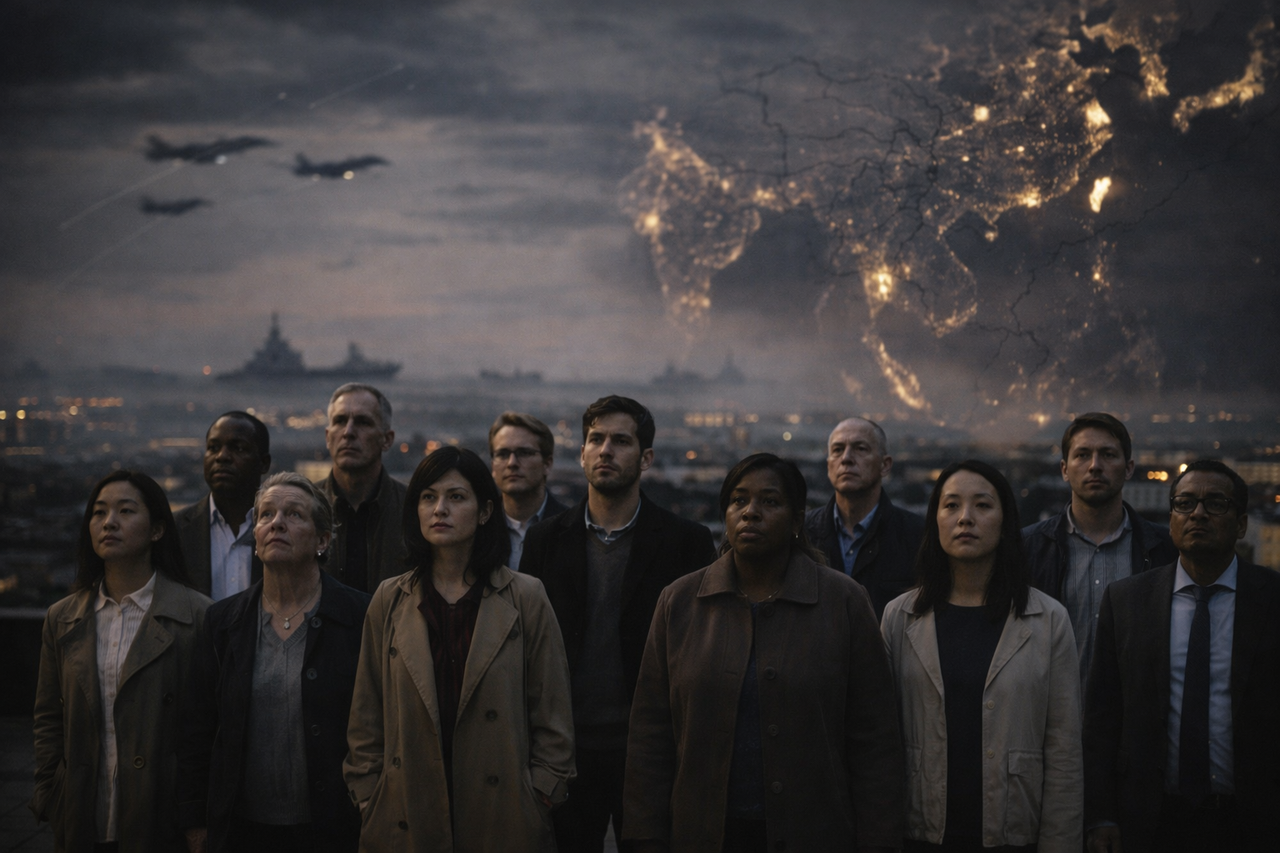
Wars occurred, often brutally, but they were assumed to be containable: localised conflicts, asymmetrical struggles, or humanitarian interventions fought at the margins of a broadly stable global system. That assumption no longer holds. The Atlantic Council survey revealed that forty per cent of respondents expected another world war, defined as a multifront conflict amongst great powers, within the next decade. Nearly half believed nuclear weapons would be used. A majority anticipated military confrontation extending into space.
These expectations are not media hysteria but elite foresight. The respondents were not journalists or activists but strategists, policymakers, academics, and practitioners who shape defence policy, manage military capabilities, and advise governments. Their assessment reflects not certainty but a recalibration of probability. World war has moved from unthinkable to plausible, not because leaders seek it, but because the system lacks reliable mechanisms to prevent it.
A world already at war with itself
The global landscape of the mid-2020s is defined by conflict that fails to resolve. Ukraine remains locked in a grinding war of attrition, with most strategists surveyed by the Atlantic Council expecting either a frozen conflict or an outcome favourable to Russia rather than a decisive Ukrainian victory. In Gaza, despite repeated cycles of violence, diplomatic intervention, and ceasefires, a durable political settlement remains elusive. Elsewhere, from the Red Sea to the Sahel, instability persists without resolution.
What unites these conflicts is not their scale, but their character. Modern wars no longer conclude with clear political outcomes. They exhaust societies, fracture institutions, and spill across borders without delivering closure. Rather than restoring order, they normalise instability. This matters because great-power conflict would not occur in a vacuum. It would erupt in a world already strained by overlapping crises: high debt, ageing populations, climate stress, fractured supply chains, and political polarisation. The system is not resetting between shocks; it is accumulating them.
The erosion of the referees
During the Cold War, the risk of catastrophic conflict was real, but it was tempered by a dense web of institutions, norms, and informal understandings. Arms control treaties, diplomatic backchannels, and a shared fear of mutual destruction imposed restraint even amid rivalry. Today, those guardrails are weaker. According to the Atlantic Council survey, three-quarters of respondents expect the United Nations to be less capable of fulfilling its mission by 2035. Confidence in the UN Security Council and the World Trade Organisation is similarly low.
This erosion does not mean institutions are irrelevant. It means they are insufficient. In a multipolar world, power is more widely distributed, but authority is not. There are more actors capable of disruption, fewer mechanisms capable of coordination, and limited consensus on rules. Multipolarity without strong institutions is not balance; it is drift. The Bretton Woods institutions, the IMF and World Bank, are increasingly viewed as constrained rather than commanding. The system has more players but fewer referees.
The central fault line: China, the United States, and Taiwan
At the centre of contemporary strategic anxiety lies the relationship between the United States and China. The Atlantic Council's survey found that nearly two-thirds of respondents expect China to attempt to retake Taiwan by force within the next decade. Amongst those who foresee a world war, that figure rises to nearly four-fifths. Taiwan is not merely a territorial dispute. It sits at the intersection of military power, economic interdependence, technological dominance, and political legitimacy. A conflict over Taiwan would draw in the United States, almost certainly Japan, and potentially others.
It would disrupt global semiconductor supply chains, maritime trade routes, and financial markets within days. Taiwan produces over 60 per cent of the world's semiconductors and more than 90 per cent of advanced chips. Yet deterrence remains uncertain rather than absent. Military planners on all sides recognise the enormous costs of escalation. China's leadership understands that a failed or protracted operation would carry domestic and international risks. The United States recognises that intervention would test alliances and domestic resolve. The danger lies not in intent alone, but in miscalculation, especially in a climate of heightened nationalism, technological acceleration, and declining trust.
Donald Trump and the return of transactional power
The return of Donald Trump to the White House has sharpened these uncertainties. Trump's approach to foreign policy is overtly transactional, sceptical of alliances, and dismissive of multilateral constraint. Whilst his administration has not sought war with China, it has embraced tariffs, sanctions, and pressure as primary tools of statecraft. For allies, this creates ambiguity. The Atlantic Council survey shows declining confidence that the United States will maintain its alliance network at current levels over the next decade.
For rivals, it introduces unpredictability. Strategic ambiguity can deter, but it can also provoke testing. Trump's posture reflects a broader trend: the substitution of rules with leverage. In such an environment, restraint depends less on shared norms and more on immediate calculations of cost. That is a fragile foundation for peace. Transactional power may prevent entanglement, but it also reduces the margin for error during crises.
Nuclear weapons: from deterrence to disruption
One of the most sobering findings of the Atlantic Council survey is the expectation that nuclear weapons may be used within the next decade. Nearly half of respondents foresee such an outcome, with Russia and North Korea viewed as the most likely actors. The renewed salience of nuclear weapons reflects several developments. Arms control regimes have weakened. Technological advances blur the line between conventional and strategic systems. Regional conflicts now involve nuclear-armed states operating in close proximity.
Yet the consequences of nuclear use today would extend far beyond the battlefield. Financial markets would seize. Insurance systems would collapse. Food and energy prices would spike. Even a limited exchange would trigger global economic shock on a scale unseen in modern history. Nuclear weapons are no longer merely instruments of deterrence. They are systemic disruptors. Their use would not reset the global order; it would disable the mechanisms that sustain it.
Democracies under strain
War is not only a military undertaking; it is a social one. It requires legitimacy, sacrifice, and endurance. Here, too, the contemporary world appears ill-prepared. The Atlantic Council survey suggests that today's "democratic recession" may deepen into a democratic depression. Press freedoms are expected to decline. Public trust in institutions remains low. Populism thrives on grievance rather than cohesion.
Democratic societies are wealthier than ever, but also more divided. Inequality, demographic change, and digital fragmentation have eroded the shared narratives that once underpinned mobilisation. The political tolerance for prolonged hardship is limited. Authoritarian systems face their own vulnerabilities, but they often possess greater capacity to suppress dissent. In a prolonged global conflict, democracies may find themselves strategically capable but politically brittle.
Democratic recession deepens: Atlantic Council survey expects press freedoms to decline further. Public trust in institutions remains historically low. Populism thrives on grievance, not cohesion. Shared narratives eroded by inequality, demographic change, digital fragmentation.
Wealth without unity: Democratic societies wealthier than ever, but more divided. Political tolerance for prolonged hardship limited. Mobilisation requires legitimacy, sacrifice, endurance. These now scarce commodities in polarised systems.
The paradox: Authoritarian systems possess greater capacity to suppress dissent. In prolonged conflict, democracies may be strategically capable but politically brittle. Military power without social cohesion is vulnerability, not strength. War tests societies, not just armies.
The economic incompatibility of global war
Perhaps the strongest argument against another world war is economic. The global economy is more interconnected than at any point in history. Supply chains are dense, just-in-time, and fragile. Public and private debt levels are unprecedented. Financial markets transmit shock instantaneously. A large-scale war would not merely destroy output; it would disable the mechanisms that allocate capital, insure risk, and distribute goods. Shipping lanes would close. Energy markets would fragment. Food security would deteriorate rapidly, especially in import-dependent regions.
Unlike in the mid-twentieth century, there is no post-war reconstruction dividend waiting on the other side. Growth potential is already constrained. Fiscal space is limited. The demographic tailwinds that supported recovery after previous wars have reversed. In economic terms, global war is no longer a reset. It is a permanent impairment. The world cannot afford to rebuild what it would destroy.
Why the risk persists
If war is so costly, why does the risk remain elevated? The answer lies not in desire, but in structure. Wars often emerge not from grand design, but from incremental escalation: a misinterpreted signal, a domestic political crisis, an alliance obligation triggered under pressure. As institutions weaken, the margin for error narrows. The Atlantic Council's respondents do not predict war because leaders are reckless. They predict it because the system lacks reliable brakes.
Miscalculation becomes more likely when communication channels are limited, when adversaries lack shared frameworks for interpreting signals, and when domestic audiences punish restraint as weakness. The current environment features all three conditions. Escalation occurs not because anyone seeks war, but because de-escalation requires coordination that no longer exists. The danger is systemic, not intentional.
Is there room for restraint?
Cautious pessimism is warranted. The trends are unfavourable. Yet conditional hope remains. Deterrence still operates. Economic interdependence, though strained, continues to impose costs. Regional groupings and ad hoc diplomacy sometimes succeed where global institutions fail. Technological cooperation on climate and health persists despite rivalry. Most importantly, awareness has increased. The fact that strategists now openly discuss the risk of world war may itself be a form of restraint. Recognition precedes prevention.
The danger is not that leaders want World War III. The danger is that the global system no longer knows how to stop it. Wars emerge not from grand design but from incremental escalation. As institutions weaken, the margin for error narrows. The system lacks reliable brakes.
The lesson of history is not that war is inevitable, but that complacency is dangerous. The question is not whether the world wants another world war. It is whether it can rebuild enough restraint, cooperation, and institutional capacity to prevent stumbling into one. The Atlantic Council's survey reveals not inevitability but risk. Risk can be managed. It requires acknowledgement first, then action. The world may not be able to afford World War III economically, but it can still afford to prevent it institutionally. That window, however, is narrowing.
On that answer rests the fate of a fragile century.