The Chagos Archipelago: Sovereignty, History, and Current Issues
Sovereignty of the Chagos Archipelago: UK or Mauritius?
Chagos is the kind of dispute that makes governments sing hymns about principle while quietly keeping one eye on the balance sheet. It is also the kind of dispute where everyone claims to be guided by history and morality, yet the runway on Diego Garcia keeps winning every argument without saying a word.
Who owns Chagos?
If you ask who administers it, the United Kingdom has done so for decades through the British Indian Ocean Territory (BIOT), and the joint United Kingdom and United States base on Diego Garcia has shaped every decision worth mentioning. In practice, the keys stayed in London, and the lights stayed on at the base.
If you ask who has the stronger legal narrative today, Mauritius has the wind at its back. In 2019, the International Court of Justice issued an advisory opinion concluding that the separation of Chagos from Mauritius was unlawful and that the United Kingdom should end its administration as rapidly as possible. A large majority in the United Nations General Assembly then backed Mauritius and called on the United Kingdom to withdraw.
So Britain held the keys, Mauritius held the case, and the rest of the world began to behave as though cases should eventually matter, even when a military base is involved.
Independence, detachment, and the polite fiction of consent
Did Mauritius give up Chagos, sell it, or trade it? The answer depends on how much you enjoy the phrase "agreement between equals".
In 1965, while Mauritius was negotiating the terms of independence, the United Kingdom detached the ChagosArchipelago. Mauritius, then, received about three million pounds in connection with that detachment. The United Kingdom also promised the islands would be returned when no longer needed for defence purposes. In 1967, London bought the plantations in Chagos for six hundred and sixty thousand pounds, which is a tidy way of saying it was not only drawing lines on a map, it was also locking down ownership.
The personalities were clear. On the British side, the government led by Prime Minister Harold Wilson drove the detachment. On the Mauritian side, Sir SeewoosagurRamgoolam and colleagues negotiated from the weaker end of the table, because Mauritius was still a colony asking to become a state. It is hard to bargain firmly when you are still asking for the door to be unlocked.
And looming over every polite sentence was the strategic backdrop. Diego Garcia was the prize, the United States wanted it, the United Kingdom wanted to keep an ally satisfied, and Mauritius wanted independence. This is why the history reads like a bargain and feels like a squeeze.
Why is the United Kingdom now keen to return it, and why is it paying?
The simplest answer is that the United Kingdom does not want to wake up one morning and find the base legally complicated, diplomatically isolated, given to China or Russia or all of the above. That is an expensive way to run an airstrip.
The 2019 ICJ opinion and the UN vote did not physically remove Britain from the islands, but they made the position harder to defend without looking like a country that advertises rules while refusing to follow them.
So London switched to a safer strategy. Transfer sovereignty on paper, secure a lease in practice, and buy certainty with money. This is not a moral awakening, it is risk management in formal wear.
ICJ versus ICC, and whether the United Kingdom can ignore the verdict
The acronyms matter. The ICC is the International Criminal Court, which focuses on individuals and crimes. The ICJ is the International Court of Justice, and they focus on states and legal questions.
The Chagos ruling in 2019 was ICJ, and it was advisory rather than a binding judgment. Yes, the United Kingdom could ignore it in strict legal mechanics. It largely did for a time.
However, advisory does not mean harmless. It means the pressure arrives through legitimacy, alliances, and international voting power. A state can ignore an advisory opinion. What it cannot ignore is the long term cost of being publicly told it did decolonisation incorrectly, then being asked to explain itself at every international dinner party.
The 2025 deal, the lease, and the price tag!
In May 2025, the United Kingdom and Mauritius signed an agreement to transfer sovereignty over Chagos to Mauritius while keeping Diego Garcia operating under an initial 99 year lease.
UK parliamentary briefings put the lease cost at an annual average of about one hundred and one million pounds over 99 years in 2025 to 2026 prices, totalling around three point four billion pounds. It also sets out an additional forty five million pounds a year for twenty five years to support development and welfare in Mauritius, and a forty million pound trust intended for Chagossians.
Why did the House of Lords argue about it?
The House of Lords' objections are a blend of strategic anxiety and fiscal outrage, served with the usual British confidence that someone else should pay for it.
First, security. Some peers worry that transferring sovereignty, even with a lease, creates future uncertainty around a vital facility.
Second, money. Paying billions while handing over sovereignty looks, to critics, like buying back your own coat and then congratulating yourself on the bargain.
Third, justice. Chagossians complain they were sidelined, and a UN committee has warned against ratifying a deal that does not properly address return and reparations.
Fourth, environment. Chagos waters have been tied to marine protection. Parliamentarians want clarity that conservation does not become collateral damage in a sovereignty exchange.
Why is Trump angry, and why is his anger loud?
Donald Trump opposes the handover because it looks like concession, and his politics treats concession as a moral failure. Volume, as ever, is presented as analysis.
He has called the deal weak, foolish and stupid, focusing on the fear that ceding sovereignty signals softness to rivals and creates openings for strategic competitors. In his framing, the lease is a footnote and symbolism is the headline.
The irony is that the deal is designed to keep the base stable for the long term. But Trump prefers the theatre of holding territory to the paperwork of securing access.
The Chagossians, the removals, and the compensation that never felt final…
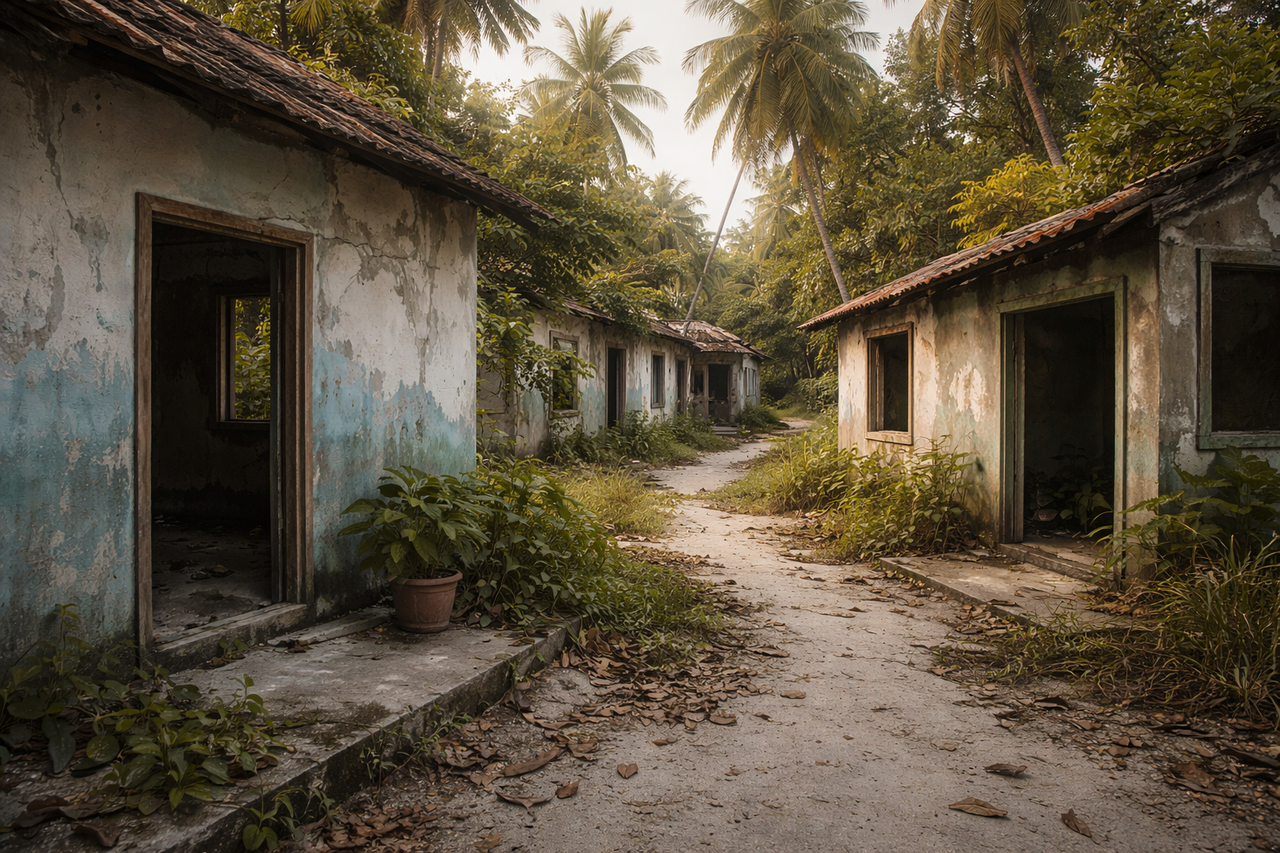
Chagossians were forcibly removed to make the base possible. That is the human core of the story, and it has never sat comfortably with the legal and diplomatic packaging.
Compensation did occur, but in stages. In 1972, the United Kingdom paid six hundred and fifty thousand pounds linked to resettlement. In 1982, about four million pounds went into a fund for former residents, and many recipients were asked to sign documents limiting future claims. In 2016, a forty million pound support package over ten years was announced. The newer framework includes a further forty million pound trust for Chagossians.
Money was paid. The deeper complaint is that money arrived late, unevenly, and often without delivering what displaced people actually wanted: dignity, voice, and a credible route back. It is difficult to deposit a homeland into a bank account, and the biggest question; was the money given to the rightful recipients?
Mauritius, and the politics of using Chagosas a family heirloom
Now to the Mauritian layer, where geopolitics meets electoral instinct and every sacred cause comes with a campaign poster.
For years, Mauritian leaders across parties asserted the Chagos claim. Sir Anerood Jugnauth repeatedly raised sovereignty in international forums. His son, Pravind Jugnauth, also pursued the claim while in office.
But in domestic politics, Chagos also became something else: a reliable symbol that can be raised whenever leadership needs a grand cause. Critics say it turned into a family brand, waved as proof of national seriousness while the people most harmed, the Chagossians, remained inconveniently poor and politically untidy.
And then comes the rumour, always delivered with a knowing smile. Critics allege that the Jugnauth father and son treated Chagos less as a national duty and more as a political asset that converts nicely into votes, influence, and access. Not a court proven accusation, just the kind of story that survives because it feels structurally plausible in a small island political economy. Or in the words of management guru Peter Drucker; cash cow.
That criticism sharpened during election season. Reporting on the 2024 campaign described Pravind Jugnauth trumpeting rent for Diego Garcia and even talking about hotels, while saying little about the Chagossians themselves, silence for the displaced.
The Chagossians are not the centre of the story. They are the backdrop. The real audience is domestic, and the prize is political capital. The archipelago becomes a stage, the people become a prop, and the word sovereignty does a great deal of unpaid labour.
The current Prime Minister: renegotiating the numbers, then facing the question everyone asks…
Navin Ramgoolam returned to office after the outline agreement had been reached and publicly questioned elements of the arrangement, while British ministers denied reports that the price would balloon. In other words, he came in, frowned, asked for better terms, and made sure the world knew he was holding the calculator.And sent his personal lawyer turned Attorney General, to renegotiate the Chagos pay-out.
Now comes the confidence test. His critics point to long running court proceedings linked to cash seized from his residence in 2015 and related allegations under anti money laundering laws, cases that have dragged on for years and still on-going. To the people, trusting him to handle the money side of the Chagos deal with spotless hands feels like asking a lamb to invite a wolf for dinner purely as a friend.
Ok, ok. Some devotees or hardcore followers who only follow for benefits and not country, will respond with a straw man: what about the previous government? Fair point. They are not saints either. Mauritius still has unanswered questions around political funding and around the unresolved death of MSM political agent Soopramanien Kistnen, a case repeatedly described in public debate as a murder and still entangled in demands for accountability, and also the source of income for the construction of the said party's H.Q in the capital of paradise.
During the campaign, opponents also argued that the settlement was being spoken of as a pot of money that could conveniently be earmarked for other national priorities, not necessarily for the Chagossian community. Once in power, critics say, promises became optional and prices became more ambitious, as though inflation itself had a party membership card.
The harder question is what comes next. Will the money be used for Chagossians living in Mauritius, or will it dissolve into the national budget with a patriotic label attached. The forty million pound trust is the clearest ring fenced pot. Everything else depends on domestic governance and political will.
The Chagossians are not the centre of the story. They are the backdrop. The real audience is domestic, and the prize is political capital. The archipelago becomes a stage, the people become a prop, and the word sovereignty does a great deal of unpaid labour.
A final punchline, carefully labelled as a punchline
Some will say, call it coincidence, but when Labour comes into power it brings chaos wherever it goes. Others will say that is tribal politics dressed up as analysis. Either way, Chagos remains the same story. A small archipelago, a giant base, a legal reckoning, and a parade of leaders who treat principle as sacred until the number on the cheque needs another zero.
A last word on trust, because everyone loves morals, right?
Let us end with the only resource more scarce than sovereignty, trust. In Mauritius, many citizens will tell you, with a straight face and a weary laugh, that trusting any government, previous or current, is an extreme sport.
Since the dawn of independence, the political arena has often felt monopolised by a small circle of familiar surnames. Their supporters call it experience. Their critics call it a family business with a national flag on the letterhead. In the harsher version of that critique, the credentials are not public service but wealth, patronage, and an exhausting talent for saying one thing while doing another.
Britain, sadly, is not auditioning for sainthood either. When left leaning parties win, critics often argue they do it by presenting a leader who is brave enough to campaign, then allergic to commitment once elected. The policy begins as a promise, matures into a press conference, and ends as a carefully choreographed reversal. Hence the nickname that floats around British conversation, two tier Keir, a baptism not from a church but from frustration.
So yes, sovereignty may be returned, and money may be paid, and statements may be issued with solemn faces. But if you are asking whether any of it will be handled with honesty, competence, and respect for the people who were actually uprooted, the only responsible answer is the one nobody likes: watch the receipts, follow the spending, and never confuse a slogan with a plan.