America After Trump
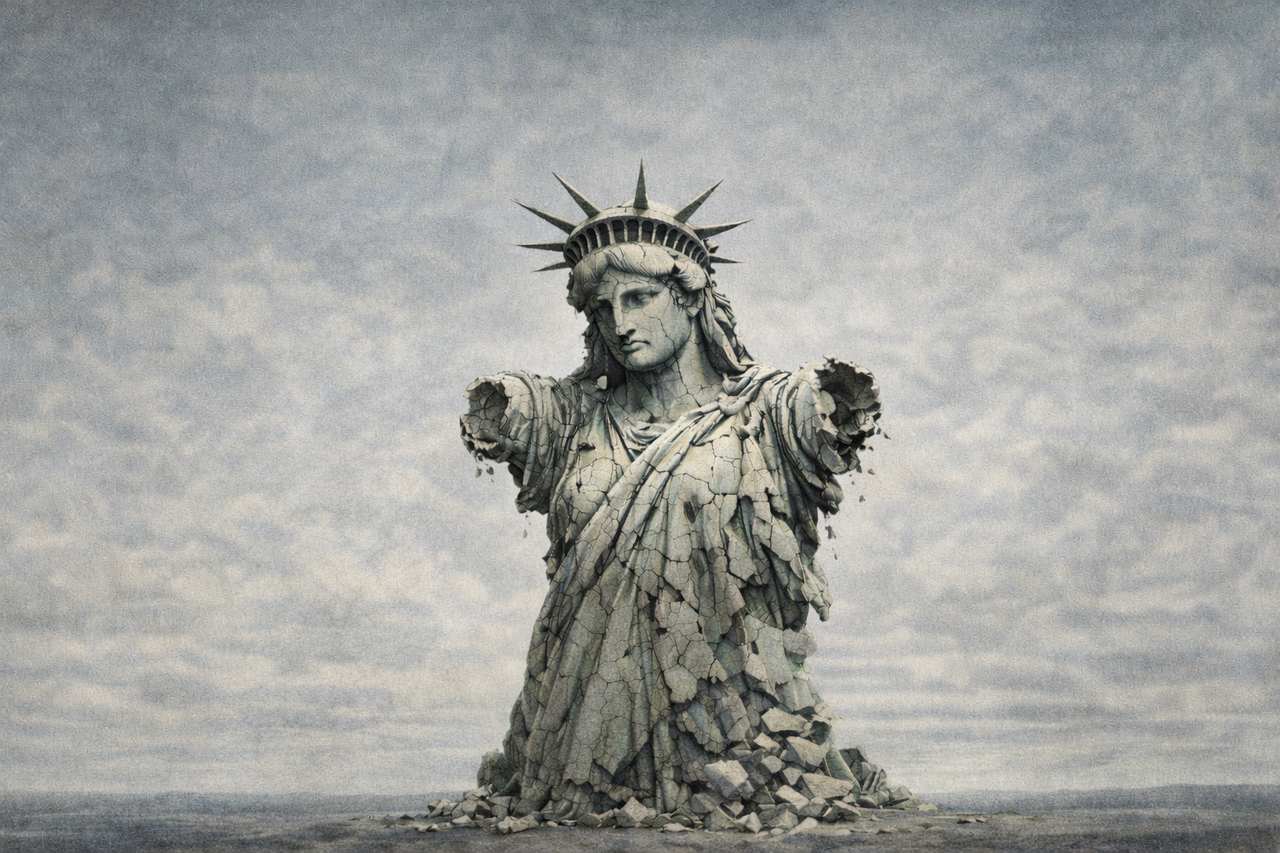
America enters 2026 wealthier than most, militarily unmatched, and still central to global finance. Yet it is also more polarised, more distrustful of its own institutions, and more willing to subordinate long-term stability to short-term political gain. These are not contradictions. They are symptoms of a deeper shift: power has become easier to win, but harder to govern.
Trump did not invent this condition. He exploited it. Over decades, America's political economy evolved in ways that rewarded confrontation over compromise and visibility over competence. Courts were politicised, legislatures hollowed out, regulators weakened, and public trust steadily eroded. Trump's genius, and his danger, lay in recognising that these constraints no longer held, and acting accordingly.
The consequences now extend beyond America's borders. When the world's largest economy treats monetary policy as a political tool, fiscal discipline as optional, and institutions as obstacles rather than safeguards, the effects travel quickly. Currency markets react. Capital reallocates. Allies hedge. Rivals test boundaries. Small states, with little room for error, feel the pressure first.
This matters especially for countries like Mauritius: open, import-dependent, exposed to external shocks, and reliant on rules rather than power. For such economies, global stability is not an abstraction. It is the difference between manageable adjustment and permanent vulnerability. When the centre shakes, the periphery absorbs the tremors.
The broader pattern examined in this issue is not uniquely American. Across continents, governments have learned how to consolidate influence without tanks, coups, or overt repression. Power is captured quietly: through control of institutions, manipulation of identity, erosion of accountability, and the normalisation of exceptional measures. Elections continue. Courts sit. Laws are passed. Yet outcomes become increasingly predictable.
This phenomenon (what we call capture without coups) links seemingly disparate cases: Lebanon's paralysis, Sri Lanka's collapse, Venezuela's endurance under failure, and the subtler forms of state capture visible in small democracies that still hold elections but struggle to enforce limits. The tools differ; the logic is the same.
Economics both enables and constrains this process. Ageing populations, rising debt, climate shocks, and slower global growth reduce governments' room to manoeuvre. As choices narrow, politics becomes more expensive. Promises grow larger just as resources shrink. The temptation to bend rules (fiscal, legal, institutional) intensifies.
America, for all its scale, is not immune to these forces. Its debt burden is rising. Its political consensus is fractured. Its central bank finds itself under pressure not because inflation has vanished, but because patience has. In such an environment, prudence becomes politically costly—and therefore rare.
Yet this issue is not a prediction of collapse. History rarely moves so neatly. Institutions can recover. Norms can be rebuilt. Power can be restrained, but only if societies recognise what has been lost, and why it mattered.
That is the purpose of this edition. We examine the mechanics of capture, the limits of power, and the illusion of choice that persists when options are constrained but rhetoric remains expansive. We compare systems that discipline authority with those that personalise it. We look at food security without famine, energy transitions without miracles, and growth without the excess optimism of past cycles.
Above all, we ask what credibility now means (for governments, markets, and citizens alike) in a world where trust has become scarce and power increasingly transactional.
America will not be the same after Trump. Neither will the world that has long depended on its stability. Understanding that shift (without hysteria, nostalgia, or denial) is the first step towards navigating what comes next.
The Meridian
February 2026