Kazakhstan's Oil State: How Discipline, Not Democracy, Sustains Power
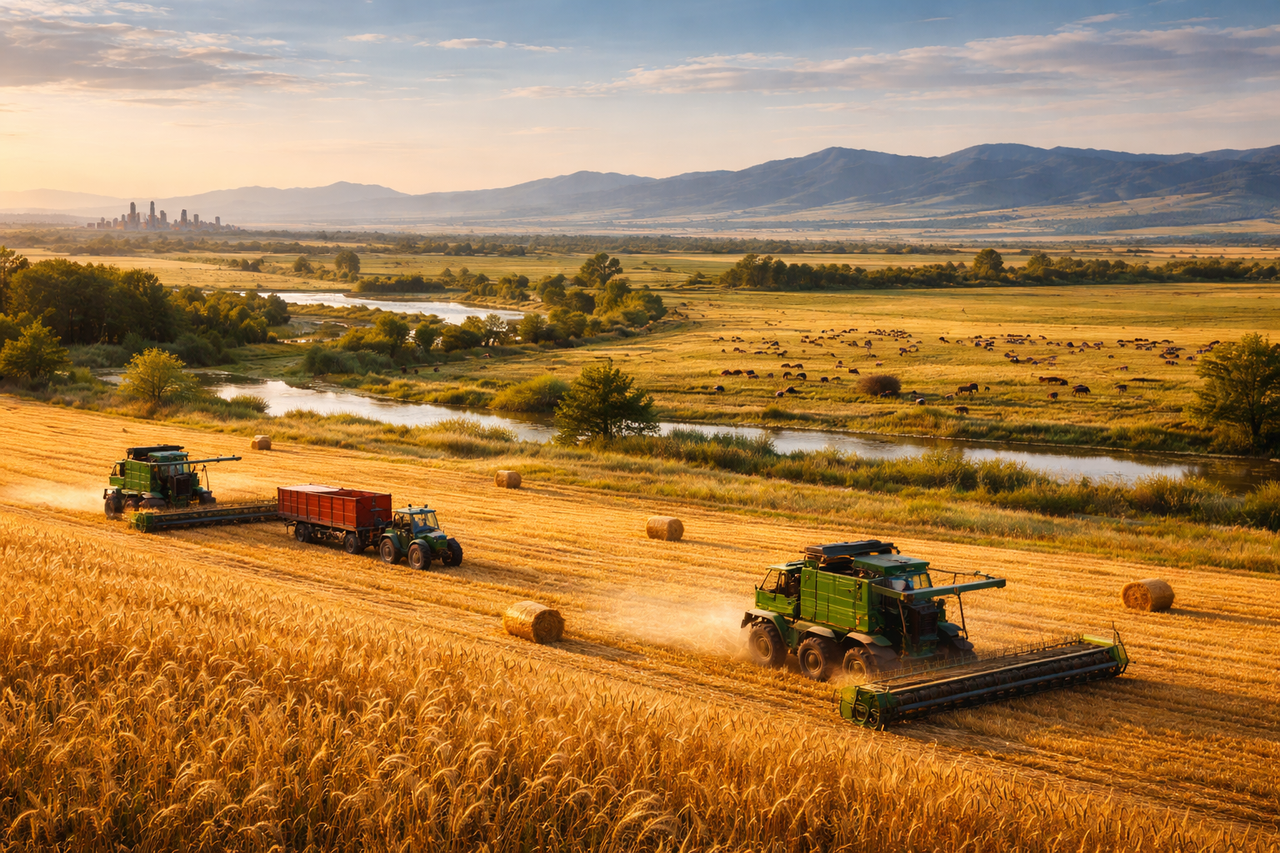
A rentier state, but not a reckless one
Oil and gas account for roughly three-fifths of Kazakhstan's exports. Add uranium, copper and other metals, and the economy is unmistakably rent-based. This alone, however, does not determine outcomes. Many states live off resource rents; most fail because rents are distributed politically rather than managed institutionally.
Kazakhstan's leadership made a different choice after independence in 1991. Strategic assets were not atomised through chaotic privatisation, nor absorbed wholesale by political factions. Instead, the state retained ultimate control while allowing foreign capital in under tightly negotiated terms. Western oil majors, Chinese state firms and regional partners were welcomed, but on contracts that preserved fiscal flows to the centre.
This produced a predictable, if narrow, bargain: investors received stability and enforceable rules; the state captured rents and maintained control. Unlike Russia in the 1990s, oligarchs were never allowed to eclipse the state. Unlike Venezuela, the national oil apparatus was not turned into a political patronage machine. And unlike Libya, security and revenue remained unified.
buyer
>50%
Export strength through diversification of partners
Kazakhstan's external trade structure explains much of its resilience. Although exports are concentrated by product, they are diversified by destination. The European Union remains the largest buyer of Kazakh crude, with Italy and the Netherlands prominent. China absorbs oil, gas, uranium and metals. Turkey and regional partners take additional volumes. Russia, crucially, functions more as a transit route than a captive market.
This matters. States collapse when rents become hostage to a single buyer or corridor. Kazakhstan's multi-directional export strategy reduces exposure to sanctions, price manipulation or geopolitical coercion. Even after Russia's invasion of Ukraine disrupted Eurasian logistics, Kazakhstan preserved access to global markets by re-routing flows and accelerating non-Russian transit links.
Its position as the world's largest uranium producer further insulates it. Uranium demand is driven not by spot cycles but by long-term energy planning. This provides steadier income than hydrocarbons alone: a rarity amongst rentier economies.
Discipline over pluralism
Kazakhstan's political system is unapologetically centralised. Elections are managed, opposition constrained and media freedoms limited. Parliament does not drive policy; the executive does. Yet within this narrow framework, economic governance has been relatively consistent.
Budgets have been conservative by regional standards. Oil revenues are partially sterilised through sovereign funds rather than spent immediately. Currency management has been pragmatic, not ideological. Public debt remains moderate. There is little evidence of the fiscal indiscipline that has undone other resource exporters.
This is not democracy compensating for rents; it is bureaucracy doing so. Policy continuity, not electoral competition, has been the stabilising force. That trade-off has worked so far.
A sovereign wealth fund is a state-owned investment vehicle that sterilises resource revenues during boom periods and supports budgets during downturns. When oil prices are high, excess revenues flow into the fund rather than immediate spending. When prices fall, the fund stabilises public finances. This prevents the boom-bust cycles that destabilise rentier economies.
Why it matters: Kazakhstan's National Fund holds assets worth approximately 12% of GDP. During the 2015 oil price collapse and 2022 unrest, it cushioned fiscal shocks without requiring emergency foreign borrowing. Venezuela, lacking any such mechanism, spent oil rents immediately during boom years and had no reserves when prices fell: a textbook example of procyclical policy failure.
Society: stability with limits
Kazakhstan's population is small relative to its resource base, giving it a favourable rent-per-capita ratio. Urban centres, particularly Almaty and Astana, display rising living standards, functional infrastructure and a modest middle class. Education outcomes are uneven but technically oriented. Health spending has improved, if slowly.
Yet strains are visible. Rural regions lag sharply. Youth unemployment and housing costs generate quiet frustration. The labour market remains segmented: energy wages are high, services less so. Inequality is contained, but not trivial.
The events of January 2022, when protests over fuel prices escalated into nationwide unrest, revealed the model's vulnerability. Stability is durable until it is not; when feedback channels are restricted, adjustment comes abruptly.
What happened: On 1 January 2022, the government removed price caps on liquefied petroleum gas (LPG), the primary vehicle fuel in western Kazakhstan. Prices doubled overnight. Protests began in Zhanaozen, an oil town with a history of labour unrest, and spread rapidly. Within 48 hours, demonstrations reached Almaty, Kazakhstan's largest city. Protesters occupied government buildings. Security forces lost control. Internet access was severed nationwide.
The intervention: President Tokayev invoked the Collective Security Treaty Organisation (CSTO) mutual defence pact, the first such invocation in the alliance's history. Russian-led forces deployed within 24 hours. Order was restored within a week. Official figures reported 238 deaths, though independent observers suggest higher tolls. Thousands were arrested. The LPG price cap was reinstated.
What it revealed: Fuel subsidies were not merely economic distortions; they were an implicit social contract. Citizens accepted restricted political freedoms in exchange for material benefits. When benefits were withdrawn unilaterally, legitimacy collapsed. The lack of institutional channels for grievance meant discontent exploded rather than being absorbed. Elite cohesion held, but barely. Russia's intervention demonstrated that Kazakhstan's stability ultimately rests on external security guarantees, not domestic consent.
A master of geopolitical balance
Kazakhstan's foreign policy is a study in calibrated neutrality. It avoids ideological alignment, refrains from exporting values, and keeps all major powers engaged. Russia provides security guarantees and transit; China offers capital and markets; Europe supplies demand and legitimacy; America brings technology and investment.
This balancing act is not decorative. It is the core of Kazakhstan's survival strategy. By committing fully to none, it reduces retaliation risk from all. Unlike Russia, it has avoided militarisation of foreign policy. Unlike Iran, it has not defined itself in opposition to the West. And unlike many smaller states, it has not outsourced sovereignty to a single patron.
EU Energy Security Strategy (2022): Kazakhstan identified as "reliable alternative to Russian gas" and "critical uranium supplier for European energy transition." The strategy emphasises "deepening energy partnerships with stable Central Asian producers."
US-Kazakhstan Strategic Partnership Dialogue: Established 2015, upgraded 2023. Focus areas include "critical minerals cooperation," "secure energy corridors" and "counter-terrorism partnership." Kazakhstan designated a "Major Non-NATO Ally" equivalent in Central Asia.
NATO Partnership for Peace: Kazakhstan maintains active cooperation through PfP framework since 1995. Described in NATO documents as "stable regional anchor" and "responsible security partner."
Comparisons that matter
Contrast Kazakhstan with Venezuela. Both possess vast oil reserves. Venezuela politicised its national oil company, purged expertise and treated energy rents as electoral tools. Production collapsed; the state followed.
Compare it with Libya, where rents fractured alongside the state itself. Or Nigeria, where oil revenues coexist with chronic instability due to elite fragmentation and weak fiscal institutions.
Kazakhstan avoided all three traps by maintaining elite cohesion, enforcing fiscal discipline and keeping security centralised. That is not virtue. It is strategy.
| Country | Elite Cohesion | Fiscal Discipline | Security Unity | Outcome |
|---|---|---|---|---|
| Kazakhstan | ✓ | ✓ | ✓ | Stable |
| Venezuela | ✗ | ✗ | ~ | Collapsed |
| Libya | ✗ | ✗ | ✗ | Fragmented |
| Nigeria | ✗ | ~ | ~ | Chronic instability |
The cracks ahead
None of this guarantees durability. Kazakhstan's model faces three structural tests.
First, succession. Systems built on centralised authority struggle during leadership transitions. Institutional depth matters more once personal authority fades.
Second, the energy transition. Hydrocarbons will not disappear, but margins will tighten. Without meaningful diversification into manufacturing or advanced services, growth will slow.
Third, social expectations. Younger cohorts are better educated, more connected and less deferential. Discipline without legitimacy becomes harder to sustain over time.
Kazakhstan has postponed these pressures; it has not eliminated them.
What the country represents
Kazakhstan is neither a democratic success nor a failed state in waiting. It is something more uncomfortable: a functioning rentier system that works because it suppresses the very dynamics (pluralism, contestation, decentralisation) that many assume are necessary for stability.
That bargain may yet unravel. But for now, Kazakhstan demonstrates an inconvenient truth: in resource-rich states, disciplined governance can matter more than democratic form. The lesson is not that democracy is dispensable, but that mismanaged democracy collapses faster than managed authoritarianism.
The real test will come not when oil prices fall, but when the system is asked to adapt. Discipline can stabilise power. It cannot indefinitely replace consent.
In resource-rich states, disciplined governance can matter more than democratic form. The lesson is not that democracy is dispensable, but that mismanaged democracy collapses faster than managed authoritarianism. That truth makes many uncomfortable. It remains true.