Do Mauritians Eat Well?
Calories without nutrition
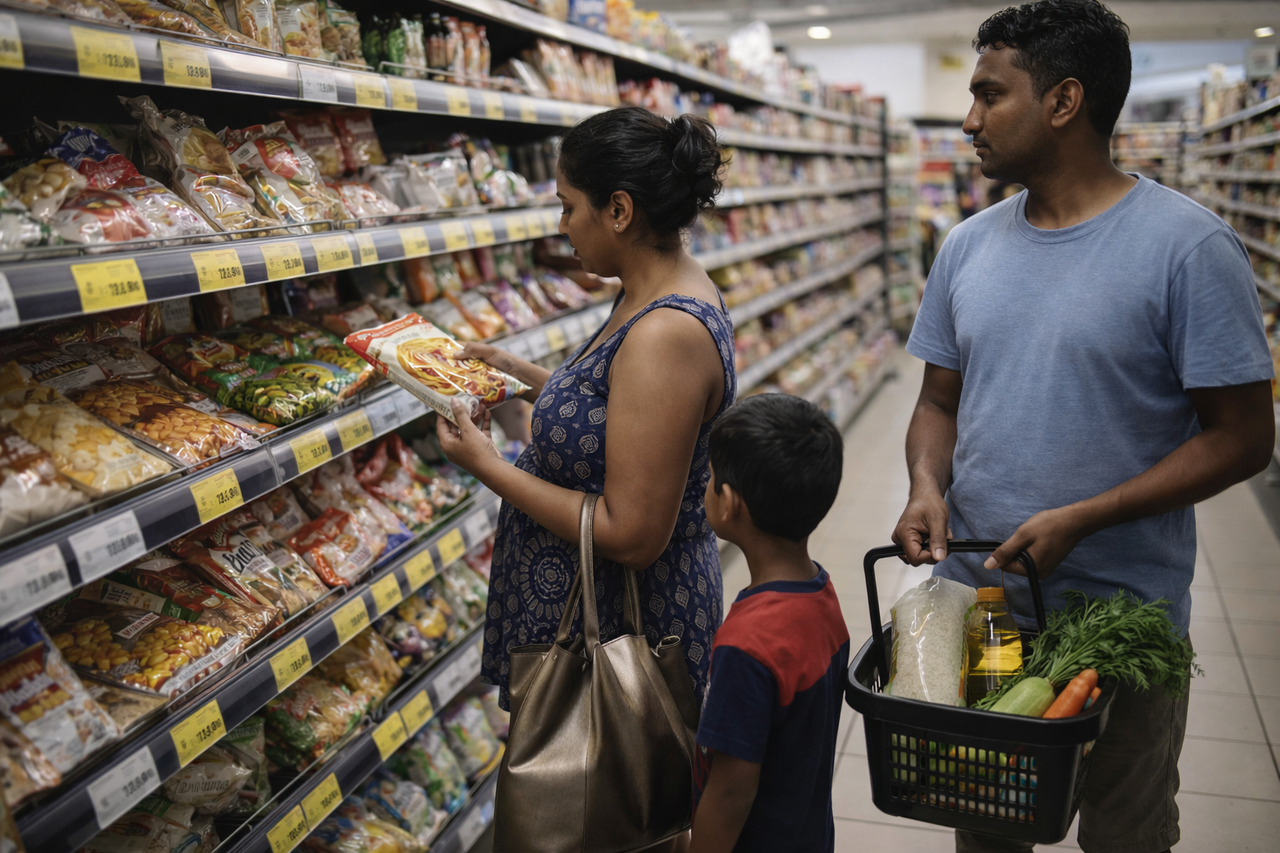
The problem is not scarcity. It is composition. Mauritian diets have shifted decisively away from traditional patterns towards refined carbohydrates, ultra-processed foods, and cheap fats. White rice, white flour, sugary drinks, fried street foods and packaged snacks dominate daily intake. Fruit, vegetables, pulses and high-quality protein play a far smaller role than dietary guidelines recommend.
The numbers tell the story. The average Mauritian consumes approximately 200 kilograms of rice per year—double the global average. Bread consumption has increased 60% since 2000. Soft drink sales per capita exceed regional norms. Fresh vegetable intake, meanwhile, falls 40% below WHO recommendations. Fish consumption—once a dietary staple—has declined as prices have risen relative to frozen imports.
This has produced a form of "hidden malnutrition". Many people consume sufficient—or excessive—calories whilst remaining deficient in iron, zinc, vitamin A, folate and protein. Anaemia affects 30% of women of reproductive age. Children who are not visibly starving still show signs of underweight and stunting: 14% are stunted, 15% are underweight. Adults, meanwhile, face rising rates of obesity (35%), diabetes (22%), and cardiovascular disease.
The double burden of malnutrition refers to the coexistence of undernutrition (stunting, wasting, micronutrient deficiencies) and overnutrition (overweight, obesity, diet-related non-communicable diseases) within the same population, community, household, or even individual across the life course.
In Mauritius: 14% of children are stunted whilst 35% of adults are obese. 30% of women have anaemia whilst 22% of adults have diabetes. The same households experience both forms simultaneously—children lacking protein whilst adults suffer metabolic disease.
Why this happens: Ultra-processed foods provide cheap calories but insufficient nutrients. Households meet energy needs through refined carbohydrates and sugars whilst failing to meet micronutrient requirements through diverse diets. The body experiences caloric surplus (causing obesity) and nutrient deficiency (causing malnutrition) concurrently.
In short, Mauritians are overfed and undernourished at the same time. This is not paradox. It is the predictable outcome of food systems optimised for cost and convenience rather than health.
The income–diet trap
Food choices do not exist in a vacuum. They are shaped by wages, prices and stress. Real incomes have struggled to keep pace with the cost of living, particularly for food. Imported staples are sensitive to exchange-rate movements, shipping costs and global commodity cycles. Between 2020 and 2025, food prices in Mauritius increased 35% whilst median wages rose only 18%. The gap compounds annually.
When prices rise, households adjust not by eating less, but by eating cheaper. Cheaper food tends to be less nutritious. Refined carbohydrates stretch further than fresh produce. A kilogram of rice costs Rs 30 and delivers 3,650 calories. A kilogram of fresh vegetables costs Rs 60 and delivers 200 calories. The arithmetic is brutal and rational.
Fried snacks offer quick satiety. Sugary drinks provide immediate energy. Protein—especially fish, lean meat and dairy—is rationed or replaced. Fresh tuna, once affordable, now costs Rs 350 per kilogram. Frozen imported fish costs Rs 120. Quality declines as budgets tighten. Households substitute towards quantity, not quality.
At the other end of the spectrum, a small but visible affluent class consumes premium foods, supplements, gourmet imports and curated "wellness" diets. Organic vegetables at Ruisseau Créole, imported salmon from Shoprite Checkers, quinoa and avocados at Super U—these remain accessible only to those earning above Rs 50,000 monthly. For the median household earning Rs 22,000, such choices are economically impossible.
The result is widening nutritional inequality: not between those who eat and those who do not, but between those who can afford nutritional quality and those who cannot. Food becomes a marker of class as much as nourishment.
Stress compounds the problem. Economic pressure, long commutes (average 90 minutes daily in urban areas), job insecurity and rising household debt push people towards convenience foods and irregular eating patterns. Nutrition suffers not only from lack of money, but from lack of time, stability and mental space. Fast food outlets proliferate. Street vendors sell fried snacks. Supermarkets position processed foods at eye level whilst fresh produce sits in corners.
Food that feeds, but no longer nourishes
There is a deeper issue that often escapes public debate: modern food is less nutritious than it once was. Global agricultural systems prioritise yield, shelf-life and uniformity. Crops are bred for volume, not micronutrient density. Soil depletion, chemical fertilisers, pesticides and rapid harvesting reduce mineral content. Studies show that vegetables grown today contain 20-40% less iron, zinc, calcium and vitamin C than equivalents grown in the 1950s.
Livestock production relies increasingly on hormones and concentrated feed rather than pasture grazing. Fish is farm-raised on pellets rather than caught wild. Fruits are harvested unripe for shipping, preventing full nutrient development. Processing strips remaining vitamins: white rice loses 80% of B vitamins, white flour loses fibre and minerals, refined oils lose antioxidants.
The result is food that looks abundant but delivers less nutritional value per unit consumed. Eating more does not necessarily mean eating better. This helps explain why malnutrition persists even when calories are plentiful. A plate of white rice, fried chicken and soft drink provides 800 calories but minimal micronutrients. The body registers energy surplus whilst experiencing nutritional deficiency.
Mauritius, as a heavy food importer (70% of consumption), inherits these global trends without the ability to regulate them at source. Standards are set by exporters. Quality is determined by price competitiveness. Nutrient density is unmeasured and unmonitored.
Ultra-processed foods are industrial formulations typically with five or more ingredients. They contain substances not commonly used in cooking (hydrogenated oils, high-fructose corn syrup, modified starches, protein isolates) and additives designed to make products palatable and attractive (flavours, colours, emulsifiers, sweeteners).
Common examples in Mauritius: Instant noodles, packaged snacks (crisps, biscuits), soft drinks, processed meats (sausages, nuggets), sweetened breakfast cereals, energy drinks, margarine, ice cream, mass-produced bread.
Health impact: Studies link ultra-processed food consumption to obesity, type 2 diabetes, cardiovascular disease, certain cancers, and premature mortality. These foods are hyperpalatable (engineered to override satiety signals), energy-dense, nutrient-poor, and designed for overconsumption. They now comprise 20% of Mauritian diets—double the rate from 2000.
The diabetes epidemic
Mauritius holds an unwanted global distinction: it ranks amongst the top five countries worldwide for diabetes prevalence. Approximately 22% of adults have diabetes, with rates exceeding 25% amongst those aged 40-60. An additional 15% have prediabetes. The trajectory is worsening, not stabilising.
This is not genetic destiny. Whilst South Asian and African genetic backgrounds carry higher susceptibility, the epidemic is driven by diet and lifestyle. High glycaemic-load diets (white rice, refined flour, sugary drinks) combined with sedentary behaviour create perfect conditions for insulin resistance. Urban work patterns, car dependency, and declining physical labour compound the problem.
The health system bears enormous costs. Diabetes accounts for 40% of kidney failure cases requiring dialysis. It drives 30% of cardiovascular disease. It causes 60% of non-traumatic amputations. Treatment costs exceed Rs 2 billion annually—money that could fund education, infrastructure or productive investment. Yet the crisis receives inadequate policy attention because it unfolds gradually, affecting individuals rather than causing visible social disruption.
Why producing locally is not a simple answer
Calls for food self-sufficiency are politically attractive but economically misleading. Local production requires land, labour, water, fertiliser, machinery, cold storage, logistics and foreign exchange. Mauritius lacks scale in most of these inputs. Only 44% of land is arable. Farming competes with tourism, housing and infrastructure for land. Younger generations—better educated and urbanised—are reluctant to enter agriculture. Labour shortages are chronic. The agricultural workforce has declined 60% since 1990.
Even successful domestic production would still depend on imported inputs priced in foreign currency. Fertiliser is 100% imported. Seeds are 85% imported. Machinery and fuel are imported. In many cases, importing food remains cheaper than producing it locally—not because it is efficient, but because global food systems are structured that way through subsidies, scale, and infrastructure.
Sri Lanka's recent experience offers a cautionary tale. When foreign-exchange shortages forced an abrupt ban on chemical fertilisers in 2021, rice yields collapsed by 40%. Tea production fell 30%. A former exporter became import-dependent almost overnight. Food prices surged 80%. The government fell in 2022. Good intentions collided with economic reality. The lesson is clear: food security is not simply about growing food. It is about managing trade, currency, income, logistics and resilience simultaneously.
Mauritius cannot escape import dependency through willpower. But it can reduce vulnerability through diversification (multiple suppliers), strategic reserves (three months' stock of essentials), currency management (export competitiveness), and income security (wages tracking food prices). These are macroeconomic interventions, not agricultural ones.
A rentier food system
At a global level, food markets are highly concentrated. A handful of multinational trading houses—Cargill, ADM, Bunge, Louis Dreyfus—dominate grain, fertiliser and commodity flows. They control logistics, pricing power, standards and access to markets. The Global South produces much of the world's food, but captures little of its value. It exports raw produce and imports finished goods, inputs and technology.
Mauritius is plugged into this system as a price-taker. It imports food shaped by decisions made elsewhere, priced in currencies it does not control, governed by standards it does not set. This creates a rentier structure: food security becomes contingent on external income (tourism, financial services, offshore revenues) rather than domestic production or diversified trade.
When external income flows, the system works. Supermarkets stock imported goods. Prices remain stable through subsidies. Political legitimacy rests on affordability. When flows stop—tourism collapses, offshore revenues decline, remittances dry up—food becomes the transmission mechanism for macroeconomic crisis. Lebanon demonstrated this trajectory between 2019 and 2024. Mauritius faces similar structural vulnerability.
Health consequences, fiscal costs
Poor diets are not only a personal issue; they are a macroeconomic one. Non-communicable diseases linked to nutrition—diabetes, heart disease, kidney failure, stroke—account for 87% of deaths in Mauritius. Health spending on NCDs exceeds Rs 5 billion annually. Treating these conditions is far more expensive than preventing them. Dialysis costs Rs 25,000 per patient per month. Cardiovascular care and long-term medication impose growing fiscal burdens on a small health system with limited capacity.
An ageing population magnifies the problem. By 2030, 25% of Mauritians will be over 60. Older people are particularly vulnerable to malnutrition, even when overweight. Protein deficiency accelerates muscle loss (sarcopenia). Micronutrient gaps increase frailty, cognitive decline, and dependence. The health system faces a double burden: managing chronic disease in working-age adults whilst supporting malnutrition in elderly populations.
Productivity losses compound fiscal costs. Adults with diabetes experience 15-20% lower productivity through absenteeism, fatigue, and complications. Children with stunting show permanent cognitive impacts affecting educational attainment and lifetime earnings. Malnutrition reduces economic potential whilst raising healthcare costs—a double penalty small economies can ill afford.
Nutrition policy, in this context, is economic policy. Every rupee spent on prevention saves five in treatment. Yet political systems optimised for short-term stability underinvest in long-term health infrastructure.
Lessons from elsewhere: Singapore and failure cases
Singapore offers instructive contrast. Like Mauritius, it imports over 90% of food. Like Mauritius, it is a small island economy dependent on external trade. Yet Singapore maintains diabetes prevalence at 9.5%—less than half Mauritius's rate. Obesity stands at 11% versus Mauritius's 35%. Life expectancy exceeds 85 years versus Mauritius's 75.
The difference is policy coherence. Singapore regulates advertising of unhealthy foods, mandates nutrition labelling, taxes sugary drinks, subsidises healthy options through vouchers, invests heavily in school meals emphasising vegetables and lean protein, maintains strict import quality standards, and designs urban environments for physical activity. Food policy is integrated with public health, urban planning, and education—not treated as separate domains.
Caribbean nations demonstrate failure modes. Jamaica, Trinidad, and Barbados—all small island economies with high import dependency—experience obesity rates exceeding 30%, diabetes above 15%, and declining life expectancy. Like Mauritius, they face wage-price gaps, ultra-processed food proliferation, and inadequate policy response. The trajectory is predictable: gradual health deterioration, rising fiscal burdens, declining competitiveness.
Mauritius has elements of Singapore's approach—but lacks coherence. School feeding programmes exist but emphasise volume over nutrition. Import standards exist but focus on safety, not quality. Subsidies exist but favour price stability over dietary diversity. The pieces remain unconnected.
What eating well would actually require
Improving diets in Mauritius does not require utopian self-sufficiency. It requires alignment across several domains simultaneously. First, income and prices must move together. Wages that lag food inflation guarantee poor nutrition. Minimum wage increases must track food baskets, not headline CPI. Targeted transfers (food vouchers redeemable only for fresh produce) reach vulnerable groups more effectively than generalised subsidies.
Second, school meals should anchor dietary habits early. Current programmes provide calories but limited nutrition. Redesigning menus around vegetables, legumes, whole grains, and lean protein—whilst removing ultra-processed items—shapes preferences during formative years. This requires investment but delivers lifelong returns through reduced healthcare costs.
Third, imports must be regulated for quality, not just price. Banning ultra-processed foods is unrealistic. But taxes on sugary drinks (Rs 5 per litre), restrictions on advertising to children, and mandatory front-of-package warning labels (as in Chile) reduce consumption whilst raising revenue for health programmes. Import standards should privilege nutrient-dense foods over cheap bulk.
Fourth, public health messaging must go beyond slogans and address affordability. Telling people to "eat more vegetables" whilst vegetables cost three times more per calorie than rice is performative theatre. Effective campaigns provide specific guidance: affordable recipes, shopping strategies, meal preparation techniques for time-constrained households.
Fifth, urban planning should support access to fresh food, not only convenience outlets. Food deserts—areas where fresh produce is unavailable or unaffordable—proliferate in lower-income neighbourhoods. Incentivising markets, mobile vendors, and community gardens reduces access barriers. Zoning regulations that limit fast-food outlets near schools reduce exposure.
Above all, food policy must be treated as part of economic strategy, not a lifestyle issue. This means integrating nutrition with currency management (import diversification), wage policy (purchasing power), fiscal policy (subsidies targeting nutrition not just price), trade policy (quality standards), and urban design (food access). Fragmented interventions fail. Coherent systems succeed.
The real question
Mauritians do eat. Calories are abundant. Hunger is rare. But eating well requires more than availability. It requires income security that keeps pace with food prices, time that permits meal preparation rather than convenience consumption, education that builds dietary knowledge from childhood, and a food system that rewards nourishment over volume and profit over health.
Until those pieces align, Mauritius will remain in its current state: full but not healthy, fed but not nourished, abundant in calories but deficient in nutrients. The island's food crisis is not one of empty plates. It is one of poor composition, misaligned incentives, and fragmented policy. Addressing it requires treating nutrition as infrastructure—essential, integrated, and worthy of long-term investment.
The question is not whether Mauritians eat. The question is whether they eat well enough to avoid the slow-motion health crisis that accompanies poor diets: rising diabetes, cardiovascular disease, frailty, and fiscal burden. The answer, presently, remains no. But unlike geological constraints or demographic inevitability, this is solvable. It requires political will, policy coherence, and recognition that food security without nutritional security is hollow achievement.
Until income, prices, and policy align, Mauritius will remain full—but not healthy. The island's food crisis is not one of empty plates. It is one of poor composition, misaligned incentives, and fragmented systems.