There is a story that Western governments tell about Iranian oil. It goes like this: sanctions have isolated the regime, cut its revenues, and are slowly strangling its capacity to make war. The story is coherent and politically convenient. It is also, in measurable terms, false.
Iranian crude is not sitting in the ground. It is moving, in large volumes, through a carefully constructed chain of intermediaries that ends, quietly, on Western shelves. The mechanism is not secret. It is simply uncomfortable to name.
Who Is Buying the Oil
As of early 2026, China takes in roughly 1.46 million barrels of Iranian crude per day. The buyers are mostly small independent refineries, known in the industry as teapots, which operate outside the dollar payment system entirely. Transactions are settled in digital yuan through the mBridge network, a cross-border payment platform that several central banks have been developing as an alternative to the SWIFT architecture. The arrangement is not accidental. It is infrastructure built for precisely this purpose.
China currently holds a strategic reserve of approximately 1.4 billion barrels of oil, a significant portion of it acquired at discounts that no Western buyer could match. This is not merely a commercial advantage. It is a structural buffer that insulates Beijing from any price shock the Gulf crisis might produce.
China is not defying Western sanctions for ideological reasons. It is running a straightforward arbitrage: buy cheap, refine, sell the finished product to the same Western consumers whose governments imposed the sanctions in the first place.
How the Energy Reaches Western Consumers
The mechanism is simple enough to follow. China uses discounted Iranian crude as a feedstock for its manufacturing economy, which is among the most energy-intensive on earth. When a consumer in London or New York buys a smartphone, a toy, or a piece of medical equipment, part of what they are paying for is the energy embedded in its production. That energy, in a meaningful number of cases, originated in Iranian oilfields.
The same logic applies to refined products. China and India are currently exporting record volumes of diesel, jet fuel, and petrochemical derivatives back to Western markets. The crude is Iranian or Russian. The label on the barrel, by the time it arrives, says Made in China or Made in India. The sanctions framework has no answer for this.
Russia adds a further dimension. On March 13, the United States Treasury issued General License 134, a 30-day waiver permitting the continued movement of Russian oil already at sea. The stated rationale was supply stability. The honest rationale is that without the waiver, pump prices in American swing states would move sharply upward before a politically sensitive period. The West is, in effect, managing the pace of its own sanctions to keep its own economies comfortable. Moscow understands this. So does Tehran.
Iran's Position: Desperation, Not Defiance
Tehran's decision to enforce a selective blockade of the Strait of Hormuz is widely described as a show of resolve. A different reading is more accurate. It is the action of a government that has run out of less costly options.
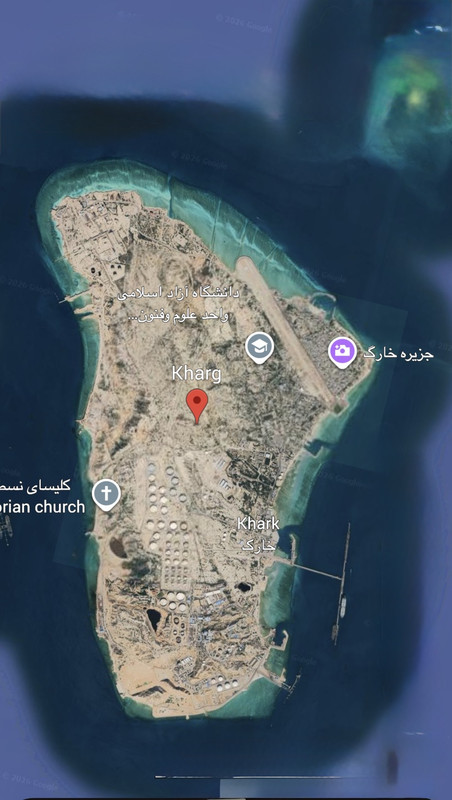
Kharg Island, through which approximately 90 percent of Iran's oil revenue moves, has been under sustained pressure since late 2025. The regime is drawing down its remaining assets to sustain a defensive posture it calls the Mosaic Defense, a distributed network of low-cost asymmetric capabilities designed to raise the price of a conventional military campaign. The strategy has logic. But it is the logic of a side that cannot win outright and is hoping to survive long enough for the other side to lose patience.
The human cost of the Crimson Winter, the period of intensified internal suppression running from December 2025 through February 2026, is estimated at more than 90,000 deaths. The regime has maintained nominal control. But the population it is controlling is no longer a constituency. It is a territory under occupation by its own government. Russia and China, nominally allies, are treating Iran as a discounted energy supplier, not a partner. The regime's leverage is narrowing from every direction simultaneously.
| Nation | Role | Strategic Position |
|---|---|---|
| Iran | Source Seller at discount |
Selective Strait blockade as leverage of last resort. Nuclear programme used as a negotiating posture rather than a genuine near-term capability. |
| China | Processor Strategic buyer |
Absorbing 1.46 million barrels per day at significant discounts. Refined products exported to Western markets, closing the loop on the sanctions architecture. |
| Russia | Profiteer Price beneficiary |
Earning an estimated additional 150 million euros per day in energy revenue as a direct result of the Gulf crisis price spike. Ukraine war expenditure partially underwritten by Western energy consumers. |
| United States | Architect Dominant creditor |
Using LNG export agreements to anchor relationships with India and other swing states. The 25 trillion dollar bond market remains the primary instrument of systemic control. |
The Russia Variable: The One Party That Does Not Lose
There is a structural beneficiary to every crisis in the Middle East, and it is not the United States, which bears the cost of naval presence, nor Iran, which is being bled. It is Russia.
When Gulf supply tightens, European energy prices rise. When European energy prices rise, Russian gas and oil become more valuable. When Russian energy revenue increases, Moscow's capacity to sustain its military campaign in Ukraine improves. When that campaign continues, European governments face a choice between funding Ukrainian resistance at scale or negotiating a settlement on terms that give Russia something close to what it originally sought.
This is not a conspiracy. It is the straightforward geometry of an interconnected energy market in which Russia holds a supply position that cannot be quickly replaced. European governments have spent three years trying to reduce their dependence on Russian energy. They have made partial progress at significant cost. But the progress is not complete, and the cost has been borne largely by ordinary households. The political pressure to find an accommodation with Moscow is growing, not shrinking. Russia does not need to win on the battlefield to win. It needs the West to grow tired first.
The regime's call for a deal is not a sign of strength reclaimed. It is the sound of a government discovering, later than most outside observers, that its principal allies were never allies at all.
What Winning the Economic Siege Actually Looks Like
The West does not need to prevail in a kinetic confrontation with Iran to achieve its strategic objectives. The economic siege is already working. Iran is selling its primary national asset at a 10 to 11 dollar per barrel discount to buyers who are using it to compete more effectively against Western manufacturers. The Rial has lost most of its functional value. The state apparatus is spending capital it cannot replace to suppress a population it cannot govern by consent.
The regime will eventually seek a negotiated exit. When it does, it will frame the moment as a sovereign decision. The framing will be false, but it will be accepted, because the alternative, a government that collapses entirely, creates problems that no outside party wants to manage. A weak, compliant Iran is more useful than a failed one.
The circular economy of deception, the one in which Western consumers fund Iranian oil revenue through Chinese intermediaries while their governments impose sanctions, will quietly unwind. A new arrangement will be described as a diplomatic achievement. The numbers will tell a different story, as numbers generally do.
The Iran crisis is not, at its core, a military story. It is an accounting story. Follow the barrels, follow the yuan, and follow the bond yields, and the picture that emerges is not one of civilisational conflict. It is one of competing commercial interests dressed in the language of principle. Russia, which contributes least to any resolution and most to the continuation of instability, will collect its dividend regardless of how the other parties settle their accounts. That is the most important number of all.