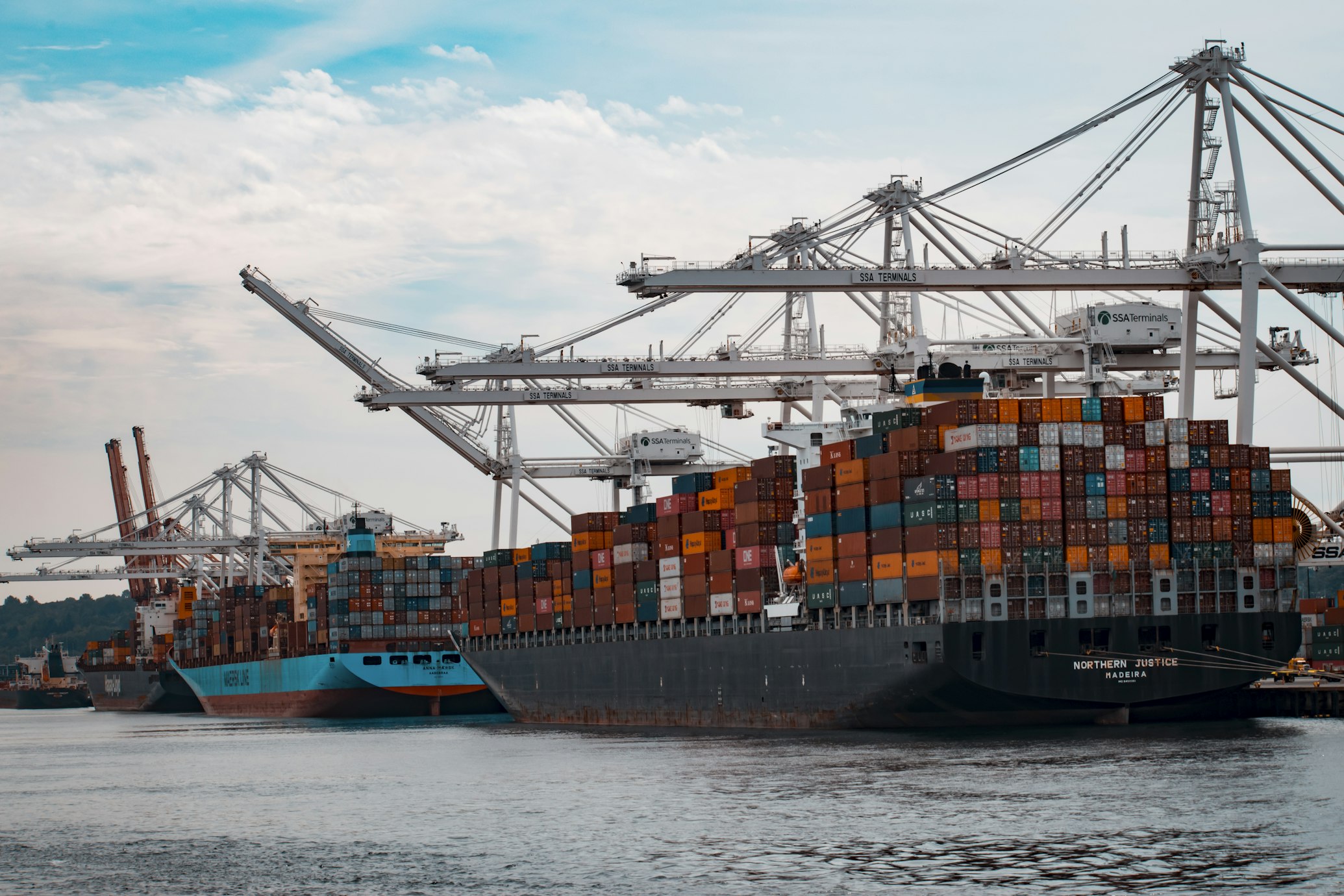
For fifty years, the unwritten architecture of the global financial system rested on a single agreement: the United States provided security guarantees to the Gulf states, and in return the Gulf priced its oil in dollars, recycled its surpluses through US Treasury markets, and kept the dollar structurally bid. The Petrodollar was not a currency. It was a treaty. Every barrel of Saudi crude that moved through the Strait of Hormuz was, in a financial sense, a vote of confidence in American power. When oil moved, dollars moved. When dollars moved, American hegemony was confirmed.
That treaty is over. What is replacing it is not a vacuum, not a multipolar chaos, and not the gold standard revival that the permabull commentators have been predicting since 2008. What is replacing it is something new and harder to name: a currency backed not by a commodity flowing through a chokepoint, but by the functional sovereignty of the only nation that can simultaneously power its own grid, arm its own war machine, supply its own chips, and project kinetic force anywhere on the planet within fourteen days. We are calling it the Military Dollar.
I. The Death of the Petrodollar Treaty
The Petrodollar's vulnerability was always a geographical one. Its value as a backing mechanism depended on the United States needing Gulf oil badly enough to guarantee Gulf security unconditionally. By 2026 that dependency has dissolved. The United States is now the world's largest oil and gas producer. Its LNG exports reach Europe, Asia, and Latin America. Its grid is increasingly buffered by domestic shale, renewables, and a nuclear baseload that Washington is now rapidly expanding. President Trump's Energy Dominance doctrine is not merely rhetoric. It is the institutional articulation of a shift that the market had already priced before the doctrine was named.
The consequence is structural and irreversible. When the Strait of Hormuz was closed in March 2026, the United States did not face an existential energy shock. It faced an opportunity. American LNG spot prices spiked. American defense contractors began booking orders at a rate not seen since the post-2001 decade. The carriers and fleet assets deployed to the Gulf were not protecting American energy imports. They were protecting the architecture of the replacement system, the system in which American military presence is not a dependency but a service offered to others for a price denominated in geopolitical alignment and dollar-denominated transactions.
The Petrodollar was a treaty. The Military Dollar is an ultimatum. Pay in our currency, bank in our system, route your insurance through our markets, or find someone else to secure your shipping lanes.
II. The Safe-Haven Paradox: Why Gold Is Bleeding in a War
Classical safe-haven theory predicts that gold surges during geopolitical crises. Gold hit $5,595 in January 2026. It is now at $4,842. The Middle East is at war. The Strait of Hormuz is disrupted. Fourteen US service members have been killed. And gold is falling. This is the data point that breaks every model built on the 1973 playbook.
The explanation is not complicated once you accept the Military Dollar framework. When the DXY strengthens, the opportunity cost of holding non-yielding gold increases. But more importantly, when investors believe that the United States is not merely surviving this crisis but winning it, and winning it in a way that consolidates American financial centrality rather than threatening it, capital does not flee to gold. Capital rotates into the instruments of American victory. Defense stocks. US Treasuries. The dollar itself as a safe-haven instrument, backed now not by Saudi production agreements but by F-35 production lines and Patriot battery deployment schedules.
The World Gold Council's February 2026 analysis argued the DXY bounce driven by the conflict is likely short-lived and that a resumption of dollar weakness would be the structural case for gold. The Military Dollar thesis contests this. The DXY weakness of H1 2025 was driven by tariff uncertainty and recession fears. The partial recovery is being driven by something categorically different: the reassertion of American kinetic sovereignty. These are not the same signal.
The carry cost argument is secondary. The primary explanation is capital allocation toward Active Wealth rather than passive storage. In a world where the United States is simultaneously the largest energy exporter, the dominant military power, the holder of the reserve currency, and the controller of the chip supply chain through Taiwan policy and TSMC leverage, gold sitting in a vault in Zurich is not competing with dollars. It is competing with US defense ETFs, US energy infrastructure bonds, and US semiconductor equity. And it is losing that competition.
III. The Dollar Evolution Matrix
| Feature | The Petrodollar (1974–2024) | The Military Dollar (2025–Beyond) |
|---|---|---|
| Primary Backing | Saudi oil production agreements and Gulf security guarantees | US energy independence, domestic chip supply, and kinetic force projection |
| Global Role | Facilitating global commodity trade through dollar denomination | Securing global supply chains as a priced service, not a free guarantee |
| Key Ally Structure | GCC / OPEC as production partners and reserve recyclers | Atlantic Anchor framework: UK, India, Namibia, Japan as tier-one partners |
| Risk Profile | High — structurally vulnerable to Gulf chaos and OPEC+ decisions | Resilient — buffered by domestic resources and self-sufficient war machine |
| Geopolitical Logic | Security for Oil: the US needed Gulf stability as much as the Gulf did | Functional Sovereignty: the US can weather Gulf collapse better than anyone else |
| Dollar Backing Metaphor | Liquid oil: every barrel was a dollar confidence vote | Kinetic capacity: every carrier group is a dollar confidence vote |
| Gold Relationship | Inverse — dollar weakness drove gold as the alternative store of value | Contested — gold competes with Active Wealth in defense and energy equity |
| Who Pays the Price | OPEC non-compliance countries, sanctioned states | Any economy that cannot align with dollar-denominated security architecture |
IV. The Strategic Verdict: Sovereignty Transition, Not Oil Crisis
The markets are not behaving like 1973 because this is not 1973. In 1973 the United States was an oil importer facing an embargo from producers it needed. In 2026 the United States is an oil exporter facing a disruption in a region it no longer depends on. The asymmetry is total. The Arab oil embargo of 1973 was a supplier cutting off a customer. The Hormuz disruption of 2026 is a regional power cutting off its own buyers and its own revenue stream while the United States watches from a position of structural advantage.
The countries that are suffering are not the United States. They are Sri Lanka, Nepal, Bangladesh, Pakistan, the Philippines, Egypt, Kenya, Uganda — every economy in the Global South that built its foreign exchange architecture around Gulf remittances and Gulf oil imports simultaneously. The Military Dollar does not protect them. It was not designed to. The Petrodollar, for all its exploitative architecture, at least created a shared dependency that gave developing countries a degree of systemic relevance. The Military Dollar creates a two-tier world: those inside the security architecture and those outside it, financing their own vulnerability with borrowed dollars at rates set in Washington.
The contesting thesis comes from the World Gold Council and major institutional desks including JPMorgan and Goldman Sachs: the DXY bounce is temporary, structural dollar weakness will resume, and gold's long-term trajectory toward $6,200 and beyond remains intact as central bank de-dollarisation demand does not pause for wars. This view is not wrong. It may describe the medium-term trajectory accurately. But it misreads the short-term signal. The reason gold retreated from $5,595 in a war is not technical. It is political. Capital is not hiding from this war. Capital is betting on the winner. And the winner, for the first time since 1973, is not ambiguous.
The $5,000 Gold retreat and the DXY holding at 100 during an active Middle East war are not contradictions. They are the clearest signal yet that the Sovereignty Transition is real, priced, and accelerating. The Petrodollar was a treaty between the world's largest oil consumer and its largest producer. That treaty expired when American fracking made the consumer self-sufficient. The Military Dollar is what replaced it: a currency backed by the functional capacity to secure borders, power grids, chip supply chains, and shipping lanes simultaneously, without asking permission from Riyadh. For institutional investors, the implications are not to abandon gold, whose structural bull thesis remains intact over the medium term, but to understand that the short-term safe-haven calculus has changed. In a Sovereignty Transition, Active Wealth outperforms passive storage. Defense, energy infrastructure, and dollar-denominated sovereign debt are the instruments of a world that has just chosen its winner. The Global South, as The Meridian documented yesterday in its analysis of Sri Lanka and the remittance chain, is paying the price of having built its foreign exchange architecture on a treaty that no longer exists. The ultimatum has replaced the agreement. The Military Dollar does not offer security for oil. It offers security for alignment.