Corridors, Concrete and the Crowded Century
Infrastructure, Megacities and the Battle for Development in India, Africa, Indonesia and the Gulf
In April 2024, Kenya's President William Ruto stood before Parliament to defend his government's latest infrastructure bonanza. A $1.9 billion Nairobi Expressway, a $5.2 billion Standard Gauge Railway extension, and dozens of road contracts awarded to Chinese, Turkish, and local firms. The headline was development. The footnote was debt. By mid-2024, Kenya's public debt had reached 68% of GDP, with infrastructure projects accounting for the bulk of new borrowing. When youth-led protests erupted in June 2024 over tax increases needed to service this debt, they weren't just protesting taxes. They were protesting concrete.
This is the paradox defining the Global South in 2026: infrastructure is both the solution and the trap. Every African, Asian, and Latin American government knows that without roads, power, water, and digital networks, economic growth remains theoretical. Yet every major project risks becoming a monument to corruption, a conduit for capital flight, or a fiscal time bomb that detonates when currencies collapse or revenues disappoint.
By 2026, the infrastructure story in the Global South is less about "development gaps" and more about a three-way battle between competing models. India is weaponizing capital expenditure as macroeconomic strategy, lifting public infrastructure investment to 3.4% of GDP. Indonesia is moving its capital to Borneo in a $35 billion bet on geography. The Gulf states are pouring oil surpluses into trillion-dollar "giga-projects." Africa faces a $68-108 billion annual financing gap while navigating between Chinese loans, Western "de-risking" schemes, and Gulf sovereign funds.
Meanwhile, 90% of the world's new urban residents through 2050 will arrive in Asia and Africa, most in secondary cities that rarely appear on investors' pitch decks. The 21st century will be decided not in summit rooms but in metro tunnels under Jakarta, highway corridors crossing Nigeria, and informal settlements on the edges of Nairobi and Dhaka. The question is no longer whether the Global South will build. It's who will control what gets built, at what cost, and who will be left paying when the concrete cracks.
The Great Urban Pivot: Where 90% of New City-Dwellers Will Live
The Global North urbanized during an era of cheap energy, stable climate, and moderate population growth. The Global South is urbanizing under precisely opposite conditions: expensive capital, climate extremes, and demographic momentum that won't peak for decades. The numbers are staggering. Africa's urban population crossed 40% in 2020 and could hit 60% by 2050. South Asia adds a Delhi-sized city's worth of urban residents every 18 months. By 2050, nine of the world's ten largest cities will be in Asia and Africa.
But here's what the aggregate numbers hide: 90% of Africa's new urban residents through 2050 will land in small and medium-sized cities, places with populations under 1 million, places that lack functioning sewage systems, reliable electricity, or formal land titles. These are the Mwanzas, the Mysores, the Makassars. They don't have metro systems or BRT lanes. They have diesel generators, borehole wells, and WhatsApp groups organizing informal bus routes. When we talk about the "urban century," we're really talking about the century of improvisation at scale.
| Region | 2024 Urban % | 2050 Projection | Where Growth Lands |
|---|---|---|---|
| Sub-Saharan Africa | 44% | 59-62% | 90% in cities under 1M population (secondary/tertiary) |
| South Asia | 36% | 48-52% | India: tier-2/3 cities; Bangladesh: Dhaka mega-region |
| Southeast Asia | 51% | 63-67% | Jakarta, Manila, Ho Chi Minh extended urban regions |
| Middle East & North Africa | 65% | 70-73% | Cairo, Lagos peripheries; Gulf new cities |
| Latin America | 81% | 87-89% | Already heavily urbanized; growth at peripheries |
Kenya 2024: When Infrastructure Becomes Revolution
Kenya's Gen-Z protests in June-July 2024 were triggered by a Finance Bill proposing tax increases on bread, diapers, and mobile money transfers. But the rage had a deeper source: infrastructure debt. Between 2013 and 2024, Kenya borrowed $10+ billion for the Standard Gauge Railway (SGR) linking Mombasa to Nairobi, the Nairobi Expressway, rural electrification, and dozens of road projects. By mid-2024, debt service consumed 37% of government revenues. The SGR, built by Chinese contractors at $3.6 billion, generates far less freight traffic than projected. When it rains, passengers ride a train past half-empty container terminals.
This is infrastructure as fiscal trap. The projects were real. They moved earth and laid track. But they were financed on optimistic revenue assumptions, built at inflated costs, and awarded to contractors with opaque procurement. When revenues disappointed and the shilling weakened, the government had two choices: default or tax. It chose tax. The population chose protest. By August 2024, President Ruto had withdrawn the Finance Bill, but Kenya's infrastructure model was exposed: borrow in dollars, build at premium prices, hope growth covers debt service. When hope fails, austerity.
| Project | Cost | Lender | Outcome |
|---|---|---|---|
| Standard Gauge Railway (Mombasa-Nairobi) | $3.6B | China Exim Bank (90%) | Freight traffic 40% below projections; debt service ongoing |
| Nairobi Expressway | $1.9B | China Road & Bridge (PPP) | Operational but toll revenues below forecast; gov't guarantees triggered |
| Lamu Port & LAPSSET Corridor | $25B (total planned) | Mixed (China, domestic) | Partially completed; cost overruns; delays; limited regional traffic |
| Rural electrification (Last Mile) | $1.3B | World Bank, AfDB, KfW | Successful in coverage but recurring O&M costs strain utilities |
The Corruption Tax: How Kickbacks Add 25-50% to Infrastructure Costs
Infrastructure corruption is not an African problem or an Asian problem. It's a Global South systemic problem. Transparency International estimates that corruption adds 10-30% to infrastructure project costs globally, with the figure rising to 25-50% in countries with weak procurement oversight. What does this mean in practice? For every $1 billion borrowed for a highway, $250-500 million disappears into kickbacks, inflated invoices, phantom subcontractors, and political patronage.
The mechanics are well-documented. Contractors collude to fix bids. Government officials receive "facilitation fees" to expedite approvals. Projects are deliberately over-scoped to increase budgets. Materials are substituted (cheaper steel, thinner asphalt) while invoices reflect premium specifications. Politicians award contracts to shell companies they control. The infrastructure gets built, but at 1.5x to 2x the efficient cost. The difference is extracted, often ending up in offshore accounts while taxpayers service the full debt.
Here's why this matters for 2026: as infrastructure spending surges across India, Indonesia, Nigeria, and East Africa, corruption isn't just stealing money. It's determining what gets built. Roads that should cost $2 million per kilometer cost $4 million. Metro lines that should serve 200,000 daily passengers serve 100,000 because corners were cut. Power plants operate at 60% capacity because maintenance budgets were siphoned. Corruption doesn't just inflate costs. It degrades function.
| Country & Project | Scandal Summary | Estimated Loss | Outcome |
|---|---|---|---|
| South Africa: State Capture (2014-2018) | Gupta family + officials looted parastatals including Eskom, Transnet | $34B+ estimated (Zondo Commission) | Multiple arrests; slow prosecutions; infrastructure decay ongoing |
| Malaysia: 1MDB scandal (2009-2015) | $4.5B siphoned via infrastructure investment fund; Najib Razak convicted | $4.5B stolen, $6B+ in debt | Najib jailed 2022; Goldman Sachs fined $3.9B; funds partially recovered |
| Nigeria: Abacha years (1993-1998) | Dictator stole $3-5B via fake infrastructure contracts | $3-5B confirmed | $3B+ recovered posthumously; rest in offshore accounts |
| Kenya: Chickengate + NYS scandals | $100M+ stolen from youth service, dam projects via fake firms | $100M+ (2015-2018) | Some convictions; most politically protected; funds unrecovered |
| Bangladesh: Padma Bridge graft (2012) | World Bank withdrew $1.2B loan citing corruption; gov't built with own funds | Delayed by 5 years; cost overrun | Bridge completed 2022; corruption allegations unresolved |
India's Capex Gamble: Can Infrastructure Spending Power Growth?
Among large economies, India has mounted the most visible experiment in using infrastructure as macroeconomic engine. In the 2024-25 Union Budget, New Delhi allocated ₹11.1 trillion ($133 billion) to capital expenditure, equal to 3.4% of GDP. This is more than double the 1.7% level from 2019-20. The logic is straightforward: India has demographics, domestic demand, and a geopolitical moment where supply chains seek alternatives to China. Without hard infrastructure, these advantages remain theoretical. With it, India converts demographic dividend into manufacturing competitiveness.
The push spans three pillars. First, transport: Gati Shakti multi-modal connectivity, 50,000+ km of national highways under Bharatmala, dedicated freight corridors linking ports to industrial hinterlands, and metro expansions in 20+ cities. Second, digital-physical integration: FASTag e-tolling, UPI payments infrastructure, and logistics data platforms that make freight movement more efficient. Third, energy transition: 500 GW renewable capacity target by 2030, new transmission grids, and coal-to-renewables pivot for railways and industrial consumers.
By 2026, the test will be execution quality. India's infrastructure spending has historically suffered from land acquisition delays, contractor disputes, and state-level corruption. If the capex surge flows through efficient procurement and modern project management, it could lift GDP growth to 7-8% sustainably. If it replicates old patterns of cost overruns, white elephants, and patronage, India will accumulate concrete without productivity. The difference matters not just for India, but for the entire Global South watching whether public investment can still drive industrial transformation.
| Sector | Key Projects/Programs | 2024-25 Allocation (₹ Lakh Crore) |
|---|---|---|
| Roads & Highways | Bharatmala, National Highways Authority (NHAI) | ₹2.78 lakh crore (~$33B) |
| Railways | Dedicated freight corridors, Vande Bharat expansion, station redevelopment | ₹2.55 lakh crore (~$31B) |
| Urban Infrastructure | Metro Rail, smart cities, water/sewage systems | ₹1.0+ lakh crore (~$12B+) |
| Power & Renewables | Transmission, solar/wind capacity, grid upgrades | ₹0.8 lakh crore (~$10B) |
| Ports & Waterways | Sagarmala, inland waterways, port modernization | ₹0.3 lakh crore (~$3.6B) |
Indonesia's $35 Billion Bet: Moving the Capital to Borneo
Where India is densifying existing corridors, Indonesia is attempting something more audacious: abandoning its capital. Jakarta, a megacity of 30+ million in its extended metro area, is congested, polluted, and literally sinking. Land subsidence from groundwater extraction has caused parts of northern Jakarta to sink 2.5 meters in a decade. Flooding is chronic. By 2050, substantial portions of the city could be underwater. In response, President Joko Widodo launched Nusantara, a planned new capital on Borneo's east coast, with a headline cost of $32-35 billion through 2045.
Nusantara is not just urban planning. It's a test of post-BRI infrastructure finance. Unlike earlier mega-projects financed heavily by Chinese policy banks, Indonesia is diversifying: domestic bonds, Gulf sovereign funds (UAE's ICD and Saudi PIF interested), Japanese concessional loans, and planned sovereign green bonds. The government hopes to finance only 20% from the budget, relying on private and foreign investment for the remaining 80%. By mid-2024, only $6-8 billion had been committed. The rest remains speculative.
The risk is that Nusantara becomes an elite island while Jakarta's infrastructure crises persist. Moving ministers to Borneo won't fix Jakarta's floods, traffic, or informal settlements. Egypt's New Administrative Capital offers a cautionary tale: a gleaming new city built east of Cairo at $45+ billion, mostly empty, while Cairo's 20 million residents cope with under-funded transit and water systems. New capitals can be monuments to elite aspiration rather than solutions to urban dysfunction. By 2026, whether Nusantara attracts genuine private investment or becomes a fiscal albatross will be clear.
| Country | New Capital | Estimated Cost | Status & Reality Check |
|---|---|---|---|
| Indonesia | Nusantara (Borneo) | $32-35B (2024-2045) | $6-8B committed by mid-2024; construction started; private investment uncertain; completion 2045+ |
| Egypt | New Administrative Capital | $45-58B | Built by military-linked firms; largely empty; fiscal burden on gov't; elite exodus from Cairo limited |
| Myanmar | Naypyidaw (2005) | $4B+ | Completed; 8-lane highways with minimal traffic; hotels empty; symbolic power move, not economic |
| Kazakhstan | Astana/Nur-Sultan (1997) | $20B+ over decades | Functional but controversial; oil money financed; centralization of power |
| Nigeria | Abuja (1991 official) | Completed | Success as political capital; did not reduce Lagos congestion; dual-hub reality |
Africa's Corridor Wars: Who Builds, Who Owns, Who Benefits
Africa's infrastructure story in 2026 is defined by two competing narratives. The optimistic one: the continent is finally building the transport, power, and digital networks that were delayed for decades. The pessimistic one: the infrastructure being built serves extraction and external interests more than African development. Both are true simultaneously.
The African Development Bank estimates Africa needs $130-170 billion annually across power, transport, water, and ICT, with a financing gap of $68-108 billion every year. This is not a one-time shortage. It's a structural deficit that compounds annually. Meanwhile, the geopolitics of who finances infrastructure has shifted dramatically. Chinese lending, which peaked at $30B+ annually in the mid-2010s, has contracted to $10-15B by 2023-2024 as Beijing recalibrated Belt and Road. African governments have turned to Gulf sovereign funds, domestic bond markets, and blended finance vehicles marketed as "just transition" or "climate-resilient" infrastructure.
Corridor politics now dominates the map. The Lobito Corridor (Angola-DRC-Zambia) links copper mines to Atlantic ports, financed by US, EU, and African partners as a "Western alternative" to Chinese-built routes. The Lamu corridor (Kenya-Ethiopia-South Sudan) remains incomplete and mired in security challenges. The Lagos-Abidjan coastal highway across five West African countries exists mostly on paper. Each corridor is not just about physical connectivity but about which currencies finance it, which contractors build it, and which legal jurisdictions govern disputes.
| Sector | Current Deficit | Annual Need | Consequence |
|---|---|---|---|
| Power Generation | 48% of Sub-Saharan Africa lacks electricity access | $40-50B annually | Diesel generators, high energy costs, limited industrialization |
| Transport (roads/rail) | Only 34% of rural Africans live within 2km of all-season road | $30-45B annually | High logistics costs (25-30% of GDP vs 8% in developed countries) |
| Water & Sanitation | 40% lack basic water; 60% lack basic sanitation | $15-20B annually | Health burdens, reduced productivity, waterborne disease |
| Digital Infrastructure | High mobile penetration but fiber backbone gaps | $10-15B annually | Expensive data, limited cloud/data center growth |
| Housing & Urban Services | 60% of urban residents in informal settlements | $20-30B annually | Slum growth, service delivery crisis, social instability |
| Corridor | Route | Primary Financiers | Status & Politics |
|---|---|---|---|
| Lobito Corridor | Angola-DRC-Zambia (Atlantic to Copperbelt) | US, EU, African partners | Rail rehab + road; marketed as Western alternative to Chinese routes; $1-2B committed; copper export focus |
| LAPSSET (Lamu Corridor) | Kenya-Ethiopia-South Sudan | Kenya gov't + China (partial) | Port partially complete; highway/rail delayed; insecurity in northern Kenya/South Sudan; cost overruns |
| Central Corridor | Tanzania-Rwanda-Burundi-Uganda-DRC | EAC members, AfDB, China | SGR Dar-Mwanza operational; extensions stalled; intra-EAC political tensions |
| Abidjan-Lagos Highway | 5 West African countries (Côte d'Ivoire, Ghana, Togo, Benin, Nigeria) | ECOWAS, AfDB, partial Chinese | Mostly paper; sections built but no continuous paved highway; coordination failures |
| North-South Corridor | Cairo-Cape Town concept | Multiple (AfDB, bilateral) | Exists in segments; major gaps remain; more aspiration than reality |
The Gulf's Trillion-Dollar Mirage: Giga-Projects as Diversification Theater
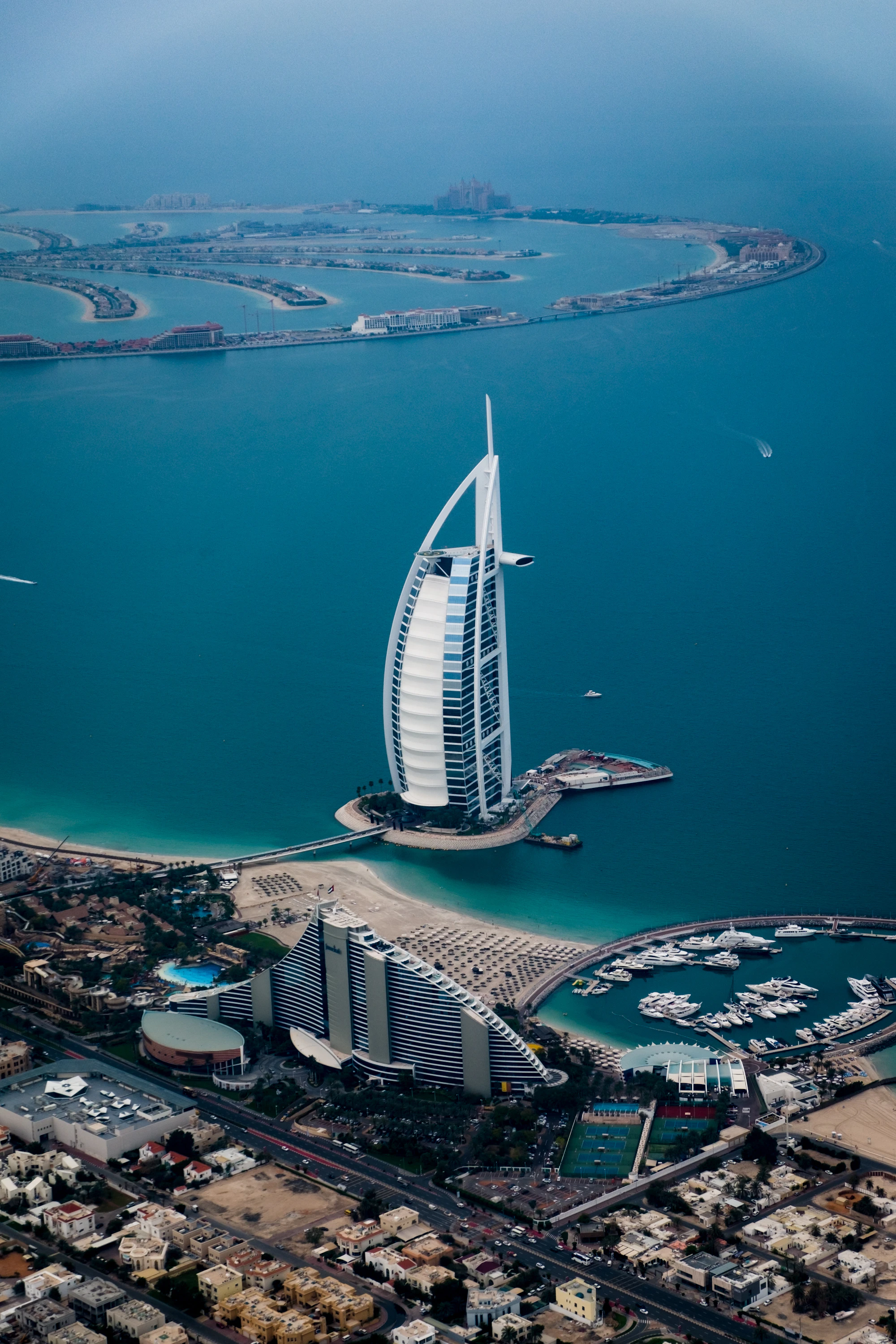
Saudi Arabia's Vision 2030 portfolio includes NEOM ($500B headline cost), the Red Sea Project ($10B+), Qiddiya entertainment city ($8B), and numerous others. Combined, Saudi commitments exceed $1 trillion over a decade. The UAE is building new airports, logistics hubs, and renewable energy capacity. Qatar invested $200B+ in infrastructure for the 2022 World Cup and continues urban expansion. These are not countries with infrastructure deficits. They're already 80-90% urban with high per-capita infrastructure spending. So why the building frenzy?
The answer is threefold. First, economic diversification. Gulf states know oil rents are time-limited, whether by energy transition or resource depletion. Giga-projects are marketed as economic transformation, building tourism, logistics, and services sectors to replace hydrocarbon revenues. Second, geopolitical positioning. By investing in ports, data centers, and energy corridors across Africa and Asia, Gulf sovereign funds convert oil surpluses into strategic influence. Third, domestic legitimacy. In autocratic systems with limited political participation, mega-projects provide visible "development" and employment to manage social contracts.
But here's the reality check for 2026: most Gulf giga-projects are behind schedule, over budget, or scaled back from initial announcements. NEOM's $500B has been quietly revised to phased development with uncertain timelines. Egypt's New Administrative Capital, financed partly by Gulf funds, sits largely empty. The question is not whether Gulf states can spend trillions on concrete and glass. They can. The question is whether this infrastructure generates sustainable economies or becomes monuments to hubris when oil prices weaken or capital flight accelerates.
| Project | Country | Announced Cost | Reality Check (2024-25) |
|---|---|---|---|
| NEOM (The Line, Oxagon, Trojena) | Saudi Arabia | $500B (headline) | Scaled back; "The Line" reduced from 170km to 2.4km Phase 1; delivery 2030+ uncertain; labor rights concerns |
| Red Sea Project | Saudi Arabia | $10-16B | Partial construction; tourism infrastructure; opening delayed to 2024-2025; visitation uncertain |
| Qiddiya Entertainment City | Saudi Arabia | $8B | Construction ongoing; Six Flags partnership; completion 2026+ projected |
| Dubai Expo 2020 Legacy + expansions | UAE | $7B+ (Expo); ongoing expansions | Expo completed 2022; legacy site partially utilized; airport expansions ongoing |
| Qatar World Cup Infrastructure | Qatar | $200B+ (stadiums + metro + roads) | Completed 2022; stadiums under-utilized post-tournament; migrant worker deaths controversy |
| Egypt New Administrative Capital | Egypt (Gulf-financed) | $45-58B | Built by Egyptian military + Gulf capital; largely empty; government relocation incomplete |
White Elephants: When Infrastructure Becomes Monument to Waste
A white elephant is infrastructure that costs more to maintain than it generates in value. The Global South is accumulating them at an alarming rate. Airports built for projected tourist booms that never materialized. Stadiums hosting one event then sitting empty. Railways with freight traffic a fraction of projections. These aren't just wasted money. They're ongoing drains, requiring maintenance, security, and debt service while producing minimal economic benefit.
Kenya's SGR is the archetype. Built at $3.6 billion to carry 22 million tonnes of freight annually, it carries 4-5 million tonnes. Passenger service is popular (Nairobi-Mombasa in 5 hours vs 10+ by road), but freight revenues disappoint because truck cartels undercut rail pricing and port inefficiencies negate time savings. The railway requires annual government subsidies while Kenya services $3.6B in Chinese debt. Similarly, numerous African countries built stadiums for Africa Cup of Nations tournaments that now host occasional matches while costing millions in upkeep.
White elephants emerge from three sources: political vanity (leaders wanting monuments), over-optimistic projections (consultants inflating demand to win contracts), and corruption (bigger projects = bigger kickbacks). The cost is borne by citizens who service debt on infrastructure that doesn't serve them. By 2026, as fiscal pressures mount, governments will face hard choices: maintain white elephants for prestige or redirect funds to working infrastructure. The answer will reveal whether states serve citizens or monuments.
| Project | Country | Cost | Why It's a White Elephant |
|---|---|---|---|
| Hambantota Port | Sri Lanka | $1.3B (Chinese loan) | Built in low-traffic area; couldn't service debt; handed to China on 99-year lease 2017; national outrage |
| Naypyidaw | Myanmar | $4B+ | 8-lane highways with no traffic; hotels empty; government moved but economic activity didn't |
| Kribi Deep Sea Port | Cameroon | $1.5B | Built with Chinese financing; operates below 20% capacity; struggles to attract shipping lines |
| Maputo-Catembe Bridge | Mozambique | $785M (Chinese loan) | Longest suspension bridge in Africa; traffic far below projections; toll revenues insufficient; debt burden |
| Ghana-Stadia Built for 2008 AFCON | Ghana | $500M+ across 4 stadiums | Used briefly; now maintenance nightmares; Sekondi stadium grass overgrown within months |
When Infrastructure Meets Climate: The Coming Wave of Losses
Most Global South infrastructure was designed for a climate that no longer exists. Roads built for occasional flooding now submerge annually. Power grids engineered for peak temperatures of 40°C face 48-50°C. Coastal infrastructure planned for stable sea levels confronts 10-15cm of rise already locked in, with 30-60cm more by 2050. The infrastructure deficit is not just about what wasn't built. It's about what was built wrong.
By 2026, climate-driven infrastructure failures will accelerate. Pakistan's 2022 floods destroyed 13,000 km of roads and 440 bridges. Karachi's July 2024 heatwave (49°C) caused power blackouts when demand exceeded grid capacity. Jakarta's land subsidence, driven by groundwater extraction, means entire neighborhoods built on current foundations will be uninhabitable by 2040. These are not future hypotheticals. They're current realities.
The cost of retrofitting climate resilience into existing infrastructure vastly exceeds building it right initially. Elevating roads costs 3-5x more than designing for higher flood levels from the start. Installing backup power for water treatment plants is orders of magnitude cheaper than emergency water trucking during blackouts. But resilience requires upfront spending that politically-constrained governments defer. The result: infrastructure that fails when it's most needed, converting climate shocks into economic crises.
| City/Region | Primary Climate Threat | Infrastructure Failures Observed | Estimated Annual Loss |
|---|---|---|---|
| Jakarta, Indonesia | Land subsidence + flooding + sea level rise | Northern districts flooding regularly; groundwater depletion causing sinking; port infrastructure threatened | $400M+ annually (flood damage) |
| Lagos, Nigeria | Coastal erosion + flooding + storm surge | Bar Beach erosion; Lekki peninsula vulnerable; drainage overwhelmed during intense rainfall | $200-300M annually |
| Dhaka, Bangladesh | River flooding + monsoon extremes | One-third of city floods in severe monsoons; drainage insufficient; roads impassable | $500M+ in 2024 floods |
| Karachi, Pakistan | Extreme heat + intense rainfall | Heatwaves (49°C 2024) cause grid collapse; flash floods overwhelm storm drains | $100-200M annually |
| Mumbai, India | Monsoon flooding + heat stress | Chronic flooding of low-lying areas; commuter rail disrupted; power outages during heat | $300-400M annually |
| Nairobi, Kenya | Flash floods + droughts (variability) | Informal settlements along rivers flood; roads wash out; water rationing during droughts | $50-100M annually |
The 2026 Infrastructure Outlook: Where the Money Goes and Who Controls It
By 2026, five trends will define Global South infrastructure. First, domestic spending will remain dominant but strained. India, Indonesia, Nigeria, and South Africa will push public capital expenditure higher, but fiscal constraints will force hard trade-offs between infrastructure, subsidies, and debt service. Second, Gulf sovereign funds will deepen their role as infrastructure king-makers, particularly in ports, logistics, data centers, and mega-projects. UAE's ICD, Saudi Arabia's PIF, and Qatar's QIA are now more active in African and Asian infrastructure than any Western development bank.
Third, corruption will remain a 25-50% tax on projects, siphoning resources that could've gone to maintenance, quality, or expanded coverage. Fourth, climate shocks will force at least 5-7 major cities (likely candidates: Lagos, Karachi, Dhaka, Jakarta, Manila, Nairobi, Mumbai) into emergency infrastructure spending after floods or heatwaves expose catastrophic under-investment. Fifth, white elephants will proliferate as governments chase prestige projects over functional systems.
The big question for 2026 is whether infrastructure becomes a development lever or a debt trap. India's capex experiment could demonstrate that sustained public investment generates growth if corruption is controlled and projects are chosen for economic logic rather than political optics. Or it could replicate patterns where concrete piles up without productivity, leaving fiscal crises and popular backlash. The Global South is building furiously. Whether it's building wisely remains to be seen.
India, Indonesia, Nigeria capex surge (70% probability): These three will lift public infrastructure spending as share of GDP, using it as primary growth lever. Execution quality variable; corruption will inflate costs 15-30% but projects will move forward due to political commitment.
Gulf funds as infrastructure king-makers (80% probability): UAE, Saudi, Qatar sovereign wealth will finance $40-60B in African and Asian infrastructure 2026-2028, focusing on ports, data centers, logistics, urban mega-projects. This reshapes who builds and who owes whom.
5-7 cities face climate infrastructure emergencies (60% probability): Major floods in Dhaka/Lagos/Jakarta or heatwaves in Karachi/Phoenix expose infrastructure failures; force emergency spending; accelerate resilience rhetoric but implementation will lag.
Kenya-style infrastructure protests spread (40% probability): At least 2-3 other countries (candidates: Nigeria, Pakistan, Ghana, Egypt) face social unrest triggered by infrastructure debt burdens + austerity. Citizens reject paying for projects that didn't deliver promised benefits.
China BRI 2.0 pivots to smaller, strategic projects (75% probability): Chinese infrastructure lending remains contracted but focuses on strategic assets (ports, logistics, data). Mega-projects decline; targeted investments in critical corridors increase.
Concrete Politics and the Battle for the 21st Century
Infrastructure is no longer a technocratic footnote in development discourse. It is the terrain of 21st-century power struggles. Who finances infrastructure determines whose currency becomes dominant in regional trade. Who builds it determines which contractors and technologies gain market share. Who owns it determines who captures the long-term value from tolls, tariffs, and data flows. And who gets left out determines which populations remain marginalized.
The Global South's infrastructure boom of the 2020s will be remembered not for how much was built, but for who controlled what was built. India's capex surge, Indonesia's new capital, Africa's corridor wars, and the Gulf's giga-projects are competing models, each with different implications for sovereignty, debt sustainability, and equity. Some will succeed in converting concrete into prosperity. Others will leave monuments to corruption and fiscal crises.
What is certain is that the 21st century will be urban, crowded, and hot. The infrastructure built today will determine whether cities become engines of opportunity or warehouses of inequality. Roads, rails, power grids, water systems, and digital networks are not neutral tools of development. They are political choices about whose neighborhoods get connected, whose businesses get reliable power, and whose children can commute to school without losing three hours a day. The battle for the century is being poured in concrete. And it's being fought right now.
Methodology & Data Standards
This Outlook draws on verified data from World Bank infrastructure databases, African Development Bank Economic Outlook 2024, Asian Development Bank project disclosures, government budget documents (India Union Budget 2024-25, Indonesia Budget 2024), IMF country debt sustainability analyses, Transparency International Corruption Perceptions Index, academic studies on infrastructure corruption (Kenny 2009, Locatelli et al. 2017), Zondo Commission Report (South Africa), 1MDB court documents, verified investigative journalism (Financial Times, Bloomberg, The Economist, Guardian, Al Jazeera), and national statistics offices.
Corruption cost estimates are ranges based on Transparency International research and academic meta-analyses. Project costs and timelines verified against official sources where available, with media reports used for projects lacking transparent disclosure. Climate impact data from IPCC AR6 city case studies, World Bank climate adaptation assessments, and national disaster management agency reports. All data compiled and cross-checked November-December 2025.
Add comment
Comments