The Mauritius Trap
The Mauritian question has moved beyond trade. It is now a question about the politics of dependency itself. A small island economy formally integrated into global markets, formally partnered with the European Union, formally committed to development, but structurally unable to set the price of what it sells, structurally unable to control the cost of what it buys, and structurally reliant on a subsidy architecture funded by its own citizens at the petrol pump. This is not the obvious failure of a country in crisis. It is dependence with better branding, and it matters precisely because it is so easy to overlook.
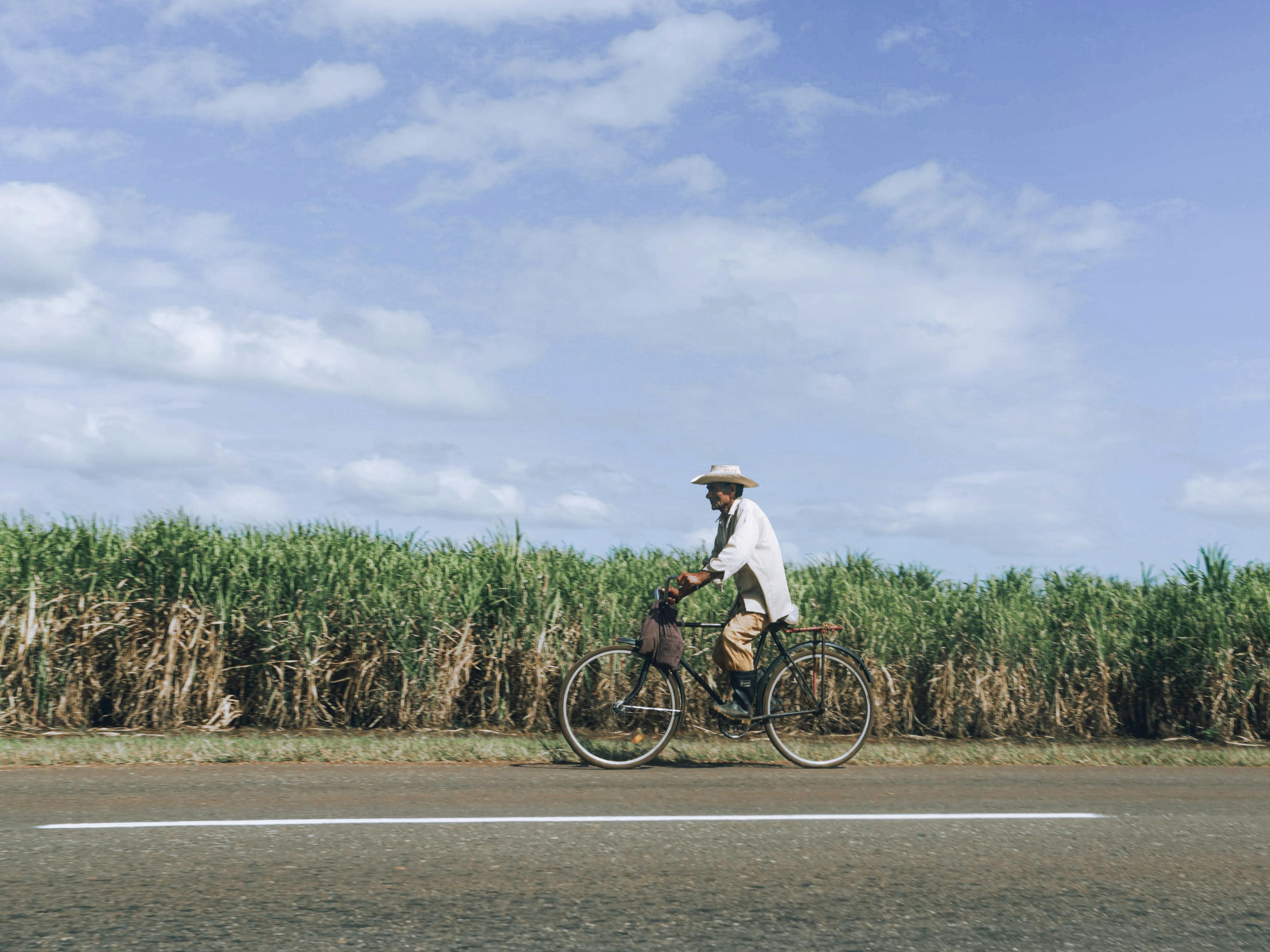
Sugar is the clearest symbol of where Mauritius is stuck. Mauritius does not set the world price of sugar. It is what economists call a price taker, meaning it must accept whatever the global market offers, with no leverage over the final number. Yet the country still carries the full domestic cost of keeping the sugar sector alive: land maintenance, energy, transport, labour, logistics and the wider political economy built around keeping cane in the ground.
Cane sugar still appears among Mauritius' top export categories, worth approximately MUR 10 billion in 2024. But that figure does not mean Mauritius commands the terms of the trade. It means Mauritius remains tied to a sector whose selling price is decided elsewhere while much of its survival cost is paid at home.
That cost is made heavier by energy. Mauritius imports the fuel that powers transport, production, freight and household life. The State Trading Corporation, which is the government body responsible for managing the pricing of essential imports including fuel and basic food commodities, publishes its petroleum price structure openly. Built into the pump price is a contribution of Rs 7.20 per litre that goes toward subsidising liquefied petroleum gas, flour and rice. In other words, when a Mauritian fills a tank with petrol, they are paying not only for fuel but also for a broader system of social cushioning that the government funds through the pump rather than through the national budget.
When a Mauritian fills a tank with petrol, they are paying not only for fuel but also for a broader system of social cushioning that the government funds through the pump rather than through the national budget.
Vayu Putra · The Meridian · April 2026This creates a fragility that is rarely discussed openly. The subsidy on LPG, flour and rice does not come from a dedicated social protection fund. It comes from the fuel pump. That means the entire architecture of food and energy cushioning for ordinary Mauritians depends on people continuing to buy petrol. Less petrol consumption means less subsidy revenue. Less subsidy revenue means the government must either find money from somewhere else in a budget already under significant pressure, cut the subsidy and expose households to sharply higher prices for basic goods, or borrow to fill the gap. None of those options is comfortable. And the Mauritian government, carrying a fiscal deficit that has exceeded 9 percent of GDP and a public debt load approaching the ceiling set by its own law, does not have the financial breathing room to absorb that gap quietly. The social cushion is real. But it is built on a foundation that moves every time the oil price moves.
This is where the model reveals its real absurdity. Mauritius buys energy in US dollars. It sells key exports at prices set by global markets it does not influence. And it then uses domestic subsidy mechanisms, paid for by ordinary citizens at the pump, to soften the social damage that results. It is a closed loop of dependency: external pricing, internal burden, recycled domestically as managed survival.
The sea tells an identical story, just with different products and different waters. Mauritius is regularly invited to imagine itself as a blue economy state, meaning a country that generates sustainable wealth from its ocean resources through fishing, shipping, maritime services and related industries. The concept is sound in theory. The reality in Mauritius is more complicated.
The EU-Mauritius fisheries protocol, covering December 2022 to December 2026, provides a formal framework for European fishing vessels to operate in Mauritian waters. The European Union's financial contribution under this agreement is €725,000 per year, of which €275,000 is allocated to sustainable fisheries policy and €175,000 to maritime and ocean economy development. That is real money. But consider it against the scale of the value flowing through the tuna economy.
Mauritius' own trade data show that frozen tuna exports were worth approximately MUR 12 billion in 2024, exceeding cane sugar at MUR 10 billion. The island is clearly part of a significant tuna value chain. Processing happens here. Infrastructure is maintained here. Employment is generated here. But the commercial power sits elsewhere: in the fleets, the processing companies, the buyers and the distribution networks that are beyond Mauritian control. Mauritius hosts part of the chain and carries much of the infrastructure burden, but it does not govern the part of the system where the real money is made.
Europe pays less than one million euros a year into the formal fisheries arrangement while participating in a tuna-linked trade system worth hundreds of millions of rupees to the island. The arithmetic of partnership does not add up.
Vayu Putra · The Meridian · April 2026Sugar and tuna are not two separate issues. They are the same issue expressed in two different environments. One is the land version of structural dependency; the other is the sea version. In both cases, Mauritius is embedded in externally shaped price systems while domestic society absorbs the friction and the cost.
Europe will respond that it has supported adjustment. That is true, and it deserves acknowledgment. But the harder question is whether adjustment ever became transformation. On that test, Mauritius reads less as a success story and more as a warning. External support has often helped the country manage pressure. It has rarely freed the country from the architecture that produces that pressure in the first place.
The island still imports most of its energy. It still relies on administered pricing, meaning prices set and controlled by the government rather than the open market, to hold together its social stability. It still carries sectors whose political importance exceeds their ability to generate autonomous value. And it still frames development through projects, special economic zones and modernisation language that too often fails to deliver the one thing that actually matters: productive depth that does not depend on external pricing decisions made in other countries.
The problem is not that aid was too small or too generous. The problem is that development finance and partnership language have too often tolerated stagnation in practice while celebrating activity in principle. Programmes can be active without being transformative. Reports can be well written while the underlying structures remain unchanged. A country can receive support, attend conferences, celebrate its resilience and still fail to acquire what matters most: genuine economic autonomy in the essentials of daily life and production.
Mauritius is not the worst case in the post-colonial world. That is precisely why it matters. It is a subtler case. It shows how a formally stable, institutionally credible island economy can remain locked into a model where external markets set the key pressures and domestic citizens pay the adjustment bill.
Europe should therefore stop telling itself a flattering story about its role in Mauritius. If it wants competitively priced Mauritian sugar, it cannot treat sugar as a purely agricultural matter. Sugar production in Mauritius is also an energy matter, a subsidy matter, a logistics matter and a governance matter. You cannot demand market-competitive exports from a state whose entire cost base, from fuel to food to freight, is hostage to prices set beyond its borders.
That means the next phase of engagement should be tougher, not softer. Less money distributed into diffuse state-managed programmes with weak accountability. More ring-fenced funding with clear, measurable outcomes. Less ceremonial partnership language. More direct intervention in the things that actually change structural positions: energy transition and storage, utility efficiency, food resilience, productive land use and the kind of industrial policy that creates domestic pricing power rather than perpetuating the absence of it.
Europe already knows how to regulate, supervise and insist on results when its own internal market is at stake. It should stop behaving as though post-colonial economies require only empathy, project funding and polite optimism. What Mauritius needs from Europe is not more sympathy. It is more seriousness.
- Prices are set externally.
- Costs are absorbed domestically.
- Subsidies are recycled internally.
- Dependency is narrated as development.
- Activity is mistaken for transformation.
- Stagnation is managed, not resolved.
Mauritius now embodies the central contradiction of too many small dependent economies. It exports value without controlling price. It imports essentials without controlling cost. And it survives the difference through sustained public strain, built into the daily cost of petrol, the price of flour and the managed fiction of national self-sufficiency.
The problem is not that Europe has been absent. The problem is that its presence has too often financed the management of a trap rather than the dismantling of one. Development finance and partnership language have tolerated stagnation in practice while celebrating activity in principle. That is not partnership. It is patience for a condition that patience will not resolve.
That is not development. That is stagnation, professionally managed. And if Europe truly wants partnership, it should stop exporting the theory of development while leaving the practice of dependency intact.
This article is part of The Meridian's April 2026 daily analysis series, published alongside the War Economy edition. Each piece examines a structural issue in the political economy of the Global South.
The Mauritius Trap is the first in the series. It argues that dependency is not always visible in the obvious ways. Sometimes it wears the face of stability.
April 2026 · Political Economy · Daily Analysis Series