Military-Industrial System
War has always depended on industry. In the twentieth century, the outcome of major conflicts was determined as much by the capacity of factories to produce tanks, aircraft and ammunition as by the skill of the soldiers operating them. The Second World War demonstrated this principle with a clarity that has never faded from strategic memory. Victory belonged not simply to armies but to industrial systems capable of sustaining them at scale, across years of attrition, against adversaries doing exactly the same. The lesson was absorbed by every major power and has never been forgotten by any of them.
In the twenty-first century, the relationship between war and industry has become considerably more complex, and considerably more consequential. Modern militaries rely on an intricate ecosystem that includes advanced manufacturing, digital technology, satellite networks, artificial intelligence and global logistics chains of a sophistication that would have been unimaginable to the planners of the 1940s. The result is the emergence of what can best be described as a military-industrial system, distinguished from its predecessors by the degree to which it has embedded itself permanently within the broader civilian economy rather than mobilising temporarily for specific conflicts.
This system extends far beyond traditional weapons manufacturers. It encompasses software companies developing battlefield algorithms, semiconductor firms producing advanced chips whose primary customers are defence agencies, energy companies supplying strategic fuels, research laboratories designing next-generation autonomous systems and satellite operators whose constellations serve as the nervous system of modern warfare. The defence sector has evolved into an economic engine that shapes national industrial policy, distorts global trade patterns and allocates a growing share of the world's most talented engineers and scientists toward the optimisation of destruction rather than the expansion of prosperity.
At the centre of the modern military-industrial system are the world's largest defence contractors. Companies such as Lockheed Martin, RTX, Northrop Grumman, BAE Systems and General Dynamics form the backbone of the Western defence industrial base. These corporations design and manufacture some of the most sophisticated weapons systems ever built, including fifth-generation stealth aircraft, integrated missile defence networks, nuclear submarine propulsion systems and satellite-guided precision munitions. Their revenues are measured in tens of billions of dollars annually, and their order books extend decades into the future.
According to the Stockholm International Peace Research Institute, the world's 100 largest arms-producing companies generated a record $679 billion in arms revenues in 2024, a 5.9 per cent increase on the previous year and the highest figure SIPRI has ever recorded. The total arms revenues of the Top 100 grew by 26 per cent across the decade from 2015 to 2024, a compound expansion driven by the wars in Ukraine and the Middle East, by European rearmament, and by accelerating defence budget increases across Asia. For the first time since 2018, all five of the world's largest arms companies increased their revenues simultaneously in 2024. The industry is not cyclical in any conventional sense. It is structurally expansionary.
The dominance of Western firms is, however, increasingly contested by the rise of defence industries in other regions. China has rapidly expanded its military manufacturing sector, with major state-owned enterprises including AVIC and NORINCO ranking among the largest arms producers globally. Russia maintains a significant defence industry despite the constraints of international sanctions, with Rostec recording a 23 per cent increase in arms revenues in 2024 despite the pressures of Western financial restrictions. South Korea's Hanwha Group recorded a 42 per cent surge, with more than half coming from exports. India and Turkey are investing heavily in domestic manufacturing capabilities. The result is an increasingly multipolar defence industry landscape whose concentration of power in the hands of a small number of Western firms is eroding, slowly but unmistakably.
The financial scale of the military-industrial system is enormous and expanding. Global military spending reached $2,718 billion in 2024 according to SIPRI, the highest level ever recorded and the tenth consecutive year of increase. The United States remains the largest military spender by a significant margin, accounting for approximately 37 per cent of global defence expenditure, a share that reflects both the scale of American strategic commitments and the political economy of a defence budget that is effectively the floor of the country's industrial policy in several key technology sectors. China ranks second, followed by Russia, Germany and India.
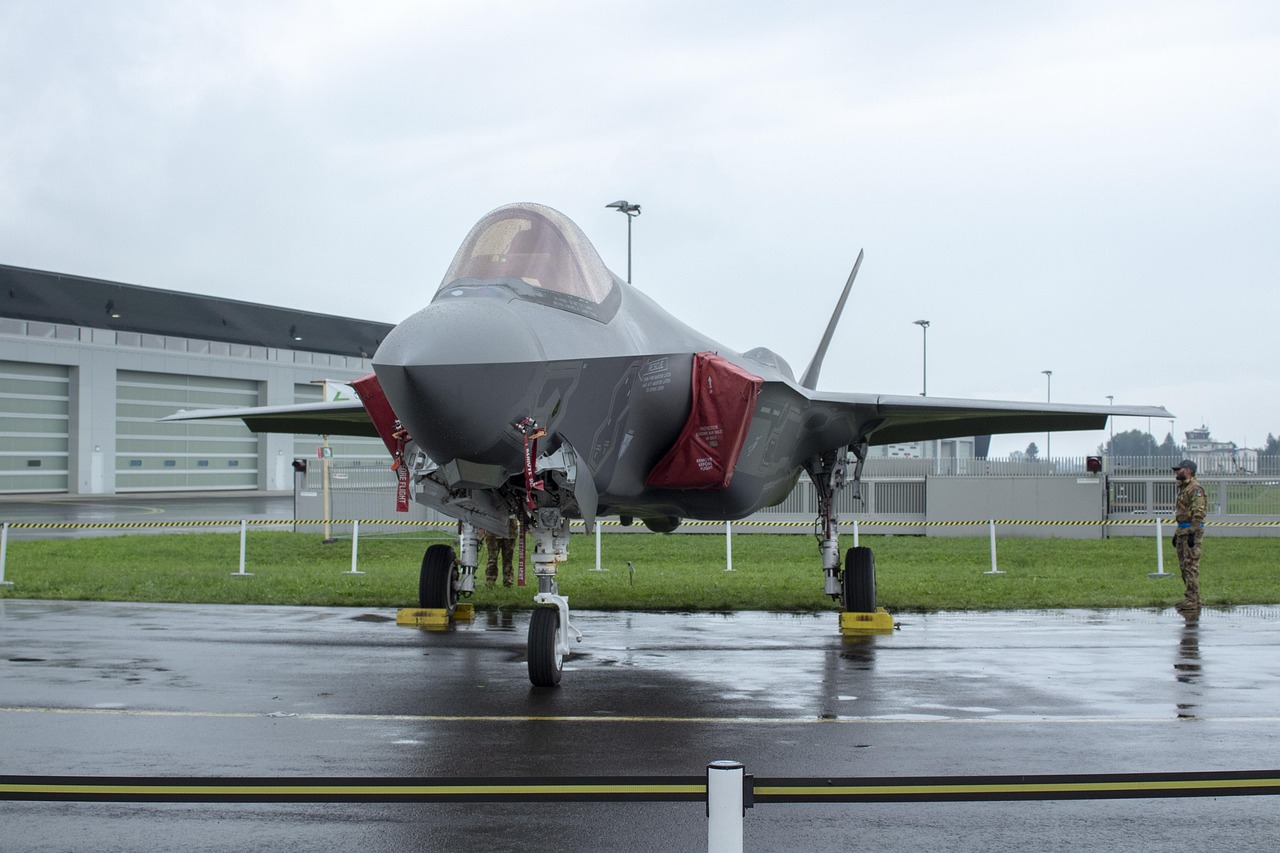
This spending supports an extensive network of defence contractors, research institutions and manufacturing facilities whose economic footprint extends far beyond the primary contractors. Large defence programmes typically span decades and involve thousands of subcontractors distributed across multiple countries. The F-35 programme, the largest defence acquisition in history at an estimated lifetime cost exceeding $1.7 trillion, involves manufacturing components across more than a dozen countries. In many regions, defence manufacturing has become a significant source of industrial employment and technological development, creating structural political incentives to sustain programmes regardless of their strategic merit.
Modern defence production rarely occurs within a single country. Weapons systems have become so technologically complex and expensive that they require multinational collaboration distributed across several industrial bases. The F-35 fighter jet programme represents perhaps the clearest example of this architecture. Led by the United States, the programme involves manufacturing components across the United Kingdom, Italy, Australia, Canada, Japan, the Netherlands and several other allied nations. This structure spreads development costs across multiple governments, integrates allied industrial bases into a shared ecosystem, and creates long-term political commitments between participating countries that outlast any individual government. Countries that operate the same equipment become deeply interconnected through maintenance contracts, supply chains and training systems that persist for decades, transforming weapons platforms into instruments of geopolitical integration.
One of the defining features of the modern military-industrial system is the growing and largely irreversible overlap between civilian and military technology. During much of the Cold War, military research operated within government laboratories or specialised defence contractors, separated from civilian innovation by institutional design and security classification. Today the most critical military technologies originate primarily within the civilian technology sector. Artificial intelligence, cloud computing, advanced semiconductors, satellite networks and autonomous systems all emerge from commercial innovation ecosystems before being adapted for military application. Major technology companies are now de facto participants in national defence: cloud infrastructure providers host vast quantities of military data, artificial intelligence companies develop targeting and logistics systems, and satellite firms provide communication networks used by defence agencies across multiple countries simultaneously.
The countries that dominate emerging defence technologies will not simply gain military advantage. They will gain the structural capacity to set the terms on which the next generation of the global order is organised.
The Meridian · War Economy Edition · April 2026The complexity of modern weapons systems means that military production relies on highly specialised and geographically distributed supply chains of extraordinary fragility. A single advanced fighter jet may contain tens of thousands of components sourced from suppliers across dozens of countries. These components include microprocessors fabricated in Taiwan, composite materials produced in Japan, specialised sensors designed in the United Kingdom, rare earth elements mined in China, and sophisticated electronic systems assembled across Europe and North America. The finished aircraft is not a product of any single nation. It is a product of the global trading system, which means that disruptions to that system translate directly into disruptions to military readiness.
Recent geopolitical tensions have exposed the depth of this vulnerability. China's dominance of rare earth processing, its export controls on gallium and germanium, and its position as the primary supplier of battery materials and advanced electronics create structural dependencies that no amount of Western defence industrial policy has yet been able to resolve. European producers including Airbus and Safran previously sourced half of their titanium requirements from Russia. The supply chain adjustments required after 2022 were costly, slow and incomplete. The lesson that governments are drawing from these disruptions is that defence industrial capacity and supply chain resilience are not separable concerns. They are the same concern.
Governments have responded to the supply chain vulnerabilities exposed by recent conflicts by incorporating defence production into their broadest national industrial strategies. In the United States, the Pentagon has launched major initiatives designed to expand domestic manufacturing capacity for critical technologies, particularly microelectronics and advanced materials, framing supply chain resilience explicitly as a national security imperative rather than a commercial efficiency question. The CHIPS and Science Act, while presented as an economic measure, was driven fundamentally by the recognition that semiconductor fabrication capacity located in a strategically contested geography is an unacceptable defence liability.
Europe has adopted a similar and, in some respects, more ambitious approach. The European Union has introduced multiple defence industrial programmes intended to strengthen cooperation among member states while reducing dependence on external suppliers, including the United States. The emergency European defence summit of March 2025 approved plans to enhance the defence sector by approximately 800 billion euros over the coming years. India's Aatmanirbhar Bharat programme seeks to expand domestic defence manufacturing while encouraging foreign companies to establish local production facilities, a strategy that has already attracted significant investment and produced measurable reductions in India's import dependence. South Korea has become one of the world's most aggressive arms exporters, leveraging its advanced manufacturing base to compete directly with established Western suppliers across multiple categories.
The political economy of defence procurement is shaped by a structural incentive that purely strategic analysis consistently underestimates. Large defence contracts support thousands of jobs distributed across multiple electoral constituencies. In the United States, for example, F-35 production supports employment across 45 states. This distribution is not accidental. It is a deliberate feature of programme design, intended to create the broadest possible political coalition in favour of continued funding. The result is that defence programmes acquire a constituency that is entirely independent of their strategic merit, and that this constituency exercises substantial and largely invisible influence over procurement decisions.
The twenty-first-century military-industrial system differs from its twentieth-century predecessor in one crucial structural respect. During the Cold War, large-scale military production was tied to specific geopolitical confrontations between identifiable rival blocs. Production surged during periods of heightened tension and contracted when tensions eased. The system was, in a meaningful sense, responsive to the underlying strategic environment. Today defence production operates as a permanent feature of the global economy regardless of the immediate strategic situation. Even in periods without major wars, governments invest heavily in defence technology in order to maintain deterrence, preserve industrial capacity and sustain the political coalitions that defence spending creates. This constant demand sustains a vast industrial ecosystem that no longer mobilises for war but simply operates continuously, war or no war.
Historically, military research has produced technological breakthroughs that eventually spread into civilian markets. The internet, GPS navigation and jet propulsion all originated within defence research programmes before becoming essential components of the modern civilian economy. Today similar dynamics are emerging in artificial intelligence, autonomous systems and space technology, where military investment is accelerating innovation that will eventually reshape commercial life. But this relationship also raises important and largely unanswered questions about the structure of technological development in societies where the largest and most reliable source of funding for advanced research is the apparatus of organised violence. The countries that dominate these emerging defence technologies will not simply gain military advantage. They will gain the structural capacity to set the terms on which the next generation of the global order is organised.
Military power rests ultimately on economic foundations. Armies, aircraft and fleets cannot exist without the industrial systems that design, build and sustain them, and those industrial systems are not neutral. They allocate capital, shape research priorities, determine which technologies mature and which wither, and create the political constituencies that perpetuate themselves across generations of government. The modern military-industrial system is one of the most powerful and least visible structures shaping the global order, and understanding it is a prerequisite for understanding anything else about where that order is heading.
In the twenty-first century, war is no longer merely a battlefield event. It is an industry. And like all industries, it serves the interests of those who own it.
April 2026 · War Economy Edition