The Rupee Should Have Crashed

The Meridian
Monetary Intelligence 25 March 2026
The Rupee Should Have Crashed — The Meridian, 25 March 2026
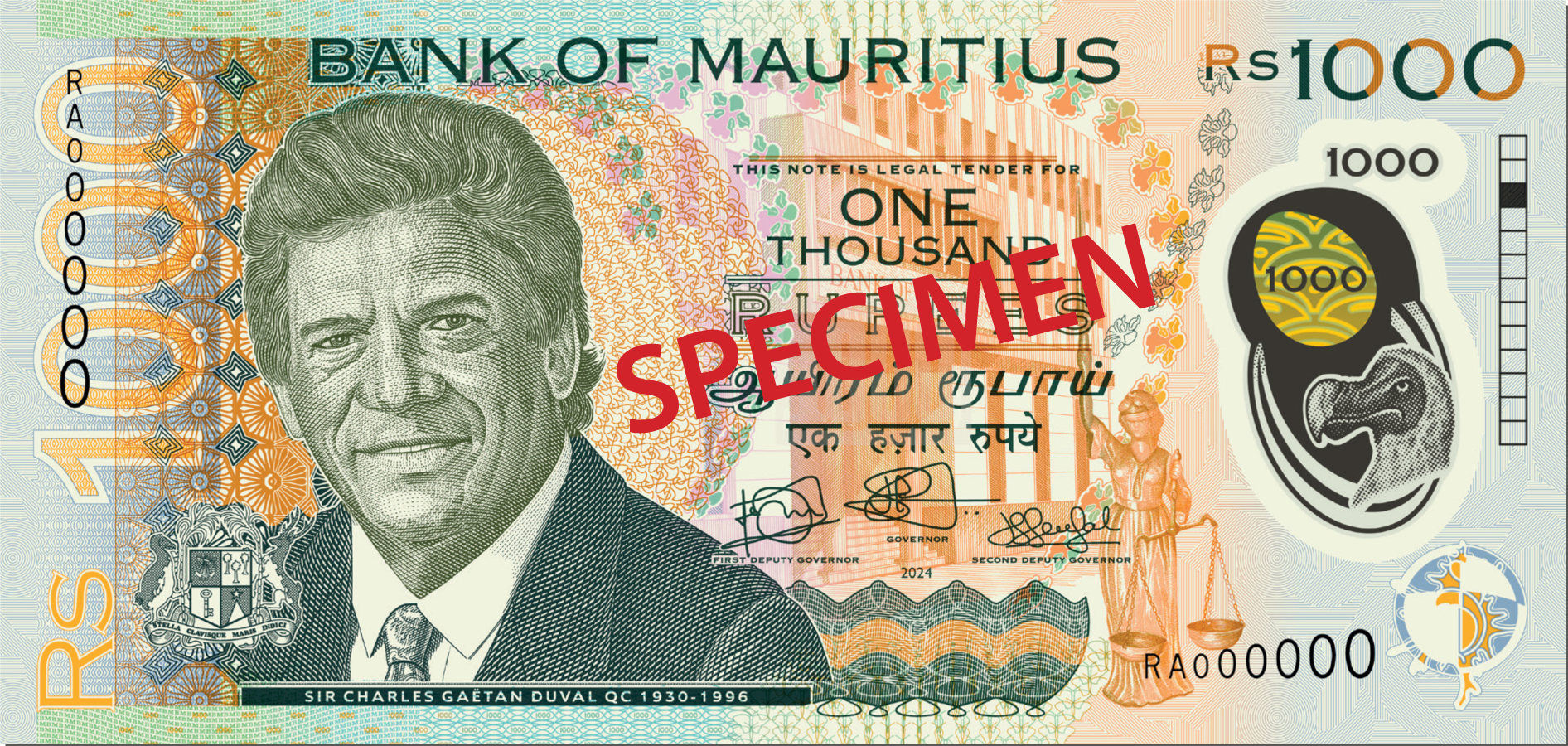
The rupee held. The cost of holding it did not. · Photo: The Meridian
Monetary Policy · Mauritius · 25 March 2026
The Rupee Should Have Crashed. Here Is Why It Did Not. And Why That Is Not Good News. Diesel is at Rs 64.80. The STC paid Rs 2.46 billion for emergency fuel at 2.2 times market price. The PSA for Gas Oil is between Rs 1.5 billion and Rs 2 billion in deficit. And yet the rupee sits at Rs 46.94 to the dollar this morning. The Meridian explains the three government interventions that prevented a collapse, the economic terms behind them in plain language, and the price every Mauritian household is paying for that stability.
Live Rates
USDRs 46.9393 GBPRs 63.1825 EURRs 54.6294 SGDRs 37.6191 Key Rate4.50% FX Injected~USD 200m PSA DeficitRs 1.5–2bn Public Debt90% of GDP DieselRs 64.80/L BoM · 24 Mar 2026The Meridian USDRs 46.9393 GBPRs 63.1825 EURRs 54.6294 SGDRs 37.6191 Key Rate4.50% FX Injected~USD 200m PSA DeficitRs 1.5–2bn Public Debt90% of GDP DieselRs 64.80/L BoM · 24 Mar 2026The Meridian
The Meridian · Read Together · Mauritius Energy Crisis Series

This article is part of The Meridian's Mauritius economic series. Read the diesel price analysis at The Asymmetry of Assirvaden and the full HFO procurement analysis at Rs 2.46 Billion. 65,000 Tonnes. Rs 37,580 Per Tonne.

Something does not add up. Mauritius just paid Rs 2.46 billion for emergency fuel at 2.2 times the market price. The diesel pump price jumped 9.9 per cent overnight. The Price Stabilisation Account for Gas Oil is between Rs 1.5 billion and Rs 2 billion in deficit. Public debt is at 90 per cent of GDP. The Gulf war has raised the cost of every shipment entering Port Louis. And yet the rupee this morning is Rs 46.94 to the dollar and Rs 63.18 to the pound. It did not crash to Rs 50 or Rs 55 as many predicted when the Hormuz crisis began. It held. The Meridian is going to explain exactly why, using the official numbers and plain language, because the explanation is not as reassuring as it first sounds.

The rupee did not hold because the economy is strong. It held because the Bank of Mauritius and the Ramgoolam administration made three specific, costly and deliberate interventions that prevented a market-driven collapse. Each intervention worked. Each carried a price that is now being distributed across every household, every business and every borrower in Mauritius. Understanding what they did, and who is paying for it, is the difference between reading a currency table and understanding your economy.

What the official rates actually tell us

The Bank of Mauritius published its Consolidated Indicative Exchange Rates on 24 March 2026, the day before the diesel price announcement. The USD selling rate was Rs 46.9393. This is the rate the STC used to calculate the Singapore fuel bill. Every dollar of the $26.8 million cargo cost Rs 46.94 of public money. The GBP rate was Rs 63.1825, representing a currency that has lost 30% of its value against sterling over ten years. The SGD rate was Rs 37.6191, the rate used to settle the second fuel cargo: 32,000 tonnes at $838 per tonne, Rs 1.26 billion of Mauritian public money sent to Singapore.

In 2015, the dollar cost Rs 35. In 2019, Rs 36. These current rates do not represent a strong rupee. They represent a rupee that has been actively prevented from falling further and faster. Here is the term economists use for what happened.

Exchange Rate Defence When a currency comes under pressure because too many people are selling it to buy foreign currencies, a central bank can step in and sell its own foreign currency reserves to prop up the local currency. This is called defending the exchange rate. Think of it like this: if everyone is rushing to sell rupees and buy dollars, the Bank of Mauritius enters the market selling its own dollars, increasing supply of dollars so that the rupee does not have to fall as far. The cost of this defence is the loss of those reserves. Once the reserves are spent, the defence stops.

The paradox is not that the rupee is strong. It is that the rupee has not collapsed further, despite the greatest pressure on Mauritius's import bill in living memory. A currency held above its market level is not a stable currency. It is a deferred correction accumulating interest.

Three interventions that held the line

The Bank of Mauritius used three tools simultaneously. Each is legitimate, each is documented, and each has a cost that does not appear in the exchange rate table.

The Meridian · Bank of Mauritius · Three Mechanisms Explained
Intervention 1: The Dollar Injections
The BoM sold dollars from its foreign exchange reserves directly into the market, including major injections on 14 January and 9 March 2026. Cumulative interventions in the current fiscal quarter totalled approximately USD 200 million. In economics this is called an open market foreign exchange intervention or sterilised intervention. The idea is straightforward: flood the market with the currency that everyone wants to buy, so the rupee does not have to fall as sharply to attract buyers. Each dollar sold from reserves is a dollar that cannot be used in the next crisis. The reserves are not unlimited.
Intervention 2: The Key Rate at 4.50 Per Cent
The Bank raised its Key Rate by 50 basis points to 4.50 per cent on 4 February 2025 and held it there through four consecutive Monetary Policy Committee meetings, most recently on 11 February 2026. This tool is called monetary tightening or contractionary monetary policy. In plain English: when interest rates go up, keeping money in a Mauritian bank account or in rupee-denominated savings becomes more attractive. People and businesses are less likely to convert their rupees into dollars and euros when rupee savings pay more. This supports the exchange rate. The cost is that every bank loan, every mortgage and every business overdraft in Mauritius now costs more. The rate that protects the rupee is the same rate on your monthly repayment.
Intervention 3: The December 2024 FX Market Cleanup
In December 2024, the government forced all major foreign currency transactions through licensed banks and implemented strict monitoring of intercompany foreign currency swaps. Economists call this reducing capital flight or closing arbitrage channels. In plain English: before this cleanup, companies and individuals were trading foreign currency outside the official banking system, often at better rates. This drained dollars from the official market without the Bank of Mauritius being able to see or control it. Every dollar that leaked this way made the rupee weaker than it needed to be. By closing the unofficial channels, the government increased the supply of dollars visible to the Bank and reduced speculative pressure on the rupee. It worked. It also came with compliance costs for businesses that had relied on the informal system.
Sources: Bank of Mauritius FX Intervention Archive 2025/26 · BoM Monetary Policy Committee Decisions · BoM Monthly Statistical Bulletin February 2026, Table 49a

Who actually pays for rupee stability

In economics, there is a concept called the distribution of adjustment costs. It means that when a government or central bank intervenes to prevent a market correction, the cost of that intervention does not disappear. It gets redistributed from the market as a whole onto specific groups of people. Here is who is carrying the cost of keeping the rupee at Rs 46.94.

The Meridian · The Distributed Cost of Stability
Mortgage Holders The 4.5% Key Rate raised the cost of every variable-rate mortgage, personal loan and business overdraft in Mauritius. The rate that defends the exchange rate is the rate raising your monthly repayment. You did not vote for this trade-off. It was decided in a central bank meeting.
All Taxpayers Every dollar the BoM injects from reserves is a dollar of national savings consumed. Foreign exchange reserves are finite. The approximately USD 200 million injected this quarter cannot be spent again. When reserves fall, the next crisis costs more to defend.
Importers and Consumers Despite the interventions, the rupee has still depreciated steadily over the past decade. At Rs 46.94 per dollar, every imported good costs more than it did at Rs 35 in 2015. The intervention slows further depreciation. It does not reverse what has already happened.
The Next Government A currency held above its natural market level through intervention is storing a correction for later. Economists call this a deferred adjustment or a suppressed equilibrium. In plain language: the longer the defence holds, the bigger the eventual drop when intervention stops. There is no fourth option. Every government that inherits a defended currency faces the same three choices: spend more reserves, raise rates further, or allow the correction.

The procurement angle and the invisible transaction

There is a dimension to the rupee story that connects monetary policy to political accountability. Minister Assirvaden authorised the emergency HFO procurement through direct procurement rules, bypassing the Central Procurement Board. The BoM injected dollars into the market on 9 March 2026, weeks before the Singapore cargo was invoiced. Those dollars helped the STC settle the fuel bill at the official rate. The rupee held. The reserves fell. And the procurement chain through which that payment was routed remains outside public scrutiny because emergency rules permit it to be.

Opacity Risk in Emergency Procurement When governments bypass competitive tender processes under emergency rules, economists and governance scholars identify what is called an opacity risk or a transparency deficit. The absence of a public tender means the identity of intermediaries and their margins are not disclosed. In this case, the STC paid approximately Rs 37,580 per tonne for fuel the market priced at Rs 17,435. The difference of roughly Rs 20,000 per tonne across 65,000 tonnes is Rs 1.3 billion that went somewhere in the supply chain. Without a competitive tender, neither the public nor Parliament can verify exactly where.

The Bank of Mauritius publishes its intervention dates, volumes and mechanisms. The STC did not publish its procurement chain. One institution opened its books. The other did not. The Mauritian public paying Rs 64.80 per litre today has every right to ask what their money paid for in Singapore.

What a lasting solution actually requires

The three interventions bought time. They did not cure the underlying problem. In economics, the structural cause of a weak currency is almost always a weak current account, meaning a country imports far more than it exports. Mauritius imports 90.9 per cent of its energy, over 70 per cent of its food, and most of its manufactured goods. Every external shock, whether a Gulf war, a shipping disruption or a global commodity spike, hits the import bill directly and puts pressure on the rupee.

Current Account Deficit and Structural Vulnerability A country's current account measures the difference between what it earns from the rest of the world and what it pays out. When a country imports more than it exports, it runs a current account deficit. To pay for its imports, it needs foreign currency, which means it is constantly selling rupees and buying dollars, euros and pounds. This creates persistent downward pressure on the rupee. The only durable way to reduce this pressure is to reduce the import bill, increase exports, or attract more foreign investment. Exchange rate interventions manage the symptoms. They do not treat the cause.

A sustainable rupee requires a smaller import bill: less energy imported through a domestic renewable grid, more food grown locally instead of being shipped from Brazil and South Africa, more value added to exports before they leave the island, and more tax revenue collected from the offshore sector that routes billions through Mauritius without contributing meaningfully to its fiscal base. None of these changes appear in a Monetary Policy Committee statement. All of them are what separates a rupee that must be defended at enormous cost from a rupee that holds because the economy beneath it is genuinely less vulnerable.

The Meridian · Assessment · 25 March 2026

The Bank of Mauritius did its job. The three interventions, dollar injections from reserves, a 4.5% Key Rate held through four consecutive meetings, and the December 2024 closure of the parallel FX market, prevented a disorderly collapse that would have made the diesel price hike look modest. That is the good news. The bad news is that stability purchased through reserve depletion and high borrowing costs is not stability. It is a deferral. Every dollar sold from reserves is a dollar that cannot defend the rupee next time. Every basis point on the Key Rate is on your mortgage. The structural vulnerabilities remain: the energy dependency, the food import bill, the sugar monoculture, the offshore sector that contributes too little. The next external shock will require the same fight, at greater cost, with fewer reserves. That is the real meaning of Rs 46.94 this morning.