Paper Oil vs Physical Oil: Contango and the Futures Machine
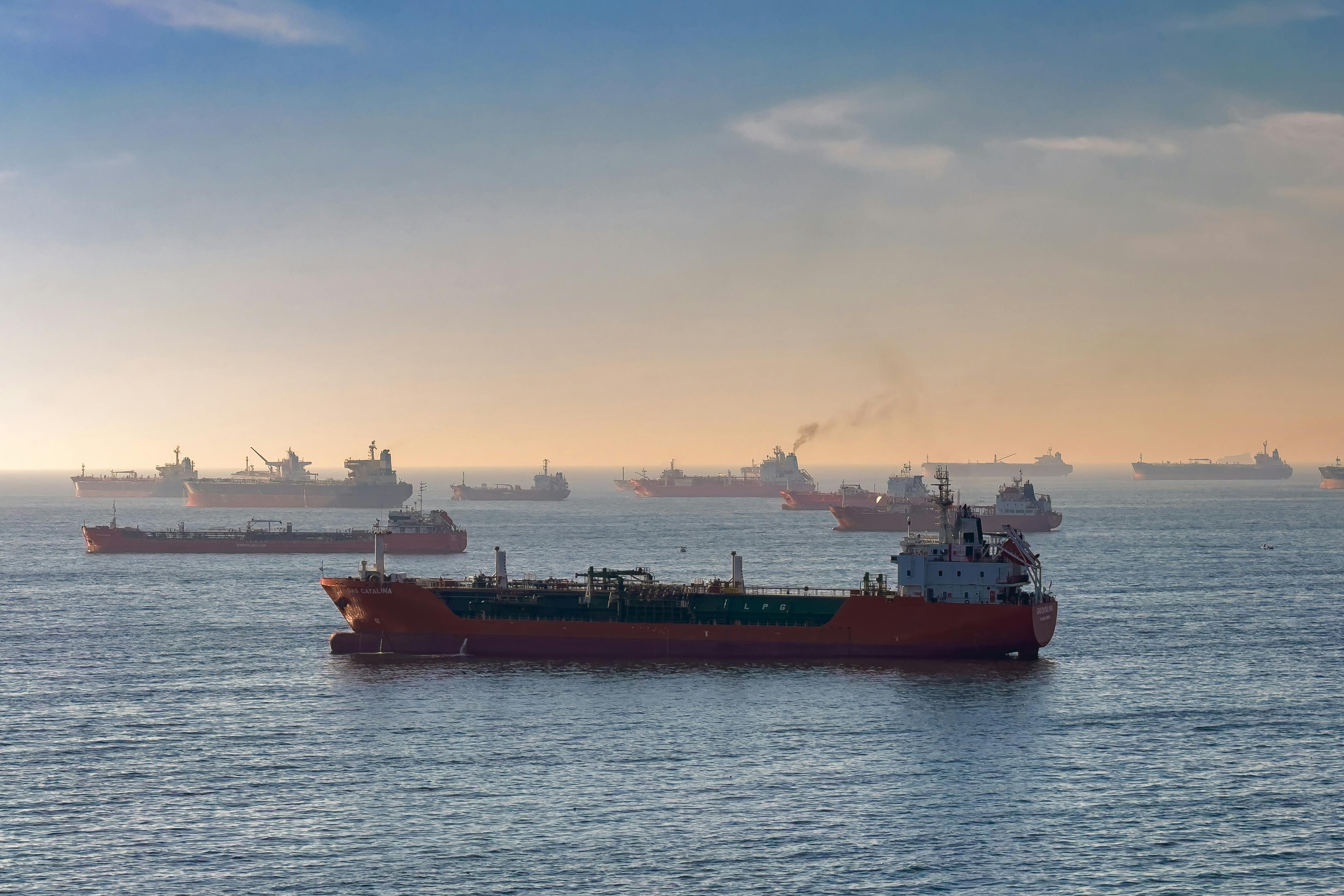
In the spring of 2020, dozens of supertankers anchored off the coasts of California, Singapore and the Gulf and simply waited. They were not waiting for a port berth or a weather window. They were being used as floating warehouses, storing oil that nobody wanted to buy today because the price tomorrow was much higher. This is contango, and it made certain trading houses very rich indeed.
Most of the oil that changes hands in global markets is never physically touched by the people who buy and sell it. It exists, for the duration of their involvement, as a number in a contract: a promise to deliver or receive a specified quantity of a specified grade of crude at a specified location on a specified future date. The traders who hold these contracts may buy and sell them dozens of times before the delivery date arrives, each transaction reflecting a view about where the price is going, or an attempt to lock in a margin between the cost of acquiring the crude and the price at which it can be sold. This world of paper oil, of futures contracts and swaps and options, is where the majority of price discovery happens in the modern oil market. Understanding it is essential to understanding how oil is actually priced and who profits from that pricing.
The distinction between physical oil and paper oil is not merely technical. It reflects a fundamental division in the oil market between those whose primary interest is in the commodity itself, the producers who extract it, the refiners who process it and the consumers who burn it, and those whose primary interest is in the price of the commodity, the financial traders, hedge funds and speculative investors who hold oil contracts not because they want the crude but because they want to profit from movements in its price. The interaction between these two populations, the physical traders and the financial traders, determines the price that ultimately appears on the pump.
Before explaining contango it is necessary to be clear about the three main types of oil price that market participants encounter. The spot price is the price for immediate delivery of physical crude. It reflects the current balance of supply and demand in the market at this moment and at this location. A refiner who needs crude today and has exhausted its pipeline nominations will pay the spot price, and that spot price will reflect whatever the tightest available supply looks like at that moment.
The forward price is the price agreed today for delivery at a specified future date, typically negotiated between two counterparties in a private transaction. Long-term supply contracts between oil producers and refiners are often structured as forward contracts, with the price linked to the relevant benchmark at the time of delivery rather than fixed in advance. This linkage to a benchmark rather than a fixed price transfers the market risk from the buyer and seller to whoever is exposed to movements in the benchmark.
The futures price is similar to the forward price in concept but different in structure. Futures contracts are standardised instruments traded on organised exchanges such as the Intercontinental Exchange in London or the New York Mercantile Exchange. They specify a fixed quantity of a standardised grade of crude, a fixed delivery location and a fixed delivery date. Because they are standardised and exchange-traded, they are highly liquid and can be bought and sold many times before expiry. Most futures contracts are closed out before their delivery date, meaning the holder sells their long position or buys back their short position and settles the difference in cash. Very little physical crude actually changes hands as a result of futures trading.
The relationship between spot prices and futures prices for delivery at different dates in the future forms what market participants call the forward curve. The shape of this curve is one of the most closely watched indicators in the oil market because it encodes the market's collective view about the future balance of supply and demand, and because its shape determines the economics of storage and therefore influences actual physical behaviour in the market.
When the spot price is higher than the futures price for later delivery, the market is said to be in backwardation. This structure typically occurs when the market is tight: current demand is strong or supply is constrained, making the oil available today more valuable than the oil available in three or six months when the market is expected to have rebalanced. Backwardation discourages storage because a trader who buys oil today and stores it for later sale will be selling into a lower-priced market. It also encourages producers to sell their current production immediately rather than withhold it.
When the futures price for later delivery is higher than the spot price, the market is said to be in contango. This structure typically occurs when the market is oversupplied: there is more oil available today than the market can immediately absorb, pushing down the spot price relative to future prices where the expectation is that supply and demand will have rebalanced. Contango creates an incentive to store oil: a trader who can buy cheap spot oil today, store it, and simultaneously sell a futures contract at a higher price for later delivery can lock in a risk-free profit equal to the difference between the two prices, minus the cost of storage and financing.
Contango is not a market anomaly. It is a signal, and the trading houses read it with extraordinary speed and act on it with extraordinary scale.
The spring of 2020 produced the most dramatic contango trade in the history of the oil market. The combination of the demand collapse caused by the global pandemic and the brief but ferocious price war between Saudi Arabia and Russia that began in March of that year drove the spot price of crude to levels not seen since the 1990s. At its most extreme, the WTI futures contract for May delivery briefly traded at negative forty dollars per barrel on 20 April 2020, as holders of futures contracts facing imminent delivery scrambled to sell positions they could not physically accommodate given that storage at Cushing, Oklahoma was approaching its physical capacity limits.
The major commodity trading houses moved with speed that reflected both their financial firepower and their physical infrastructure. Vitol, Trafigura, Gunvor and their peers bought crude at or near the lows, chartered every available supertanker at rates that reflected the sudden surge in demand for floating storage, and sold futures contracts against their physical holdings at prices that locked in a spread of ten to fifteen dollars per barrel. The tankers anchored in sheltered waters around the world were not idle. They were working: each one was an element in a trade that was as close to risk-free profit as commodity markets allow.
The scale of the floating storage trade at its peak was remarkable. Analysts estimated that over two hundred million barrels of crude were stored at sea during the peak of the contango trade in the second quarter of 2020. At an average cargo size of two million barrels per VLCC, that represented roughly one hundred very large crude carriers being used as floating warehouses. The daily cost of chartering a VLCC for storage purposes during this period reached two hundred thousand dollars or more, and yet the trade remained profitable because the contango spread was wide enough to cover the storage cost many times over.
The contango trade illustrates a broader feature of the modern oil market that has become more pronounced over the past two decades: the financialisation of commodity pricing. The volume of financial instruments linked to oil prices, including futures contracts, options, swaps and exchange-traded funds, now dwarfs the volume of physical crude that actually trades. The daily trading volume in Brent futures contracts alone is many times the daily physical production of crude oil worldwide. This disproportion means that movements in the price of oil are driven not only by changes in physical supply and demand but by the portfolio decisions of financial investors who have no interest in the physical commodity and may hold oil futures alongside equities, bonds and other financial assets.
The consequences of financialisation for price behaviour are contested among economists but observable in the data. Oil prices have become more volatile than a pure supply-and-demand model would predict. They respond to financial market sentiment, to changes in risk appetite among institutional investors, and to movements in the dollar that affect the purchasing power of buyers paying in other currencies. The correlation between oil prices and equity markets, which was historically weak, has strengthened considerably since the early 2000s as commodity index investing has grown and the oil market has become more integrated into the broader financial system.
For the physical actors in the oil market, producers and refiners and consumers, this financialisation creates both opportunities and risks. The futures market provides genuine tools for managing price risk: a refiner who wants to lock in the cost of its crude supply three months forward can do so through the futures market, transferring the price risk to a counterparty willing to bear it. A producer who wants to guarantee a minimum revenue for its planned production can sell futures contracts against its expected output. These hedging functions are legitimate and valuable, and they represent the original rationale for the existence of commodity futures markets.
The futures market was designed to help producers and consumers manage risk. It has evolved into something considerably more complex, and considerably more profitable for those who understand its structure.
For the ordinary consumer, the financialisation of the oil market has produced a pricing environment that is more volatile and less connected to physical fundamentals than it would be in a purely physical market. The price at the pump reflects not only the current cost of producing and refining crude but also the collective sentiment of financial markets, the positioning of speculative investors, the rolling of commodity index funds as their futures contracts approach expiry, and the hedging decisions of airlines, shipping companies and industrial consumers managing their energy costs months in advance.
None of these financial dynamics are visible to the consumer. They see only the price. When the financial market decides that geopolitical risk has increased, or that a major producer is about to cut supply, or simply that inflation expectations have shifted in ways that make commodity ownership attractive, the price at the pump rises. When financial sentiment reverses, it falls. The consumer has no mechanism for distinguishing between a price rise that reflects a genuine reduction in physical supply and one that reflects a change in financial market positioning. In most cases, neither does the government that is trying to manage the fiscal and social consequences of that price.
The oil market has, in this sense, become a financial market that happens to have a physical commodity attached to it. The physical commodity is real, its scarcity is real, its geopolitical significance is real. But the price at which it trades at any given moment reflects the interaction of the physical market with a financial superstructure of extraordinary complexity, populated by actors whose interests and time horizons are entirely different from those of the producers who extract the crude or the consumers who ultimately burn it. Understanding this does not make the price more predictable or more manageable. It does make the pretence that the oil market is a simple supply-and-demand mechanism considerably harder to sustain.
Add comment
Comments