The Shadow Fleet: Rust, Risk and the Rogue Tanker Economy
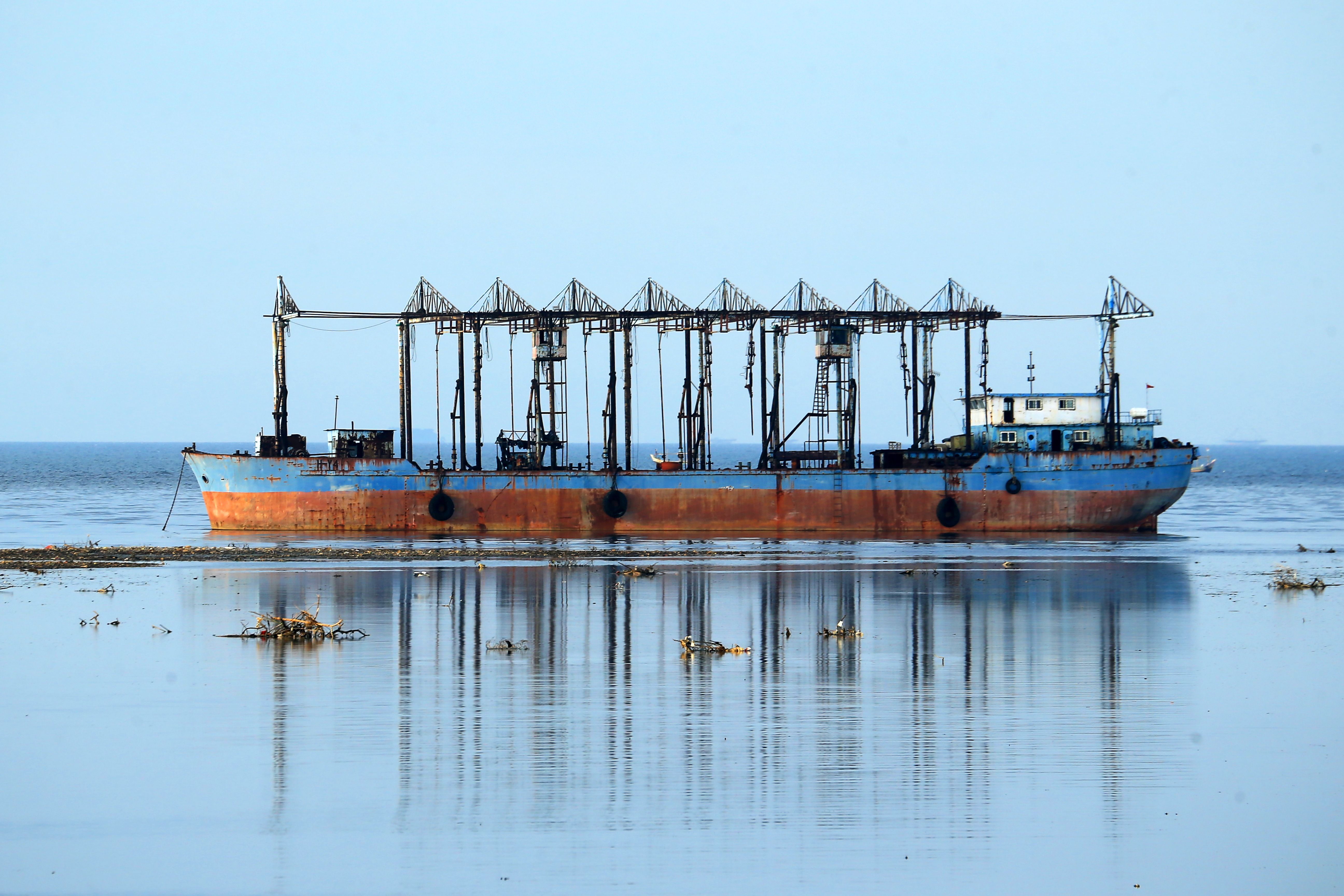
It has no name you would recognise. Its flag is Gabonese. Its registered owner is a shell company in the Marshall Islands. Its manager is a firm in Dubai that was incorporated eighteen months ago. Its insurer is a Russian state entity whose claims-paying capacity has never been independently assessed. And it is carrying two million barrels of sanctioned crude oil through waters that several coastal nations depend on for their fishing industries, their tourism and their drinking water.
The shadow fleet did not exist as a recognised category of global shipping before 2022. The vessels that now constitute it were simply old tankers: ageing assets reaching the end of their commercial lives in the conventional market, worth more as scrap than as operational ships in most cases, accumulated in the fleets of owners who were running down their exposure to the sector. Within months of the G7 price cap coming into force in December 2022, these vessels had acquired a new commercial identity and a new economic value. They were the only ships available to carry Russian crude at scale without exposing their operators to Western sanctions, and the premium available for that service was sufficient to make vessels that had been economically marginal suddenly very profitable indeed.
The assembly of the shadow fleet is one of the most remarkable feats of commercial improvisation in recent maritime history. It involved the rapid identification and purchase of hundreds of ageing tankers, the establishment of new corporate structures to own and manage them, the development of alternative insurance and financing arrangements to replace the Western infrastructure from which they were excluded, and the creation of new trading and logistics relationships to connect Russian crude producers with Asian refiners through routes that avoided the conventional shipping lanes where Western oversight was most effective. All of this happened within a period of months, not years, driven by the financial incentives created by the price spread between sanctioned and conventional crude.
A shadow fleet vessel typically has several characteristics that distinguish it from a conventionally operating tanker. It is old, frequently more than fifteen years and often more than twenty, placing it at or beyond the age at which major oil companies and port terminals operating conventional quality controls would normally accept it. It is registered under a flag of convenience, most commonly Gabon, Cameroon, Palau, the Cook Islands or one of several other small states whose maritime administrations provide registration services without the rigorous oversight that the leading flag states apply. Its Automatic Identification System transponder, the equipment that broadcasts its identity and position to other vessels and to maritime authorities, is frequently switched off for significant portions of its voyages, a practice known as going dark that is technically a violation of international maritime regulations but is extremely difficult to enforce on the high seas.
Its ownership structure is designed to maximise opacity and minimise the ability of any external party to identify who ultimately controls it. A typical shadow fleet ownership chain might involve a Marshall Islands holding company as the registered owner, a Dubai-based ship management company as the technical and commercial operator, a trading company registered in Hong Kong or Singapore as the charterer, and a financial entity in a third jurisdiction handling the proceeds of the freight. Each layer of this structure provides a degree of separation from the next, and the combination of multiple jurisdictions with varying degrees of corporate disclosure requirements makes it extremely difficult for sanctions investigators, port state control authorities or journalists to trace the chain to its ultimate beneficiaries.
The shadow fleet was not built by criminals. It was built by rational commercial actors responding to a price signal created by Western policy. That is what makes it so durable.
The Greek shipping industry played a significant and somewhat uncomfortable role in the assembly of the shadow fleet. Greece is home to the world's largest private shipping industry by tonnage, accounting for roughly twenty per cent of global merchant shipping capacity. Greek owners have historically operated across all vessel types and age ranges, and their fleets include a significant number of older tankers that, in the years before 2022, were approaching the end of their economic life in the conventional market.
When the demand for ageing tankers suitable for shadow fleet operations emerged after the price cap, Greek owners found themselves holding assets whose value had suddenly increased dramatically. A twenty-year-old VLCC that might have been sold for scrap at eight to ten million dollars was suddenly attracting offers of thirty to fifty million dollars from buyers willing to pay a premium for vessels that could be put to work in the sanctioned crude trade. Many Greek owners sold, accepting prices that represented extraordinary windfalls relative to the scrap value of the assets they were disposing of.
The sales were legal. Selling an old tanker to a buyer who intends to use it in the shadow fleet is not itself a sanctions violation, provided that the seller does not subsequently provide services to the vessel in connection with sanctioned cargo movements. But the moral economy of the transaction is more complex. The Greek shipping community, which has deep and longstanding relationships with the Western financial and insurance institutions that the shadow fleet is designed to circumvent, profited handsomely from providing the physical assets that made the circumvention possible. The windfall accrued to sellers in Piraeus. The risk accrued to the coastal communities of the Baltic, the Black Sea and the straits through which these ageing vessels now pass.
The safety record of the shadow fleet is difficult to assess with precision, in part because its opacity makes incident reporting incomplete and in part because many of the incidents that do occur are managed quietly to avoid attracting regulatory attention. What is clear from the incidents that have become public is that the fleet's age and its operating practices create risks that the conventional maritime safety system is not well placed to manage.
The Eventin grounding in the Baltic in January 2025 was the most prominent shadow fleet incident to attract international attention. The vessel, a Cameroonian-flagged tanker carrying Russian crude, suffered an engine failure and drifted towards the German coast before being taken under tow by German authorities. The incident prompted a significant escalation of Baltic state concerns about shadow fleet safety and led to calls for enhanced port state control inspections of vessels suspected of operating in the sanctioned trade. It did not produce a spill, but the potential consequences of a two-million-barrel crude release in the shallow, ecologically sensitive waters of the Baltic Sea were clear to anyone who examined the circumstances.
Less prominent but collectively significant are the reports of engine failures, structural defects and near-miss incidents involving shadow fleet vessels that have emerged from maritime intelligence services and investigative journalists monitoring the fleet's movements. Many of these vessels have not undergone the major drydock refits that the conventional tanker fleet undergoes on a regular cycle, partly because the yards willing to service them are fewer and partly because the owners of vessels operating in the shadow trade have an economic incentive to minimise downtime and maintenance expenditure that reduces the profitability of a vessel whose commercial life is already limited.
The shadow fleet's safety deficit is not a failure of regulation. It is what happens when the profit motive is systematically separated from the liability for the consequences of failure.
The flag of convenience system, under which vessels are registered in states that offer registration services to foreign-owned ships with minimal oversight, is not a creation of the shadow fleet. It predates the price cap by decades and serves a range of commercial purposes beyond sanctions evasion, including tax efficiency and the ability to employ seafarers at wage rates below those prevailing in the flag state. But the shadow fleet has exploited the system in ways that expose its most significant weaknesses.
A flag state is formally responsible for the vessels registered under its flag, including ensuring that they comply with international maritime conventions on safety, pollution prevention and crew welfare. In practice, many flag of convenience states lack the administrative capacity, the technical expertise and the political will to exercise meaningful oversight over their fleets. Their inspection regimes are minimal, their enforcement of international standards is inconsistent, and their response to incidents involving their flagged vessels is frequently inadequate. The financial income from registration fees, which can represent a significant share of a small state's government revenue, creates an obvious incentive to maintain permissive registration policies regardless of the safety and environmental consequences.
Port state control, the system under which coastal states inspect foreign vessels calling at their ports, provides a partial check on the deficiencies of flag state oversight. Port state control authorities have the power to detain vessels that fail their inspections and to exclude vessels with poor safety records from their ports. But the shadow fleet largely bypasses port state control by using ports and terminals in jurisdictions with less rigorous inspection regimes. The major shadow fleet cargo movements load at Russian Baltic and Black Sea ports and discharge at Indian and Chinese terminals, with transshipment sometimes occurring in the territorial waters of Gulf states or in international anchorages where port state control inspections are not conducted.
Three years after the price cap came into force, there is no sign that the shadow fleet is a temporary phenomenon that will dissolve when geopolitical conditions change. The commercial infrastructure assembled to support it has developed institutional depth. The trading relationships, the ownership structures, the insurance arrangements and the port networks that constitute the shadow fleet ecosystem have become embedded in the operations of the companies and states that rely on them. Iran has operated its own shadow fleet for decades, and its continued existence despite sustained Western pressure suggests that the Russian shadow fleet will be similarly durable.
The implications of this permanence extend beyond the immediate geopolitical context of the Ukraine war. The shadow fleet represents a structural bifurcation of global maritime trade into a conventional segment subject to Western regulatory oversight and an alternative segment operating outside it. This bifurcation has consequences for the effectiveness of future sanctions regimes, for the competitive dynamics of the shipping industry, and for the distribution of maritime risk between insured and uninsured actors.
Most immediately it has consequences for the coastal states along whose shores the shadow fleet operates. The Baltic nations, Turkey, the Bosphorus coastal communities, the Red Sea states and the Indian Ocean island nations including Mauritius all lie within range of routes used by shadow fleet vessels. They have no effective means of excluding these vessels from their waters under international law, no guarantee of adequate compensation if a major incident occurs, and no voice in the geopolitical decisions that created the fleet and sustain its commercial rationale. They are, in the most precise sense, bystanders in a system whose benefits accrue elsewhere and whose risks are distributed across whoever happens to be in the path of the next engine failure, structural breach or navigational error on an ageing vessel whose owner is a shell company, whose flag is Gabonese and whose insurer may or may not be able to pay the bill.
Add comment
Comments