Wars for Oil: A Structural History
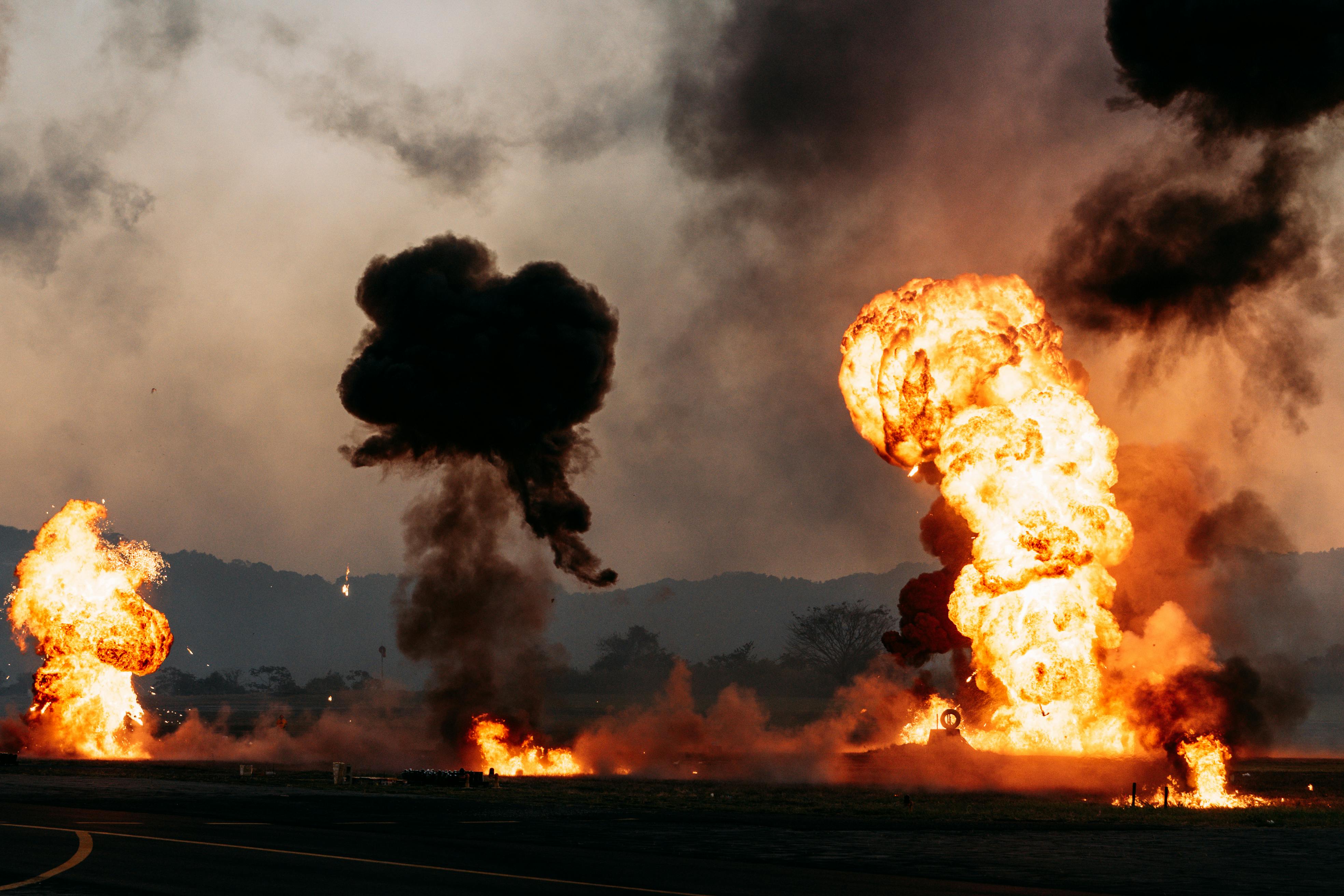
The claim that wars are fought for oil is often dismissed as reductive, as if the complexity of geopolitical decision-making were too great to be explained by a single commodity. This article does not argue that oil is the only cause of any war. It argues something more precise and more unsettling: that oil has been a structural determinant of where wars happen, who fights them, who funds them and what the terms of their resolution look like, across most of the major conflicts of the past century.
In October 1973 the Arab members of the Organisation of Petroleum Exporting Countries, acting in response to American military support for Israel during the Yom Kippur War, announced an embargo on oil exports to the United States and the Netherlands and reduced their overall production by five per cent per month until Israel withdrew from occupied Arab territories. Within weeks the price of oil had quadrupled. Petrol stations in the United States ran dry. European governments imposed speed limits and banned Sunday driving. Japan, almost entirely dependent on imported oil for its energy supply, faced an economic crisis that threatened the industrial base that had driven its postwar growth. The embargo lasted five months. Its effects on the global economy, on Western energy policy and on the geopolitical understanding of oil as a strategic weapon lasted decades.
The 1973 embargo is the moment at which the political economy of oil became fully visible to Western publics who had previously consumed petroleum products as though they were a natural fact of the world rather than a commodity whose supply was controlled by states with interests and grievances of their own. It revealed, with a clarity that no subsequent commentary has matched, the degree to which the functioning of modern industrial economies depended on a resource concentrated in a small number of politically volatile states, and it set in motion the strategic calculations that have shaped Western policy in the Middle East and beyond ever since.
The relationship between oil and war is frequently mischaracterised in public debate. On one side stand those who reduce every conflict in the oil-producing world to a simple formula: Western powers wanted the oil, so they manufactured a pretext and went to war to get it. On the other stand those who dismiss the oil dimension entirely, treating every conflict as a matter of principle, security or humanitarian obligation in which commercial interests played no role. Both positions are wrong, and both are intellectually lazy in ways that obscure rather than illuminate the actual relationship between oil and conflict.
The structural argument for oil's role in shaping conflict is more careful and more powerful than either of these caricatures. It does not claim that oil is the sole cause of any particular war. It claims that the geographical concentration of oil reserves creates a set of strategic interests for oil-consuming nations that systematically influences their decisions about where to project military power, which governments to support or undermine, what international legal frameworks to insist upon and what violations of those frameworks to overlook. These structural interests operate through the decisions of governments, military planners, intelligence agencies and corporate actors in ways that shape the probability of conflict without determining its outcome in any mechanistic sense.
Wars are not fought for oil in the way that one might fight for a wallet. They are fought in environments that oil has structured, for objectives that oil has defined, using alliances that oil has created.
The Gulf War of 1990 to 1991 is the clearest modern example of military intervention driven primarily by oil-related strategic interests. When Iraq invaded Kuwait in August 1990, the immediate American response was shaped by a calculation that was explicit in the internal deliberations of the Bush administration and only partially concealed in its public communications: the combination of Iraqi control over Kuwaiti oil reserves with Iraq's existing reserves would give Saddam Hussein control over approximately twenty per cent of global oil production and place him in a position to threaten Saudi Arabia's fields, which would have elevated his control to roughly forty per cent. This degree of dominance over global oil supply by a state that had demonstrated its willingness to use military force and its hostility to American interests was judged, correctly, to be incompatible with the functioning of the global economy and the strategic interests of the United States and its allies.
The legal framework assembled to authorise the military response, including the UN Security Council resolutions that condemned the Iraqi invasion and authorised member states to use all necessary means to reverse it, rested on the principle of state sovereignty and the illegality of territorial conquest by force. These principles were genuine and their application in this case was legally correct. But they were applied with an urgency and a scale of military mobilisation that reflected not only the legal principle at stake but the oil geography of the region in which it was being violated. The same principle had been violated in other conflicts in the preceding decades without generating anything approaching the international response assembled against Iraq in 1990.
The Iraq War of 2003 presents a more complex and contested picture. The publicly stated justifications for the invasion, Iraqi possession of weapons of mass destruction and the alleged connection between the Iraqi government and the September 2001 attacks on the United States, were either false or unsubstantiated. The alternative explanations that have been advanced by critics of the war include the desire to control Iraqi oil reserves, the ideological commitment of key decision-makers to the transformation of the Middle East's political order, and the strategic calculation that demonstrating American willingness to use military power would deter other states from acquiring weapons of mass destruction or challenging American interests.
The oil dimension of the Iraq War is real but operates at the structural level rather than the transactional. The Bush administration did not invade Iraq primarily to transfer Iraqi oil revenues to American companies, as the simplest version of the oil war thesis suggests. American oil companies did not emerge as the primary beneficiaries of Iraqi oil contracts in the post-invasion period. What oil did provide was a structural context in which Iraq mattered strategically in ways that similarly sized states without oil reserves would not have: it sat astride critical transit routes, it possessed reserves that gave whoever controlled the Iraqi state enormous fiscal resources, and its relationship with the Gulf oil states meant that its political orientation affected the security of the entire region's production.
The NATO intervention in Libya in 2011, authorised by UN Security Council Resolution 1973 on the basis of the responsibility to protect civilian populations from mass atrocities, provides a further case study in the relationship between oil and military intervention. Libya is Africa's largest oil producer by reserve size and was, before the civil war, producing approximately 1.6 million barrels per day of high-quality light crude that was particularly valued by European refineries. The prospect of that production being disrupted, or of the Gaddafi government being replaced by one less willing to maintain the stable supply relationships that European oil companies had developed over the previous decade, was a background concern in the calculations of the European governments that led the push for intervention.
The humanitarian justification for the intervention was genuine in the sense that there was credible evidence of Gaddafi's intention to use force against civilians in Benghazi. But the application of the responsibility to protect doctrine, which had not previously been used to authorise military intervention in comparable situations, reflected a selective deployment of legal principle that cannot be fully understood without accounting for Libya's oil geography and its importance to European energy security. Other situations involving comparable or greater threats to civilian populations have not generated equivalent international responses, and the selectivity of the response in the Libyan case is difficult to explain without reference to the strategic interests of the intervening powers.
The aftermath of the intervention illustrates a recurring pattern in oil-related conflicts: the military action achieves its immediate objective, the removal of the government that provoked the intervention, but fails to establish a stable successor political order capable of maintaining the production and export of oil at the levels that motivated the strategic interest in the first place. Libya's oil production has been severely disrupted by the civil conflict that followed the fall of Gaddafi, falling far below pre-war levels and remaining highly volatile as rival factions compete for control of the country's oil infrastructure. The strategic interest in Libyan oil was served neither by Gaddafi's continued rule nor by the chaos that followed his removal.
The pattern repeats across every oil-related intervention: the military objective is achieved and the political objective is not. The oil keeps flowing, but not to anyone's plan.
Yemen's oil reserves are modest relative to its Gulf neighbours, but its geography is not. The Bab el-Mandeb strait, the narrow waterway between Yemen and Djibouti through which approximately six million barrels of oil transit daily on their way from the Gulf to European and American markets, is one of the world's most strategically significant chokepoints. Control of the Yemeni coast, or the ability to threaten shipping in the Bab el-Mandeb, gives whoever holds it significant leverage over global energy supply chains.
The Houthi movement, which controls most of northern Yemen including the capital Sanaa, demonstrated the strategic value of this position dramatically from late 2023 onwards when it began targeting commercial shipping in the Red Sea in solidarity with Gaza, forcing a significant rerouting of global maritime trade around the Cape of Good Hope. The attacks added thousands of miles to shipping routes between Asia and Europe, elevated freight rates and insurance premiums, and temporarily disrupted the supply chains of multiple industries. They demonstrated, in real time, the degree to which the physical geography of oil transit routes translates into geopolitical leverage for actors willing to exploit it.
The Saudi-led military intervention in Yemen that began in 2015, backed by the United States and the United Kingdom, was motivated by a complex mix of strategic calculations including the desire to restore the internationally recognised Yemeni government, the containment of Iranian influence in the Arabian Peninsula, and the protection of the Gulf Cooperation Council members from a hostile state on their southern border. The oil geography of the region, including the protection of Saudi oil infrastructure from Houthi attacks and the maintenance of the Bab el-Mandeb as an open transit route, was not the publicly stated rationale for the intervention but was clearly a background strategic interest that shaped its prosecution.
Across this survey of oil-related conflicts, a consistent structural pattern emerges. Oil-rich regions attract the sustained strategic attention of consuming powers whose military and diplomatic resources are deployed to maintain access to production and transit routes. States that sit astride critical oil geography face persistent interference in their internal affairs by external powers whose interest in the stability of their governments is primarily instrumental. The legal frameworks of international order, including the prohibition on aggressive war, the principle of state sovereignty and the responsibility to protect, are applied selectively in ways that reflect the oil geography of the conflicts to which they are applied.
This pattern does not render these legal frameworks meaningless or the strategic interests that animate their selective application entirely cynical. States have genuine security interests in maintaining access to oil supplies, and those interests are not rendered illegitimate simply because they sometimes align with legal principles that would independently justify intervention. But the pattern does reveal a systematic bias in the international order that is inseparable from the geography of oil reserves: the states that possess oil, or that control the routes through which it moves, face a qualitatively different relationship with the great powers than the states that do not.
For the Global South, this structural reality has profound implications. The oil-producing states of Africa, the Middle East and Latin America exist in a geopolitical environment shaped by the strategic interests of consuming nations whose military and economic power vastly exceeds their own. Their sovereignty is nominally guaranteed by the same international legal frameworks that are selectively applied in the management of oil-related conflicts. Their ability to determine their own political and economic trajectories is constrained by the strategic interests that their oil geography generates in the capitals of the great powers. The resource curse, in this reading, has a geopolitical dimension that extends far beyond the domestic institutional pathologies that most development economics analysis focuses on: it includes the systematic limitation of political sovereignty that the possession of a strategically vital commodity imposes on states too weak to defend that sovereignty against the interests it attracts.
Add comment
Comments