What Morocco's Rise Means for Mauritius
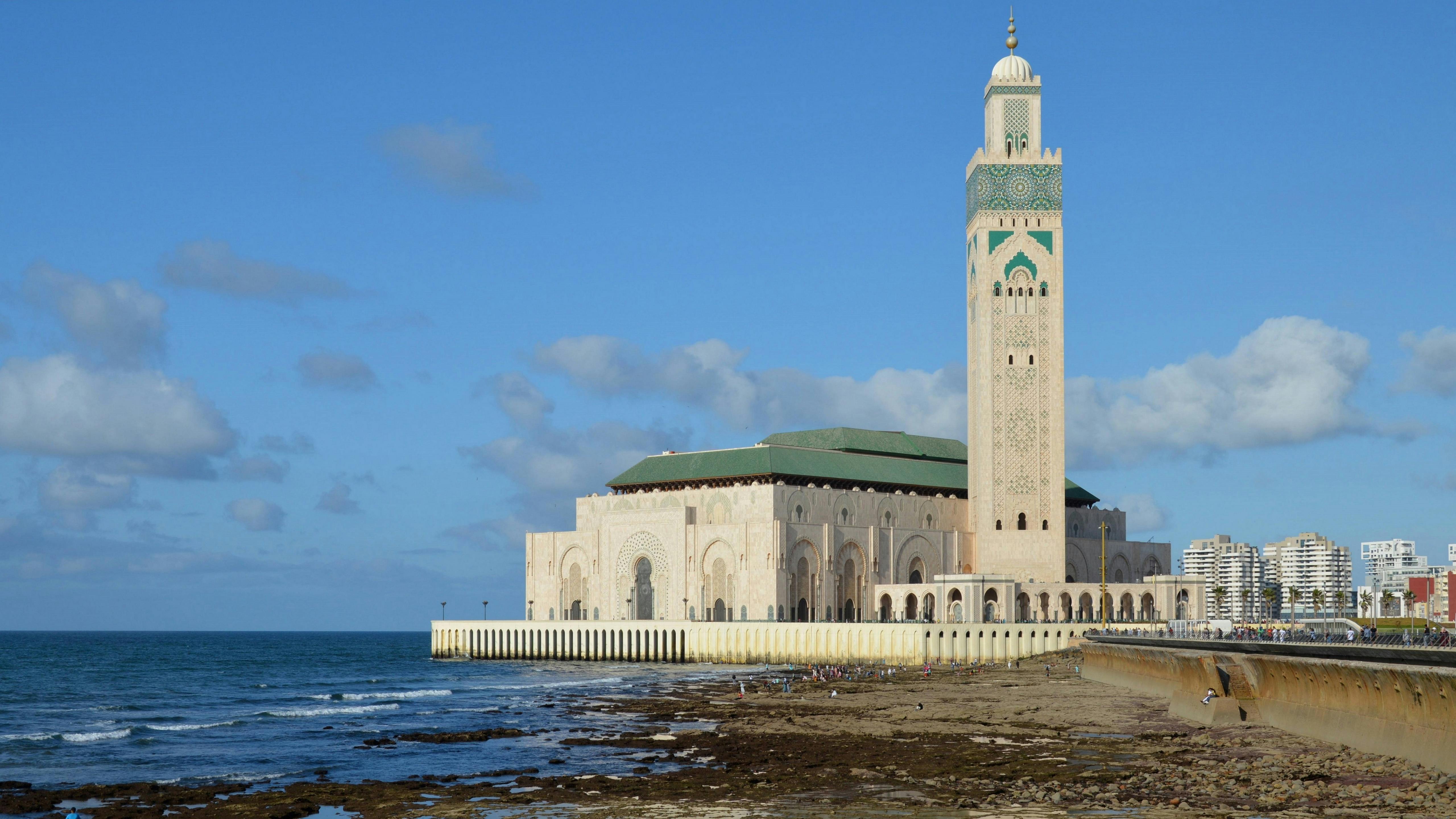
For three decades Mauritius held a position that smaller countries rarely achieve: it was the undisputed leading financial centre on the African continent. That position is gone. Morocco has taken it. The question now is not how to reclaim what was lost but whether Mauritius understands why it lost it, and whether it can build something more durable before the window closes entirely.
The Global Financial Centres Index ranks the world's financial centres by competitiveness across five dimensions: business environment, human capital, infrastructure, financial sector development and reputation. For years Mauritius sat at the top of the African rankings, a small island state that had built, against considerable odds and against the advice of several multilateral donors who thought it a fantasy, a genuinely competitive offshore financial services sector. The GFCI ranking was not merely a vanity metric. It was a signal to international capital that Mauritius was open, stable, well-regulated and worth the routing. Morocco has now displaced Mauritius at the top of that ranking, and the displacement is not a statistical accident. It reflects a decade of deliberate Moroccan strategic investment in financial centre infrastructure that Mauritius did not match.
The significance of this shift cannot be overstated for a country whose financial services sector contributes approximately 12 per cent of GDP, employs a significant share of its skilled professional workforce and provides the foreign exchange earnings that help offset the structural trade deficit driven by oil and food imports. Financial services is not merely one sector among several for Mauritius. It is the sector on which the island's claim to upper-middle-income status most directly rests, the sector that has allowed it to punch above its weight in international economic diplomacy, and the sector whose continued health is most critical to the fiscal sustainability of the public services and social transfers that underpin the island's social contract.
Statistics Mauritius, 2024
Moody's, January 2026
Second reputational pressure point
Displacing Mauritius
How Morocco overtook Mauritius as Africa's leading financial centre
Morocco's ascent to the top of the African financial services rankings was not accidental and it was not rapid. It was the product of a decade of deliberate state investment in financial centre infrastructure, anchored in the Casablanca Finance City project, which launched in 2010 as a special economic zone designed explicitly to compete with established African financial centres including Mauritius. The Moroccan strategy combined several elements that Mauritius either did not attempt or attempted too late and with insufficient commitment.
The first element was physical infrastructure. Casablanca Finance City built a purpose-designed financial district with Grade A office space, connectivity infrastructure and a regulatory environment specifically calibrated to attract international financial institutions. Mauritius has Ebene Cybercity, which was built for a similar purpose but which has not been maintained or expanded at the pace required to remain competitive with purpose-built financial districts elsewhere on the continent.
The second element was product diversification. Morocco developed capabilities in capital markets, sukuk issuance, green finance and infrastructure financing that gave it a broader range of financial products to offer international clients. Mauritius remained narrowly positioned in fund administration and related services. When foreign firms began acquiring Mauritius's largest offshore management companies, the island lost not only ownership but the institutional knowledge and client relationships that had taken decades to build.
The third element was diplomatic positioning. Morocco has positioned Casablanca Finance City explicitly as the gateway to African markets for international capital, backed by bilateral investment treaties, aviation connectivity and French-language professional capacity. The geographic argument for Mauritius, that its Indian Ocean location makes it the natural hub for India-Africa capital flows, remains valid in theory. It has not been converted into market share at the scale the theory would predict.
Morocco did not take Mauritius's position by accident. It took it by doing for a decade what Mauritius should have been doing: building the infrastructure, diversifying the products and making the diplomatic case for why international capital should route through Casablanca rather than Port Louis.
FATF review 2027 and Mauritius financial services reputation
The competitive displacement by Morocco coincides with a second and distinct threat to Mauritius's financial services reputation: the FATF review scheduled for 2027. The Financial Action Task Force conducts mutual evaluations of member and observer jurisdictions on a rolling basis. Mauritius was grey-listed by FATF in 2020, a designation that caused significant reputational damage to the offshore sector and accelerated the departure of some institutional clients to competing jurisdictions. The island was removed from the grey list in 2021 following remediation measures, but the 2027 review will assess whether those measures have been sustained and deepened.
International financial institutions treat FATF status as a primary input to their jurisdictional risk assessments. A jurisdiction on the FATF grey list faces automatic additional due diligence requirements from institutional counterparties that raise the operational cost of routing business through it. In a competitive market where Morocco, Singapore and Dubai offer equivalent or superior regulatory environments without the compliance overhead of grey list history, the FATF dimension is not a technical regulatory matter. It is a commercial one.
What Mauritius must do to compete with Morocco in African financial services
The path back to African financial centre leadership, if it exists, runs through a set of strategic decisions that the Mauritius financial services establishment has largely preferred to defer. The first is an honest assessment of what the island's comparative advantage actually is in 2026, not what it was in 2005. The India-Africa capital flows thesis has been eroded by India's own bilateral investment treaty renegotiations, which reduced some of the tax treaty advantages that made Mauritius an attractive routing jurisdiction.
The second decision is investment in product diversification at a scale that matches the competitive threat. The growth segments of the global financial services market, including green finance, infrastructure investment platforms, digital assets regulated frameworks and Islamic finance, are segments where Mauritius has regulatory frameworks on paper but operational depth that does not yet match the ambition.
The third decision is the most politically difficult. The sustainable competitive position for a small island jurisdiction is not as the cheapest or most permissive option in the market. It is as the most trusted, most transparent and most institutionally robust. Singapore built its position on that basis. Luxembourg built its position on that basis. Mauritius has the institutional foundations to do the same. It has not yet made the political commitment that the strategy requires.
The competitive window is not closed. But it is narrowing. Every year that Mauritius defers the structural decisions that a serious financial centre strategy requires is a year in which Morocco, Dubai and Singapore extend advantages that become progressively harder to close.
Morocco Mauritius financial services and the Mauritius budget 2026
The financial services question is not separable from the fiscal question examined in yesterday's analysis of the Mauritius budget. A financial sector that is losing ground to Morocco is a financial sector generating less tax revenue, fewer high-skilled jobs and less foreign exchange than its potential. A financial sector that suffers a second FATF grey-listing would lose clients at a pace that no marketing campaign or bilateral agreement could reverse.
The budget cannot be fixed without a healthy financial sector generating the tax revenues that fund consolidation. The financial sector cannot be fixed without the institutional investment and regulatory quality that the budget must help finance. They are a single structural challenge with interlocking requirements, and the answer to both requires the same thing: a quality of governance that has been discussed in Mauritius for decades and delivered only in part. Morocco's rise is not a crisis for Mauritius. It is a signal. The question is whether the signal is being heard.
Add comment
Comments