Why Does Africa Export Raw Materials and Import Finished Goods?
Africa produces 70 per cent of the world's cocoa beans but captures only 5 per cent of the $100 billion global chocolate industry. The concept that explains this gap -- and why it persists -- is value addition
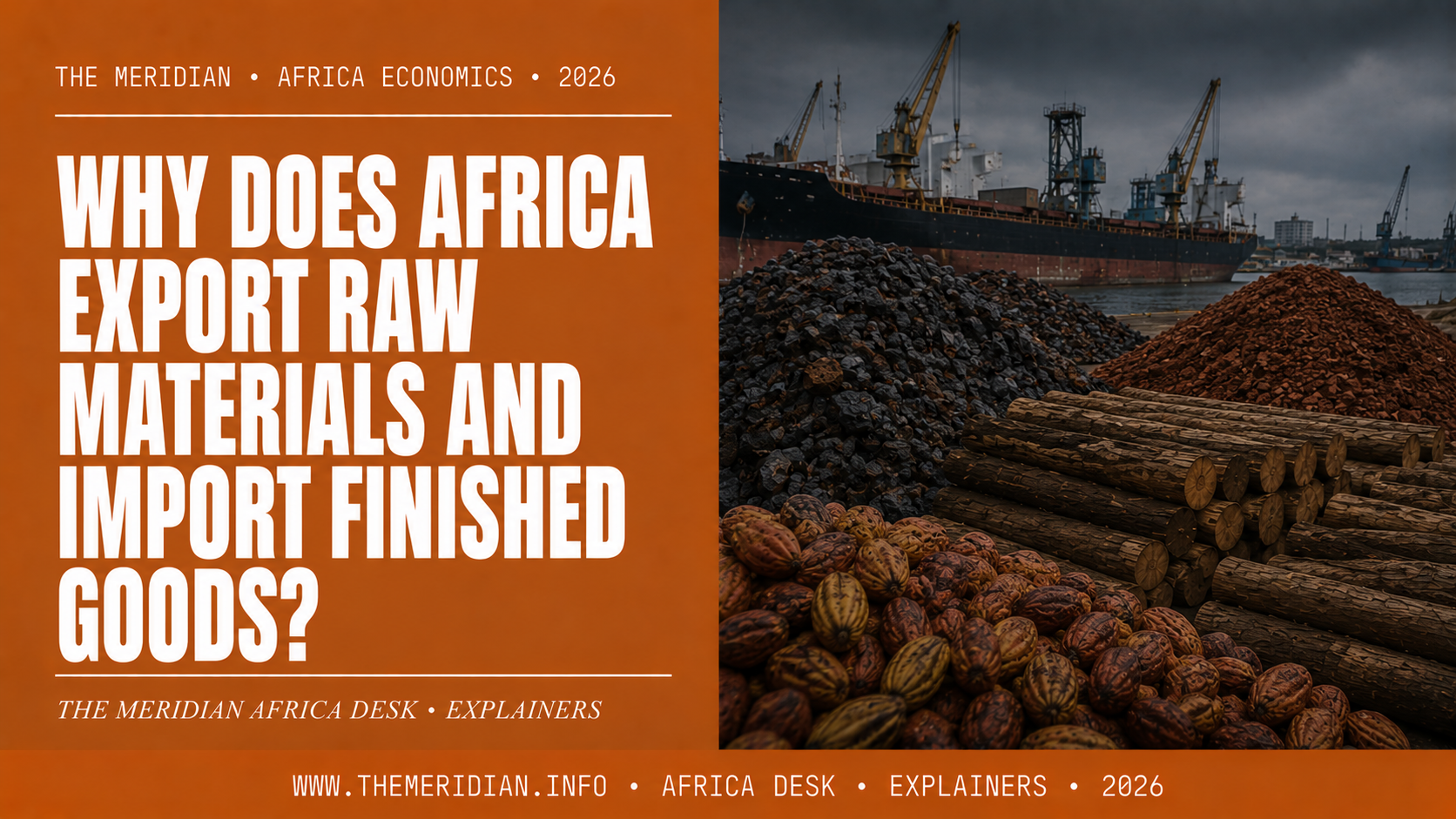
Africa produces most of the world's cocoa, gold, oil, and cotton. The factories, brands, and refining operations that turn those commodities into finished products are mostly located somewhere else. The concept at the centre of this gap is called value addition.
Across the African continent, a frustrating economic pattern consistently repeats. Many countries export massive quantities of unprocessed natural resources -- raw gold, crude oil, cocoa beans, raw cotton, unrefined minerals -- and then spend billions importing the processed, finished versions of those same commodities at significantly higher prices. They export the ingredient and import the product. This cycle creates a permanent financial drain, and understanding why it exists starts with a single concept: value addition.
Take a cocoa bean. As a raw bean, it is worth a small amount. Roast it, grind it, add sugar and milk, pour it into a mould, wrap it in branded packaging -- and it becomes a chocolate bar worth many times the original bean's price.
The difference in value between the raw bean and the finished bar is the value that was added during processing. Whoever does the processing -- roasting, manufacturing, branding -- captures that added value. If the processing happens abroad, the added value goes abroad too.
According to the United Nations Conference on Trade and Development, African nations produce approximately 70 per cent of the world's cocoa beans. Ghana and Côte d'Ivoire alone account for roughly 60 per cent of global supply. Yet because those beans are shipped abroad to be roasted, ground, and manufactured into commercial chocolate, Africa captures only about 5 per cent of the total wealth generated by the $100 billion global chocolate industry. The roasting, grinding, mixing, moulding, branding, and retail -- the steps where most of the price is actually built -- happen in European and North American factories.
Every commodity has a value chain -- a sequence of steps from raw material to finished product. The further along that chain the processing happens, the more value is created at each stage. Here is how the cocoa chain looks:
The same pattern runs through mineral extraction. As explored in this desk's analysis of Ghana's macroeconomic position, Ghana relies heavily on exporting unrefined gold to generate foreign exchange. Because the sovereign lacks the large-scale industrial infrastructure required to refine its own deposits, it sells raw bullion to foreign buyers at the spot price. When Ghana later needs refined gold products -- industrial components, jewellery, consumer goods -- it must import them at commercial value. The refining margin, the difference between the raw price and the refined price, is captured entirely in the countries that have the refining capacity. Ghana supplies the raw material and pays for the processing. This is the same logic as the cocoa example, in a different commodity.
Two things keep this pattern in place. The first is the immense upfront cost of building industrial infrastructure. Constructing oil refineries, chocolate processing plants, textile mills, and the reliable electricity grids to power them requires billions of dollars in capital investment that many developing economies have not been able to secure. The second is a trade policy called tariff escalation. Many wealthy importing countries charge zero import duties on raw materials coming in from Africa, but impose progressively higher tariffs on processed or finished goods. This specifically discourages African countries from building domestic processing capacity: if a finished product faces a tariff that a raw material does not, it is harder for an African manufacturer to compete on price in that market. Zero tariff on raw beans; significant tariff on chocolate. The incentive structure, as currently designed, pushes the processing offshore.
When a country exports a raw material, it is paid once -- at the commodity's spot price, which tends to be volatile and over which it has limited influence. When a country processes that material at home, it is paid at each stage of the value chain: for the labour, for the industrial process, for the finished product, and for the brand. It creates domestic jobs at each step, builds industrial skills, generates higher taxable corporate revenues, and retains the final profit margin rather than paying it to someone else's factory. Escaping the raw-material export cycle is not a philosophical question. It is a mathematical one about where in the value chain a country's economy is positioned -- and how much of its own commodity's worth it captures before it leaves.
| Source | Relevant Point |
|---|---|
| United Nations Conference on Trade and Development (UNCTAD) | African nations produce approximately 70% of the world's cocoa beans; Africa captures approximately 5% of the total wealth generated by the $100 billion global chocolate industry. |
| The Meridian Africa Desk -- Ghana (Article 2) | Ghana exports unrefined gold and re-imports refined gold and gold-based products at commercial value, with the refining margin captured in jurisdictions with processing capacity. See: Ghana's 2026 IMF Review: What the Metrics Reveal About Debt Sustainability |
Add comment
Comments