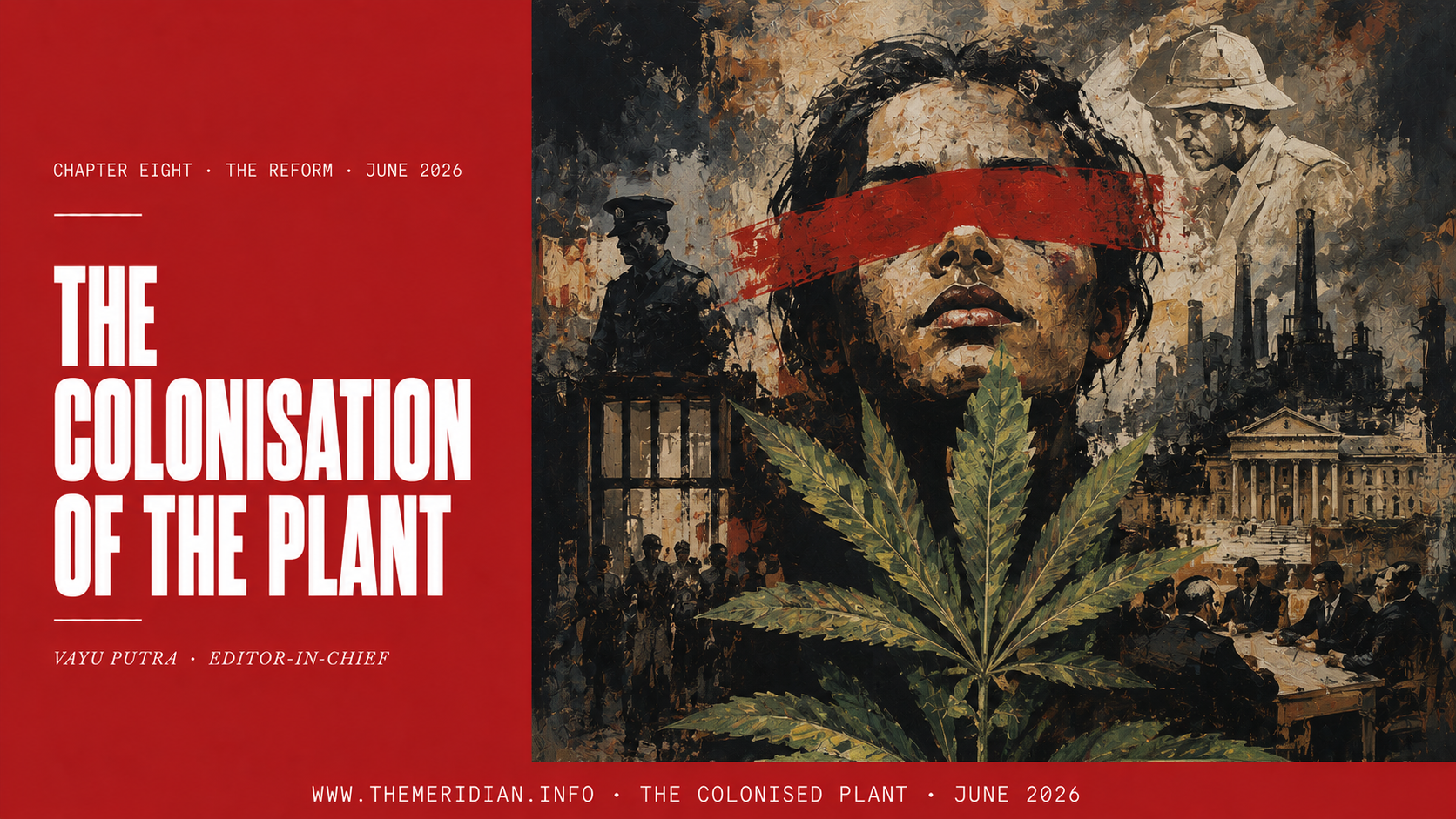









Cannabis is documented in the Ebers Papyrus of 1550 BCE, in Emperor Shen Nung's pharmacopoeia of 2700 BCE, and among the five sacred plants of the Atharva Veda. Five thousand years of therapeutic use. Zero documented deaths from overdose in the entire historical record. The Meridian opens the Cannabis Edition at the beginning — before the law, before the politics, before the criminality that never should have been.
Bhang, ganja, charas. Three preparations named in Sanskrit texts three thousand years before the first prohibition law. The Shiva connection. The Indian Hemp Drugs Commission of 1894. The suppressed report that recommended against prohibition.
Mohammed El Guindy's intervention at the 1925 International Opium Convention. The League of Nations archives. The commercial interests behind the plea. The afternoon that turned medicine into contraband.
The Israeli chemist who isolated THC in 1964, discovered the endocannabinoid system in 1988, and died in 2023 without a Nobel Prize. The man who proved the body was designed to receive this medicine. The Meridian names him.
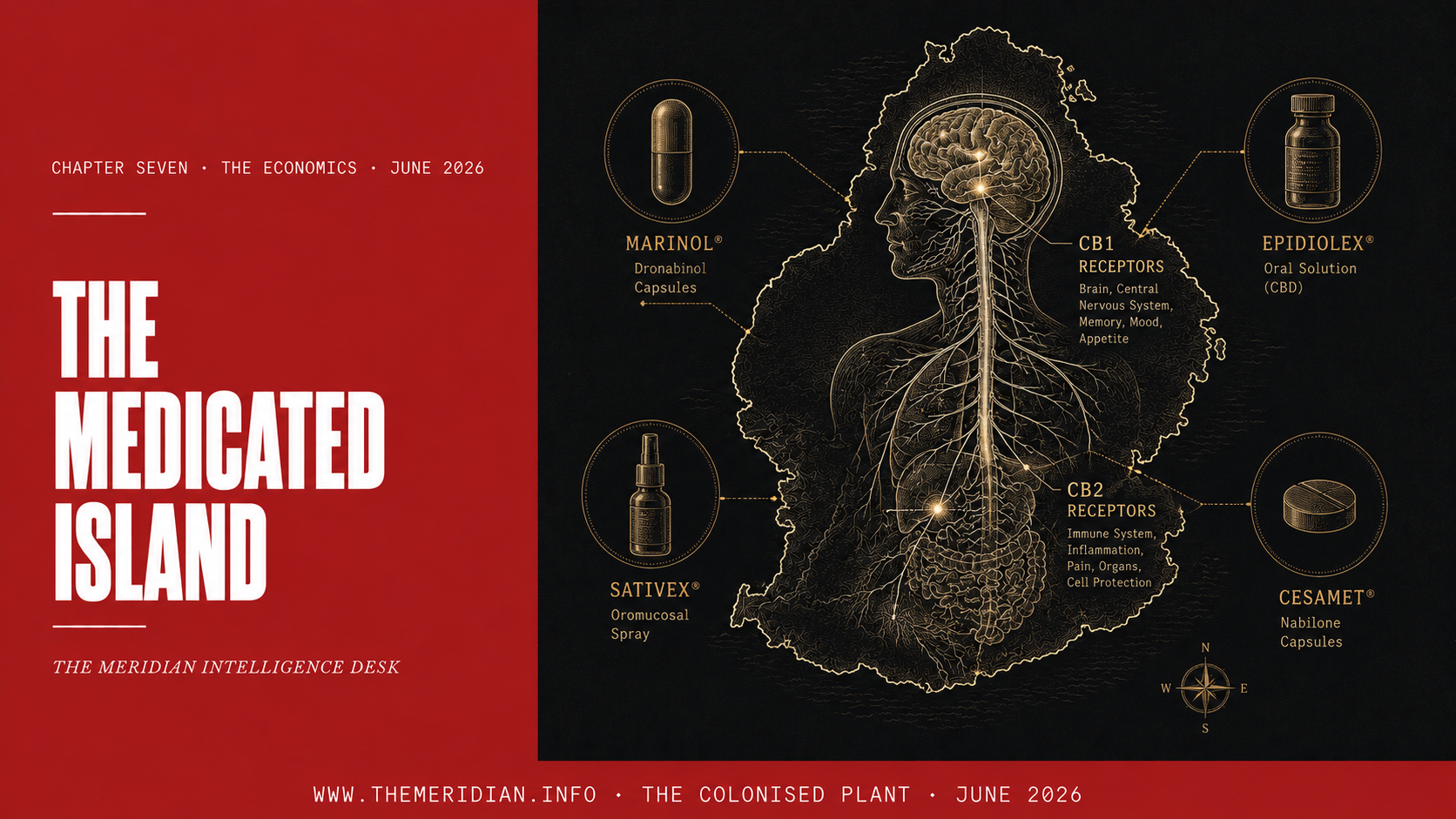
CB1 and CB2 receptors. Anandamide — the body's own cannabis molecule, named from the Sanskrit word for bliss. A system that evolved 600 million years ago. Present in all vertebrates. The body did not evolve a system to interact with a plant it was not supposed to encounter.
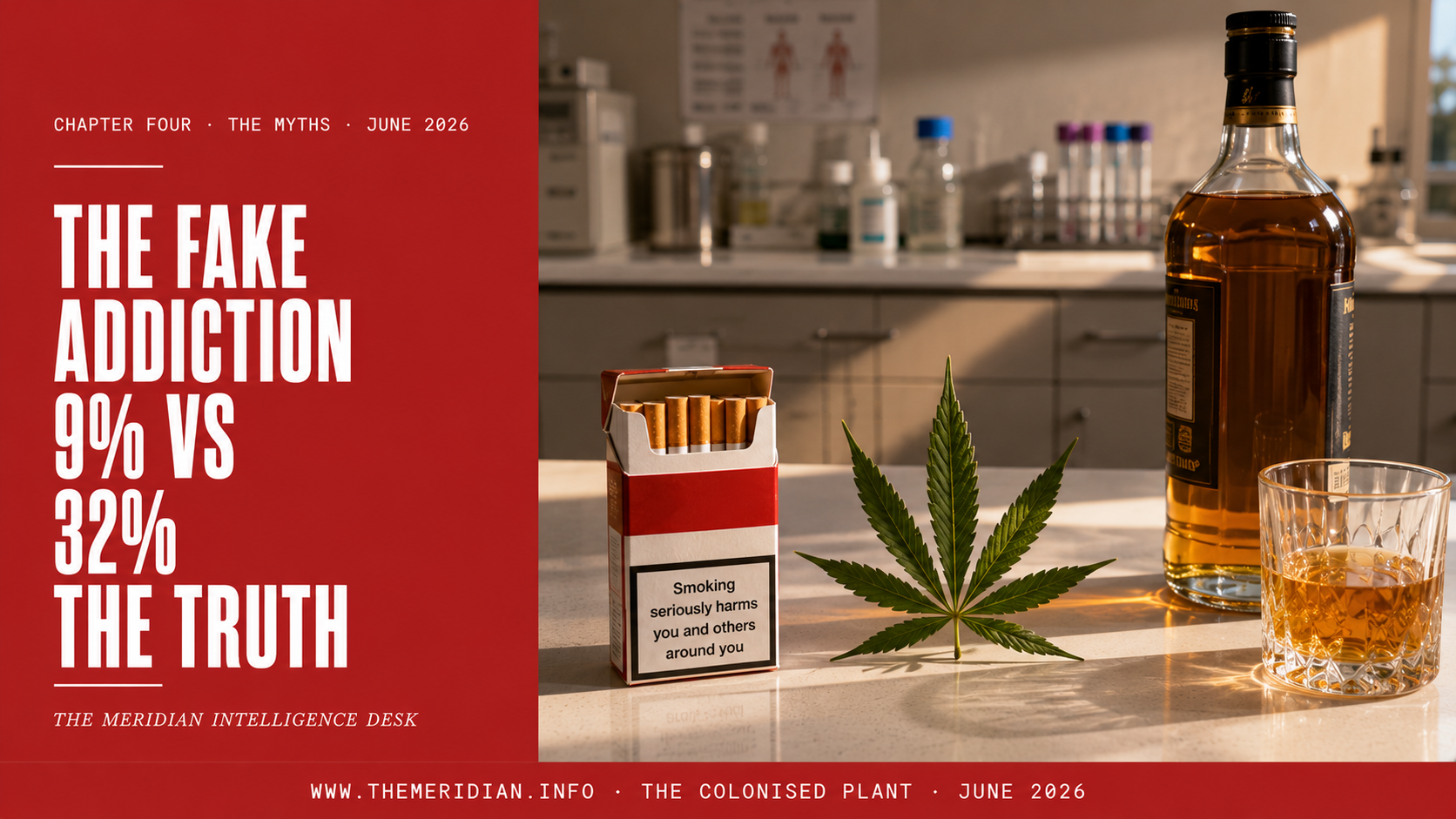
Zero confirmed deaths from cannabis overdose in the entire recorded medical history of humanity. Alcohol: 3 million per year. Tobacco: 8 million. Aspirin: 7,600 in the US alone. Cannabis: zero. The Meridian documents the record. The record speaks.
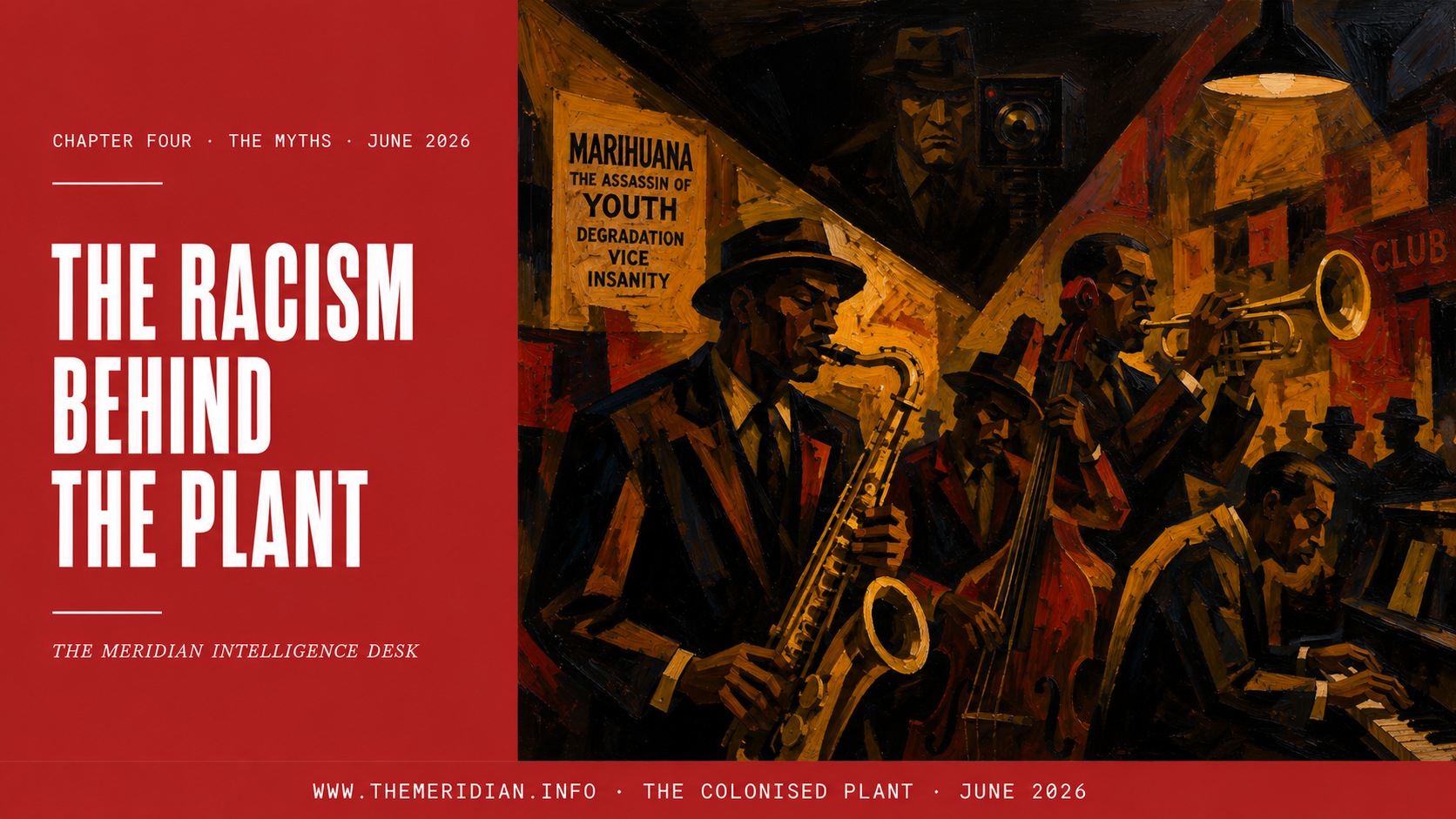
The complete chronology. 1925 Geneva. 1937 Anslinger and the Marihuana Tax Act. 1961 UN Single Convention Schedule IV. 1971 Nixon. 1994 Ehrlichman's confession: the War on Drugs was designed to criminalise Black Americans and the anti-war left.
The seven principal arguments used to maintain cannabis prohibition, examined against the evidence and demolished with named primary sources. The gateway is the dealer, not the drug. The Netherlands has had coffee shops since 1976 and lower heroin use than prohibition countries.
Spice, K2, Mamba. Synthetic cannabinoids that kill because the illegal market has no quality control. Cannabis sprayed with glass powder, lead compounds, and synthetic additives. The prohibition created the danger it claimed to prevent.
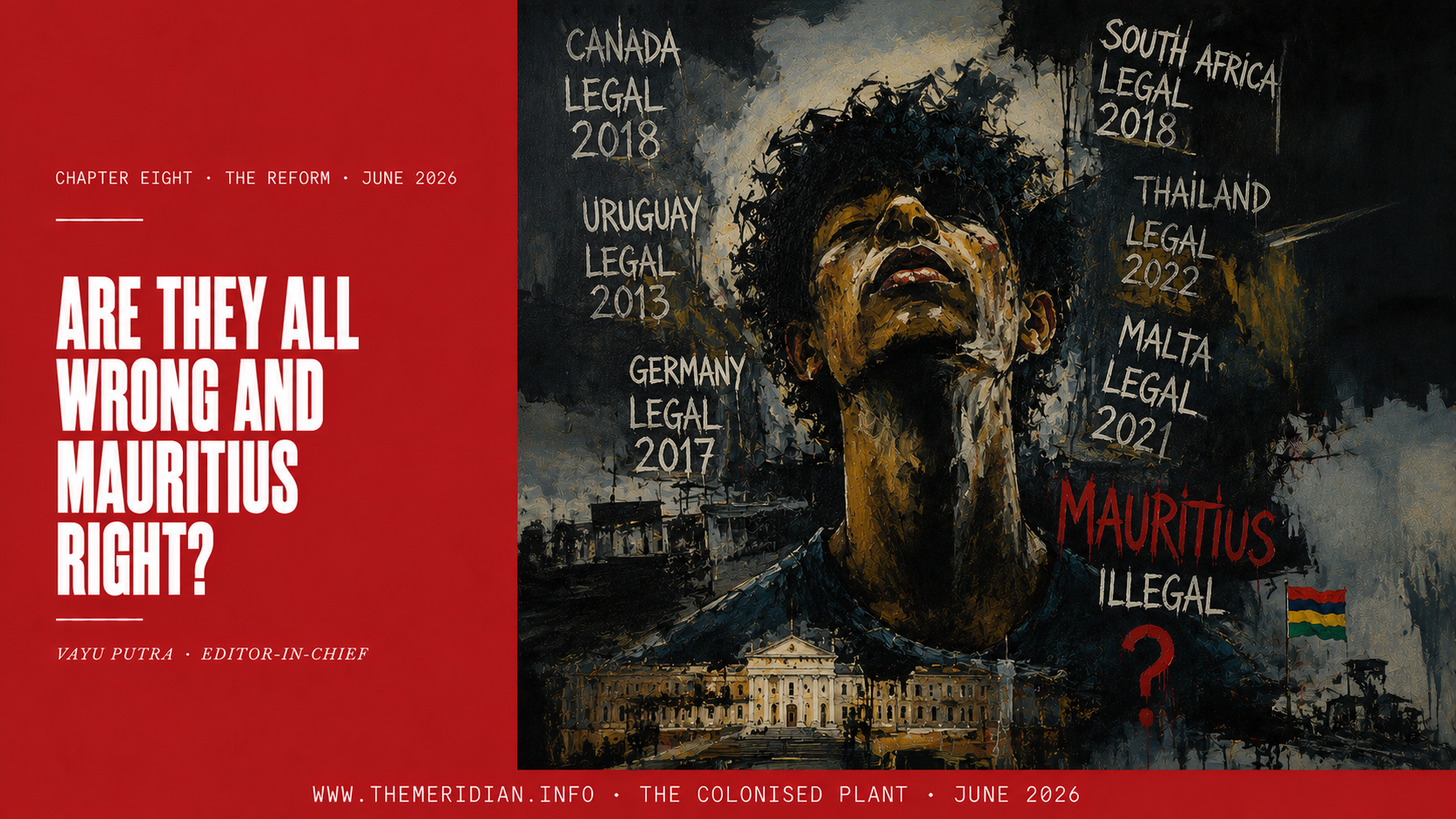
Every human being on earth has an endocannabinoid system. The same body. The same receptors. The same mechanism. In Canada it is a licensed product. In Singapore it is a capital offence. The Meridian asks why the same plant interacting with the same biological system produces such radically different legal responses.
Prince v Minister of Justice, South Africa 2018. The Mexican Supreme Court's five rulings against prohibition. Article 25 of the UDHR and the right to medical care. The Meridian applies the UDHR framework to a plant that interacts with a universal human biological system.
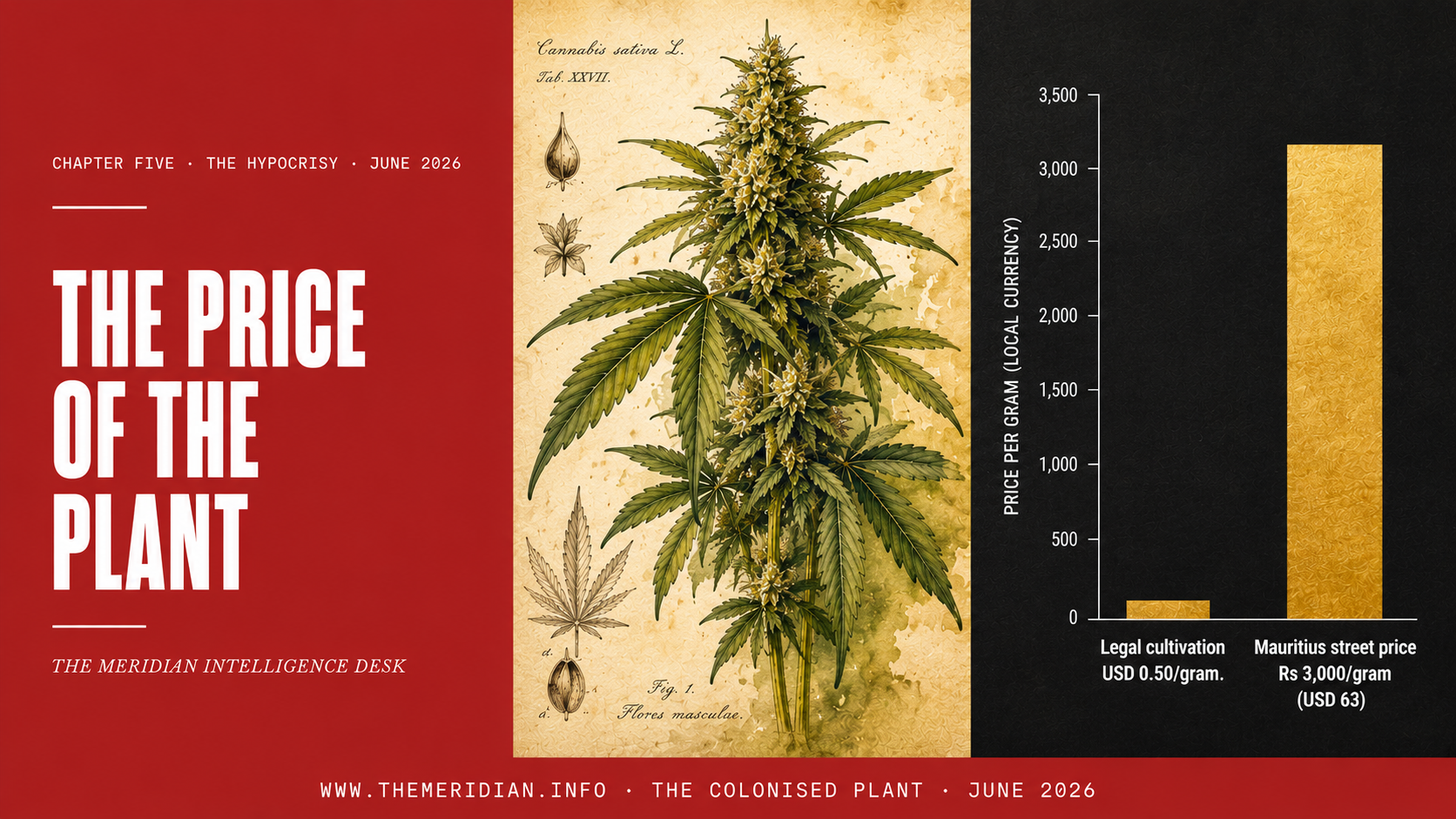
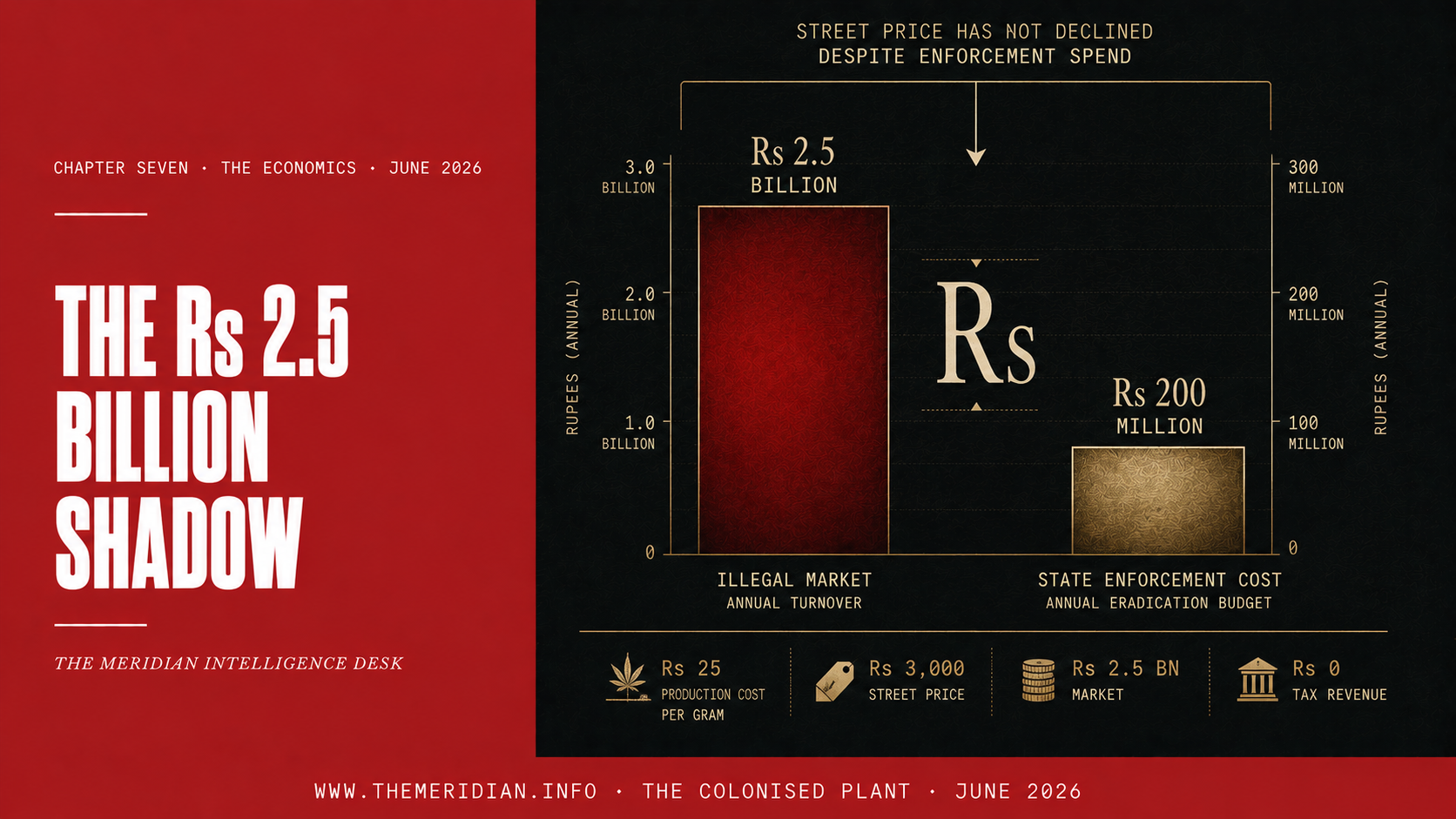
Cannabis costs $0.50 per gram to produce legally in Colombia. It sells for Rs 15,000 per ounce in Mauritius's illegal market. The prohibition creates the extraction. If the plant were legal you could grow it in your garden the way you grow mint — pick it after work, make tea, sleep. It literally heals.
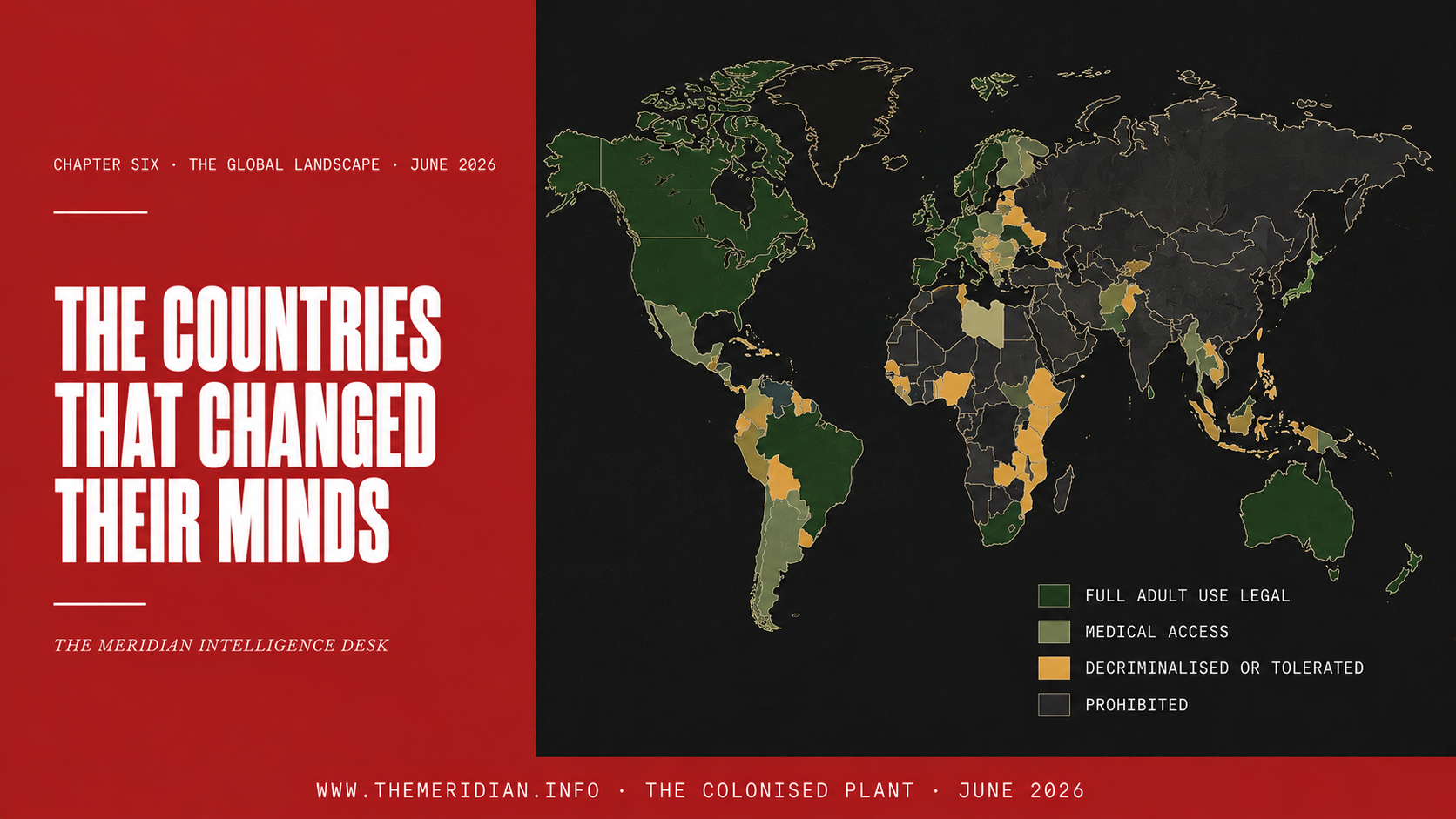
Canada 2018. Uruguay 2013. Germany 2024. Malta 2021. South Africa 2018. Thailand 2022. Lesotho 2017 — the first African country. 24 US states recreational, 39 medical. The complete verified global map. The Meridian produces the most comprehensive single-source cannabis legal status database available in the Mauritian press.
Five questions for Bérenger. Three for Bhadain. Two open to all. The questions a serious analyst would ask any senior figure claiming authority on Mauritian inflation — and why the answers, honest or evasive, are now on the record.
VAT Act 1998. IPP-coal contracts April and June 1998. The conglomerate retail consolidation. Nita Deerpalsing as the witness who broke ranks. The structural decisions of one government that every subsequent government has inherited and none has dismantled.
Minister Sik Yuen disclosed in Parliament that the State spends Rs 380 million annually to keep rice affordable. 70 days of stock in Mauritius. 45 days in Rodrigues. The countdown that measures how long Mauritian and Rodriguan tables stay fed before something has to arrive.
Subratty's 587% markup on aubergine. The Reform Party's MRP proposal against its own deregulation platform. India versus Mauritius: why MRP works where production is domestic and fails where imports dominate. The Venezuelan outcome documented.
Parliamentary Question B/786. Two Directors of Supervision under FCC investigation. The Reserve Bank of India called in to assist. The Prime Minister acknowledges the officers should have been transferred — then says it is the Bank's call. The onus passed. The supervision remains.
Seven criteria. The Sri Lanka pre-crisis diagnostic applied to Mauritius in May 2026. Countries with bad governance avoid the IMF the way Father Christmas avoids Easter. The reform window is still open. It is narrowing.
A central bank with a clean balance sheet does not file a police complaint. It publishes the data. The appointments architecture. The Rs 31 billion debt increase in 16 months. The structural questions Mauritius is not asking while it watches the courtroom theatre.
Drawing on Gramsci, Bourdieu, Scott, Hirschman, Sen and Fanon. The architecture that locates every structural failure in the individual citizen. The worker spends wrong. The woman is unmarried wrong. The family borrows wrong.
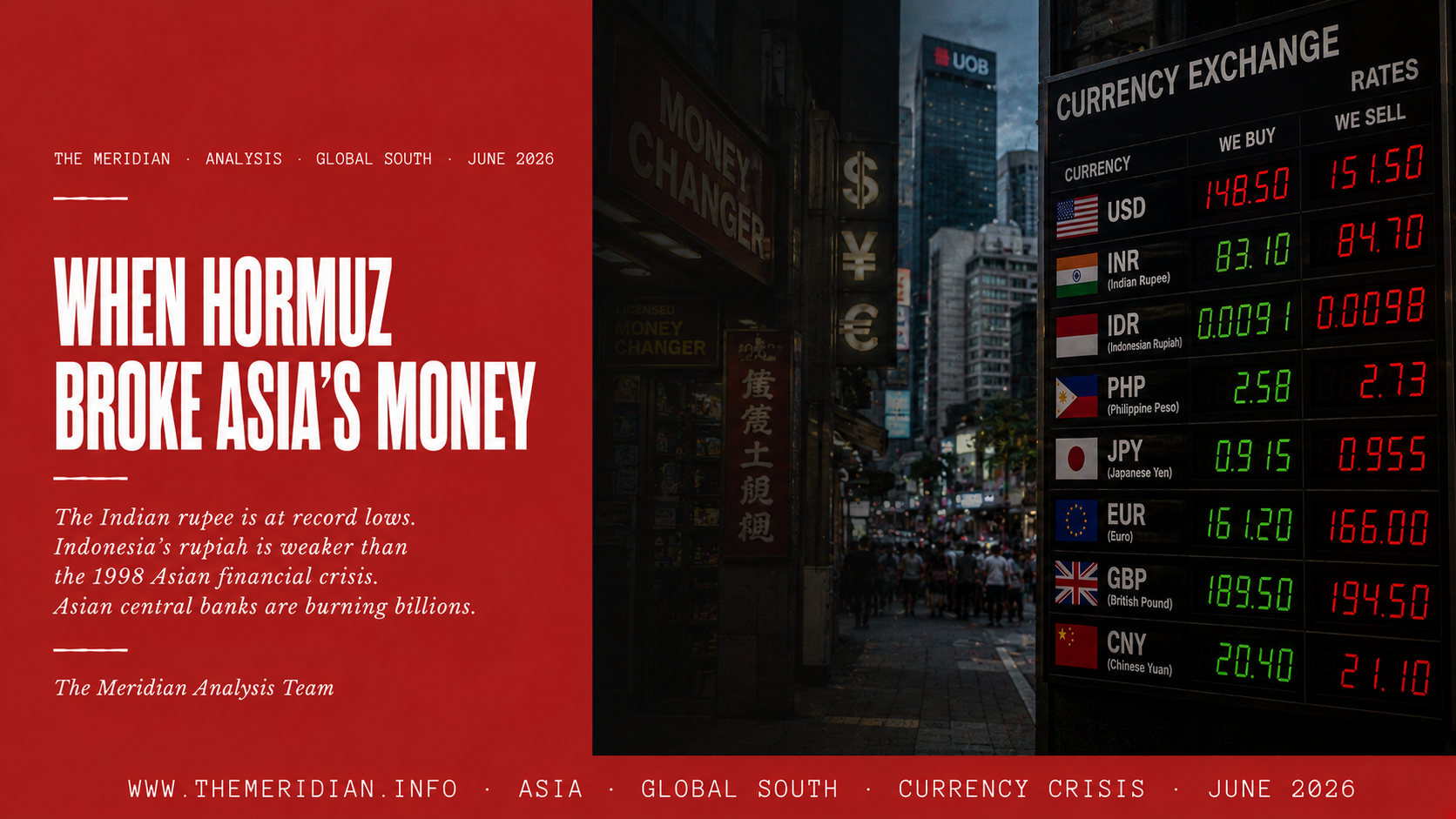
$1.13 trillion in US Treasuries. 446 robots per 10,000 manufacturing workers. The framework limits of orthodox exchange rate equilibrium theory when applied to a monetary sovereign that issues its own currency.
Germany at €43,000 per capita. Croatia at €18,000. One ECB rate for both. TARGET2 imbalances at €1.1 trillion. The contradiction the euro has never resolved.
Advanced economies carry $36 trillion in sovereign debt with no austerity programme. The Global South is told to consolidate. The asymmetry is not analytical. It is structural, historical, and political. The Meridian names the architecture of the double standard.
A case study submitted to the Journal of Geoeconomics. 58 consecutive years of trade deficit. Near-total food and energy import dependence. Passive structural coercion as a new analytical concept for the geoeconomics literature.
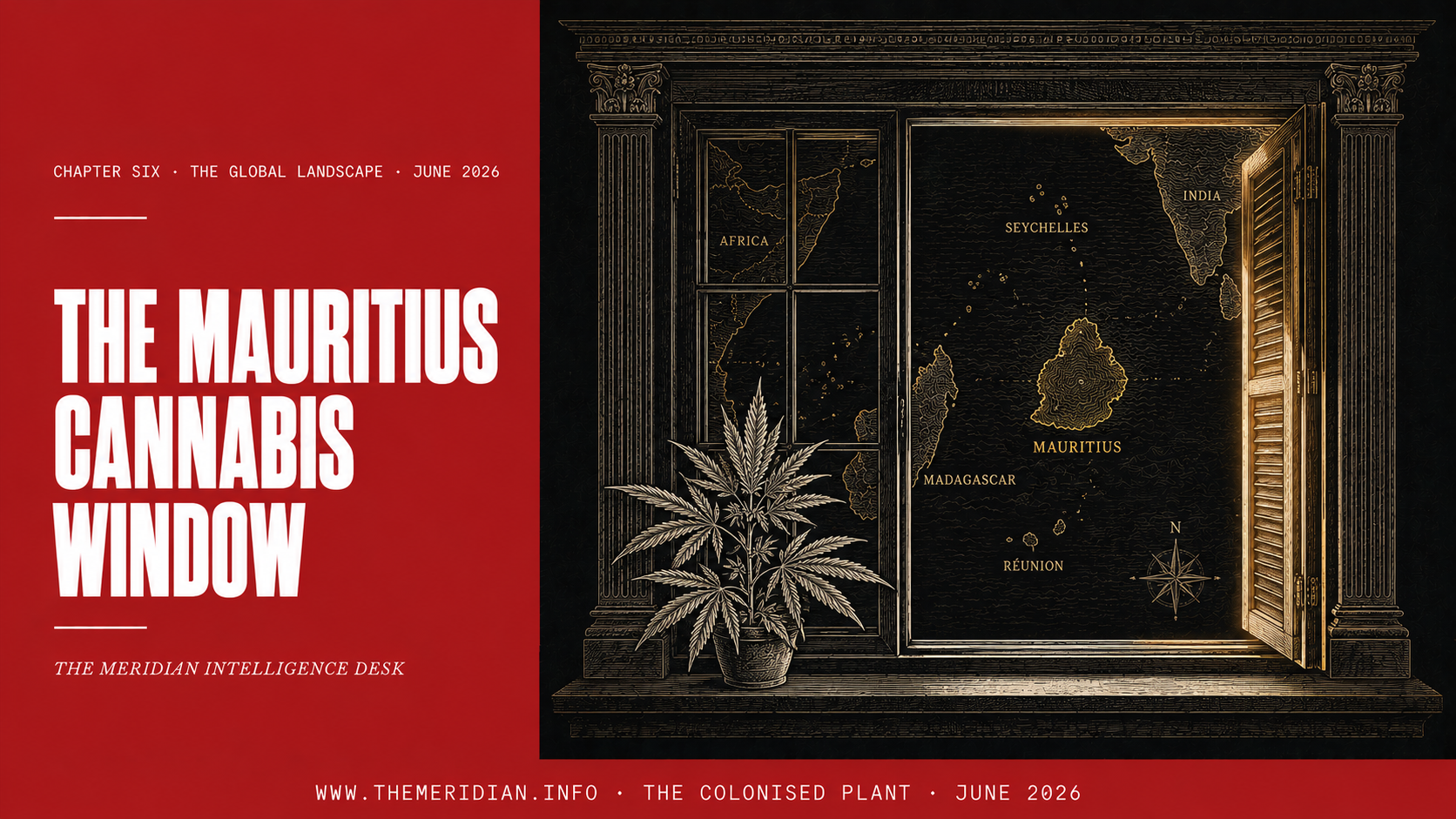
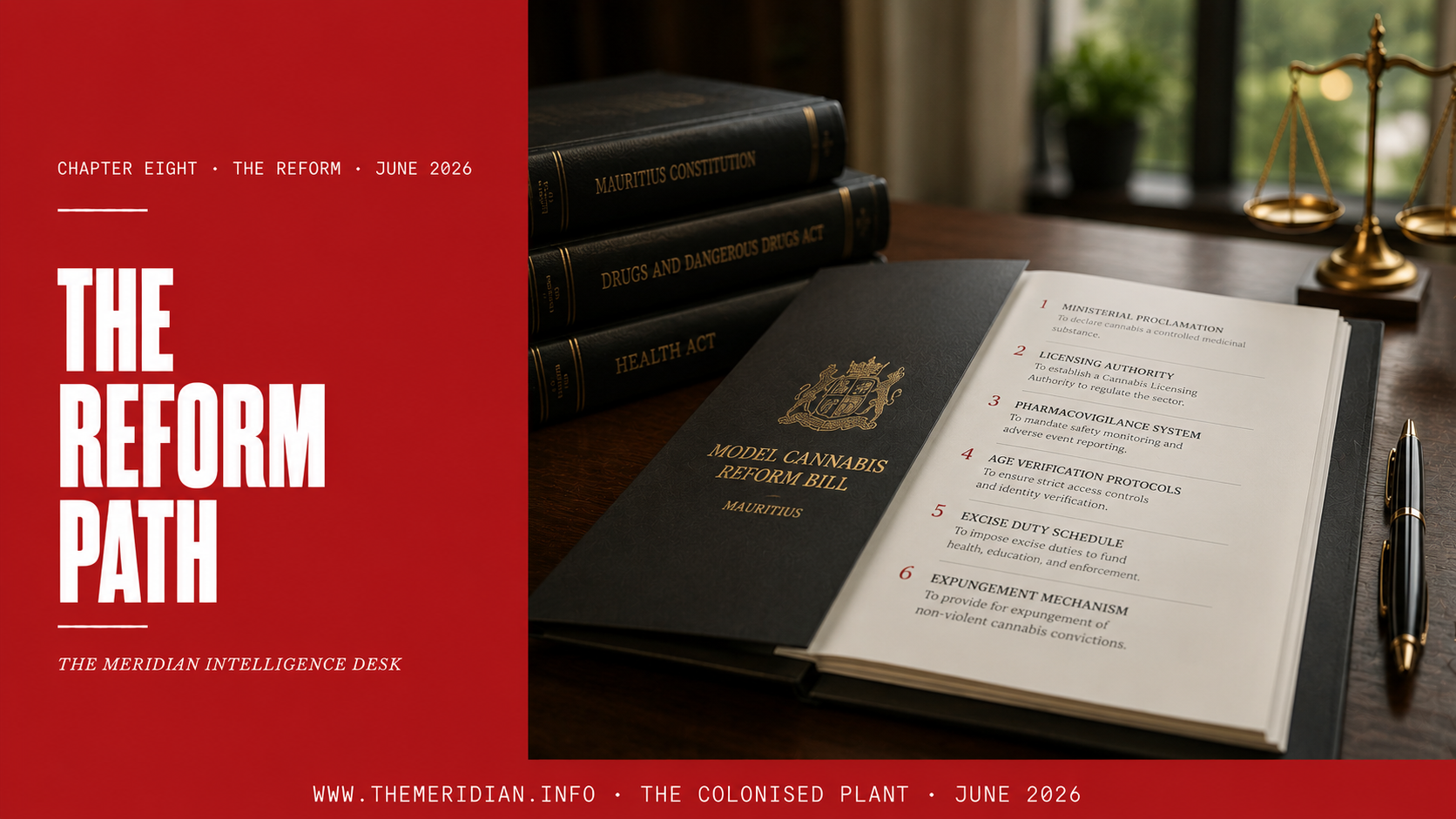
The 2022 amendment never proclaimed. The FAREI hemp cultivation pilot. What first-mover advantage in the Indian Ocean cannabis economy would mean for a small island with no productive base and a 58-year trade deficit.
Citing Zangrandi, Patrignani and Schiavone in the Journal of Geoeconomics, June 2026. The semiconductor ecosystem as the most consequential geoeconomic battleground of the 2020s. What a small island developing state can realistically extract from it.
Fourteen African currencies pegged to the euro without ECB representation, voting rights, or structural funds. The CBAM as green colonialism. The asymmetric currency dynamics between the euro and Global South currencies. The slavery structural consequences the Pope acknowledged and the system has not.
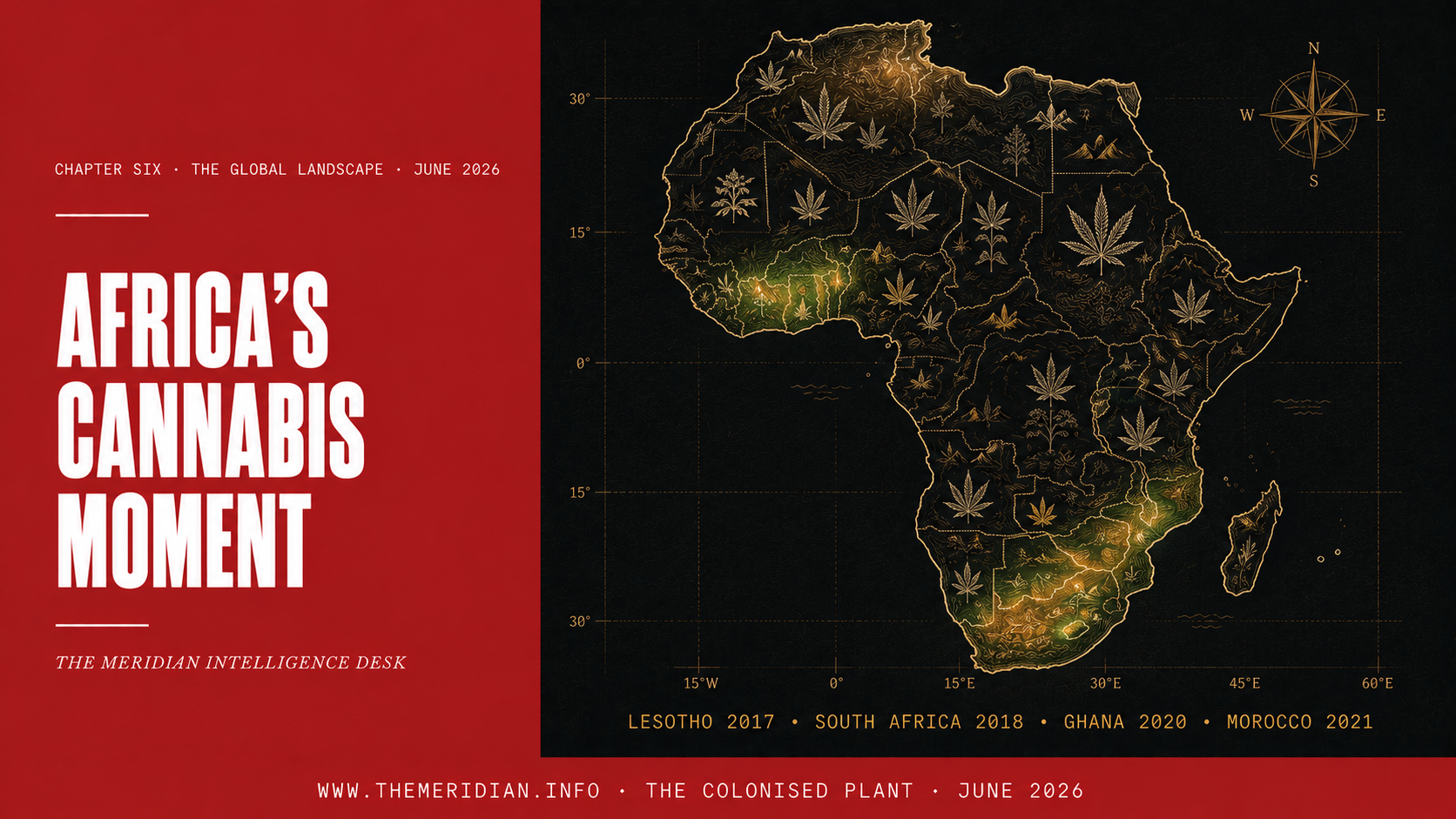
Lesotho 2017 — the first African country to legalise medical cannabis cultivation. South Africa's Constitutional Court 2018 ruling. Ghana, Zimbabwe, Zambia, Eswatini, Malawi following. The continent that grew the plant for millennia is now building the industry. The Meridian maps the African cannabis economy.
The Asian Development Bank's latest regional economic update. Growth forecasts revised downward across developing Asia. The Iran war impact on energy costs. The Global South caught between higher import bills and weaker export demand.
The question Jonathan Davies of IMEN Economics did not answer on 21 May 2026. The Meridian's response. The yen is not the policy failure. The yen is the policy.
Giscard d'Estaing's 1965 phrase. The dollar as the global reserve currency. How the United States finances its deficits by issuing the asset the world demands. What the Global South pays for this privilege in import costs and debt servicing.
Thailand decriminalised cannabis in June 2022. A partial reversal followed in 2024. The tourism impact. The agricultural economy. The regulatory framework. What Asia can learn from the first country in the region to move — and the complications that followed.
Uruguay was the first country in the world to fully legalise cannabis at the federal level in December 2013. The state-controlled model. The pharmacy distribution system. The tourist problem. The US pressure. Thirteen years of evidence on what happens when a country decides the law was wrong.
The closing essay of The Meridian's Abundance Trap series. Why resource-rich economies fail to convert abundance into sustainable development. The circular economy gap that keeps the Global South extractive. The structural reform that closes it.
75% of the health budget consumed by wages. Candos Hospital's tarpaulin roof. The Presidential Palace Rs 600 million renovation. One in five Mauritians diabetic. The private clinic extraction model. Cannabis as the exit drug from a pharmaceutical import bill the country cannot afford.
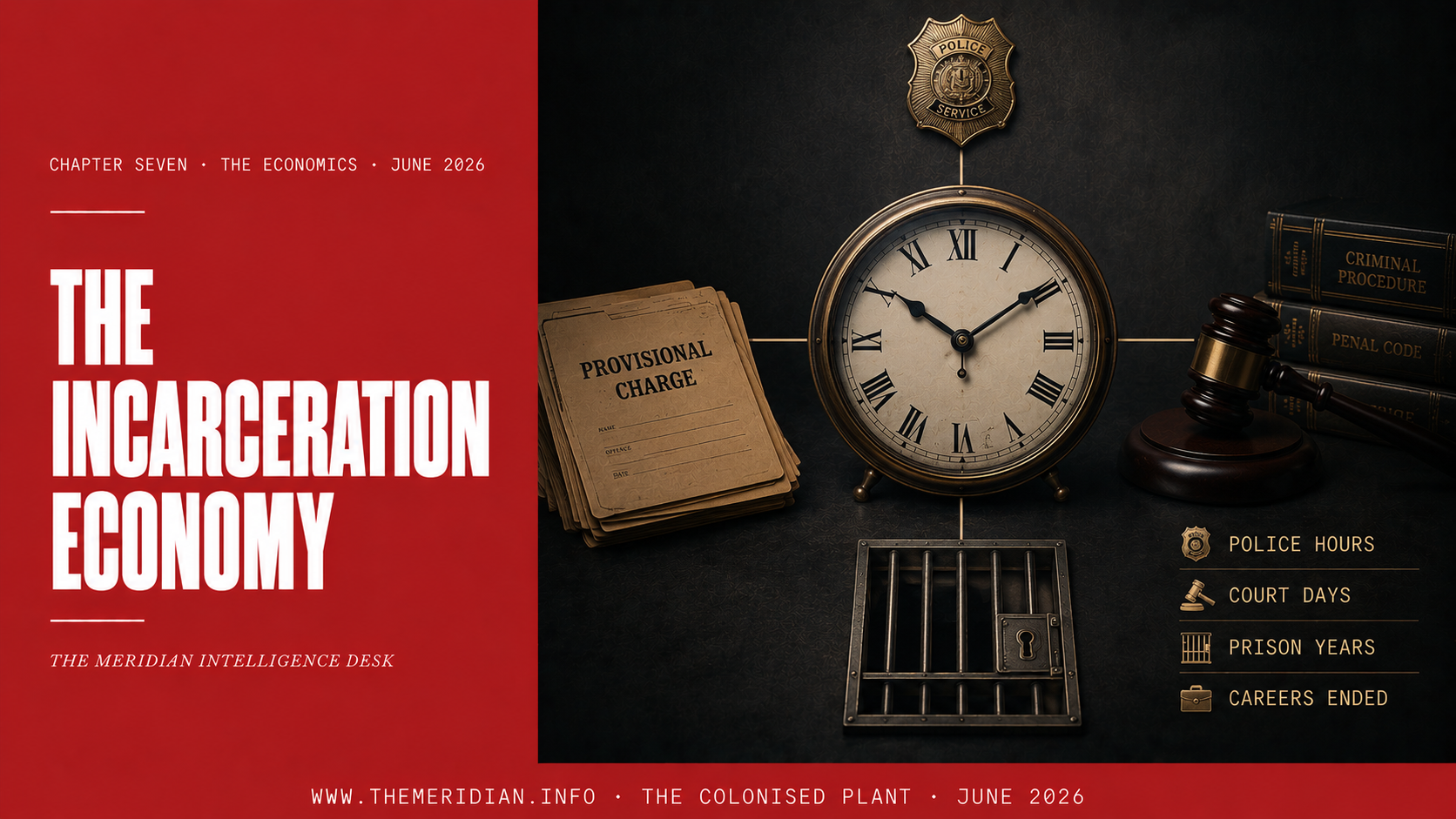
On 27 May 2026, two Grade 6 pupils in a primary school in the south of Mauritius were placed under police investigation for cannabis. They are approximately eleven years old. This is the Dangerous Drugs Act 2000 working exactly as designed. The design is the problem.
Germany's IG Metall framework. Hoogovens as the Dutch absorber of British Steel via Corus in 1999. The counterfactual argument: what structural wage policy would have done for British industrial capacity. The lesson for the Global South on wages as industrial policy.
One currency. Twenty economies. No shared fiscal authority. TARGET2 at €1.1 trillion.
How the dollar reserve status allows the United States to borrow without consequence while the Global South bears the cost.
Growth forecasts revised downward. Iran war energy cost impact. The Global South between higher import bills and weaker export demand.
The fastest-growing legal industry in the world by CAGR. $57 billion in 2023. Projected $100 billion by 2028. The Global South excluded from the market its plants created.
The State of the Mind publishes original working papers submitted to SSRN with Digital Object Identifiers. WP-2026-01 introduces elastic political hysteresis as an independently derived theoretical concept applied to small island developing states. The VAT Buffer paper introduces the Household Protection Gap and the Fiscal Amplification of Imported Inflation mechanism. All papers are open access and freely available.
Read the Working Papers → thestateofthemind.com/papers