Resource Sovereignty: Securing Critical Mineral Supply Lines in Sub-Saharan Africa
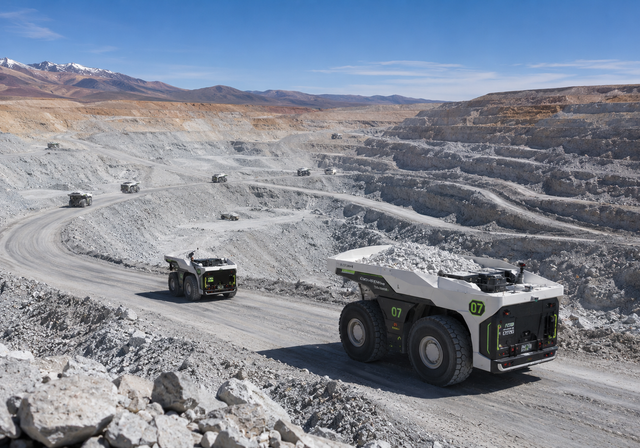
Sub-Saharan Africa holds the geological foundations of the global energy transition. The Democratic Republic of Congo supplies over 70 per cent of the world's cobalt. Zimbabwe has emerged as Africa's leading lithium producer. South Africa holds approximately 80 per cent of known platinum group metal reserves. Yet fewer than 5 per cent of Africa's critical minerals are refined or processed on the continent. The gap between what Africa holds in the ground and what it captures in economic value is the defining structural problem of the continent's mineral sector, and the defining investment opportunity for allocators willing to engage with processing infrastructure rather than extraction alone.
The International Energy Agency projects that global lithium requirements will grow fivefold by 2040, graphite and nickel will double, and cobalt and rare earth elements will expand by 50 to 60 per cent, as electric vehicle adoption and grid-scale energy storage deployment accelerate across the major economies. Sub-Saharan Africa sits at the centre of the supply response to that demand. The DRC's cobalt production surged 25 per cent from 2021 levels to reach 220,000 tonnes in 2025, according to Business Tech Africa analysis. Africa produced 124,230 tonnes of lithium carbonate equivalent in 2024. The continent holds 26.7 million tonnes of identified lithium resources, representing 5 per cent of the global total, with Zimbabwe leading production alongside Mali, Namibia, South Africa, Ghana, and the DRC. Mineral exploration spending across Africa reached over $2.5 billion in 2025, a 15 per cent increase from 2021 levels, adding over 150,000 formal sector jobs continent-wide. The resource base is real, growing, and strategically critical. The problem is where the value goes.
Fewer than 5 per cent of Africa's critical minerals are refined or processed locally, according to African Pact's 2025 analysis. The remainder is exported as raw ore or concentrate to processing facilities in China, which currently dominates the midstream and downstream segments of the critical mineral supply chain across cobalt, lithium, graphite, and rare earth processing. The consequence for African producing nations is a structural value leakage: the country that holds the cobalt or lithium captures the extraction-stage revenue, while the country that refines it into battery-grade material captures the higher-value downstream margin.
The investment implication is direct. The processing gap represents a capital deployment opportunity in refining, smelting, and chemical-processing infrastructure that is structurally required by both African governments asserting domestic value-add mandates and Western buyers seeking to reduce dependence on Chinese midstream processing. The allocator who positions in processing infrastructure in a jurisdiction with confirmed mineral reserves, stable licensing, and access to the required energy and logistics infrastructure is occupying the value-capture node that is currently the most structurally undersupplied point in the critical mineral supply chain.
African governments have moved from rhetoric to legislation on domestic processing requirements, and the pace of that shift has accelerated markedly in 2025 and 2026. Zimbabwe imposed export bans on unprocessed lithium concentrates in 2022 and maintained and strengthened them through 2025 and into 2026, specifically to incentivise domestic processing before export. In June 2025, Zimbabwe announced it would ban the export of lithium concentrates from 2027, providing an explicit implementation timeline for the processing mandate.
The DRC's approach to cobalt has been more volatile but equally directional. The DRC imposed an export ban on cobalt in February 2025, lifted it in October 2025, but retained a quota system to manage export volumes while channelling production toward domestic refining. The quota system stabilised cobalt prices at between $30,000 and $35,000 per tonne after a 2025 price dip, and the DRC government is now considering flexible export quotas to balance market stability with domestic processing development. Multiple African economies implemented export restrictions during 2025 and 2026 simultaneously, suggesting a degree of regional policy coordination that strengthens the collective negotiating position of African producing nations with international processors.
African mineral producers operating the domestic processing mandate face a simultaneous compliance requirement from the other direction. Western buyers, particularly European manufacturers subject to the EU Battery Regulation, require verified provenance, environmental and social due diligence documentation, and traceability data for every stage of the mineral supply chain from mine to battery-grade product. The EU Battery Regulation establishes carbon footprint requirements, supply chain due diligence obligations, and recycled content thresholds that apply to batteries placed on the European market, including those used in electric vehicles and industrial energy storage systems.
The practical consequence is that an African mineral producer seeking to sell into the European market must simultaneously satisfy the domestic government's processing mandate and the European buyer's compliance requirements. A cobalt mine in the DRC that has not established third-party verified traceability from pit to refined product, cannot demonstrate compliance with the OECD Due Diligence Guidance for Responsible Mineral Supply Chains, and cannot provide carbon footprint data for its processing operations will find access to the most premium European market segment progressively restricted, regardless of the quality of the underlying material.
Africa holds the minerals that the energy transition requires. The continent does not yet hold the processing infrastructure, compliance architecture, or traceability systems that the highest-value buyers in the global market are increasingly demanding as a condition of purchase. That gap is where the capital needs to go.
China's dominance of the midstream processing segment of the critical mineral supply chain is the structural context within which every other discussion of African mineral development takes place. China currently processes the majority of the world's cobalt, lithium, graphite, and rare earth materials, regardless of where those materials are mined. An African cobalt mine that exports its output to China for processing before it reaches a Western battery manufacturer is contributing to a supply chain architecture that both Western governments and African host governments are now explicitly trying to restructure.
Zhejiang Huayou Cobalt's $400 million commitment to a lithium sulphate plant in Zimbabwe, scheduled to commence production in the first quarter of 2026, illustrates the paradox. Chinese capital is actively investing in African processing infrastructure, which advances the domestic value-add agenda of African governments but does not necessarily resolve the Western concern about Chinese processing dominance. The question of who owns and operates the processing facility is as strategically significant as the question of where it is located. A Chinese-owned lithium sulphate plant in Zimbabwe is geographically in Africa but commercially still within the Chinese processing supply chain.
In February 2026, the US State Department convened a critical minerals ministerial meeting attended by representatives of 54 countries and the European Commission. Vice President JD Vance announced the creation of a preferential trade zone that would maintain a price floor for critical minerals through adjustable tariffs, explicitly framing it as a mechanism to combat Chinese dumping and reduce Western dependence on Chinese processing.
For African mineral producers, the US preferential trade zone represents both an opportunity and a constraint. It offers access to a premium market with a supported price floor, but it requires supply chain compliance with Western provenance and due diligence standards that most African producers are not yet positioned to meet. The processing infrastructure investment required to qualify for the preferential zone is the same investment required to satisfy African domestic processing mandates. The two policy pressures are converging on the same structural requirement.
The investment case for critical mineral processing infrastructure in Sub-Saharan Africa rests on the convergence of three verified structural drivers. First, African governments are mandating domestic processing as a condition of new and renewed mining concessions, making raw export increasingly commercially and legally restricted. Second, Western buyers are imposing compliance requirements that can only be satisfied by processing operations with verified traceability and environmental standards, creating a premium market segment for compliant African-processed material. Third, the Chinese processing dominance that has historically provided the path of least resistance for African mineral producers is now the target of explicit Western industrial policy countermeasures, creating a commercial opening for non-Chinese processing capacity.
The DRC and Zambia have established a joint battery value chain venture with support from the African Development Bank, focused on cobalt and copper processing before export. Morocco is building a battery materials manufacturing ecosystem at scale: Gotion High Tech's gigafactory in Kenitra commenced operations in the third quarter of 2026 with an initial capacity of 20 gigawatt-hours, with later phases potentially expanding to 100 gigawatt-hours. BTR New Material Group is developing cathode material industrial units in Tangier. These are not pilot projects. They are industrial-scale processing investments that demonstrate the commercial viability of the African processing model when the right combination of policy stability, energy access, and logistics infrastructure is present.
The critical constraint, consistently identified across every African processing initiative, is energy. Mining operations already consume substantial portions of available electricity in countries like Zambia and the DRC, creating severe constraints for the additional energy-intensive downstream processing operations that domestic value-add mandates require. This connects the critical mineral processing investment thesis directly to the base-load energy infrastructure argument examined in an earlier briefing in this series: without a reliable, sufficient, and affordable power supply, the processing facilities that both African governments and Western buyers require cannot operate at commercial scale.
The IEA's demand projections are unambiguous. Lithium requirements will grow fivefold by 2040. Cobalt, graphite, nickel, and rare earth elements will follow on comparable trajectories. Sub-Saharan Africa holds the geological endowments to supply a significant share of that demand. The DRC's 70 per cent share of global cobalt, Zimbabwe's emergence as Africa's leading lithium producer, and South Africa's 80 per cent share of known PGM reserves are not contested facts. They are the foundation of the investment thesis.
What is contested is who captures the processing value, who owns the compliance architecture, and who controls the supply chain between the mine and the battery factory. The convergence of African domestic processing mandates, Western compliance requirements, and US preferential trade zone policy is creating a narrow but genuine commercial opening for processing infrastructure investment that is neither Chinese-controlled nor compliance-deficient. Occupying that opening requires capital, patience, and the operational capability to build processing facilities that satisfy both the host government's industrial policy requirements and the Western buyer's due diligence demands simultaneously.
The Meridian Intelligence Desk provides confidential critical mineral sector assessments, processing infrastructure investment analysis, and supply chain compliance frameworks for institutional allocators and industrial partners considering engagement with Sub-Saharan Africa's mineral sector.
Enquiries: editor@themeridian.info
Add comment
Comments