The Retrograde Signal: How Cannabis Modulates the Brain's Brakes and Accelerators

The most enduring institutional myth about cannabis is that it structurally damages the human brain. The narrative, repeated by politicians, police commissioners, and public health literature across a century of prohibition, frames the plant as an invasive narcotic that hijacks neurological function. Modern molecular biology proves the exact opposite. Far from hijacking the brain, the active compounds in cannabis perfectly mimic the human body's own master regulatory system. The mechanism is called retrograde signalling. Understanding it dismantles the brain damage argument at the cellular level and explains precisely how cannabis treats epilepsy, PTSD, and chronic pain.
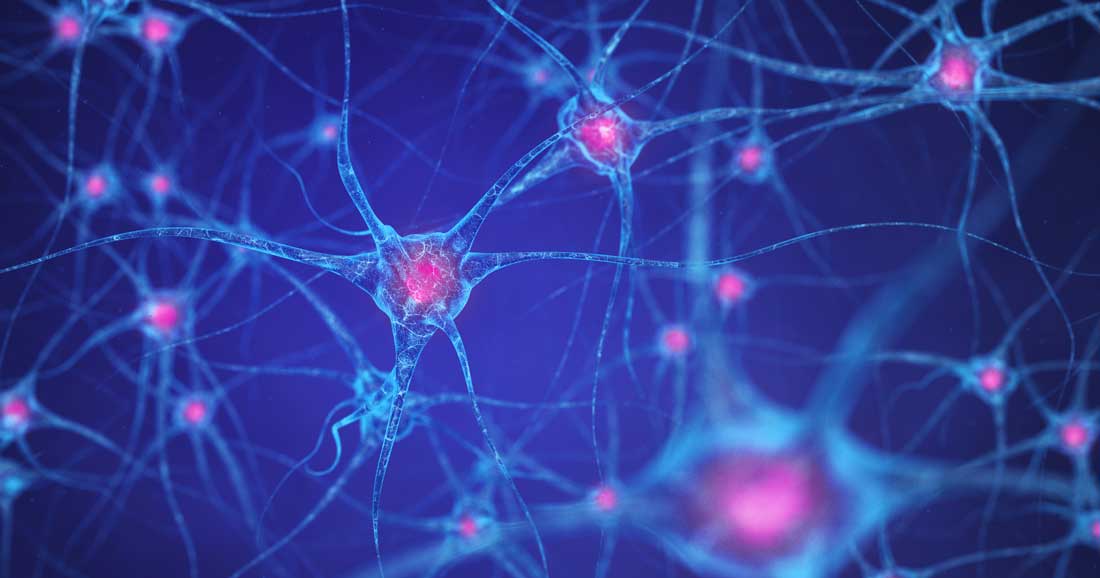
Every thought, every sensation, every memory, and every movement you have ever experienced has been produced by neurons communicating with each other across microscopic gaps called synaptic clefts. The standard model of this communication is directional: a presynaptic neuron (the sender) releases chemical neurotransmitters across the synaptic cleft, and those chemicals bind to receptors on the postsynaptic neuron (the receiver), triggering the next step in the neural chain. This is how serotonin travels. It is how dopamine travels. It is how adrenaline travels. The signal moves forward, from sender to receiver, in what neurobiologists call orthograde transmission. The endocannabinoid system breaks this rule entirely. And in breaking it, it performs a function that no other neurotransmitter system can perform: it allows the receiving neuron to tell the sending neuron to stop. The retrograde signal is the brain's most fundamental mechanism for self-regulation. Cannabis activates it.
retrograde signalling endocannabinoid system synapse presynaptic postsynaptic CB1 receptor anandamide 2-AG backward signal
The sequence of the retrograde signal is precise and documented. When a postsynaptic neuron is being bombarded with too many incoming signals, firing too rapidly in a state of neurological over-excitation, it synthesises endocannabinoids (principally anandamide and 2-arachidonoylglycerol, known as 2-AG) on demand in its membrane. These endocannabinoids are released not forward into the synapse, but backward: they travel from the receiver to the sender, bind to the CB1 receptors located on the presynaptic neuron's terminal, and instruct the sending neuron to reduce its output. The signal from the over-stimulated receiver reaches the over-active sender and says, in the language of molecular biology: slow down.
This retrograde feedback loop is what neurobiologists call depolarisation-induced suppression of excitation (DSE) or depolarisation-induced suppression of inhibition (DSI), depending on which neurotransmitter is being modulated. It is the cellular definition of homeostasis: the brain's mechanism for correcting its own imbalance by feeding information about the receiving end back to the sending end. No other major neurotransmitter system performs this function. The endocannabinoid system is unique in its retrograde direction, and that uniqueness is the source of its therapeutic power. Cannabis works because it activates exactly this mechanism, supplementing the body's own retrograde signal with plant-derived compounds that bind to the same CB1 receptors and produce the same corrective effect.
glutamate excitatory neurotransmitter GABA inhibitory neurotransmitter cannabis modulation retrograde signal accelerator brakes
To understand why the retrograde signal matters clinically, it is necessary to understand the two neurotransmitters it primarily modulates. They are glutamate, the brain's principal excitatory neurotransmitter, and GABA (gamma-aminobutyric acid), the brain's principal inhibitory neurotransmitter. Glutamate is the accelerator. GABA is the brakes. The endocannabinoid system, through its retrograde signal, is the mechanism that adjusts both in real time to maintain neurological balance.
The brain's primary excitatory neurotransmitter. Glutamate makes neurons fire. Under normal conditions it is essential for learning, memory formation, and alertness. Approximately 90 percent of the brain's synapses use glutamate as their primary signalling molecule.
When trauma, neurological disorder, or injury causes the brain to release excessive glutamate into synapses, the result is a state of toxic over-excitation called excitotoxicity: neurons literally firing themselves to death. In less extreme cases, excessive glutamate drives the hyper-vigilance and involuntary flashbacks of PTSD, and in the most extreme cases produces the violent, uncontrolled electrical storms that constitute epileptic seizures.
The brain's primary inhibitory neurotransmitter. GABA slows neural activity, promoting calm, sleep, and muscle relaxation. It counterbalances the excitatory activity of glutamate, maintaining the equilibrium that constitutes normal neurological function.
When the brain's GABA system is insufficient or dysregulated, anxiety disorders, insomnia, and muscle spasticity result. Most pharmaceutical anxiolytics and sedatives work by enhancing GABA activity: benzodiazepines, barbiturates, and alcohol all act on GABA receptors. The endocannabinoid system modulates GABA through the same retrograde mechanism, but with far greater precision and without the addictive profile of pharmaceutical GABA enhancers.
The endocannabinoid system acts as what neuroscientists describe as the master conductor of the glutamate-GABA balance. When a glutamatergic neuron (one that releases glutamate) is over-firing, the postsynaptic neuron it is bombarding releases endocannabinoids backward, activating CB1 receptors on the glutamatergic terminal and suppressing the release of further glutamate. The circuit breaker is engaged. The seizure stops. The flashback is interrupted. The pain signal is attenuated. When the GABA system requires fine-tuning to prevent excessive sedation, the endocannabinoid system modulates GABAergic terminals with equal precision. The system does not simply suppress or excite: it calibrates, continuously and in real time, the balance between the brain's accelerator and its brakes.
Far from hijacking the brain, cannabis activates the brain's own primary feedback mechanism. The plant compound and the body's own molecule bind to the same receptor and perform the same function. The difference is pharmacokinetic, not pharmacodynamic.
cannabis epilepsy PTSD chronic pain clinical application retrograde signal CB1 receptor FDA Epidiolex PTSD endocannabinoid
cannabis brain damage myth retrograde signal cellular evidence neuroscience endocannabinoid homeostasis not damage
The institutional claim that cannabis damages the brain fails at the cellular level for a specific and documented reason. Brain damage, in the neurological sense, is produced by processes that destroy neurons or permanently impair their function. The two primary mechanisms are excitotoxicity (neurons over-firing due to excess glutamate, literally burning out from excessive activation) and oxidative stress (damage to neurons from toxic oxygen radicals produced by abnormal metabolic activity).
The retrograde signal mechanism of the endocannabinoid system acts against both of these damage mechanisms. By suppressing excess glutamate release, endocannabinoid signalling reduces excitotoxicity. By modulating the immune response through CB2 receptors, it reduces oxidative stress. This is why cannabinoids have been studied as neuroprotective agents, not neurotoxic ones. The US Department of Health and Human Services, in its Patent 6630507 granted in 2003, specifically described cannabinoids as "neuroprotective antioxidants" useful in the treatment of neurological diseases including Alzheimer's disease, Parkinson's disease, and HIV dementia. The government that funded global cannabis prohibition simultaneously held a patent on its brain-protective properties. The brain damage narrative and the neuroprotection patent exist in the same institutional record. The public was shown one and not the other.
The founding paper on retrograde endocannabinoid signalling: Wilson RI, Nicoll RA, "Endocannabinoid Signaling in the Brain." Science, 2002, 296(5568), 678-682. doi:10.1126/science.1063545. The paper that established depolarisation-induced suppression of excitation (DSE) as the primary mechanism of endocannabinoid retrograde signalling. Freely available via PubMed.
Glutamate modulation and epilepsy: Devinsky O et al., "Trial of Cannabidiol for Drug-Resistant Seizures in the Dravet Syndrome." New England Journal of Medicine, 2017, 376, 2011-2020. doi:10.1056/NEJMoa1611618. The Phase 3 trial that led to FDA approval of Epidiolex.
PTSD and endocannabinoid system: Viveros MP et al., "The endocannabinoid system in critical neurodevelopmental periods: sex differences and neuropsychiatric implications." Journal of Psychopharmacology, 2012, 26(1), 164-176. Russo EB, "Clinical endocannabinoid deficiency reconsidered." Cannabis and Cannabinoid Research, 2016, 1(1), 154-165. doi:10.1089/can.2016.0009.
Chronic pain: Aviram J, Samuelly-Leichtag G, "Efficacy of Cannabis-Based Medicines for Pain Management." Journal of Pain Research, 2017, 10, 2009-2022. doi:10.2147/JPR.S132833. Systematic review of randomised controlled trials.
Neuroprotection patent: US Patent 6630507, "Cannabinoids as antioxidants and neuroprotectants." Assignee: The United States of America as represented by the Department of Health and Human Services. Granted 7 October 2003. Available at: patents.google.com/patent/US6630507.
To criminalise cannabis is not to protect the public from a toxic narcotic. It is the legal prohibition of the external activation of the human body's most fundamental self-regulatory mechanism. The retrograde signal is not a pharmacological curiosity. It is the cellular process through which the brain maintains its own equilibrium. Cannabis supplements it. The Dangerous Drugs Act 2000 makes that supplementation a criminal offence. The science has known this is wrong since 2002, when Wilson and Nicoll published the mechanism in Science magazine. The law has not caught up with the biology. In 2026, it still has not.
This is the eighth article in The Colonised Plant: The Cannabis Edition, June 2026, and the fifth in Chapter Two: The Science. The next article examines the extraordinary biological fact at the heart of the prohibition: that human breast milk contains the body's own endocannabinoids, and what that means for the claim that cannabis is an unnatural substance. The complete edition is published at themeridian.info/june-2026.
Add comment
Comments