Mother's Milk: The Endocannabinoid Fact That Destroys the Unnatural Poison Myth

The architecture of global cannabis prohibition relies on a singular emotional premise: that the plant is an unnatural, foreign toxin that corrupts the pure baseline state of the human body. To maintain this legal fiction, the state must ignore the very first biochemical signals a human being receives upon entering the world. Human breast milk contains anandamide and 2-arachidonoylglycerol, the body's own cannabis-like molecules. Without them, newborns do not learn to feed. The endocannabinoid system is not a vulnerability the cannabis plant exploits. It is the system that sustains human life from its first hours.
Every human being who has ever lived was, within hours of birth, given a dose of endocannabinoids. They received it not from a laboratory or a plant, but from their mother. It was delivered in breast milk. The mammary glands of the human mother actively synthesise 2-arachidonoylglycerol (2-AG) and anandamide (AEA) and concentrate them in the colostrum and milk produced in the first days and weeks of a newborn's life. These are not trace contaminants. They are not incidental byproducts of mammary chemistry. They are deliberately produced in the mammary glands and passed to the nursing infant to perform a function without which the newborn cannot survive: they activate the infant's CB1 receptors and trigger the suckling reflex. Without cannabinoid receptor activation, a newborn mammal will not feed. The prohibitionist narrative calls cannabis an unnatural poison. The biochemistry of human infancy calls it a survival mechanism.
breast milk 2-AG anandamide endocannabinoids mammary glands mass spectrometry lipid analysis human newborn
Rigorous mass spectrometry and lipid analysis of human breast milk have confirmed the presence of both major endocannabinoids. The methodology is precise and the findings are reproducible: the molecules are identifiable, measurable, and consistently present in human milk samples across diverse populations. They are not present by accident. The mammary gland is not a passive conduit for random biochemical compounds. It is a highly selective organ that synthesises specific molecules for specific biological purposes. The presence of 2-AG and anandamide in breast milk at measurable concentrations reflects active, purposeful synthesis by the mother's body directed at the biological needs of the infant.
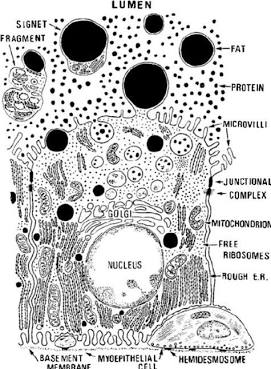
To understand why the body produces these molecules for its newborns, it is necessary to understand the relationship between the endocannabinoids in breast milk and their molecular counterparts in the cannabis plant. The cannabis plant produces phytocannabinoids. The human body produces endocannabinoids. They are not identical molecules, but they are structurally related and they bind to the same receptors. The relationship between them is one of the most significant findings in modern pharmacology. It is also the finding that makes the "unnatural drug" argument against cannabis permanently untenable.
The body's own bliss molecule, named from the Sanskrit ananda. Synthesised by the mammary gland and concentrated in breast milk. Binds to CB1 receptors throughout the brain and nervous system. Present in the colostrum delivered to newborns in the first hours of life. Regulates appetite, mood, pain, and the suckling reflex.
The second major endocannabinoid, present in breast milk at higher concentrations than anandamide. Binds to both CB1 and CB2 receptors. The most abundant endocannabinoid in the central nervous system. Regulates synaptic plasticity, immune function, and energy metabolism in the developing infant. Critical to the retrograde signalling mechanism that protects the newborn brain from excitotoxicity.
The non-psychoactive primary cannabinoid of the cannabis plant. Structurally related to anandamide. Engages the same CB1 and CB2 receptors as anandamide, as well as serotonin and TRPV1 receptors. FDA-approved as Epidiolex for childhood epilepsy. Classified by the Dangerous Drugs Act 2000 as a dangerous drug without medical value.
The primary psychoactive cannabinoid of the cannabis plant. Structurally related to 2-AG. Binds to CB1 and CB2 receptors, the same receptors activated by 2-AG in the infant's brain from the first hours of life. Classified in Schedule IV by the UN Single Convention of 1961, the same year the endocannabinoid system had not yet been discovered.
suckling reflex endocannabinoid CB1 receptor Dr Ester Fride newborn mammal failure to thrive survival cannabinoid
When an infant is born, it must immediately transition from receiving passive, intravenous nutrition through the umbilical cord to actively consuming and digesting food for the first time in its life. This transition requires an immediate, powerful, and precisely timed biological drive to seek and consume the mother's milk. The mechanism through which the newborn acquires this drive was identified by the late Dr Ester Fride and her colleagues in pioneering neurodevelopmental research that fundamentally changed the understanding of the endocannabinoid system's role in early life.
The sequence of events is as follows. The endocannabinoids present in the mother's colostrum, the concentrated first milk produced in the days immediately after birth, cross into the infant's digestive tract and central nervous system, binding directly to the infant's newly formed CB1 receptors. This receptor activation performs two simultaneous functions: it stimulates the infant's appetite and it coordinates the motor-neural pathways required for the suckling action itself. The newborn, receiving its first dose of endocannabinoids from the mother's milk, is simultaneously told to be hungry and taught how to feed.
The newborn's umbilical cord is cut. Passive intravenous nutrition ceases. The infant must immediately begin active feeding or face failure to thrive. Its CB1 receptors are fully formed and awaiting activation.
The mother's mammary glands have synthesised 2-AG and anandamide and concentrated them in her colostrum. The infant receives this first feed and the endocannabinoids cross into the digestive tract and bloodstream.
The endocannabinoids bind to CB1 receptors in the infant's brain, triggering two simultaneous responses: stimulation of appetite (the hunger drive) and coordination of the motor-neural pathways for suckling. The infant is told to be hungry and taught how to eat, simultaneously, by its mother's endocannabinoids.
In laboratory studies with mammalian models, when the CB1 receptor is chemically blocked with a cannabinoid antagonist, the newborn loses the instinct to suckle. It rejects the mother's milk. Without cannabinoid receptor activation, the infant fails to feed and, without intervention, will not survive. The endocannabinoid mechanism is not peripheral to infant survival. It is the trigger for it.
Beyond triggering the appetite, the endocannabinoids in breast milk serve ongoing neuroprotective functions throughout the nursing period. As retrograde modulators, they calm hyper-excited synapses in the rapidly developing infant brain, protecting it from excitotoxicity during the period of most intense neural development in a human life. 2-AG and anandamide also regulate the infant's metabolic rate, ensuring the high-fat content of human milk is efficiently converted to the energy required for rapid cellular growth.
The CB1 receptors in the brain of a 60-year-old patient finding relief from a cannabis tincture are the exact same receptors that were activated by their mother's milk on the day they were born. The molecular structures being criminalised are the same structures that sustained the citizen's life in its most vulnerable hours.
cannabis unnatural myth demolished breast milk endocannabinoid Dangerous Drugs Act 2000 prohibition hypocrisy biological reality
The phytocannabinoids produced by Cannabis sativa L., specifically THC and CBD, are therapeutically effective precisely because they are structural analogues of the endocannabinoids that the human body already produces and relies upon. THC mimics 2-AG. CBD mimics anandamide. The receptors they bind to are the same receptors that received the endocannabinoids in the mother's milk. The biological pathway cannabis activates in a patient using it therapeutically is the same biological pathway that sustained that patient's life as a newborn. The claim that cannabis is a foreign toxin introduced into a pure and unaffected biological system is not merely scientifically incorrect. It is the precise opposite of what the biology shows.
When the Dangerous Drugs Act 2000 tells a Mauritian citizen that cannabis is a dangerous drug without medical value, it is making a claim about a plant whose active compounds are structural analogues of the molecules present in human breast milk. When the state prosecutes a citizen for cannabis possession, it is criminalising the external activation of a biological system that was first activated by the most natural and universally endorsed act of human caregiving: a mother feeding her newborn child. The same CB1 receptor. The same molecular family. The same biological system. One activation is celebrated as the foundation of infant health. The other is a criminal offence carrying a maximum of two years imprisonment under Mauritian law.
To criminalise the external activation of the endocannabinoid system is not an act of public health. It is the legislative prohibition of the molecular family that sustains human life from its first hours. The breast milk of every mother who has ever lived contained these molecules. The law that imprisons citizens for engaging with them makes no distinction. The biology does not support the law. The law has not engaged with the biology.
Endocannabinoids in breast milk confirmed: Fride E et al., "Endocannabinoids and food intake: Newborn suckling and appetite regulation in adulthood." Experimental Biology and Medicine, 2003, 228(9), 1121-1128. doi:10.1177/153537020322800918. Dr Ester Fride's foundational paper documenting the role of endocannabinoids in the suckling reflex and early appetite regulation.
2-AG and anandamide in human milk: Botek M et al., "Endocannabinoids in human breast milk." Nutrients, 2021, 13(9), 3216. doi:10.3390/nu13093216. Mass spectrometry confirmation of 2-AG and anandamide in human breast milk samples. Freely available open access.
CB1 receptor activation and suckling: Fride E et al., "Critical role of the endogenous cannabinoid system in mouse pup suckling and growth." European Journal of Pharmacology, 2001, 419(2-3), 207-214. doi:10.1016/S0014-2999(01)00953-0. The study demonstrating that CB1 receptor blockade abolishes the suckling reflex in newborn mammals.
Neuroprotection in the developing brain: Fernandez-Ruiz J et al., "Endocannabinoid signalling in the developing brain." Progress in Neurobiology, 2000, 60(6), 549-571. doi:10.1016/S0301-0082(99)00049-9. Documents the neuroprotective and neurodevelopmental roles of 2-AG and anandamide in early postnatal brain development.
THC as 2-AG analogue and CBD as anandamide analogue: Mechoulam R, Parker LA, "The Endocannabinoid System and the Brain." Annual Review of Psychology, 2013, 64, 21-47. doi:10.1146/annurev-psych-113011-143739. The most comprehensive review of the structural and functional relationships between phytocannabinoids and endocannabinoids.
This is the ninth article in The Colonised Plant: The Cannabis Edition, June 2026, and the sixth in Chapter Two: The Science. The next article examines the complete pharmacopoeia: cannabis in the medical literature from Dioscorides to the New England Journal of Medicine, the five-thousand-year documented record of therapeutic use that the prohibition narrative requires its audience to forget. The complete edition is published at themeridian.info/june-2026.
Add comment
Comments