The Colonisation of the Plant: A Political Economy of Cannabis Prohibition
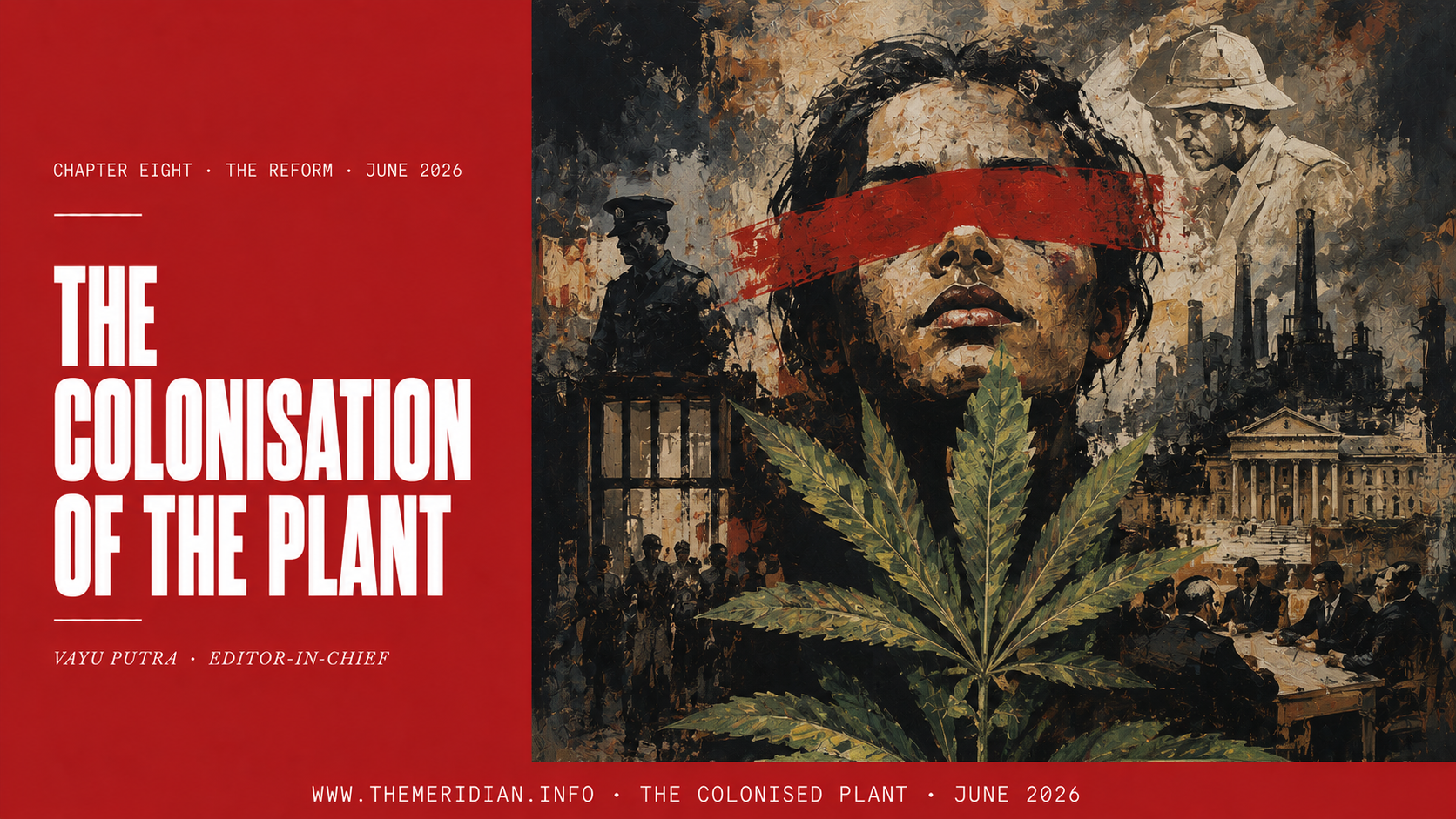
The political economy of cannabis prohibition has a consistent structure, visible across every jurisdiction that has maintained it for a sustained period. The plant is criminalised at the point when its regulation ceases to serve the interests of the state or its commercial allies, and the criminalisation is sustained at the point when enforcement directly serves those interests. The science does not drive the structure. The pharmacological record has been available and contrary to prohibition since at least 1944, when the La Guardia Commission published its conclusions and Harry Anslinger suppressed them. What drives the structure is a convergence of interests: commercial, political, and institutional. In Mauritius, as everywhere else, the question of who benefits from prohibition is more illuminating than the question of whether the plant is dangerous. The plant is not dangerous. The record on that point is closed. The question of who benefits from pretending otherwise is the question this essay addresses.
The title of this publication is The Colonised Plant. I chose that title not as metaphor but as description. The cannabis plant was colonised, in the precise political economy sense of the word, when its regulation was extracted from the communities that cultivated and used it and transferred to an international treaty framework that served the interests of states and commercial actors rather than the interests of those communities. The 1925 Geneva Convention did not arise from a pharmacological emergency. There was no crisis of cannabis-related deaths, no epidemic of cannabis-induced violence, no scientific consensus demanding international action. There was an Egyptian delegate, a political coalition, and a single afternoon in February that changed the legal status of a plant for the following century. That afternoon was not about medicine. It was about power.
political economy cannabis prohibition colonisation plant Vedas Geneva 1925 Anslinger Nixon pharmaceutical patent DDA 2000 Mauritius who benefits prohibition enforcement Municipal Mindset Vayu Putra closing analytical essay
The political economy of cannabis prohibition is not, at its foundation, complicated. It has six structural components that recur across jurisdictions and across time. They are not always all present simultaneously, and their relative weight shifts as the prohibition system matures and as the interests that sustain it evolve. But the pattern is consistent enough to constitute, in the analytical sense, a political economy: a structured relationship between economic interests, political power, and the legal arrangements that connect the two.
The DDA 2000 was not passed in a political vacuum. It was passed in 2000, twelve months after a musician named Kaya was arrested at a public decriminalisation rally, held in custody at Line Barracks police station, and found dead three days later. The forensic pathologist from Reunion who challenged the official cause of death was not given the institutional support to complete that challenge. The riots that followed Kaya's death killed nine people. The government that had presided over that sequence of events passed the most restrictive drug legislation in Mauritian history one year later. The DDA 2000 is not a neutral pharmaceutical intervention. It is a political document. Its timing is its argument.
In the twenty-six years since its passage, the DDA 2000 has served the six structural components of prohibition's political economy with considerable efficiency. The pharmaceutical gap: Mauritian patients cannot access Epidiolex, Sativex, Marinol, or cannabis-derived treatments for diabetes, cancer, and epilepsy, ensuring continued dependence on imported patent-protected pharmaceutical alternatives. The enforcement apparatus: the ADSU, the MRA Cannabis Unit, the Special Striking Team, and the FSL cannabis division represent a significant institutional complex whose budgets depend on the continuation of the prohibition they enforce. The social control instrument: the provisional charge mechanism has been applied to thousands of Mauritians, disproportionately young and Creole, suspending their civil and professional rights before any conviction is recorded. The criminal revenue generation: the Rs 2.5 billion illegal cannabis market exists because the DDA 2000 makes regulated supply impossible, and that market funds the criminal distribution networks that the state claims to be fighting.
The political economy of the DDA 2000 is most legible not in what it prohibits but in who it exempts. It does not touch alcohol. It does not touch tobacco. It does not touch the pharmaceutical opioids prescribed in Mauritian public hospitals at a fifteen per cent addiction rate. It touches cannabis. The exemptions are the argument.
The synthetic cannabinoid crisis is the political economy's most unambiguous self-indictment. The Mauritian state banned the botanical plant. The botanical plant costs Rs 25 per gram to produce legally. The state's enforcement apparatus drove its street price to Rs 3,000 per gram. A synthetic substitute emerged at Rs 100 per dose. Six hundred and fifty-two Mauritian adolescents were hospitalised in four years by that substitute. The substitute is manufactured from chemicals imported through the postal system from China, processed in domestic kitchens with rat poison and acetone, and sold to the youngest and poorest members of Mauritian society.
The state created this market. Not by failing to suppress cannabis. By succeeding in pricing it out of the reach of every person who could not afford Rs 3,000 per gram. The enforcement success created the market the enforcement apparatus cannot control. And the institutional response to that market, the NADC study being planned while the hospitalisations accelerate, the Ministry of Health advisory being considered while 173 adolescents were admitted in 2025 alone, reflects the same political economy that produced the crisis: the interests served by maintaining the structure are more politically powerful than the interests of the adolescents the structure is hospitalising.
The political economy of prohibition could not sustain itself without the Municipal Mindset that Chapter Five of this publication examined in its closing essay. The commercial interests, the enforcement apparatus, the pharmaceutical lobby, and the political class that benefits from prohibition's social control mechanisms are not sufficient, on their own, to maintain a system that the pharmacological, constitutional, economic, and comparative record has so comprehensively refuted. What maintains it, in the end, is the Gramscian hegemonic consent of the governed: the internalisation by the citizens most harmed by prohibition of the state's narrative about why prohibition exists.
The Mauritian citizen who defends the DDA 2000 on public health grounds is not defending his own interests. He is defending the interests of the enforcement apparatus that arrests young men like him disproportionately, the pharmaceutical companies whose patent-protected alternatives he cannot afford, and the political class that uses the provisional charge mechanism as a pre-conviction punishment tool deployed primarily in communities like his. He is doing so in the sincere belief that cannabis is dangerous, that the law protects him, and that the people who challenge it are threats to social order rather than bearers of a pharmacological, constitutional, and historical record that the state has spent decades suppressing.
The antidote to the Municipal Mindset is access to the record. That is what The Colonised Plant is. Not advocacy. Not polemic. The record. Forty-six articles. Eight chapters. The pharmacological evidence, the historical evidence, the constitutional precedent, the economic arithmetic, the human cost, the comparative global landscape, the legislative framework, and now, in this essay, the political economy that produced and maintains the system that all of it describes. The record is the intervention. The Municipal Mindset cannot survive contact with it. The question is only whether enough citizens will read it before the next 652 adolescents are hospitalised.
I began this edition with a question: why does a plant with a zero-death record produce such institutional fury? I have spent forty-six articles answering it. The fury is not pharmacological. It is political. The fury is the defensive response of a structure of interests that prohibition serves, confronted with a pharmacological, constitutional, economic, and comparative record that the structure cannot engage with honestly without conceding that it should not exist.
The Vedas knew this plant as a medicine three thousand years before Geneva criminalised it. The 1894 Indian Hemp Drugs Commission recommended against prohibition 131 years ago. The 1944 La Guardia Commission demolished Anslinger's claims eighty-two years ago. The endocannabinoid system was identified sixty-two years ago. The FDA approved cannabis-derived medicine forty-one years ago. The South African Constitutional Court struck down private prohibition eight years ago. The Mauritius National Assembly passed the 2022 amendment four years ago. Shirish Rummun filed his constitutional petition, incurred Rs 3 million in medical debt, and died waiting for the court to answer him three years ago. Two Grade Six children were placed under police investigation for cannabis on 27 May 2026, seven days before this publication went to press.
The colonisation of the plant is not complete because the science requires it. It is complete because the political economy that sustains it has not yet been confronted with sufficient institutional pressure to make the cost of maintaining it exceed the cost of ending it. The 2022 amendment is the evidence that Parliament has already calculated that the cost exceeds the benefit. The executive's non-proclamation is the evidence that the interests served by maintaining the structure still outweigh, in the political calculus of the executive, the interests of the citizens it has been elected to serve.
That calculus can change. It changed in Canada. It changed in Germany. It changed in South Africa when the Constitutional Court forced the issue that the legislature had declined to address. It is changing in Mauritius through the courts, through the advocacy of the voices recorded in Chapter Eight, through the synthetic cannabinoid crisis that can no longer be managed with institutional silence, and through publications like this one that assemble the record in institutional form and place it before the policymakers who cannot claim, after reading it, that they did not know.
The plant was colonised. The colonisation can end. The instrument for ending it is in the Government Gazette. It is called the Dangerous Drugs (Amendment) Act 2022. It requires one signature. The Meridian has provided the analysis. The instrument is there. The signature is the government's alone to give.
This is the fifth article of Chapter Eight: The Reform, and the closing analytical essay of The Colonised Plant: The Cannabis Edition, June 2026. The final article asks the question that the global cannabis policy record has already answered. The complete edition is published at themeridian.info/june-2026.
Add comment
Comments