Why Was Prof Okey Ndibe Stopped by the DSS at Lagos Airport?
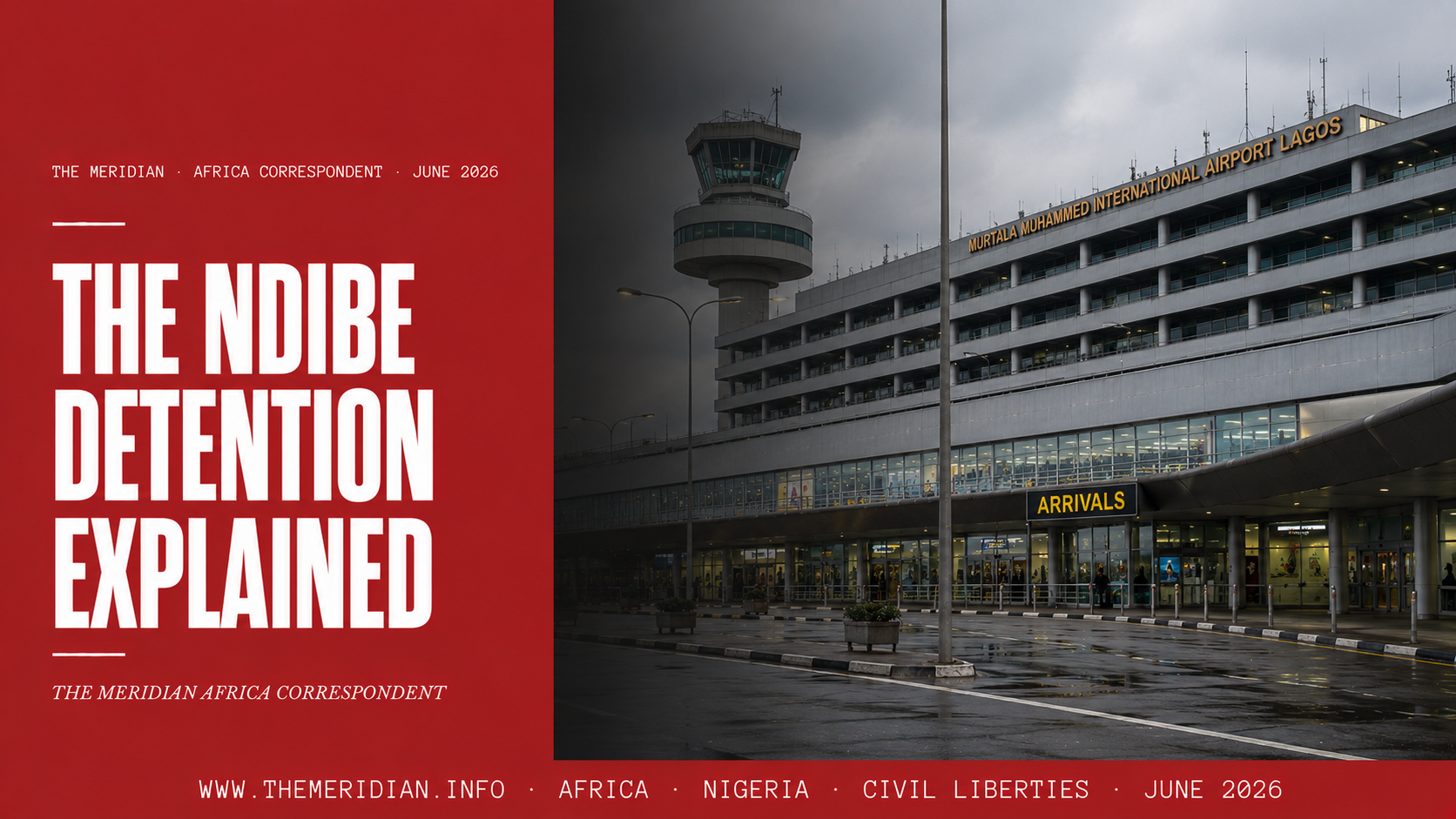
On 1 June 2026, Professor Okey Ndibe, one of Nigeria's most respected literary figures and public intellectuals, was stopped at Murtala Muhammed International Airport upon arriving from the United States. The Department of State Services describes it as a routine administrative clearance lasting under an hour. Prof Ndibe describes it as a detention of more than three hours. Both agree on one underlying fact: his name had been on a DSS security watchlist since 29 January 2013. That is thirteen years. Across five different heads of state. Through a civilian administration, a military-era holdover list, and a government that campaigned explicitly on civil liberties reform.
Prof Okey Ndibe is not an obscure figure. He is a novelist, essayist, and academic whose writing on Nigerian governance, culture, and politics has been published internationally for decades. He has taught at universities in the United States and has been a consistent voice on issues of Nigerian democratic accountability. His presence on a DSS watchlist for thirteen years -- through the Jonathan administration, the entire Buhari presidency, and into the Tinubu era -- is not an administrative oversight. It is a deliberate institutional choice that was only reversed when it became publicly embarrassing. The question is not whether the DSS handled the 1 June encounter professionally. By most accounts, the agents on the ground did. The question is why the watchlist existed at all, and how many more Nigerians are still on it.
According to Favour Dozie, DSS Deputy Director of Public Relations, Prof Ndibe's name has been on the agency's watchlist since 29 January 2013. The current DSS Director-General ordered a comprehensive review and clean-up of outdated Watch-List Actions, some dating to the military era, to prevent citizens from facing unnecessary embarrassment at border points. The 1 June stop was the required physical interface to review Ndibe's file and officially downgrade his status as a final step before complete delisting. The DSS states the process took less than one hour.
Prof Ndibe reported on his Facebook page that he was detained at the airport for more than three hours upon arriving from the United States. Notably, despite characterising the experience as an ordeal, he specifically acknowledged that the two DSS agents who interacted with him were professional, courteous, and decorous throughout. The discrepancy between the DSS timeline of under one hour and Ndibe's account of more than three hours has not been officially reconciled.
The Ndibe incident is not primarily a story about one encounter at an airport. It is a story about an institutional architecture that allowed a prominent Nigerian intellectual to remain on a security watchlist for thirteen years without his knowledge, without any formal charge, and without any mechanism for him to challenge or even discover his status. The DSS's own acknowledgement that some Watch-List Actions date to the military era is the most significant detail in its entire statement. Nigeria's last military government ended in 1999. That means Nigerians have potentially been flagged at entry points based on security designations made by a military administration that ceased to exist over a quarter of a century ago.
Some names on Nigeria's DSS watchlist were placed there by a military government that has not existed for 27 years. The civilian administrations that followed -- four of them -- did not review, audit, or clean the list. That is not a bureaucratic failure. It is a governance choice.
The DSS statement confirms that journalist Lanre Arogundade was also recently delisted after spending over a decade on the same watchlist. The pattern is consistent: journalists, academics, and writers -- voices in the public sphere -- placed on security watchlists by administrations seeking to monitor or suppress dissent, then left on those lists by successor governments that either did not audit the inherited security architecture or chose not to. The current Director-General's review, if genuine and comprehensive, is a welcome institutional correction. The question it does not answer is how many others remain on lists they do not know about, from designations made by governments they never had the opportunity to challenge.
The Socio-Economic Rights and Accountability Project condemned the stop immediately, labelling it unlawful detention and citing it as evidence of a continuing pattern of intimidation directed at critics, writers, and activists. The DSS, predictably, rejected this characterisation, pointing to the delisting process as evidence of reform rather than repression. Both positions contain truth. The agents on the ground behaved professionally, by Ndibe's own account. The institutional architecture that produced the watchlist, maintained it for thirteen years across multiple administrations, and required a prominent public figure to be physically stopped at an international airport as a precondition for administrative delisting is not a model of civil liberties protection.
SERAP's intervention highlights the broader structural concern. If prominent Nigerians with international profiles and legal resources find themselves on security watchlists for over a decade without recourse, the situation for less prominent Nigerians with fewer resources to publicise or challenge their status is almost certainly worse. The DSS has not published the scope of its watchlist review: how many names are being reviewed, how many have been delisted, what criteria are being applied, and what appeals mechanism exists for individuals who believe they have been wrongly listed.
Prof Ndibe's own acknowledgement that the DSS agents who handled his case were courteous and professional is important. It separates the conduct of individuals from the design of institutions. The agents did their job. The institution that created the watchlist, maintained it without review for thirteen years, and built no mechanism for citizens to know about or challenge their status -- that institution failed its constitutional obligations regardless of how professionally any individual encounter was handled.
Nigeria's security state inherited a set of tools from the military era -- watchlists, surveillance designations, border flagging systems -- that were designed for a political system without democratic accountability. The Ramgoolam... correction: the Tinubu administration's DSS Director-General has ordered a review. That is a step. The test is whether the review produces a published, auditable, and legally challengeable process -- or whether it produces a series of individual delistings announced in press releases whenever an embarrassing case makes the news.
Prof Ndibe spent thirteen years on a list he did not know about. He was stopped for what the DSS calls less than an hour and what he calls more than three hours. He is now delisted. The next question is how many Nigerians are still listed, from designations made by governments they never voted for, with no mechanism to find out or challenge the decision. That is the question the DSS review needs to answer. A press release is not an answer.
Add comment
Comments