The African Oil Moment: Who Actually Captures Nigeria's 2026 Licensing Wealth?
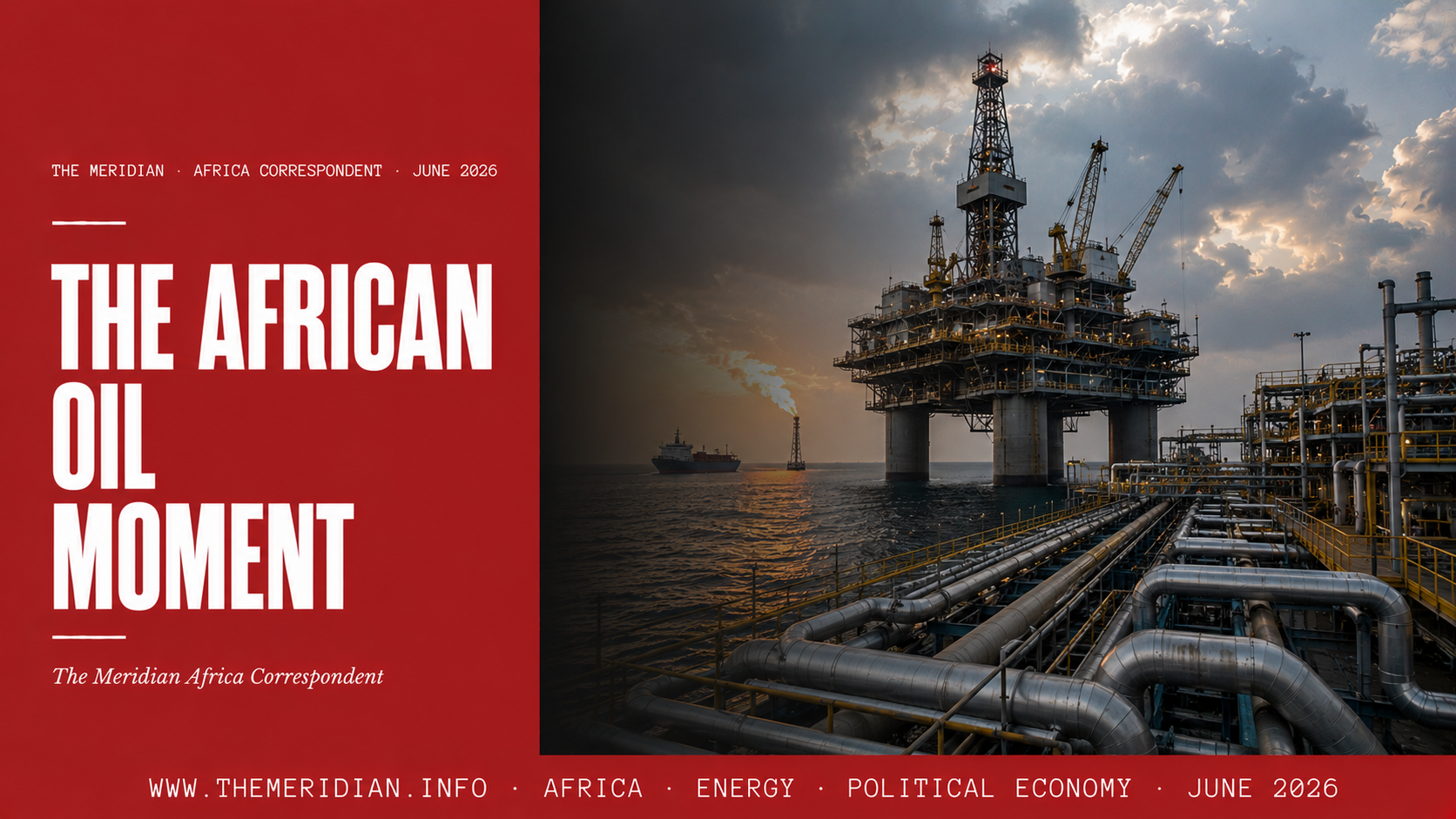
The Nigerian Upstream Petroleum Regulatory Commission has secured presidential approval to launch its 2026 oil block licensing round by the third quarter, targeting $10 billion in new upstream investment. The Dangote Refinery has surpassed 700,000 barrels per day and is now exporting aviation fuel to European markets. The African Development Bank confirms Central Africa is growing at 3.8 per cent, driven almost entirely by high global crude prices. On paper, this is Africa's oil moment. In practice, it is a macroeconomic mirage -- and the structural reasons why the $10 billion will not reach the Nigerian working class are the same reasons why Africa's largest economy holds only BRICS partner status while Ethiopia, Egypt, and South Africa hold full membership.
The headline data from June 2026 presents a picture of African hydrocarbon renaissance. The NUPRC's chief executive has described the upcoming Q3 licensing round as a "make or break point" for the Nigerian upstream sector. The Dangote Refinery, operational since 2024 and now running at 700,000 barrels per day -- above its 650,000 nameplate capacity -- has stabilised Nigeria's balance of payments sufficiently to trigger a sovereign credit rating upgrade by S&P Global. Central Africa's 3.8 per cent growth makes it one of the continent's strongest-performing sub-regions in 2026. The numbers look like a turning point. The structure beneath them has not changed since 1956, when Shell struck oil at Oloibiri and the first barrel left Nigerian soil in a foreign-flagged tanker. The barrel is still leaving the same way.
The Nigerian state is positioning the 2026 licensing round as a definitive fiscal corrective for a heavily indebted treasury. The structural reality of deep-water oil extraction makes this positioning analytically incoherent. Deep-water oil blocks function as perfect economic enclaves exhibiting almost zero macroeconomic diffusion into the domestic Nigerian economy. The capital expenditure required for deep-water drilling flows directly to foreign-built rigs and specialised expatriate contractors. The extracted crude is pumped directly from floating production, storage, and offloading units into foreign-flagged tankers. The hydrocarbons never touch Nigerian soil. The generated wealth bypasses the local working class entirely, producing only the dollarised royalties required to service sovereign debt. The $10 billion investment figure is not a capital injection into the Nigerian economy. It is a capital injection into a sealed offshore extraction system that happens to be geographically located in Nigerian territorial waters.
The standard counter-argument to the enclave critique is the Dangote Refinery. By mid-2026, the facility has surpassed its nameplate capacity, stabilised Nigeria's balance of payments, reduced the catastrophic foreign exchange drain of petrol imports, and earned a credit rating upgrade from S&P Global. It has ended the humiliating structural absurdity of Africa's largest oil producer importing its own refined petroleum. These are genuine achievements that deserve genuine acknowledgement.
The institutional question, however, is whether the Dangote Refinery breaks the enclave model or merely relocates it. The facility is housed within the Lekki Free Zone and increasingly operates as a global merchant refining hub rather than an integrated national utility. As the refinery's own leadership noted in mid-2026, it runs on a "fully merchant refining model," processing dozens of global crude grades including US WTI Midland and Middle Eastern streams rather than relying on domestic upstream supply. Its most celebrated recent milestone -- becoming a premier exporter of aviation fuel to European markets -- demonstrates its capacity as a global trading operation with a Nigerian address. The Nigerian working class is no longer paying foreign import prices for petrol. It is now dependent on the operational decisions of a single domestic corporate entity functioning as a heavily subsidised, nationally protected downstream monopoly. The structural vulnerability has been transformed, not eliminated.
The oil never touched Nigerian soil when it left the deep-water FPSO units. Now it enters through the Lekki refinery and is exported as aviation fuel to Europe. The extraction architecture has been partially domesticated. The working class is still watching from outside.
The AfDB's 3.8 per cent growth projection for Central Africa in 2026 is the most misread statistical headline in African development economics this year. It is being cited as evidence of the sub-region's macroeconomic resilience. It is actually evidence of the resource curse operating precisely as theory predicts. Central Africa's growth is extractive by definition: driven almost entirely by sustained high global crude prices that generate upstream revenues absorbed by foreign conglomerates and recycled into sovereign debt service rather than domestic investment.
While the oil sector generates billions offshore, state investment in public education, technology transfer, and healthcare in Central African oil-producing states remains structurally underfunded. The domestic working class is locked into the informal economy, entirely insulated from the capital generated within their own sovereign borders. The 3.8 per cent figure is not a measure of domestic prosperity. It is a measure of how efficiently natural capital is being converted into foreign exchange earnings that immediately leave the sub-region. Nations relying on this hydrocarbon boom are liquidating their geological inheritance to service existing sovereign debt. When the wells run dry or the crude price falls, the 3.8 per cent disappears and the debt remains.
The most structurally consequential fact in the 2026 African oil picture is not the Nigeria licensing round or the Dangote milestone. It is this: Africa's largest economy, its most populous nation, and its premier oil producer holds only BRICS partner status while Ethiopia, Egypt, and South Africa hold full membership with the corresponding access to local currency settlement frameworks, alternative digital payment infrastructure, and the bloc's collective financial governance architecture.
Nigeria's exclusion from core BRICS membership is not a diplomatic oversight. It is a strategic failure with immediate macroeconomic consequences. By remaining outside BRICS's emerging local currency settlement frameworks and alternative digital payment rails, every barrel from the 2026 licensing round will be priced, sold, and settled in US dollars through SWIFT-dependent Western clearinghouses. This dollar dependency is the foundational mechanism of capital arbitrage and flight. Foreign conglomerates operating the offshore enclaves repatriate their profits in dollars through Western clearinghouses, systematically draining the Central Bank of Nigeria's foreign exchange reserves. The state, to service its dollar-denominated sovereign debt and maintain basic import capacity, is forced into perpetual dollar scramble. The scramble triggers naira depreciation. The depreciation functions as a regressive stealth tax on working-class food, energy, and transport. The $10 billion licensing round celebration in Abuja is paid for, in real terms, by inflation in Lagos, Kano, and Port Harcourt.
A sovereign state cannot utilise its natural resources to mandate technology transfers, dictate local currency settlement, or build independent financial infrastructure when it remains entirely dependent on the currency and clearinghouses of the exact conglomerates extracting the wealth. BRICS integration would not solve this problem overnight. But it would create the institutional framework within which Nigeria could begin to negotiate on different terms. Without it, the 2026 licensing round locks another generation of Nigerians into the same parasitic contract their grandparents signed.
The NUPRC's chief executive described the 2026 Q3 licensing round as a "make or break point." That assessment is correct -- though the break risk is structural, not operational. If Nigeria signs another generation of parasitic upstream contracts with no local currency settlement mandate, no technology transfer conditionality, and no domestic profit reinvestment quota, the $10 billion will perform exactly as the previous fifty years of $10 billion investments have performed. It will stabilise the sovereign debt position temporarily, generate dollarised royalties that flow through Western clearinghouses, and leave the working class absorbing the inflationary consequences of the dollar scramble that follows.
The make scenario requires something that has never been done in Nigerian oil history: treating the licensing round not as a budget balancing exercise but as a geopolitical instrument. Before a single 2026 block is awarded, the state must mandate strict ex-ante conditionalities -- local capacity-building quotas, technology transfers, and crucially, local currency or BRICS-compatible digital settlement options that begin to break the dollar dependency trap.
Central Africa's 3.8 per cent growth will not build schools. Nigeria's $10 billion licensing round will not reduce poverty if the structure of the contract is identical to 1956. The African oil moment is real. The question of who captures it has been answered the same way for seventy years. Changing that answer requires not a new licensing round but a new architecture for extraction itself -- one in which the state, not the conglomerate, sets the terms before the first drill bit enters the seabed.
Add comment
Comments