The Arbitrage of Empire
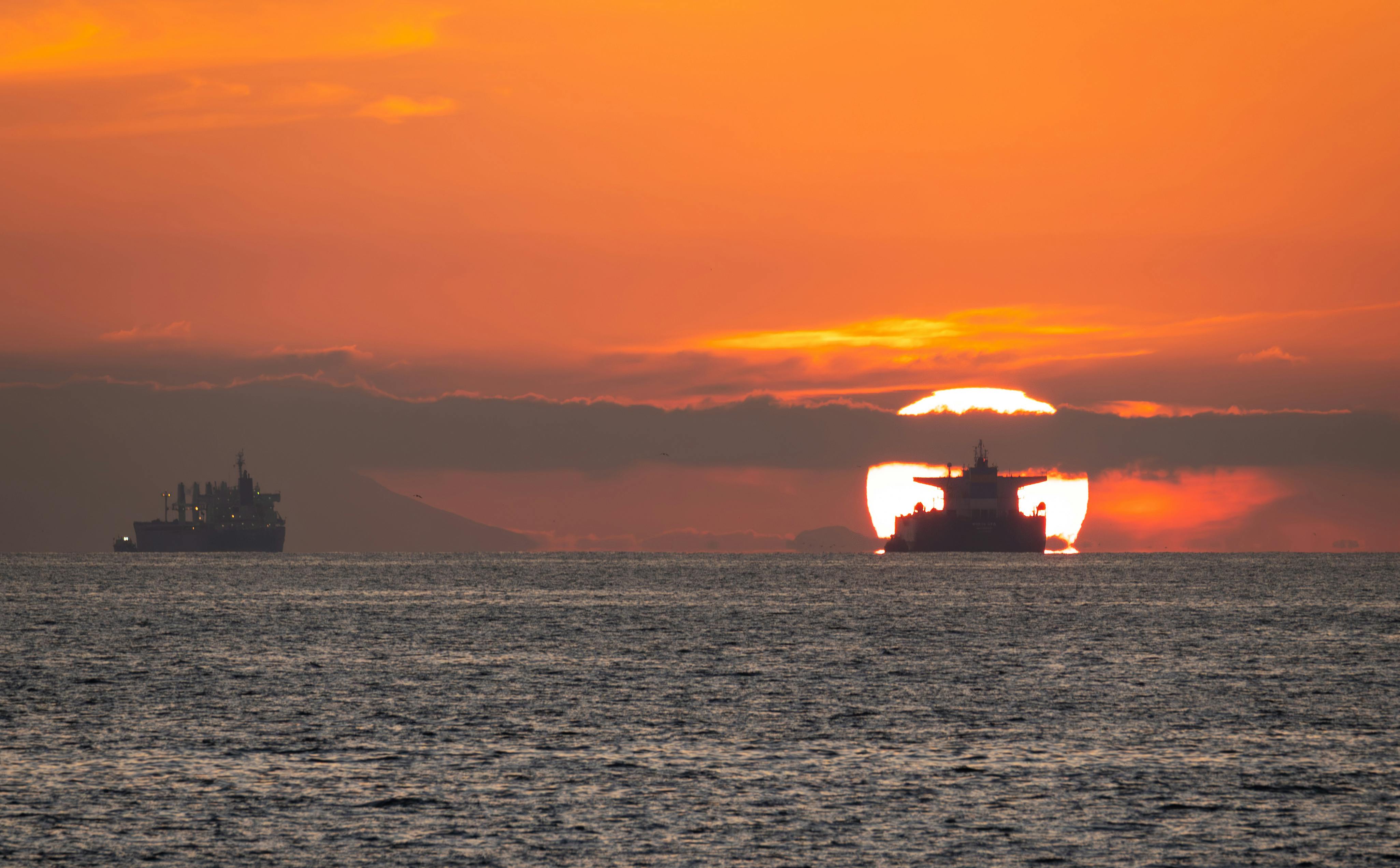
Oil is not a free market. It is a fractured, two-price system exploited by those with capital, ships and impunity. This is the architecture of the machine that powers the world and extracts its toll from the bottom up.
Somewhere in the South Atlantic, a tanker is turning. It left a Russian port twelve days ago, its transponder switched off somewhere near the Danish straits, its flag of convenience registered in Gabon, its insurance underwritten by an entity in Dubai that did not exist three years ago. Its cargo is Urals crude, sanctioned by the G7, priced at a discount of twenty-two dollars below the Brent benchmark, and already sold to a refinery in Gujarat that will process it into diesel and jet fuel and sell those products, at full market price, to buyers in Europe. The tanker's owner is a shell company. The profit is real. The system is working exactly as designed.
This is the oil economy in 2026. Not the version taught in economics textbooks, where prices reflect scarcity and supply meets demand in an orderly market supervised by rational actors. The real version: a machine of extraordinary complexity in which the formal rules and the actual rules are entirely different things, and in which the distance between the two is measured in billions of dollars of annual profit captured by those who understand both sets.
The May edition of The Meridian exists to map this machine in full. Not the headline price of Brent crude, which flickers across financial screens and is reported as though it were a natural phenomenon like rainfall or temperature. The deeper architecture: who sets the price, how it is set, who benefits from the gap between what crude costs to extract and what consumers pay at the pump, and who — at the very bottom of this chain — pays the full cost of a system they had no hand in designing and no power to resist.
The first thing to understand about the modern oil economy is that there is no single price of oil. There are at least two, and the gap between them is the most consequential arbitrage opportunity in the history of commodity markets.
Before February 2022, oil traded in a relatively unified global market. Crude was priced against internationally recognised benchmarks — Brent from the North Sea, WTI from West Texas, Dubai crude from the Gulf — and while there were quality and location differentials between grades, the market was broadly integrated. A barrel of Russian Urals crude traded at a modest discount to Brent, reflecting its slightly higher sulphur content and the logistical cost of moving it from Baltic or Black Sea ports to refineries.
The Russian invasion of Ukraine shattered that integration. The G7 imposed a price cap on Russian crude: Western shipping services, insurance and finance could only be used to transport Russian oil if it was sold at or below sixty dollars per barrel. Since Western institutions, and specifically the London-based Protection and Indemnity clubs, underwrite roughly ninety per cent of global maritime insurance, this was a powerful instrument. A tanker carrying Russian crude above the cap could not legally dock at most major international ports. It could not be insured against collision, spill or structural failure by any credible underwriter.
The sanctions did not stop the oil. They created a two-price system where the middlemen capture the difference.
What happened next was not what the architects of the price cap intended. Instead of forcing Russia to accept dramatically lower revenues by cutting it off from global markets, the cap created the most lucrative arbitrage mechanism in modern commodity history. Russian crude, unable to use Western services, found new buyers — principally India and China — who purchased it at the capped or discounted price, processed it in their refineries, and sold the refined products into European and global markets at the full Brent-linked price. The sanctions did not stop the oil. They stopped the Western middlemen and replaced them with a new set of intermediaries who captured the spread.
By mid-2023, India had become the world's largest buyer of Russian crude, importing over 1.8 million barrels per day. Its refineries, particularly those operated by Reliance Industries and Indian Oil, were processing Urals crude purchased at fifteen to twenty-two dollars below the Brent benchmark and selling diesel, aviation fuel and petrochemicals at global market rates. The margin — the difference between the discounted input and the market-rate output — was captured in India, not in Russia, and not in the Western countries that imposed the cap.
The tanker turning in the South Atlantic is part of what analysts now call the shadow fleet: a collection of ageing vessels, many over twenty years old, operating outside the Western insurance system and beyond the reach of the price cap enforcement mechanism. Estimates of the shadow fleet's size vary, but by early 2026 credible assessments placed it at between six hundred and eight hundred vessels, carrying roughly a third of the world's seaborne crude oil trade.
These ships were assembled with remarkable speed after 2022, purchased largely from Greek shipowners who sold their older vessels at significant premiums to anonymous buyers operating through networks of shell companies registered across multiple jurisdictions. The Greek owners, to their considerable profit, effectively monetised their ageing fleets by selling into a market that had no other source of tonnage. The buyers got ships. The sellers got cash. The Western governments that imposed the cap got neither the compliance nor the revenue reduction they expected.
The shadow fleet is not merely a sanctions-evasion mechanism. It is a structural feature of a bifurcated oil market, and its existence creates risks that extend far beyond the geopolitical intent of its creation. These ships are old. Their maintenance records are opaque. Their insurers — where insurance exists at all — are entities of uncertain financial standing operating in jurisdictions with minimal regulatory oversight. When one of these vessels runs aground, collides with another ship, or suffers a structural failure in the kind of catastrophic spill that a twenty-year-old single-hull tanker is capable of producing, the consequences fall not on the shell company that owns the vessel but on the coastal state, the fishing community, the marine ecosystem within range of the disaster.
The profits of the shadow fleet are privatised. Its risks are socialised onto the nations least able to bear them.
This is the negative externality in its purest form. The profits of the shadow fleet are privatised — captured by the trading intermediaries, the refinery operators and the shell company networks that structure the transactions. The risks are socialised: borne by coastal nations, fishing communities and ultimately by the taxpayers of states that will be expected to fund the clean-up of a spill caused by a vessel they had no authority over and no regulatory relationship with.
The public face of the oil industry is the integrated oil major: Shell, ExxonMobil, BP, TotalEnergies. These are companies that drill, refine, retail and report. They publish annual accounts, employ armies of lobbyists, issue sustainability reports and appear before parliamentary committees. They are the visible architecture of the system.
The real architecture is different. The physical movement of the world's oil — the actual trading, shipping, blending, storage and arbitrage of crude and refined products — is dominated not by the majors but by a small number of privately held commodity trading houses whose names are largely unknown to the public they serve. Vitol, Trafigura and Glencore together handle a volume of oil that exceeds the combined output of most OPEC member states. Vitol alone reported revenues of three hundred and forty-three billion dollars in 2022, a figure that places it among the largest companies on earth by turnover — yet it is privately held, publishes no equity prospectus and faces none of the disclosure requirements that govern its listed counterparts.
These trading houses do not primarily profit from moving oil from producer to consumer. They profit from volatility, from the gaps between markets, from the informational asymmetry that comes from operating simultaneously in the spot market, the futures market, the physical storage market and the shipping market. When a refinery in Europe needs crude urgently, they supply it. When contango makes it profitable to store oil on supertankers at anchor, they do so. When sanctions create a price differential between Urals and Brent, they arbitrage it. They are, in the most precise economic sense, rent-seekers: they capture value that exists because of friction in the system rather than creating value through productive activity.
At the top of this system sits a small number of trading houses, refiners and state oil companies who understand its architecture and profit from its complexity. At the bottom sits everyone else: the households of oil-importing nations whose energy costs, transport costs, food costs and inflation rates are determined by decisions made at the top of a chain they have no visibility of and no influence over.
Mauritius is an instructive example, though not a unique one. The island imports essentially all of its petroleum requirements. The State Trading Corporation purchases fuel on international markets, sells it domestically at regulated prices, and applies a cross-subsidy levy — currently structured around a contribution of several rupees per litre — that is used to cushion the domestic price of basic goods including flour, rice and liquefied petroleum gas. This mechanism exists because the government recognises that the full transmission of global oil price volatility into domestic consumer prices would be socially and politically destabilising.
But the mechanism has a cost. Every time Brent spikes — because of a supply cut by OPEC, because of a hurricane in the Gulf of Mexico, because of a geopolitical crisis in a producing region, because a trading house has decided to squeeze a particular market — the fiscal cost of the cross-subsidy increases. The government must either absorb the cost through the budget, pass it through to consumers, or borrow. All three options have consequences. And none of them give Mauritius any leverage over the underlying cause of the pressure.
This is the inverted resource curse: not the dysfunction of the petrostate that cannot manage its abundance, but the structural vulnerability of the oil-importing small state that has no abundance to mismanage, only a dependency it did not choose and cannot easily escape. The Geneva trader, the OPEC minister, the shadow fleet operator — none of them have Mauritius in mind when they make their decisions. But every one of those decisions lands, with compound interest, on the Mauritian household budget.
The oil economy is not a market. It is a machine. It has architecture — physical, financial, legal and geopolitical — that was designed over more than a century by specific actors with specific interests, and it continues to function in the interest of those actors regardless of the formal rules that nominally govern it. The price cap was designed to punish Russia and reduce its oil revenues. It succeeded only in creating a new set of intermediaries who captured the spread. The shadow fleet was created to evade Western oversight. It succeeded, and in doing so transferred the risks of that evasion to the coastal nations and fishing communities that had no voice in any of the decisions that created it.
Understanding this machine is not an academic exercise. It is a prerequisite for any serious analysis of economic sovereignty, fiscal policy, inflation management or development strategy in the Global South. You cannot design a coherent energy policy for an oil-importing small island state without understanding why the price of oil is what it is, who set it, and what it would take to change it. You cannot understand the Mauritian levy structure, or the Nigerian resource curse, or the Saudi fiscal dependency on crude, without understanding the system that connects them all.
That is what this edition is for. The articles that follow map each component of the machine in detail: the geology that created the original lottery of reserves, the value chain that captures value at every stage, the two-price system and the shadow fleet it spawned, the trading houses that profit from complexity, the majors that sustain their positions through lobbying, the resource curse that has hollowed out producing nations, the wars that oil has financed and motivated, and the transition that is coming — slowly, unevenly, and not nearly fast enough for the nations that bear the greatest cost of the current system.
The tanker in the South Atlantic is still turning. Its cargo will reach Gujarat in four days. The refined products will reach European buyers in six weeks. The profit will be booked in a jurisdiction chosen for its tax treatment. And somewhere in Mauritius, the price of bread will go up by fifty cents, and nobody will know why, and nobody will be held accountable, and the system will continue to function exactly as designed.
Add comment
Comments