How Oil Is Made: The Geology of Power
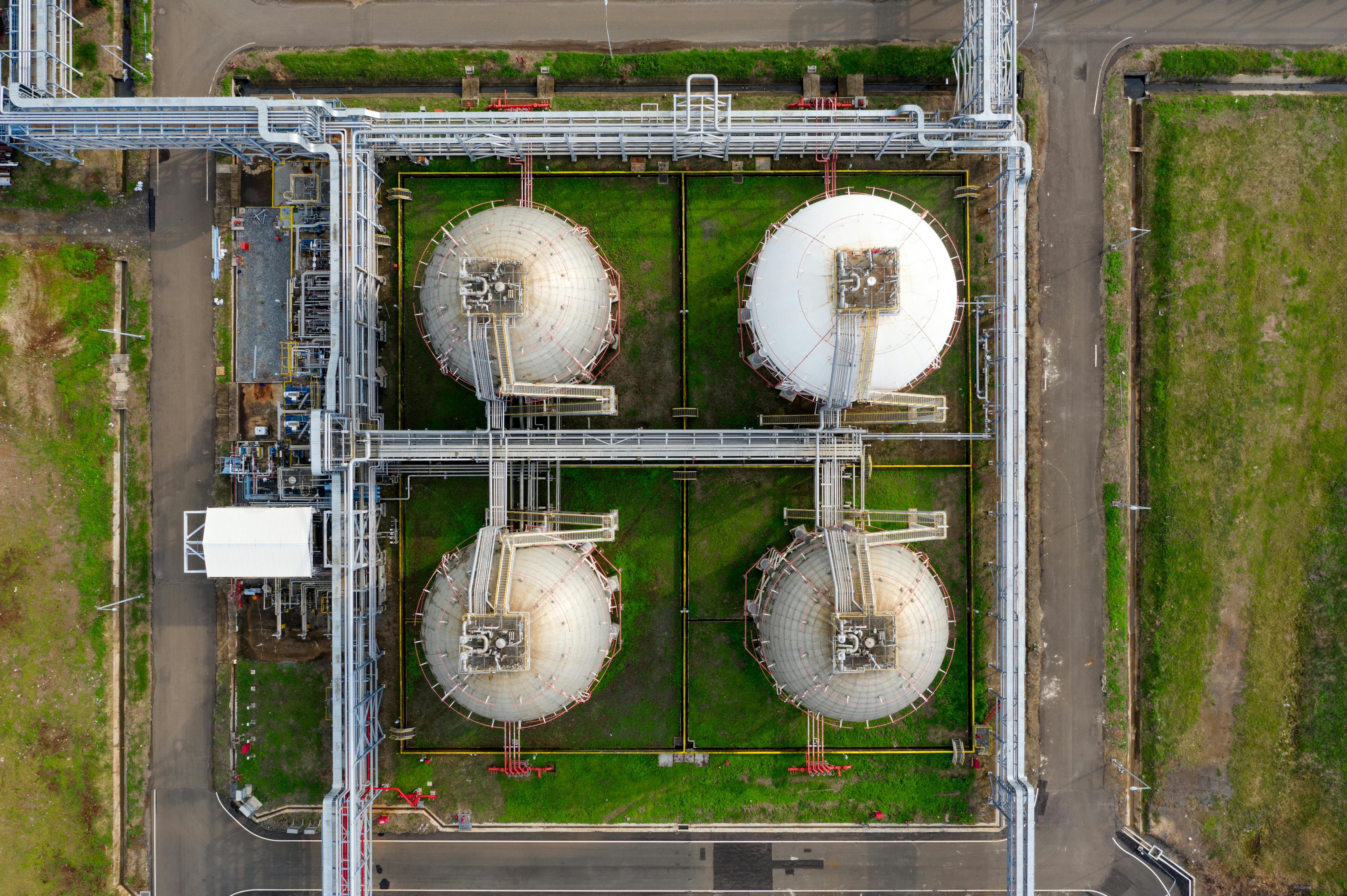
Before the trading house, before the tanker, before the refinery and the pump and the price cap, there is rock. The geological lottery that created oil also created the political map of the modern world. Understanding how crude forms is the first step to understanding why power is distributed the way it is.
Three hundred million years ago, the shallow seas that covered much of what is now the Middle East, West Africa and the Gulf of Mexico were teeming with microscopic marine organisms: phytoplankton, zooplankton, algae. These organisms lived, photosynthesised, consumed one another and died in their billions, their organic remains drifting to the seafloor and accumulating in layers of sediment. Under most circumstances these remains would decompose completely, returning their carbon to the water column. Under specific conditions of low-oxygen bottom water and rapid burial, they did not. They were preserved, compressed under successive layers of sediment, and subjected over geological time to the particular combination of heat and pressure that transforms organic matter into hydrocarbons.
This process, which geologists call catagenesis, operates across a temperature window of roughly sixty to one hundred and twenty degrees Celsius. Too cold and the organic matter remains as kerogen, an insoluble precursor. Too hot and the hydrocarbons crack further into natural gas or, ultimately, into carbon dioxide and water. The oil window, as petroleum geologists call it, is narrow. It requires the right source rock, the right temperature history, the right burial depth and the right amount of geological time. These conditions are not rare in absolute terms — they have been met across many of the earth's sedimentary basins — but they are distributed with stunning unevenness across the globe.
The concentration of the world's conventional oil reserves in a handful of geological provinces is one of the most consequential accidents of natural history. The Arabian Platform, a vast sedimentary basin stretching beneath Saudi Arabia, Kuwait, Iraq, the UAE and Iran, sits atop roughly half of the world's proven conventional reserves. The basin's Jurassic and Cretaceous source rocks accumulated organic matter during periods of exceptional marine productivity. The carbonate reservoirs that formed above them are porous, permeable and structurally simple. The trapping mechanisms — anticlines, salt domes, fault seals — are abundant and well-defined. The result is a collection of fields whose productivity per well and recovery factor are unmatched anywhere else on earth.
Ghawar, the largest conventional oil field ever discovered, lies in the Eastern Province of Saudi Arabia. It is approximately two hundred and eighty kilometres long and thirty kilometres wide, and it has produced more than seventy billion barrels of oil since its discovery in 1948. At its peak it produced roughly five million barrels per day — more than five per cent of global supply from a single structure. No comparable field has been found since. The era of giant conventional discovery effectively ended in the 1960s and 1970s, and the fields found since have been progressively smaller, deeper, more technically challenging and more expensive to develop.
The geological lottery was drawn once. The nations that won it did not earn their reserves. They inherited them from three hundred million years of marine sedimentation.
West Africa's oil provinces are younger and geologically distinct. The Niger Delta, where Nigeria's reserves are concentrated, is a Tertiary deltaic system: vast quantities of terrestrial and marine sediments deposited by the ancestral Niger River over tens of millions of years, rich in the organic material that generated the light, sweet crude that now trades at a premium on global markets. Angola's offshore Kwanza Basin, developed later and at much greater expense, produces from deepwater turbidite reservoirs — complex geological formations that required decades of technological development before they could be economically produced.
Venezuela's Orinoco Belt, which contains the largest estimated reserves of any country on earth, presents a different geological story entirely. The Orinoco crude is not conventional light oil but extra-heavy crude and bitumen: highly viscous, high in sulphur and metals, requiring either upgrading or blending before it can be processed in standard refineries. The reserves are enormous — officially certified at over three hundred billion barrels — but their development cost is vastly higher than Arabian conventional crude, which is why Venezuela's geological wealth has never translated into Saudi-style economic dominance.
Oil does not stay where it forms. Once generated from the source rock, it migrates upward through permeable pathways — fractures, faults, porous carrier beds — driven by buoyancy, since crude oil is less dense than the formation water that saturates most subsurface rock. This migration can carry oil tens or even hundreds of kilometres from its source before it is either trapped in a reservoir structure or lost at the surface through seeps.
Trapping is the critical factor. An accumulation of commercial significance requires three elements in combination: a porous and permeable reservoir rock that can hold and transmit fluids, a seal of low-permeability rock above it that prevents the upward-migrating oil from escaping, and a geometric trap that concentrates the oil beneath the seal rather than allowing it to disperse laterally. The most common trap geometry is the anticline: a dome-shaped fold in the rock layers where oil, being buoyant, accumulates at the crest beneath the sealing formation. It is no accident that many of the world's great fields — Ghawar, Kirkuk, Marun, Ahvaz — are large, simple anticlines. They are the geological structures most likely to have been identified by early explorers using surface mapping and gravity surveys, before seismic technology made it possible to image complex subsurface geology.
The seismic revolution, which began in earnest in the 1960s and reached its current sophistication with three-dimensional and four-dimensional imaging, dramatically expanded the range of trap geometries that could be reliably identified and drilled. Stratigraphic traps, where the reservoir thins or changes character laterally rather than being sealed by structural geometry, were historically difficult to find. Salt-related traps, where mobile salt bodies create complex deformation that can both generate traps and destroy them, required sophisticated imaging to penetrate the acoustically opaque salt. Deepwater turbidite systems, where sand-rich sediment flows deposit reservoir-quality rock in complex patterns on the deep ocean floor, were beyond reach until the development of dynamic positioning technology and subsea completion systems in the 1990s.
The geological distribution of oil reserves has shaped the modern world in ways that go far beyond the economics of the energy sector. The nations that won the geological lottery — Saudi Arabia, Kuwait, the UAE, Iraq, Iran, Russia, Venezuela, Nigeria, Libya — have structured their politics, their institutions, their social contracts and their foreign policies around the management of a resource they did not create and cannot replenish. The nations that lost it have structured their economies around importing a commodity whose price they do not control and whose supply they cannot guarantee.
This asymmetry is not a market outcome. It is a geological accident amplified by political choices. The decision to nationalise oil resources — made by most producing states between the 1950s and the 1970s — gave governments control over the subsoil wealth their territories happened to contain. The decision to form OPEC, first in 1960 and then with real market power after the 1973 embargo, gave the major producing states collective leverage over the price of a commodity on which the entire global economy depended. Neither of these decisions was inevitable. Both were political choices, and both reflected the understanding by producing states that their geological inheritance had a monetary value that could be captured through collective action.
The decision to import oil is not a choice. It is a geological sentence, served by the nations that lost the lottery of reserves.
For the oil-importing world, the geological reality is equally determinative but experienced in the opposite direction. The decision to import oil is not a strategic choice that can be reversed by good policy. It is a geological sentence. Mauritius has no sedimentary basins of commercial significance. Japan has almost no domestic production. South Korea, Germany, France, India and most of sub-Saharan Africa import the majority of their petroleum requirements because the geology of their territories does not contain oil in extractable quantities. This is not a policy failure. It is the starting condition from which all energy policy must be built.
The implications of this geological reality are fundamental to the political economy of oil. Because reserves are concentrated, the supply side of the market is also concentrated: a small number of nations and state oil companies control the majority of the resource. Because demand is dispersed across every economy on earth, the consuming nations have structurally less leverage than the producing ones in any negotiation over price and supply terms. This asymmetry — geological in origin, political in expression — is the foundational architecture of the oil economy. Everything that sits above it: the pricing mechanisms, the trading structures, the geopolitical alignments, the fiscal dependencies, the resource curse — rests on this geological bedrock.
The largest, simplest and cheapest fields were found and developed first. This is not a coincidence but a structural feature of any exploration programme: the most obvious prospects are drilled earliest, and each successive round of exploration targets more complex, deeper or more remote structures that require greater technical sophistication and higher capital investment to develop. The average size of new field discoveries has declined steadily since the 1960s. The average depth of new drilling has increased. The average development cost per barrel has risen, in real terms, across every decade of the industry's existence.
The shale revolution, which transformed the United States from a declining producer into the world's largest oil producer by 2018, appeared to challenge this narrative. Unconventional resources — tight oil trapped in low-permeability shale formations — are widespread in the United States and Canada, and hydraulic fracturing technology has made them producible at scale. But the geological reality of shale production is instructive: individual wells decline rapidly, often losing fifty to seventy per cent of their initial production rate within the first twelve months. Maintaining output requires continuous drilling of new wells, which requires continuous capital investment. Shale is not a geological lottery win of the Arabian kind. It is a treadmill: expensive, technically intensive and highly sensitive to the price of oil.
The age of easy oil is over. What remains is technically accessible but economically and environmentally costly: deepwater fields that require billion-dollar platforms, Arctic resources that require ice-class vessels and have consequences for ecosystems of extraordinary fragility, extra-heavy crudes that require upgrading facilities costing tens of billions of dollars, shale plays that require relentless capital deployment to offset natural decline. The geological history of oil is, in this sense, a history of progressively diminishing returns: the best came first, and what follows demands more of everything — more capital, more technology, more energy — to produce less of the same.
This trajectory matters for the oil economy as a whole because it affects the cost floor beneath the global price. When the marginal barrel of supply requires sixty, seventy or eighty dollars to produce, prices cannot fall sustainably below that level without destroying the investment that maintains supply. The geological reality of depletion — not geopolitical machination, not cartel manipulation, though both play their role — is the deepest structural force pushing the long-run price of oil upward. It is a force that no government can reverse, no trading house can arbitrage away, and no importing nation can escape.
Add comment
Comments