The Official Price and the Shadow Price
When the G7 imposed a price cap on Russian crude oil in December 2022, it believed it was restricting Moscow's ability to finance its war. What it created instead was the most lucrative arbitrage opportunity in the history of commodity markets. The oil kept moving. The money kept flowing. It simply went through different hands.
In the months before February 2022, a cargo of Urals crude loading at the Russian Baltic port of Primorsk would typically sell at a discount of one to two dollars per barrel to the Brent benchmark. The discount reflected modest quality differences and the logistical cost of moving the cargo from a northern European port to the refineries of Rotterdam, Antwerp or Wilhelmshaven that were its primary buyers. The spread was thin, the trade was routine, and the flow of Russian crude into European refineries was simply one strand in the integrated global oil market that had developed over decades of relatively stable geopolitical conditions.
By the end of 2022 that world had ended. The European Union had banned imports of Russian crude by sea. The G7 had imposed a price cap of sixty dollars per barrel on Russian crude transported using Western shipping services, insurance and finance. The discount on Urals crude relative to Brent had widened from two dollars to over thirty dollars. And a new geography of global oil trade was taking shape, one whose full implications are still working themselves out in refinery margins, shipping routes and government balance sheets across the world.
The price cap mechanism rested on a simple but powerful insight: Western institutions dominate the infrastructure of global maritime trade in ways that extend far beyond the trading of oil itself. The London market underwrites the majority of global maritime insurance through the Protection and Indemnity clubs, a network of mutual insurers that cover shipowners against third-party liabilities including collision, pollution and cargo damage. Western banks provide the trade finance that funds most large commodity transactions. Western classification societies certify the seaworthiness of the global tanker fleet. Western legal systems govern the contracts through which crude oil is bought, sold and transported.
By conditioning access to these services on compliance with the price cap, the G7 created a mechanism that did not require the cooperation of Russia, India, China or any other party directly involved in the trade. It simply made the use of Western infrastructure contingent on price cap compliance, and since that infrastructure was deeply embedded in the operational routines of the global shipping and finance industries, compliance was the path of least resistance for most established market participants.
The price cap did not stop Russian oil reaching the market. It created a parallel market in which the premium for navigating between the two prices was captured by whoever was willing to accept the risk.
The flaw in this logic was its assumption that Western infrastructure was sufficiently dominant that Russian crude could not move in meaningful volumes without it. This assumption proved incorrect. The Russian state, with the active assistance of a network of trading companies, shipowners, insurers and flag registries operating outside Western jurisdiction, assembled an alternative infrastructure with remarkable speed. The shadow fleet, as it came to be known, was the physical expression of this alternative: a collection of ageing tankers, many purchased from Greek and other Western owners who were happy to monetise their older vessels at significant premiums, operating under flags of convenience and insured by entities in Russia, India and the Gulf whose financial standing was difficult to assess and whose regulatory oversight was minimal.
The commercial logic that drove the two-price system into existence was straightforward. Russian crude was available at a substantial discount to Brent. Refined products derived from Russian crude sold in international markets at prices linked to Brent. The margin between the discounted input and the market-rate output was, in essence, a gift to whoever was willing and able to capture it. The principal beneficiaries were the refiners of India and China, who had both the refining capacity and the political willingness to buy Russian crude at scale, and the network of trading intermediaries who structured the transactions.
India's transformation into the world's largest buyer of Russian crude was one of the most significant structural shifts in global oil trade in decades. Before 2022, Russia supplied less than two per cent of India's crude imports. By mid-2023 it supplied over forty per cent, with volumes running at roughly 1.8 million barrels per day. The arithmetic was compelling. An Indian refiner buying Urals crude at twenty dollars below Brent and processing it into diesel or jet fuel sold at Brent-linked prices was capturing a refining margin that, in normal market conditions, would have been impossible to achieve. The Russian discount was not a market outcome in the conventional sense. It was a geopolitical subsidy, created by Western sanctions and captured by whoever was positioned to take advantage of it.
China's participation followed a different logic but produced similar results. Chinese refiners, both the state-owned majors and the independent refiners known as teapots concentrated in Shandong province, absorbed significant volumes of Russian crude alongside sanctioned Iranian and Venezuelan crude that they had been buying for years through structures designed to obscure the origin of the cargo. For China, the Russian discount reinforced an already established pattern of buying sanctioned crude at below-market prices and processing it in domestic refineries with no exposure to Western financial infrastructure.
To understand the two-price system fully it is necessary to understand how oil benchmarks work and why the spread between them matters so much to the traders who exploit it.
Brent crude is extracted from a cluster of fields in the North Sea and serves as the reference price for approximately two thirds of the world's internationally traded crude oil. Its dominance reflects not the volume of physical Brent crude that actually trades, which is relatively small given the maturity of North Sea production, but the liquidity of the financial markets built around it. The Brent futures contract traded on the Intercontinental Exchange in London is one of the most liquid commodity derivatives in the world, with daily trading volumes that dwarf the physical market many times over. When journalists report the price of oil they are almost always reporting the Brent futures price.
West Texas Intermediate is the benchmark for American crude and the reference price for the NYMEX futures contract in New York. WTI is a slightly higher-quality crude than Brent, being lighter and lower in sulphur, but it has historically traded at a discount to Brent because it is produced inland in Texas and Oklahoma and must be transported by pipeline to refineries on the Gulf Coast before it can be exported. The Brent-WTI spread, which fluctuates continuously, is itself an arbitrage opportunity: when it widens sufficiently, traders buy WTI, charter tankers, and sell the cargo in European or Asian markets against the higher Brent price.
The Urals discount to Brent that emerged after February 2022 was of a different character entirely. It was not driven by quality or logistics in the conventional sense but by the political risk premium attached to buying Russian crude and the legal constraints imposed by the price cap. A buyer willing to accept that risk and navigate those constraints could purchase crude at thirty dollars or more below the Brent reference price. A refiner able to process that crude and sell the products at Brent-linked prices captured the entire spread as margin. The spread was, in effect, a measure of the political risk that the West had tried to impose on Russian crude and that the market had immediately begun to price and trade.
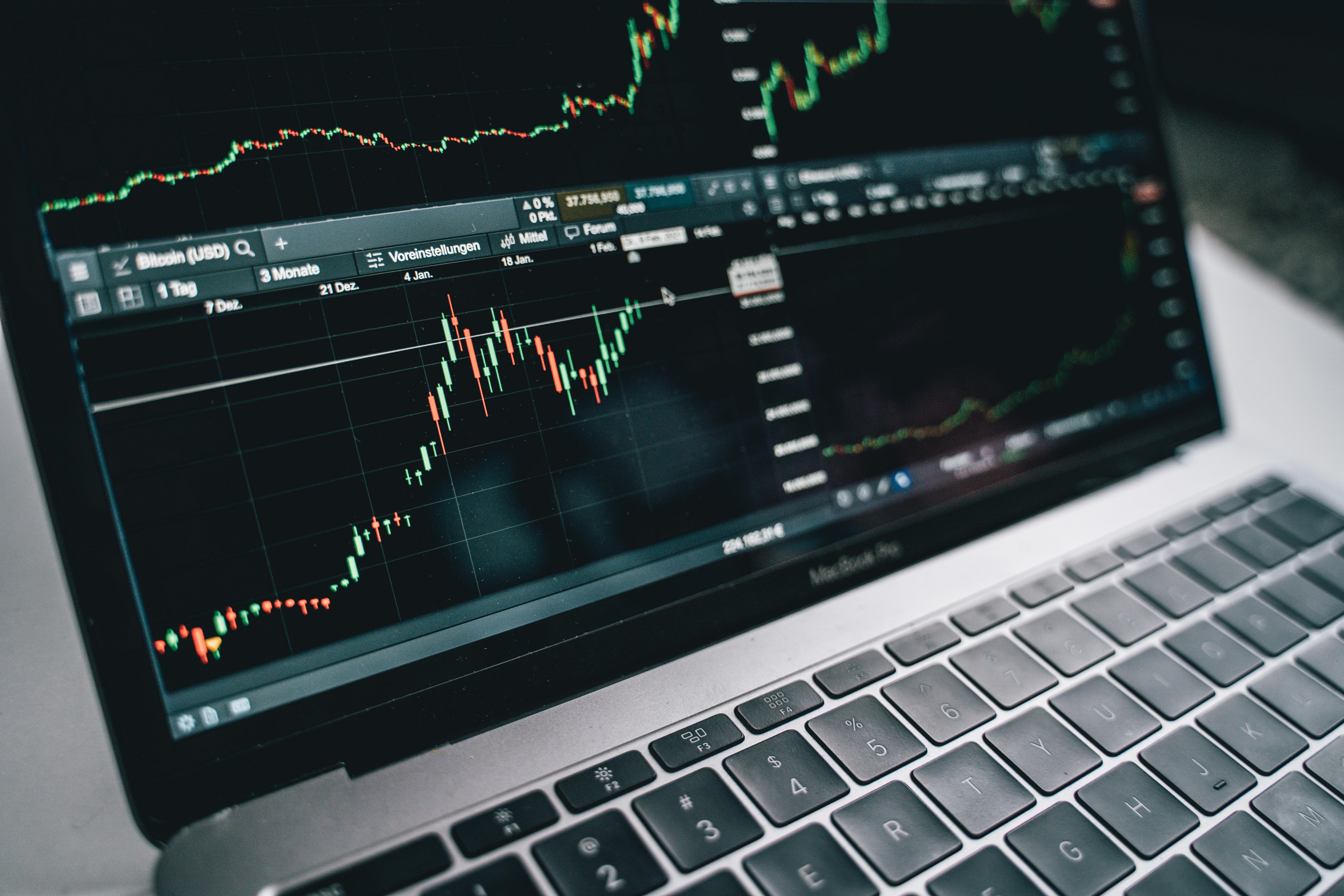
The spread between sanctioned crude and the Brent benchmark became, within months of the price cap's introduction, one of the most actively arbitraged opportunities in global commodity markets.
The price cap has not functioned as designed in several important respects. Its primary objective was to reduce Russian oil revenues by forcing Russia to sell crude at a price below which it could adequately fund its military and its state budget. The evidence suggests it achieved this objective only partially and temporarily. In the months immediately after the cap's introduction, the Urals discount widened to levels that did impose a meaningful revenue constraint on Russian exports. But as the shadow fleet expanded and alternative trading routes became established, the discount narrowed. By mid-2023 Russia had largely adapted to the new architecture of the market, and while it was selling crude at a lower price than before the war, the gap was considerably smaller than cap architects had anticipated.
The secondary objective was to keep Russian crude flowing to world markets in order to prevent a global supply shock that would have driven oil prices sharply higher, to the detriment of Western consumers and economies. In this respect the cap has been more successful. Russian crude exports have remained broadly stable since the introduction of the cap, rerouted through new channels rather than removed from the market. The global supply shock that many analysts feared in early 2022 did not materialise, partly because the cap achieved its supply-preservation objective and partly because other producers, notably in the Gulf, increased output to compensate for reduced Russian flows to Western markets.
The unintended consequence of this partial success has been the entrenchment of a bifurcated global oil market that shows no sign of re-integrating. The shadow fleet has grown into a permanent feature of the seaborne crude trade. The trading routes established to move Russian crude to Indian and Chinese refineries have become embedded in the commercial relationships and operational procedures of the companies involved. The alternative insurance and finance structures assembled to support those routes have developed institutional depth. What began as an emergency improvisation has become a structural feature of how a significant portion of the world's crude oil moves from producer to refiner.
For most of the world's oil-importing economies, the two-price system has produced mixed outcomes. Countries with the refining capacity and political flexibility to buy discounted Russian crude, principally India, China and Turkey, have enjoyed a period of lower input costs that has supported their domestic fuel prices and refining margins. Countries without that capacity or flexibility, including most of sub-Saharan Africa, the Caribbean and the Pacific island states, continue to buy refined products at Brent-linked prices and have derived no benefit from the Russian discount.
Mauritius is in the second category. The State Trading Corporation buys refined petroleum products on international markets. It has no crude oil refining capacity and therefore no ability to capture the discount available on Russian crude. The price of fuel imports into Mauritius reflects the full Brent-linked price of refined products, plus freight costs that have been elevated by the disruption to Red Sea shipping routes, plus the cost of the insurance premium attached to a market in which the shadow fleet has added new risks to maritime trade. The two-price system has, from a Mauritian perspective, produced the worst of both outcomes: no access to the cheap crude available to large refiners, and elevated freight and insurance costs driven by the disruption the shadow fleet has introduced into global shipping markets.
This asymmetry is characteristic of how the global oil system distributes its costs and benefits. The sophisticated actors with the infrastructure, the capital and the political relationships to navigate between the two prices capture the spread. The small, structurally exposed economies at the bottom of the chain absorb the costs of the disruption without any of the offsetting benefits. The price cap was designed as a Western instrument of geopolitical coercion. Its principal commercial beneficiaries have been Indian and Chinese refiners. Its costs have been distributed, as oil market costs so reliably are, to those least equipped to bear them.
Add comment
Comments