The OPEC Fracture: What the UAE's Exit Means for the Cartel, the Price and Mauritius
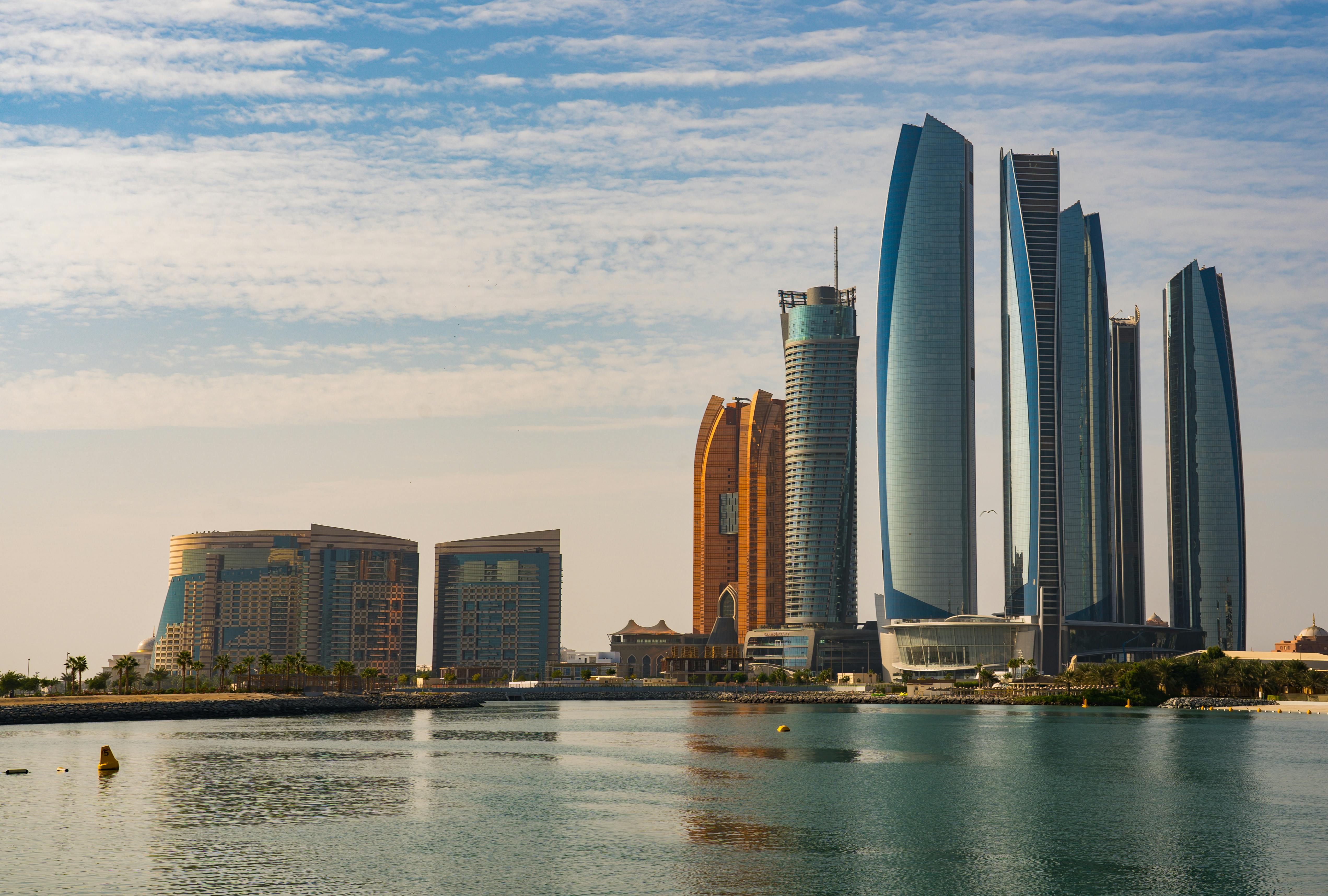
On 28 April 2026, the United Arab Emirates announced it would leave OPEC effective 1 May, ending nearly six decades of membership. The announcement came as the Iran war continued to disrupt the Strait of Hormuz, OPEC's output had collapsed by 27 per cent, and the cartel's internal contradictions had become too great to contain. For Mauritius, which buys oil in dollars and earns in rupees, this is not distant geopolitics. It is an economic sentence.
The Organisation of Petroleum Exporting Countries was founded in Baghdad in 1960 by five nations: Saudi Arabia, Iraq, Iran, Kuwait and Venezuela. Over the following six decades it expanded, contracted, fractured, reunited and reinvented itself repeatedly in response to the shifting pressures of geopolitics, technology and the global energy transition. It survived the oil shocks of the 1970s, the price war of the 1980s, the demand collapse of 2020 and the post-Ukraine sanctions restructuring of the global oil market. What it could not survive, in the end, was the combination of an unprecedented supply shock caused by the Iran war, the accumulated tensions of years of Saudi-UAE rivalry, and the UAE's conclusion that six decades of quota constraints had cost it more than membership was worth. On 1 May 2026, for the first time in its history, OPEC loses one of the Gulf's major producers not to conflict or collapse but to strategic calculation.
The immediate context of the exit is the Iran war, which has transformed the energy market in which OPEC operates. Iranian attacks on shipping in the Strait of Hormuz have disrupted approximately a fifth of the world's oil and liquefied natural gas supply. OPEC's output collapsed by 27 per cent to 20.79 million barrels per day in March 2026, as the Hormuz closure constrained the export capacity of Gulf producers across the board. The supply shock surpassed anything the cartel had experienced since the 1970s, exceeding both the cuts of the 2020 pandemic and the production losses of the 1991 Gulf War. Into this environment the UAE announced its departure, with Energy Minister Suhail Al Mazrouei stating that the disruption created by the war had made this an opportune moment: the exit would have minimum impact on price precisely because the market was already in crisis and the UAE's incremental production would be absorbed rather than destabilising.
UAE was OPEC's third-largest producer behind Saudi Arabia and Iraq. It accounts for roughly four per cent of global oil production and contributed approximately 77 billion dollars of OPEC's 455 billion dollars in annual oil sales. Its OPEC quota constrained it to around 3.2 million barrels per day. Its stated capacity target is five million barrels per day by 2027. The gap between quota and capacity is the commercial logic of the exit: roughly 1.8 million additional barrels per day of potential production, previously suppressed by cartel discipline, now available to the market on whatever terms Abu Dhabi determines.
The UAE's exit did not come without warning. For years Abu Dhabi had chafed under the quota system that OPEC imposes on its members, arguing that its rapidly expanding production capacity, built through decades of investment in Abu Dhabi National Oil Company's upstream infrastructure, was being systematically underutilised by the cartel's output discipline. The UAE had invested heavily in increasing its capacity precisely because it understood, earlier than most OPEC members, that the window for monetising conventional oil reserves was closing as the global energy transition gathered momentum. The logic was straightforward: if demand for oil is eventually going to peak and decline, the rational strategy for a low-cost producer with large reserves is to produce as much as possible as quickly as possible, capturing market share before the transition erodes it. OPEC's quota system was directly contrary to this strategy.
The Saudi-UAE relationship, once the bedrock of Gulf Cooperation Council cohesion, has deteriorated across multiple dimensions in recent years. Economic competition between Dubai and Riyadh as regional financial and tourism hubs has intensified as Saudi Arabia's Vision 2030 programme has developed. The breakdown of the Saudi-UAE coalition in Yemen, following Saudi Arabia's bombing of UAE-backed separatist forces in late 2024, removed the last major security framework within which the two countries had operated as genuine partners. The Iran war, in which UAE territory was subject to Iranian missile and drone attacks for weeks, created a security crisis that Abu Dhabi navigated independently rather than deferring to Riyadh's leadership. The OPEC exit is the culmination of a strategic divergence that has been building for years and which the Iran war has accelerated into a formal rupture.
The UAE did not leave OPEC because it lost patience. It left because it concluded that the cartel's constraints cost more than its benefits, and that the Iran war had created the moment of minimum disruption to make the move.
The loss of the UAE deals a structural blow to OPEC that goes beyond the immediate reduction in the cartel's controlled output. It signals that the Gulf's second most significant producer, a country that has been central to OPEC's credibility as a market management institution, has concluded that membership no longer serves its interests. This signal will be read carefully by every other OPEC member that has its own reasons for dissatisfaction with the quota system, and the list of candidates for potential departure is not short.
Kazakhstan, which is an OPEC+ member rather than a core OPEC member, has already been identified by analysts as a potential next departure. The country has repeatedly exceeded its production quotas, prioritising the interests of its international oil company partners, including Chevron, Shell and ExxonMobil, over its OPEC+ commitments. Its compliance with cartel discipline has been the weakest of any major OPEC+ member, and the commercial and political logic that made it reluctant to leave while the UAE remained inside the tent may now have changed. If Kazakhstan follows the UAE out of OPEC+, the combined departure would remove two significant producers from the cartel's production discipline framework and substantially weaken its ability to manage global supply.
OPEC has survived defections before. Indonesia left and returned. Ecuador left and returned. Qatar left in 2018. None of these departures fundamentally altered the cartel's ability to function as a market management institution because none of them involved a Gulf producer of strategic significance. The UAE is different. It is a Gulf state, a neighbour of Saudi Arabia, a country whose production decisions have historically been coordinated with Riyadh in ways that amplified the cartel's market power. Its departure removes not just the volume of its production from OPEC's control but the credibility that Gulf unity lent to the cartel's pricing decisions.
The immediate price impact of the UAE exit has been muted by the extraordinary supply context created by the Iran war. With the Strait of Hormuz disrupted and OPEC's output already down 27 per cent, the market is absorbing the news of the UAE's departure against a background of severe supply tightness that makes the prospect of additional UAE production welcome rather than threatening. Energy Minister Al Mazrouei was explicit about this calculation: the exit was timed to have minimum impact on price precisely because demand for additional supply exists and the UAE's incremental barrels will be absorbed by a market that needs them.
The medium-term price implications are more complex. The UAE has stated its ambition to reach five million barrels per day of production capacity by 2027, compared to the approximately 3.2 million barrels per day it was permitted under its OPEC quota. If and when Hormuz reopens and the acute supply shortage created by the Iran war eases, the addition of potentially 1.8 million additional UAE barrels per day to the market will be a significant downward force on prices. Combined with the continued growth of American shale production, which operates entirely outside the OPEC framework, and the potential departure of other OPEC members emboldened by the UAE's exit, the structural outlook for oil prices over the medium term points toward lower equilibrium levels than the Iran war's supply shock currently suggests.
For the oil-importing world, lower prices in the medium term would be welcome. But the path from here to there runs through a period of acute volatility driven by the Hormuz disruption, the uncertain trajectory of the Iran war and the structural reorganisation of the cartel that the UAE exit has initiated. Volatility, as this edition has argued throughout, falls disproportionately on the small, structurally exposed importer with no hedging capacity and no buffer beyond the cross-subsidy mechanisms of its state trading corporation.
The medium-term outlook is lower prices. The path to get there runs through a period of extraordinary volatility that small importing economies are structurally unequipped to absorb.
For Mauritius, the OPEC fracture and the broader supply crisis it sits within represent not a passing disruption but the sharpest possible expression of the structural condition this edition has called the inverted resource curse. The arithmetic of the rupee trap is brutally simple: Mauritius buys oil in dollars. It earns its income in rupees. The rupee has depreciated consistently against the dollar over the past decade, driven by a chronic trade deficit that reflects the structural reality of an economy that imports far more by value than it exports. Every depreciation of the rupee makes the dollar cost of oil imports more expensive in rupee terms, even if the dollar price of oil remains constant. When the dollar price of oil also rises, as it has during the Iran war supply shock, the two effects compound: the island pays more dollars for the same barrel and gets fewer dollars for each rupee it converts.
The trade deficit is the deepest structural problem. Mauritius runs a persistent and widening gap between the value of what it imports and the value of what it exports. Tourism earnings and financial services revenues provide foreign exchange that partially offsets this gap, but they are themselves vulnerable to external shocks: a global recession, a regional conflict, a pandemic or a reputational event can reduce them sharply and suddenly. Oil imports are not discretionary. They cannot be reduced quickly or easily without consequences for the entire economy. They must be paid for in dollars regardless of what happens to tourist arrivals or offshore financial flows. The trade deficit therefore creates a structural dollar scarcity that makes every oil price shock, every currency depreciation and every freight rate increase more damaging than it would be for an economy with a stronger export base and a more balanced external account.
The free market that the UAE's exit from OPEC may eventually produce is not a market that will treat all participants equally. A free oil market without cartel discipline rewards those with hard currency, refining capacity and the logistical infrastructure to access multiple supply sources. It rewards the large importer with the balance sheet to hedge its price exposure through derivatives markets. It rewards the nation with the sovereign wealth fund or the strategic petroleum reserve that can absorb short-term price spikes without transmitting them immediately to domestic consumers. Mauritius has none of these advantages. In a more volatile, more fragmented, post-OPEC oil market, the small island importer with a weak currency, a chronic trade deficit, no refining capacity and no hedging programme is not liberated. It is more exposed than before, dependent on whatever price the spot market sets on any given day and on whatever freight rate the tanker market charges for delivery to a small Indian Ocean port that offers no economies of scale to the shipping companies serving it.
Mauritius imports approximately 100 per cent of its petroleum requirements. Every dollar rise in Brent crude adds directly to the State Trading Corporation's import bill. The rupee has lost significant value against the dollar over the past decade. The trade deficit is persistent and structural, consistently exceeding the foreign exchange earnings that tourism and financial services can supply. The STC cross-subsidy mechanism, which buffers domestic fuel and food prices against global oil price volatility, costs the government a sum that rises and falls with the oil price. In a free market with OPEC discipline removed and prices more volatile, the fiscal cost of maintaining that buffer becomes unpredictable, potentially unaffordable and certainly unsustainable at the structural level without either significant currency earnings growth or a fundamental reduction in oil dependency.
The fracturing of OPEC does not create a crisis for everyone. It creates an opportunity for those positioned to exploit the resulting volatility and the restructuring of supply relationships that will follow. The large commodity trading houses of Geneva, whose business model is precisely the exploitation of market dislocations and price differentials, will find in a more fragmented post-OPEC oil market a richer landscape of arbitrage opportunities than the cartel-managed market of the previous decades. The major importing economies with hard currency reserves, sovereign wealth funds and sophisticated state energy companies will be able to negotiate bilateral supply agreements with newly unconstrained producers like the UAE at terms that reflect their commercial scale and financial strength. The refining complexes of India and China, which have already demonstrated their ability to capture the discount available on sanctioned Russian crude, will apply the same logic to whatever new price differentials emerge from OPEC's restructuring.
For these actors, the UAE exit and the broader weakening of OPEC discipline is genuinely liberating. The cartel's production management had, over decades, maintained prices at levels higher than pure market competition would have produced. Its dissolution, if that is where the fracture leads, will lower the structural floor on oil prices in the long run and benefit consumers everywhere. But the distribution of these benefits will not be equal, and the timing of their arrival will be preceded by a period of volatility that the strongest participants can absorb and the weakest cannot.
Mauritius is among the weakest participants in the global oil market. It has no production, no refining, no strategic reserve, no futures market exposure and no bilateral supply relationships that give it preferential access to any producer's output. It buys on the spot market or through the STC's procurement arrangements, at prices set by the interaction of forces entirely outside its control, in a currency that is structurally weaker than the dollar in which those prices are denominated. The free market that the OPEC fracture may eventually produce will set the price of oil according to the laws of supply and demand among actors with vastly more market power than Mauritius. The island will pay whatever that price is, converted at whatever exchange rate the rupee has reached by then, and the difference between what it pays and what its economy can afford will be absorbed by the government's fiscal position, the STC's balance sheet, the household that cannot afford the bus fare, or some combination of all three.
The OPEC fracture is the latest and most dramatic chapter in the structural story that this edition of The Meridian has told across seventeen articles. The oil economy is not a market in the textbook sense. It has never been a market in the textbook sense. It has been a system of managed scarcity, cartel discipline, geopolitical alignment and financial engineering that has distributed its benefits upward along the value chain and its costs downward, onto the economies least equipped to resist them. The UAE's exit from OPEC does not end this system. It transforms it. The managed scarcity of the cartel era gives way to the unmanaged volatility of a more fragmented market, and in that transition the fundamental asymmetry between those with hard currency, refining capacity and market power and those without remains unchanged. What changes is the mechanism through which the asymmetry operates, not the asymmetry itself.
Mauritius has always been at the bottom of the oil chain. It was placed there by geology, which gave it no reserves. It was kept there by the structure of the global oil economy, which gave it no leverage. The OPEC fracture does not move it up the chain. It removes one of the mechanisms through which prices were set while leaving the island's structural position entirely unchanged. The rupee will continue to be worth less than the dollar. The trade deficit will continue to widen. The oil will continue to arrive at Port Louis on tankers whose freight rates, insurance costs and fuel surcharges are determined by markets in which Mauritius has no voice. And the price of bread, the cost of LPG and the fare on the morning bus will continue to be determined, at their foundation, by decisions made in Abu Dhabi, Vienna, Geneva and London by people who have never heard of the State Trading Corporation and have no particular reason to care what it costs to run one.
The fracture of OPEC is a world-historical event. For Mauritius, it is another day at the bottom of the chain, with the chain itself now more volatile, more unpredictable and harder to read than it was before. Those with hard cash will prosper. Those without it will pay.
Add comment
Comments