Peak Demand: The Economics of a World Moving On
For most of its history the oil industry worried about supply. It worried about running out of reserves, about depletion rates, about the cost of finding the next barrel. The question that now dominates its strategic planning is different and, for an industry built on scarcity, more unsettling: what happens when the world no longer needs as much oil as it produces?
Peak oil, as originally conceived, was a geological argument. The American geophysicist M. King Hubbert proposed in 1956 that oil production in any given region follows a bell-shaped curve, rising as new fields are discovered and developed, reaching a maximum when roughly half the recoverable resource has been produced, and then declining as remaining reserves become progressively more difficult and expensive to extract. Applied to global production, Hubbert's model predicted a peak that successive generations of analysts placed at various points in the near future, always retreating as new discoveries and new technologies extended the resource base beyond what earlier estimates had suggested. The shale revolution in the United States, which added millions of barrels per day of production from resources previously considered uneconomic, appeared to deliver a definitive refutation of the peak supply thesis and removed it from serious discussion in energy policy circles.
What replaced it was a different and more consequential question. Peak demand asks not when the geological limit of oil production will be reached but when the economic and technological forces driving alternatives to oil will reduce consumption below the level at which it currently grows. It is a question not about the earth's crust but about the decisions of governments, consumers, engineers and investors. And unlike peak supply, which was always a matter of geological uncertainty, peak demand is a matter of policy choice: it will happen faster or slower depending on how aggressively governments pursue the energy transition, how rapidly electric vehicle technology improves and how quickly the cost of renewable energy continues to fall.
Global oil demand grew at roughly one million barrels per day per year for most of the first two decades of this century, driven primarily by rising incomes and industrialisation in China, India and other developing economies. The pandemic collapse of 2020 interrupted this trajectory sharply, removing roughly nine million barrels per day from global demand at its trough. Demand recovered through 2021 and 2022 as economies reopened, but the recovery was uneven and the consensus among energy analysts shifted during this period. The International Energy Agency, which had for years projected continued demand growth well into the 2030s, began publishing scenarios in which demand peaked within the current decade. The oil majors, whose capital allocation decisions depend heavily on their price and demand forecasts, began hedging their long-term assumptions, with some projecting peak demand as early as the mid-2020s in their base cases and others maintaining growth projections that stretched to 2035 or beyond.
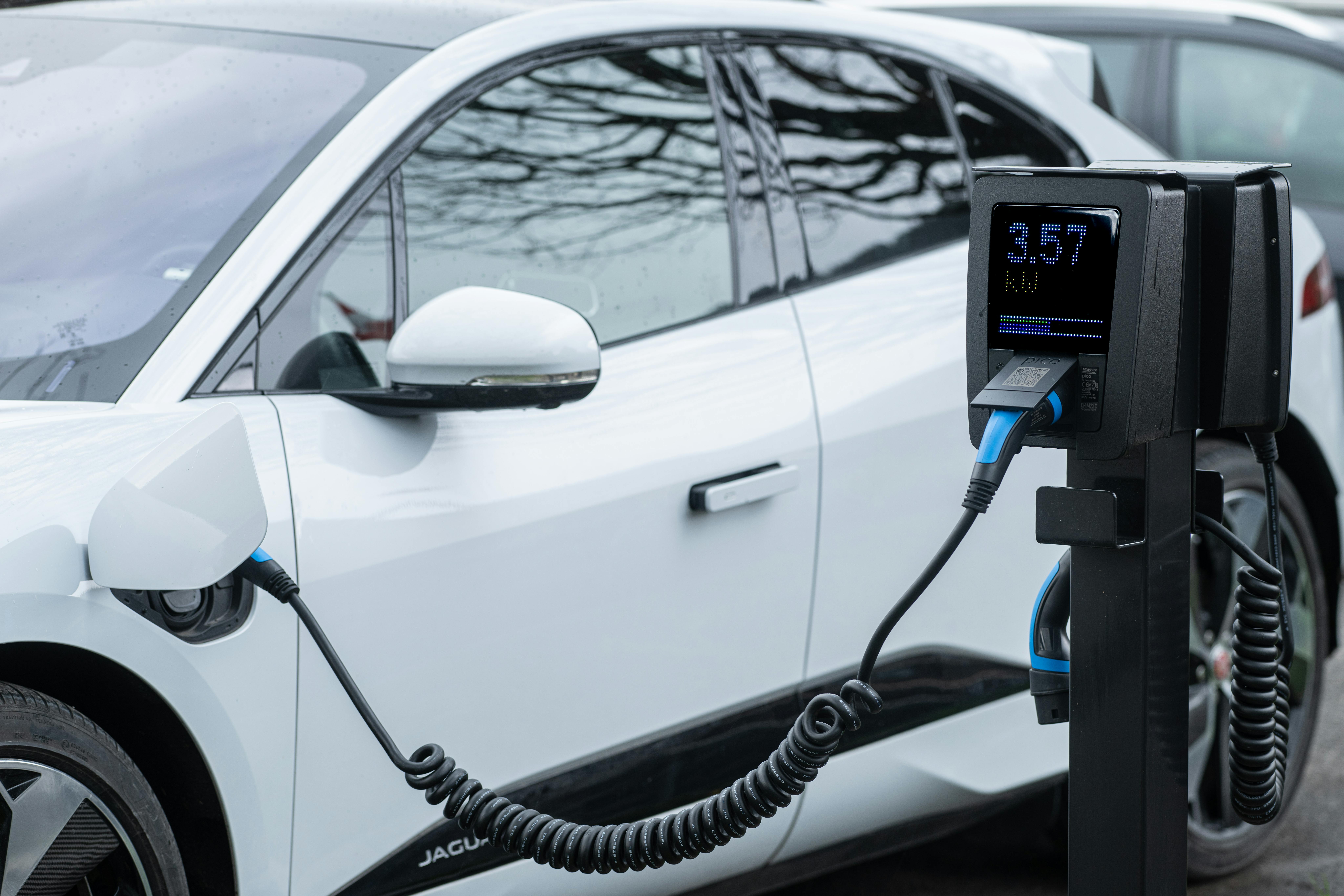
The critical variable is transport, which accounts for roughly half of global oil consumption. Road transport alone, principally passenger cars and light commercial vehicles, consumes approximately a quarter of all oil produced globally. The electrification of road transport is therefore the single most consequential development for long-run oil demand, and the pace of that electrification has consistently exceeded the forecasts of both sceptics and institutional forecasters over the past decade. Electric vehicle sales have grown from a negligible share of the global market in 2015 to a significant and rapidly expanding fraction by 2026, with China leading the transition by a substantial margin and European markets following at pace driven by regulatory requirements.
The electric vehicle does not merely substitute for the internal combustion engine. It removes a barrel of oil demand permanently from the market for every car sold, compounding year after year across the entire fleet.
China is simultaneously the world's largest oil importer, its largest electric vehicle market and its largest manufacturer of solar panels and batteries. This combination makes China the single most important variable in any serious analysis of peak demand. China's oil consumption growth has been the primary driver of global demand growth for the past two decades. If Chinese demand peaks and begins to decline, as an increasing body of evidence suggests it may do within this decade, the global demand trajectory changes fundamentally regardless of what happens in other markets.
The Chinese government has pursued the electrification of its vehicle fleet with a combination of subsidies, mandates and industrial policy that has produced the world's most competitive electric vehicle manufacturing sector. Chinese electric vehicle manufacturers, led by BYD, CATL and a range of newer entrants, have achieved cost structures that allow them to produce electric vehicles at prices competitive with internal combustion equivalents, a milestone that analysts have long identified as the tipping point for mass market adoption. The penetration of electric vehicles in Chinese new car sales has reached levels that, if sustained, will begin to reduce the total stock of internal combustion vehicles on Chinese roads within the foreseeable future, and with it the oil demand those vehicles represent.
Beyond transport, China is also the world's largest installer of solar and wind generation capacity, reducing the use of oil and gas in power generation and industrial processes. The combination of these trends has led some analysts to conclude that Chinese oil demand growth has already slowed to near zero and may tip into outright decline before the end of the decade. If that assessment proves correct, it will represent the most significant structural shift in the global oil market since the rise of Chinese demand transformed the market's growth trajectory in the early 2000s.
The oil industry's response to the prospect of peak demand has been characterised by a tension between the commercial logic of maximising near-term returns from existing assets and the strategic necessity of positioning for a world in which those assets may become stranded. This tension operates differently across the different types of actor in the oil economy.
The integrated oil majors have pursued a range of strategies in response to the demand transition, none of which represents a coherent or complete answer to the structural challenge they face. BP made the most ambitious attempt at repositioning, announcing in 2020 a strategic pivot toward renewables and low-carbon energy that involved substantial planned reductions in oil and gas production and investment in wind, solar and electric vehicle charging infrastructure. By 2023, under pressure from investors who concluded that the pivot was destroying shareholder value without creating a credible alternative business model, BP had partially reversed course, restoring oil and gas investment and moderating its renewable energy targets. The episode illustrated the difficulty that integrated majors face in transitioning their business models within the timeframes that capital market investors, with their focus on near-term returns, are willing to accept.
ExxonMobil and Chevron have taken a more straightforward position, essentially denying that peak demand is imminent and continuing to invest in oil and gas production on the basis that global demand, particularly from developing economies in Africa and Asia, will continue to grow for longer than the energy transition consensus suggests. This position has the commercial advantage of simplicity and the strategic disadvantage of exposure if the transition accelerates beyond current projections, stranding assets that were built on assumptions of sustained demand growth.
The oil major that bets too heavily on the transition loses in the near term. The one that bets too little loses in the long term. The industry has not found a strategy that resolves this dilemma, because no such strategy exists.
For oil-producing states in the Global South, the prospect of peak demand creates a dilemma that is both more urgent and less tractable than the one facing the oil majors. A major oil company can, in principle, redirect its capital toward other energy businesses and manage the decline of its oil assets over time. A state whose fiscal revenues, public services, subsidy programmes and political stability all depend on oil production revenues has no equivalent flexibility. The resource curse, described earlier in this edition, is a condition of oil abundance. The post-peak condition, in which demand for the resource on which a state's entire fiscal architecture depends begins to decline, is potentially even more destabilising.
Saudi Arabia's Vision 2030 programme, launched in 2016 under Crown Prince Mohammed bin Salman, represents the most ambitious and best-resourced attempt by a major producing state to diversify its economy away from oil dependence before peak demand makes that diversification an emergency rather than a choice. The programme involves massive investment in tourism, entertainment, technology and manufacturing, funded by the oil revenues that remain substantial in the near term. Its ambition is to reduce the Saudi economy's dependence on oil from its current level to a point where the kingdom can sustain its public services and its political bargain with its citizens without the oil revenues that currently underpin both.
The UAE's exit from OPEC, announced this week and effective from 1 May 2026, reflects a similar calculation at the individual producer level. By leaving the cartel and pursuing its five million barrels per day capacity target unconstrained by quota, the UAE is maximising the volume of oil it produces in the period before demand begins to decline structurally. The logic is explicit in Abu Dhabi's public statements: produce more now, while the demand exists and the price is adequate, rather than holding back behind a quota that protects Saudi Arabia's market share at the expense of the UAE's revenue. In a world of peak demand, the low-cost producer that moves fastest to monetise its reserves wins. The one that defers production loses revenue permanently to a market that may no longer exist at the same scale when it eventually decides to produce.
For oil-importing economies, the prospect of peak demand and eventually declining oil prices offers long-run relief from the structural vulnerability that has characterised their position throughout this edition's analysis. A world in which oil demand has peaked and is declining is a world in which the price of oil faces sustained downward pressure, in which the leverage of oil-producing states over importing economies is reduced, and in which the fiscal cost of managing imported inflation is lower. For Mauritius, which has been described in this edition as the clearest regional example of the inverted resource curse, lower long-run oil prices would reduce the burden on the STC cross-subsidy mechanism, ease pressure on the rupee and free fiscal space for productive investment.
But this long-run relief comes with a transitional challenge that is acute for small island developing states. The energy transition requires capital investment in renewable generation, storage, grid infrastructure and vehicle electrification that these states must finance at a time when their fiscal positions are under pressure from the very oil price volatility that the transition is intended to resolve. The clean energy technologies that will eventually reduce import dependence require upfront investment that competes with immediate social spending pressures. The international financing mechanisms designed to support this transition, including the Green Climate Fund, concessional lending from multilateral development banks and the various bilateral climate finance commitments made at successive COP meetings, have been chronically underfunded relative to the stated ambitions of their architects and have reached small island developing states in volumes well below what the scale of the transition challenge requires.
The path from a world of oil dependency to a world of renewable energy self-sufficiency runs through a transitional valley in which the costs of the old system and the investment requirements of the new one overlap. For the smallest and most exposed economies, this valley is the most dangerous terrain in the entire transition. They cannot afford to move slowly, because every year of continued oil dependency is a year of structural exposure to a market they cannot influence. And they cannot afford to move quickly without financing that the international system has promised but not adequately delivered. Peak demand, when it arrives, will eventually set them free. Getting there is the challenge that the next generation of Mauritian policymakers will inherit from this one.
Add comment
Comments