The Petrodollar Trap: Dollar Hegemony, Oil Dependency and the Structural Constraints on Global South Sovereignty
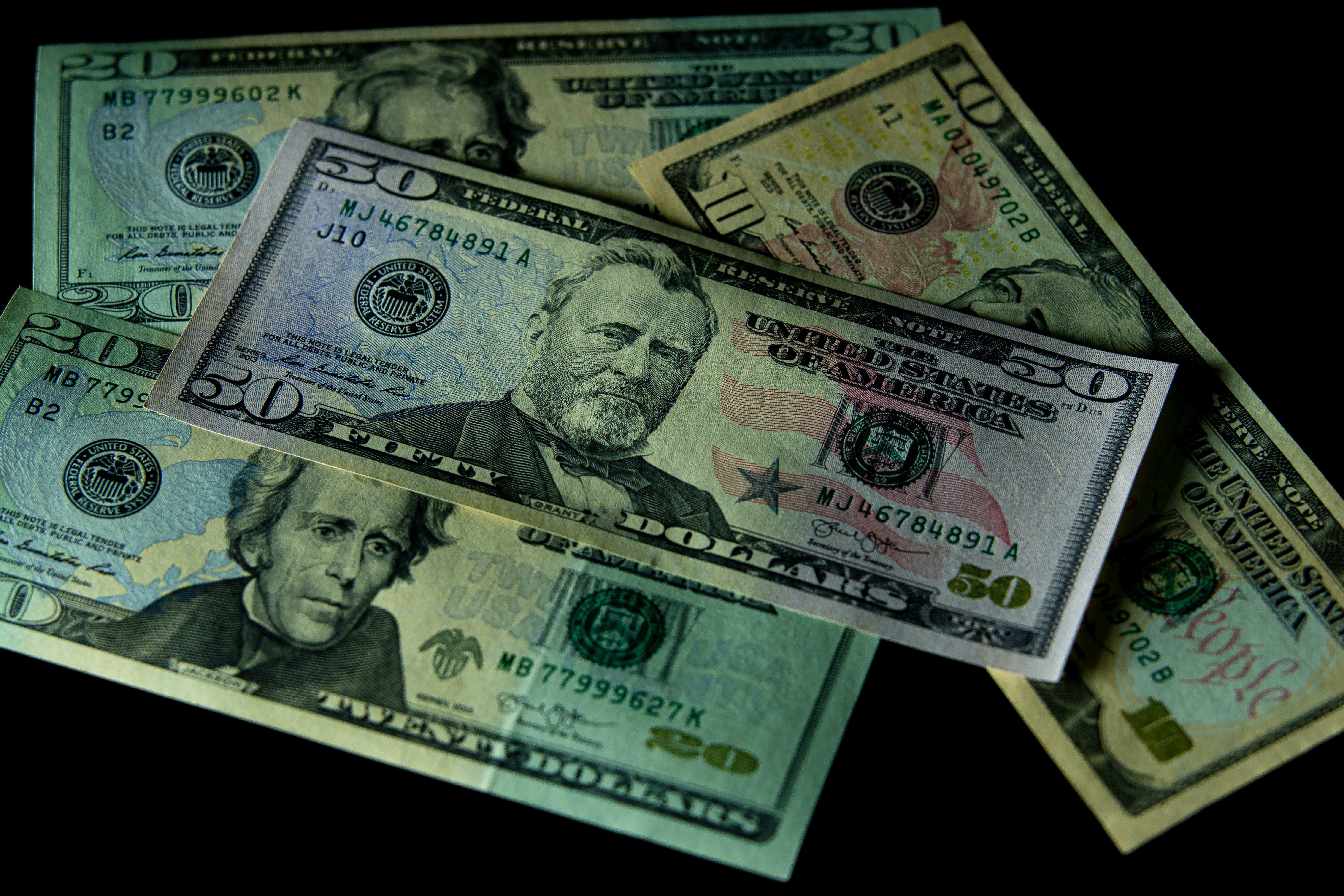
This paper examines the structural relationship between dollar hegemony, oil dependency and the sovereignty constraints imposed on Global South states that must purchase oil in a currency they do not issue and cannot control. We introduce the Petrodollar Sovereignty Deficit as an original conceptual framework extending the Currency Sovereignty Deficit Index developed in WP-2026-04. The Petrodollar Sovereignty Deficit measures the degree to which a state's policy autonomy is constrained by the combination of oil import dependency and dollar denomination of the global oil trade, and distinguishes between the chronic form of this deficit, which operates through the trade balance, exchange rate and fiscal position, and the acute form, which operates through the direct weaponisation of dollar access as an instrument of geopolitical coercion.
We develop the theoretical framework through three case studies representing the full severity spectrum of the Petrodollar Sovereignty Deficit: Mauritius as the chronic case, Iran as the sanctioned producer case, and Cuba as the acute weaponisation case. The Cuba case, in which the United States has deployed the dollar-denominated oil trading system as the primary instrument of economic coercion, including the threat of secondary tariffs against any third-country supplier of oil to Cuba, represents the most extreme current expression of the deficit and provides the clearest test of the framework's predictive and explanatory power. We conclude that the Petrodollar Sovereignty Deficit is a structural feature of the post-Bretton Woods international monetary order that is systematically underweighted in standard analyses of Global South development constraints, and that its full magnitude is only visible when chronic and acute forms are analysed within a unified framework.
When the United States threatened tariffs on any country that supplied oil to Cuba in early 2026, it was not deploying a new instrument of foreign policy. It was revealing, in unusually naked form, the instrument that the dollar-denominated oil trading system has always provided: the ability to deny a country access to the energy it needs to function by threatening the suppliers who might otherwise provide it. This paper analyses that instrument and its consequences.
The petrodollar system, as it has been understood since the United States negotiated an agreement with Saudi Arabia in 1974 under which Saudi oil would be priced and traded exclusively in dollars in exchange for American security guarantees, is one of the foundational institutional arrangements of the post-Bretton Woods international monetary order. Its effects extend far beyond the bilateral relationship between Washington and Riyadh. Because the dollar is the invoicing currency for the vast majority of internationally traded crude oil and refined products, every country that imports oil must first acquire dollars before it can purchase the energy its economy requires. This requirement creates a structural dependency on the dollar that operates continuously and independently of any explicit policy decision by the United States government, and that becomes acutely coercive when the United States chooses to weaponise its position as the issuer of the global oil trading currency against a specific state or set of states.
The chronic form of the Petrodollar Sovereignty Deficit operates through three channels that are familiar from the development economics literature but have not previously been integrated into a unified framework that makes their common origin in dollar hegemony explicit. The first channel is the trade balance channel: oil-importing countries must earn dollars through exports or borrow them through capital markets in order to purchase the energy their economies require, and the continuous requirement to generate dollar-denominated foreign exchange constrains their trade and industrial policy in ways that a country issuing the reserve currency does not experience. The second channel is the exchange rate channel: the dollar denomination of oil imports means that currency depreciation directly raises the domestic currency cost of energy, creating an inflationary transmission mechanism that is more severe for countries with weaker currencies and less hedging capacity. The third channel is the fiscal channel: the interaction between oil import costs, currency depreciation and domestic price management mechanisms, such as the fuel levy and cross-subsidy structures described in this paper's companion publications, creates fiscal pressures that constrain the public investment capacity of oil-importing states.
The Petrodollar Sovereignty Deficit, denoted PSD, is defined in this paper as the aggregate constraint on policy autonomy imposed on a state by the combination of oil import dependency and dollar denomination of the global oil trade. It is a composite measure that integrates three components: the Oil Import Vulnerability Index, which measures the share of primary energy derived from imported oil and the ratio of the oil import bill to total export earnings; the Dollar Access Index, which measures the state's capacity to generate or access dollar-denominated foreign exchange independent of its oil import requirement; and the Weaponisation Exposure Index, which measures the state's vulnerability to acute coercion through the denial of dollar access to itself or to its oil suppliers.
PSD = f(OIVI, DAI, WEI) where OIVI measures oil import dependency as a share of energy and export earnings, DAI measures independent dollar access capacity, and WEI measures exposure to third-party supply coercion through dollar denial. The chronic PSD is determined primarily by OIVI and DAI. The acute PSD is activated when WEI exceeds a threshold determined by the sanctioning state's willingness to impose secondary costs on third-country suppliers. The relationship between chronic and acute PSD is not linear: a state with a high chronic PSD may face acute activation at relatively low WEI thresholds if its geopolitical exposure to the sanctioning state is high, while a state with moderate chronic PSD but high geopolitical salience may face acute activation even with substantial independent dollar access, as the Iran case demonstrates.
The Petrodollar Sovereignty Deficit extends the Currency Sovereignty Deficit Index introduced in WP-2026-04, which measured the constraint imposed by currency weakness on a state's capacity to conduct independent monetary and fiscal policy. The PSD adds the specific dimension of oil dependency, which creates a channel through which the currency sovereignty constraint is activated by the physical requirement to purchase a dollar-denominated commodity rather than by monetary policy dynamics alone. A state with a strong currency but complete oil import dependency still faces a PSD because its dollar requirement for energy is structural and cannot be eliminated by monetary policy. A state with a weak currency and significant domestic energy production faces a Currency Sovereignty Deficit but a lower PSD because its dollar requirement for energy is reduced by domestic supply.
Mauritius represents the chronic form of the Petrodollar Sovereignty Deficit in its most analytically clear expression. The island imports approximately one hundred per cent of its petroleum requirements. It has no domestic oil production, no refining capacity and no strategic petroleum reserve. Its dollar earnings come primarily from tourism receipts and financial services exports, both of which are vulnerable to external shocks that are independent of the oil price but compound its fiscal impact when they occur simultaneously. The rupee has depreciated consistently against the dollar over the past decade, driven by the structural trade deficit that reflects the island's dependence on imported commodities including fuel.
The chronic PSD operates in Mauritius through all three channels identified above. The trade balance channel is visible in the persistent and structural gap between import values, in which petroleum products represent a significant share, and export earnings. The exchange rate channel is visible in the direct relationship between rupee depreciation and the domestic currency cost of fuel imports, which transmits into the STC's import bill and through the cross-subsidy mechanism into the fiscal position. The fiscal channel is visible in the share of government expenditure consumed by the management of fuel and food price subsidies, which rises and falls with the oil price and the exchange rate in ways that crowd out productive public investment.
The Mauritius chronic PSD is not currently in its acute activation phase because the United States has no specific geopolitical interest in denying Mauritius access to oil suppliers. But the structural exposure revealed by the chronic PSD analysis demonstrates that acute activation would be devastating if it occurred: the island has no domestic energy alternative, no significant strategic reserve, no refining capacity to process alternative crude grades, and no supplier relationships independent of the dollar-denominated international market. In this sense the chronic PSD measures not only the current constraint but the potential severity of acute activation, which for Mauritius would be existential at the energy security level within a matter of weeks.
Iran represents a distinct variant of the Petrodollar Sovereignty Deficit that this paper terms the sanctioned producer case. Unlike Mauritius, Iran is a major oil producer with significant domestic energy resources and a state oil company with decades of operational experience. Its PSD does not arise from import dependency but from the opposite direction: its inability to sell its oil in dollar-denominated markets and to access the dollar-clearing system for the proceeds of such sales as it can make.
The sanctioned producer PSD operates through the exclusion of the Iranian state from the petrodollar system at the export rather than the import end. Iran produces approximately 3.4 million barrels per day under pre-sanction conditions but has been unable to sell that production through conventional dollar-denominated channels since the comprehensive sanctions regime was reimposed in 2018 following the American withdrawal from the Joint Comprehensive Plan of Action. Its oil reaches market through the shadow fleet and alternative financial channels described in this edition's companion articles, at discounts to the Brent benchmark that represent a direct fiscal cost of the petrodollar exclusion.
Iran's sanctioned producer PSD operates through three mechanisms. First, the discount on sanctioned crude: Iranian oil has traded at discounts of fifteen to twenty-five dollars per barrel to equivalent non-sanctioned grades, representing a direct revenue loss that compounds over the volume of production. Second, the transaction cost of alternative channels: the shadow fleet, the alternative insurance arrangements and the non-dollar payment systems used to circumvent sanctions all impose costs that further reduce the net revenue available to the Iranian state. Third, the storage crisis: as described in this edition's Intelligence Note, the Hormuz closure has created a geological emergency in which Iran's inability to export oil through conventional channels threatens permanent damage to its wellhead infrastructure, a consequence that no sanctions analysis based on financial flows alone could have predicted and that the Weaponisation Exposure Index must incorporate as a physical dimension of the acute PSD.
Cuba represents the most extreme current expression of the Petrodollar Sovereignty Deficit and provides the clearest empirical test of the acute activation mechanism. The island derives over 80 per cent of its total energy supply from oil. It has no domestic production of significance. Its economy was engineered during the Soviet era around energy systems that have not been substantially modernised, creating a built environment of extraordinary oil dependency in transport, power generation and industrial production. The collapse of the Soviet Union in 1991 removed Cuba's primary energy subsidiser, and the subsequent decades of dependence on Venezuelan oil at preferential prices created a supply relationship that was itself a form of managed vulnerability: the island was dependent on a single politically motivated supplier whose own stability was subject to the geopolitical dynamics of the Western Hemisphere.
When the United States captured Venezuelan President Nicolas Maduro in January 2026 and made clear that Venezuelan oil supplies to Cuba would end, it activated the acute form of Cuba's Petrodollar Sovereignty Deficit with a speed and severity that illustrates the mechanism with unusual clarity. The subsequent announcement that any country supplying oil to Cuba would face significant tariffs in trade with the United States deployed the secondary sanctions instrument in its most explicit form: threatening to impose dollar access costs on third-country suppliers as a means of extending the reach of American financial coercion beyond the bilateral relationship with the target state.
Over 80 per cent of Cuba's total energy supply comes from oil. The country relies on imports for the vast majority of this requirement. Venezuela was its primary supplier until January 2026. The US embargo, now complemented by the oil blockade, has been estimated by the Cuban government to have cost the country approximately 170 billion dollars in cumulative damages. The oil blockade has produced electricity blackouts of up to 20 hours per day, a collapse of food refrigeration and medical supply chains, and reports of acute food insecurity. The Cuban government estimates these as previously unprecedented levels of social stress. UN human rights experts have described the oil blockade as a serious violation of international law. Russia sent one shipment of approximately 700,000 barrels in March 2026, sufficient to fuel the country for approximately one week, which the United States permitted under a deliberate calibration strategy: maintaining enough pressure to cause severe pain without triggering social collapse and the mass migration crisis that would result.
The Cuba case illustrates the full architecture of the acute Petrodollar Sovereignty Deficit. The target state has high oil import dependency and no domestic alternative. Its dollar access is constrained by decades of sanctions that have excluded it from the international financial system. Its Weaponisation Exposure Index is at its maximum because the sanctioning state has both the motivation and the mechanism to extend coercion to third-country suppliers through tariff threats denominated in dollar trade access. The result is an energy crisis that has cascaded through every dimension of the Cuban economy and society: the power grid fails for twenty hours a day, hospitals run on generators of limited capacity, food spoils without refrigeration, and people search through bins in Havana streets for anything edible.
Cuba is not suffering an energy crisis. It is suffering the acute activation of the Petrodollar Sovereignty Deficit, deployed with deliberate calibration to cause maximum pain without triggering the collapse that would create the migration crisis the sanctioning state does not want.
The calibration dimension of the Cuba case is analytically significant. The United States permitted a single Russian oil shipment in March 2026 despite its general policy of threatening tariffs on Cuban oil suppliers, with Trump stating publicly that Cuba needs to survive. This reveals the deliberate management of the acute PSD activation: the sanctioning state is not attempting to destroy the target state's economy entirely but to maintain it at a level of stress sufficient to generate political pressure for regime change without triggering the social collapse that would produce consequences, primarily mass migration, that are contrary to the sanctioning state's interests. This calibration strategy requires a degree of precision in the application of coercive instruments that is only possible because the petrodollar system gives the United States granular control over the volume of energy that reaches the target economy through the mechanism of secondary sanctions on suppliers.
The Cuba case cannot be fully understood without reference to the broader strategic context in which the acute PSD has been activated. The Trump administration's foreign policy in the Western Hemisphere reflects what analysts have described as a Donroe doctrine: an updated version of the Monroe Doctrine of 1823, which asserted American dominance over the Western Hemisphere and warned external powers against interference, combined with the specific policy preferences and personal political interests of the current administration. The sequential targeting of Venezuela, Cuba and potentially other states in the region follows a pattern of asserting American hegemonic authority over the hemisphere through the most powerful available instruments of coercion, of which the petrodollar system is the most effective because it operates without requiring military deployment and creates economic pain that is directly attributable to American policy.
The involvement of Secretary of State Marco Rubio, whose political identity was built on opposition to the Cuban Communist government and whose Cuban-American constituency in Florida has specific and longstanding interests in the outcome of American Cuba policy, adds a domestic political dimension to the acute PSD activation that is outside the purely structural analysis this paper attempts. But it is relevant to the framework in one respect: the Weaponisation Exposure Index must incorporate not only the structural factors that determine a state's vulnerability to petrodollar coercion but the domestic political economy of the sanctioning state, which determines the threshold at which that coercion will be activated and the objectives it will be deployed to achieve.
The Petrodollar Sovereignty Deficit framework developed in this paper has several implications for the analysis of Global South development constraints and for the design of policies aimed at reducing oil dependency and dollar vulnerability.
The first implication is that standard analyses of oil import dependency significantly underestimate its true cost by focusing on the direct trade balance effects while neglecting the sovereignty constraint that dollar denomination imposes on the full range of a state's policy choices. A country that derives fifty per cent of its energy from imported oil is not merely exposed to oil price volatility. It is structurally constrained in its monetary policy, its fiscal policy, its trade policy and, as the Cuba case demonstrates, its foreign policy by the requirement to maintain access to the dollar-clearing system through which that oil must be purchased.
The second implication is that the energy transition is not merely an environmental and economic imperative but a sovereignty imperative for oil-importing states in the Global South. Every percentage point reduction in oil import dependency reduces the Petrodollar Sovereignty Deficit and expands the policy space available to the state. The transition to domestic renewable energy generation, however capital-intensive and institutionally demanding, is the only structural path out of the chronic PSD for states like Mauritius. The acute form of the deficit, as the Cuba case demonstrates, can be activated by geopolitical decisions that the target state has no capacity to influence or predict.
The third implication is for the international monetary architecture. The concentration of global oil invoicing in a single currency, the dollar, creates a structural asymmetry between the issuing state, which can use its currency position as an instrument of coercion at effectively zero cost to itself, and the states that must hold and use that currency to purchase an essential commodity. The diversification of oil invoicing currencies, which China has pursued through the petroyuan and which several bilateral agreements between non-Western states have attempted, represents a partial structural remedy for the chronic PSD. It does not address the acute form of the deficit for states that remain integrated into the dollar-clearing system for other aspects of their international economic relations, but it would reduce the leverage available to the United States through secondary sanctions on oil suppliers.
The Cuba case, unfolding in real time as this paper is written, is the most consequential live test of the Petrodollar Sovereignty Deficit framework. It demonstrates that the petrodollar system is not a neutral infrastructure of international trade but an instrument of power that can be activated with considerable precision against states whose energy dependency and dollar vulnerability make them susceptible to coercion through the denial of access to the commodity on which their economies and societies depend. Whether the Cuban government survives the current activation of its acute PSD will depend on factors, including the resilience of its population, the calculations of potential alternative suppliers and the calibration decisions of the sanctioning state, that lie outside the framework this paper develops. What the framework provides is the analytical architecture for understanding why Cuba's energy crisis is not an accident of policy or a consequence of communist mismanagement, though mismanagement has contributed to its severity, but the predictable outcome of the structural vulnerability that dollar-denominated oil dependency creates for every state that sits outside the circle of American geopolitical favour.
Proposition 1: Every oil-importing state that lacks the capacity to issue the global oil invoicing currency faces a chronic Petrodollar Sovereignty Deficit that constrains its monetary, fiscal and trade policy autonomy independently of any explicit coercive action by the currency-issuing state.
Proposition 2: The chronic PSD becomes acute when the currency-issuing state deploys secondary sanctions against third-country oil suppliers of the target state, activating the full coercive potential of dollar denomination against a state that has no alternative energy source and no independent dollar access.
Proposition 3: The severity of the acute PSD is a function of the target state's Oil Import Vulnerability Index, its Dollar Access Index and its Weaponisation Exposure Index, the last of which incorporates both structural factors and the domestic political economy of the sanctioning state.
Proposition 4: The only structural remedy for the chronic PSD is the reduction of oil import dependency through domestic energy production, primarily renewable generation. The acute PSD can be partially mitigated by diversification of oil invoicing currencies and by the maintenance of supplier relationships with states outside the dollar-clearing system, but neither remedy is available to states in the most acute phase of PSD activation.
Add comment
Comments