Cuba at the Breaking Point: The Oil Blockade, the Blackouts and the Society Holding On
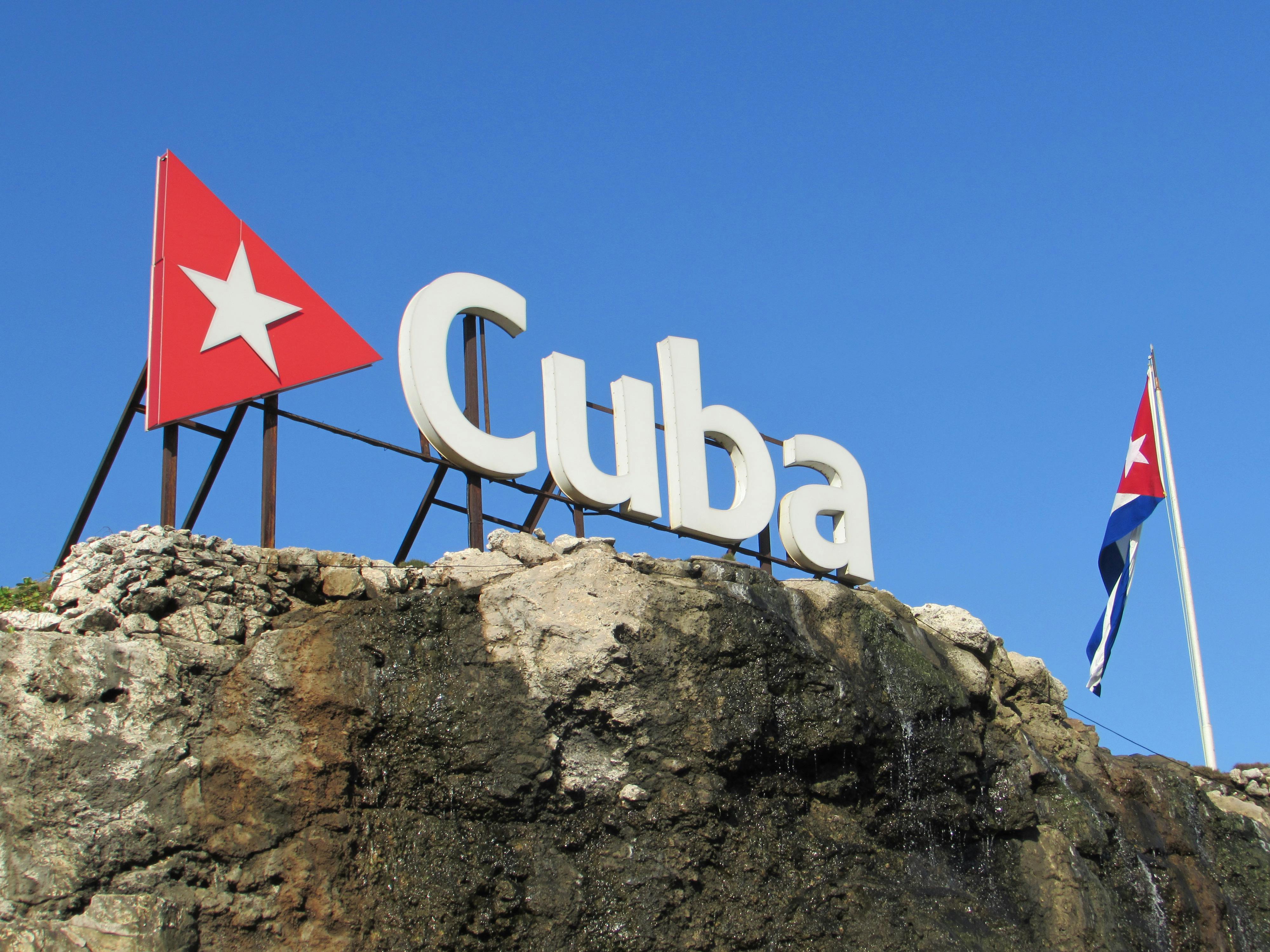
Cuba requires 100,000 barrels of oil per day. It produces 40,000. Oil imports hit zero in January 2026 for the first time since 2015. Seven nationwide grid collapses in eighteen months. Fifteen hours without power per day in parts of Havana. Hospitals unable to operate safely. Garbage piling in the streets. Petrol at ten dollars a litre on the black market. This is not a crisis approaching. It is a crisis that has arrived. The Meridian Intelligence Desk publishes the full structural account of what is happening in Cuba, how it got here and where it goes next.
In the Havana neighbourhood of Regla, a restaurant owner named Salva ran a Japanese-Cuban fusion food business called Oishi. She had built it over years, navigating the peculiarities of Cuba's mixed economy with the particular tenacity that small entrepreneurs in controlled economies develop as a survival skill. When the blackouts began running to fifteen hours a day in early 2026, she bought a generator. When the petrol price on the black market surged from one dollar a litre to ten, the generator became unaffordable. She closed Oishi. She spent days in tears. Salva is not a statistic. She is a representative data point for what is happening across the Cuban economy as the convergence of infrastructure decay, geopolitical pressure and fuel starvation pushes the island toward a threshold it has not approached since the Special Period that followed the Soviet Union's collapse in 1991.
The numbers behind Salva's story are precise and they are damning. Cuba's national power grid, built largely after 1959 and dependent on Soviet engineering that received its last meaningful maintenance investment in the late 1980s, requires approximately 100,000 barrels of oil per day to meet national demand. Cuban domestic production covers approximately 40,000 barrels per day, or 40 per cent of that requirement. The remaining 60 per cent was historically supplied by Venezuela under the Chávez and Maduro governments, which provided heavily subsidised oil in exchange for Cuban medical workers and security personnel. Venezuela's deliveries had been declining since the mid-2010s as its own economy deteriorated. They stopped entirely in January 2026 following the US military operation that resulted in the capture of Nicolás Maduro. Mexico, the secondary supplier, suspended shipments in February 2026 under US pressure. Oil imports to Cuba dropped to effectively zero in January 2026, the first time that had occurred since 2015.
Cuba requires 100,000 bbl/day, produces 40,000
Including March 5 and March 16, 2026
Over half the country without power
Petrol at $10/litre on black market
Cuba power grid collapse 2026 Soviet infrastructure decay thermoelectric plants
To understand the current crisis it is necessary to understand that the Cuban power grid was never robust. It was built during the period of Soviet patronage, designed around large centralised thermoelectric plants that burned heavy fuel oil, and it received no meaningful investment after 1989 when Soviet support ended. The plants that generate Cuba's electricity are aging, under-maintained and operating well beyond their designed service lives. The grid connecting them lacks the redundancy that modern systems require: when a generating unit fails unexpectedly, the system cannot compensate through alternative routing. The protection systems that should detect faults and isolate them are old enough that they frequently cannot. The result is that what would be a manageable local failure in a modern grid becomes a cascading national collapse in Cuba's.
The October 2024 collapse, triggered by the unexpected shutdown of the Antonio Guiteras Power Plant in Matanzas, left the entire island without power and illustrated this fragility with brutal clarity. The plant's loss of 1.64 gigawatts, equivalent to half of total consumer demand at peak hours, could not be compensated. The grid failed. It took four days to restore power. That collapse was followed by another in December 2024, two more in March 2026 and continuing severe daily deficits through April and May. The most recent full collapse on 16 March 2026 was triggered by a boiler leak at the Antonio Guiteras plant again and lasted 29 hours and 29 minutes. The same plant. The same failure mode. The repairs between October 2024 and March 2026 were insufficient to prevent recurrence because they addressed the immediate breakdown rather than the structural condition of a plant that should have been decommissioned years ago.
Cuba's grid has not broken down because of the blockade alone. It has broken down because it was already at the edge of systemic failure, and the blockade removed the fuel that was keeping it barely operational.
US oil blockade Cuba 2026 Trump executive order Pemex Venezuela Maduro
The United States oil blockade on Cuba, formalised in an executive order signed by President Trump on 29 January 2026, is the most consequential external pressure applied to the island since the Cuban Missile Crisis of 1962. The New York Times used precisely that comparison when the blockade took full effect in February. The mechanism is straightforward and effective: the United States threatened tariffs on any country that sells or provides oil to Cuba. Mexico's Pemex, the primary remaining supplier after Venezuela's exit, suspended shipments in February rather than face US tariff consequences. The blockade does not require the US Navy to intercept every tanker. It requires only that the commercial and financial consequences of supplying Cuba be severe enough that potential suppliers choose not to do so.
The blockade is not operating in isolation. It is part of a broader maximum pressure strategy that Trump applied to Cuba from the first days of his second term, tightening sanctions, demanding the release of political prisoners and making increasingly explicit statements about the possibility of regime change. Trump has spoken publicly about a friendly takeover of Cuba and has said he believes the Cuban government is on the verge of collapse. These statements are not merely rhetorical. They reflect a strategic assessment that sustained maximum pressure can produce political transformation in Havana without military intervention, by creating conditions of material deprivation that generate domestic pressure on the Díaz-Canel government.
The Trump administration's Cuba strategy also intersects with the Iran war in a way that is rarely noted in mainstream coverage. The US oil blockade on Cuba was made possible in part by the same financial and shipping pressure infrastructure that the United States has deployed against Iran, Venezuela and Russia. The threat of secondary sanctions, meaning sanctions on third parties that do business with sanctioned entities, is the common mechanism. Its simultaneous application to Cuba, Iran and what remains of Venezuela's oil export capacity has created a ring of sanctioned energy producers that collectively represent a significant restructuring of the global oil and gas market.
Cuba daily life blackouts 2026 Havana hospitals water food shortage protests
The humanitarian dimensions of the Cuban energy crisis are documented by Human Rights Watch, the United Nations and multiple international news organisations, and they go well beyond the inconvenience of power cuts. Hospitals cannot operate safely during extended outages. Surgical procedures are being limited. The water supply system, which depends on electric pumps, fails during blackouts, leaving households without running water for the duration. Without refrigeration, food spoils. Without street lighting and traffic signals, movement after dark becomes difficult and dangerous. Without internet access, which is also affected by power outages, communication with family abroad is disrupted at the moments when people most need it.
The economic consequences compound the physical ones. Container trucking from Havana's port, which cost between 100 and 150 dollars before the crisis, now costs no less than 600 dollars because fuel is scarce and expensive. Every cost increase in logistics passes through to the price of goods. The private sector, which had been developing cautiously since 2021 when the government permitted the creation of small and medium enterprises, has been hit particularly hard. Some businesses have closed entirely. Others have survived by pivoting to solar power and electric vehicles, though the price of an electric tricycle has jumped 50 per cent as demand surges. The government has responded to the private sector's distress with a series of liberalisation measures, allowing greater tax exemptions for solar panel imports and permitting Cubans living abroad to open businesses on the island, measures that would have been unthinkable five years ago and that represent a real, if limited, ideological concession to economic reality.
Public protests have occurred, a significant development in a society where organised dissent carries serious personal risk. On 7 March, residents in parts of Havana took to the streets, banging pots and pans and lighting bonfires. Days later, students held a peaceful protest on the steps of the University of Havana, citing the impact of power cuts and internet outages on their studies. The government's response combined repression with partial accommodation: internet access was cut in some areas during protests, police dispersed demonstrators, but the government also acknowledged the crisis publicly in a nationally televised press conference by Díaz-Canel, an unusual admission of structural failure from a leadership that has historically attributed all difficulties to the US embargo while maintaining an image of self-sufficient revolutionary resilience.
When a Cuban president holds a nationally televised press conference to acknowledge that the energy situation will not be simple to resolve, something has shifted in the calculus of how the government communicates with its own people. Necessity has a way of producing honesty that ideology does not.
Russia Cuba oil tanker 2026 shadow fleet shipments energy lifeline
Russia has provided a partial lifeline. On 30 March 2026, a Russian oil tanker carrying 100,000 tonnes of crude oil arrived in Havana. The shipment, convertible into approximately 250,000 barrels of diesel, could cover Cuban energy demands for twelve and a half days. Russian shipments have continued through Q1 and Q2 2026, operating through the shadow fleet infrastructure that Russia has developed to circumvent Western sanctions on its own oil exports, the same infrastructure that The Meridian has analysed in the context of the Iran war. The Russian tankers typically disable their AIS tracking transponders, use flags of convenience and route through intermediary ports to obscure their destination.
The limits of this lifeline are significant. Russian shipments cover only 7 to 10 days of total Cuban consumption per delivery, and the interval between deliveries is not sufficient to prevent the deficit from soaring. As of 11 May 2026, the Russian oil that arrived in April has run out with no new shipments confirmed for May. The deficit on the morning of 11 May stood at 1,305 MW already by 6 AM, with an evening peak projected deficit of 1,955 MW, meaning more than half the country was expected to be without power during the hours when demand is highest. The CTE Felton plant in Holguín was offline for maintenance, adding four more days of reduced capacity to an already critically strained system.
Cuba government collapse 2026 Díaz-Canel Trump regime change Cuba Special Period
Trump has repeatedly stated that the Cuban government is on the verge of collapse and that he expects to have the honour of taking Cuba. The assessment behind this prediction deserves serious examination rather than reflexive acceptance or reflexive dismissal. The Cuban government has demonstrated a remarkable capacity to absorb material deprivation without losing its grip on power. The Special Period of the 1990s, during which the Cuban economy contracted by approximately 35 per cent following the Soviet collapse, produced severe humanitarian suffering but not regime change. The government survived by a combination of repression, rationing, limited economic liberalisation and the ideological discipline of a revolutionary state that had spent three decades preparing its population for exactly this kind of external siege.
The current crisis has some characteristics that make it more threatening than the Special Period and some that make it less so. It is more threatening because the Cuban population has significantly more exposure to information from abroad through mobile phones and social media, which makes the contrast between Cuban living conditions and those elsewhere harder to suppress. Emigration has accelerated dramatically, removing from the island precisely the young, educated and economically active people who would be the agents of any political transformation. Hundreds of thousands of Cubans have left since 2022. The people who remain are disproportionately older, more dependent on state services and less economically mobile, which reduces the organised capacity for sustained resistance while increasing the humanitarian burden on state resources.
It is less threatening in the sense that the government still controls the security apparatus, still controls information within the island more than it did before social media but more than any comparable authoritarian state has managed to do, and still commands a degree of genuine ideological support among a portion of the population that has been educated within the revolutionary framework for its entire life. The Cuban military and security services have not shown signs of fracture. The leadership succession from Raúl Castro to Díaz-Canel was managed without incident. The government is under severe strain, but severe strain and imminent collapse are different conditions, and the history of the Cuban revolutionary state suggests a higher tolerance for the former than most external observers assume.
Cuba future 2026 solar energy negotiations US Cuba deal diplomatic talks
Three trajectories are structurally possible from Cuba's current position. The first is a negotiated accommodation with the United States. Díaz-Canel confirmed in March 2026 that diplomatic talks with Washington were underway, the first public acknowledgement of high-level engagement between the two governments since the blockade began. The terms of any accommodation would almost certainly require Cuba to make political concessions, including the release of political prisoners, and to accept a degree of economic opening that would alter the structure of the Cuban state. Whether the current Cuban leadership is capable of making concessions of that magnitude while maintaining ideological coherence is the central unknown. The Trump administration's demand for a friendly takeover suggests an ambition that goes well beyond the kind of normalisation that the Obama administration pursued in 2014 to 2016.
The second trajectory is sustained crisis without resolution, the situation Cuba is in now, potentially for years. Russia continues to provide partial relief. China has committed to building up to 2,000 MW of solar capacity across 92 solar parks. Fifty-four photovoltaic parks are already operational, contributing 3,620 MWh on a recent Monday, reaching a maximum capacity of 531 MW at noon. The fundamental problem with solar is that it generates power when the sun shines, not during the evening peak when demand is highest and the deficit is most severe. Until battery storage at scale is available, solar addresses the daytime deficit but not the critical evening hours. The structural fuel dependence cannot be resolved through solar alone on the timescale that the current crisis demands.
The third trajectory is the one Trump is betting on: political transformation driven by material deprivation. The historical evidence from Cuba suggests this is a harder outcome to achieve than the logic of maximum pressure theory predicts. But the current crisis is also more severe than anything Cuba has faced since the early 1990s, and the combination of a more informed population, accelerating emigration and a government that has visibly run out of easy answers creates conditions that are genuinely uncertain in a way they have not been for decades. What is certain is that the people paying the price of this uncertainty are the eleven million Cubans living on the island, most of whom have no leverage over any of the governments whose decisions determine whether the lights come on.
Add comment
Comments