The Side Deal: How Pakistan Cracked the Hormuz Blockade and What It Means for the World
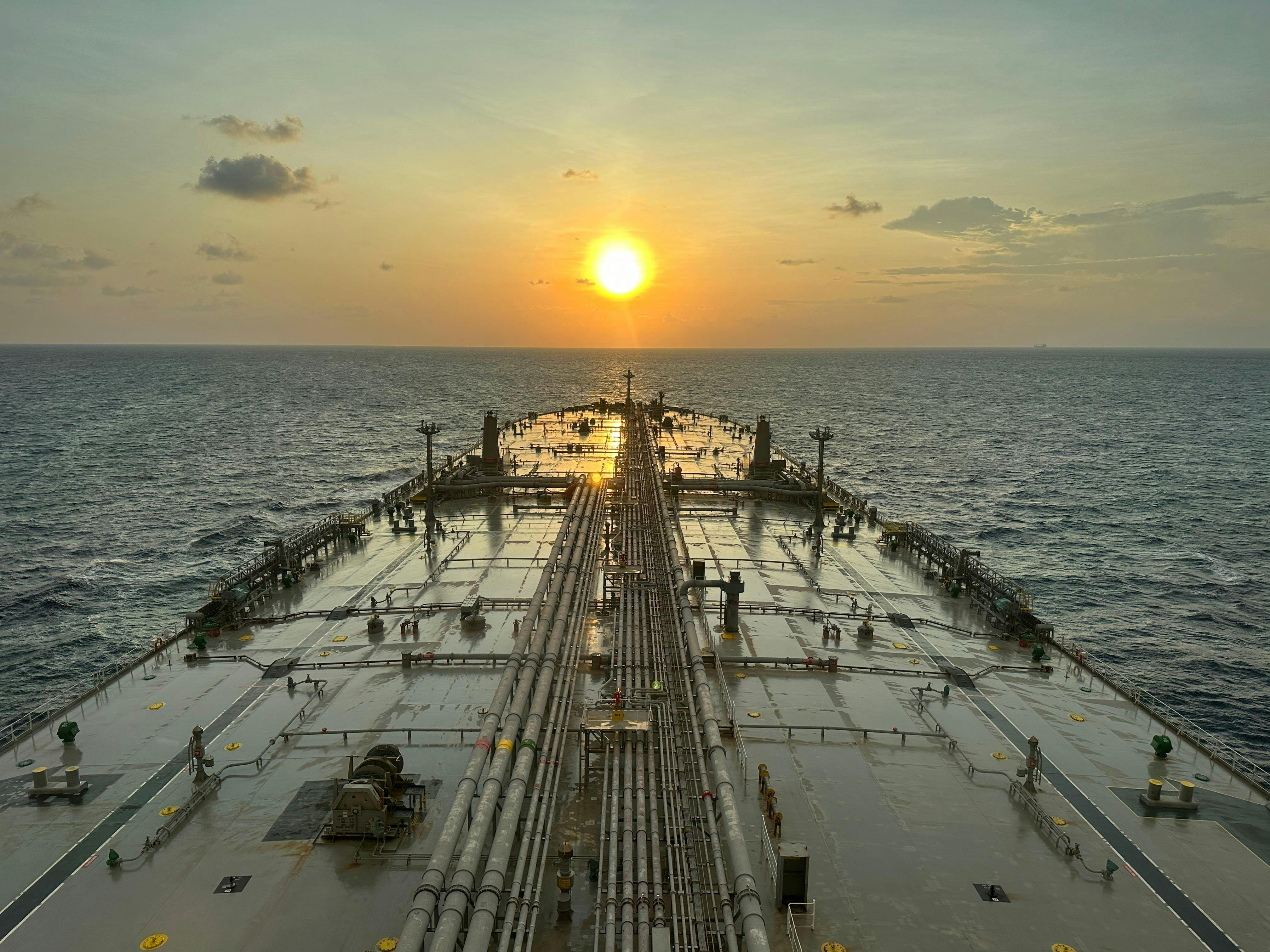
Day 73 of the Iran war. The ceasefire is on life support. Trump has called Iran's peace proposal garbage. But while the formal diplomatic process collapsed over the weekend, something quietly extraordinary happened in the Strait of Hormuz. A Qatari LNG tanker slipped through the blockade to Pakistan under a government-to-government arrangement approved by Iran. Then a second one followed. The side deal model has arrived. Sir Michael Clarke, former Director General of RUSI, identified the mechanism on Sky News. The Meridian analyses what it means structurally for the war, the negotiations, and the Global South.
On Sunday 10 May 2026, the Al Kharaitiyat, a Marshall Islands-flagged LNG tanker managed by Nakilat Shipping Qatar Ltd, with a cargo capacity of 211,986 cubic metres of liquefied natural gas loaded at Qatar's Ras Laffan export facility, became the first vessel to successfully transit the Strait of Hormuz since the start of the Iran war on 28 February 2026. It navigated the Iranian-approved northern route, hugging the Iranian coast through the strait, and by Sunday evening its AIS tracking data showed it well beyond the strait and en route to Port Qasim in Pakistan. A second tanker, the Mihzem, with a capacity of 174,000 cubic metres, departed Ras Laffan and followed. It is expected at Port Qasim on 12 May. Reports indicate two further tankers may be on the same track.
These transits did not happen because the Hormuz crisis has been resolved. They happened because Pakistan negotiated a side deal. Under a government-to-government arrangement between Islamabad and Doha, with explicit Iranian approval for safe passage, Qatar sold its LNG to Pakistan and Iran permitted the tankers through on a case-by-case basis. Two Qatari LNG tankers had attempted the same crossing in April and were forced to abort when Iranian clearance was not obtained. This time it was. The difference was not a change in the military situation. It was a change in the diplomatic arrangement, and the person at the centre of it is Pakistan's army chief, General Asim Munir.
28 February 2026
QatarEnergy CEO Saad Al Kaabi
International Energy Agency, May 2026
Saudi Aramco CEO, 11 May 2026
General Asim Munir Pakistan mediation Iran war Hormuz side deal
General Asim Munir is Pakistan's Chief of Army Staff and, in the context of the Iran war, he is the most consequential diplomatic actor that most Western audiences have never heard of. As Sir Michael Clarke observed in his Sky News analysis, Munir is a figure who has built trust simultaneously with the Trump administration and with the IRGC, the Iranian Revolutionary Guard Corps. This is an extraordinarily rare combination. The IRGC does not trust many foreign military figures. The Trump administration does not easily develop personal relationships with the security establishments of Muslim-majority countries. Munir is the exception on both sides, and that exceptionality is the structural reason why Pakistan became the channel for US-Iran communications.
Pakistan's motivation for this mediation role is not purely altruistic. Pakistan is suffering economically from the Hormuz closure, with fuel prices sky-high and its primary LNG supplier, Qatar, unable to export through the blockade. The government-to-government deal that secured the Al Kharaitiyat transit is simultaneously a diplomatic achievement and a direct economic lifeline for a country whose energy crisis has been acute since late February. The LNG tankers going to Port Qasim are keeping Pakistani power stations running. General Munir's mediation has delivered for Pakistan in both the diplomatic and the practical sense, which gives him both the credibility and the incentive to continue.
General Munir speaks to both Washington and Tehran. In a war where those two parties will not speak directly to each other, that is not a minor diplomatic asset. It is the only channel that exists.
Trump Iran ceasefire life support 14-point proposal unacceptable Ghalibaf
While the side deal quietly succeeded, the formal negotiating process hit its hardest wall yet over the weekend. Iran's parliamentary speaker Mohammad Bagher Ghalibaf, who has led the Iranian negotiating team in Islamabad, submitted a 14-point Iranian counterproposal to the United States via Pakistan on Sunday. The proposal was Iran's response to a 15-point American framework. Its core demands, according to Al Jazeera and NPR reporting of the Iranian state media description, included a 30-day timetable to resolve all issues, an end to the naval blockade, withdrawal of US forces from Iran's periphery, release of frozen Iranian assets, reparations, lifted sanctions, an end to fighting in Lebanon, and a new governance mechanism for the Strait of Hormuz.
President Trump said Monday that the ceasefire with Iran was on life support after he received what he called Tehran's garbage response to a US proposal for ending the war. He said he did not finish reading it. Saudi Aramco CEO Amin Nasser warned on the same day that if the reopening of the Strait of Hormuz is delayed by a few more weeks, then normalisation will last into 2027, and that even if the vital waterway were to reopen today, it would still take months for the market to rebalance.
The structural problem in the negotiations is well-defined by this point. Trump seeks what one analyst described as a quick and easy triumph that includes immediate concessions on Iran's nuclear programme, while Tehran is determined to delay those demands and secure its own concessions first. Iran's negotiating position reflects the fact that it controls the Hormuz chokepoint and can sustain the closure for longer than its economic pain might suggest, because the IRGC's parallel economy provides a degree of insulation from the formal sanctions regime. Trump's negotiating position reflects domestic political pressure from rising petrol prices and an inability to declare victory without a demonstrable Iranian concession on the nuclear question. Neither side's bottom line is currently compatible with the other's minimum acceptable outcome.
Hormuz side deal model Iran legitimacy blockade Pakistan Qatar China India
The side deal model is strategically significant for reasons that go well beyond the immediate energy relief it provides to Pakistan and Qatar. Sir Michael Clarke identified the core dynamic precisely: the more side deals Iran facilitates, the more legitimate its control of the Strait appears to become, even though that control is entirely illegal under international maritime law. The Strait of Hormuz, like all international straits, is subject to the right of innocent passage under the UN Convention on the Law of the Sea. Iran's blockade is a violation of that right. But international law is enforced by political will, not by the text of conventions, and political will is being eroded by the side deal process.
Consider what the side deal model actually does in practice. Iran has already confirmed that ships from China, Russia, India, Iraq and Pakistan may transit the strait. Turkey secured passage for a Turkish vessel in March. The UAE's ADNOC sent two LNG tankers through in early May with transponders turned off. Qatar has now sent two tankers to Pakistan. Each of these transactions involves the implicit recognition by the transiting party that Iran has the authority to grant or deny passage through what is legally an international waterway. Each transaction creates a bilateral relationship between Iran and the transiting nation that Iran can use as leverage, as a source of diplomatic goodwill and as a commercial relationship. And each transaction weakens the unified Western position that the Hormuz closure is illegal and must end unconditionally before any negotiations can produce a settlement.
Iran is not simply blocking the Strait of Hormuz. It is building a permission system. Every side deal adds a country to the list of nations that have, in practice, acknowledged Iran's authority to issue those permissions. That is how illegal blockades become accepted facts of international life.
Trump Beijing Xi Jinping summit Iran war weakened position May 2026
Sir Michael Clarke noted a dimension of the current situation that deserves careful analytical attention. President Trump is scheduled to travel to Beijing for a long-awaited summit with President Xi Jinping. The summit has already been delayed once. Trump had originally intended to arrive in Beijing with the Iran war behind him and a military victory to present. He will instead arrive with the war unresolved, the ceasefire on life support by his own description, and Iran's side deal network expanding in ways that demonstrate the limits of American leverage over the strait.
This matters for the Beijing summit because Xi Jinping has watched the Hormuz crisis with considerable strategic interest. China receives approximately one third of its oil via the Strait of Hormuz. It has an obvious economic interest in the strait reopening. But it also has a strategic interest in demonstrating that American military power has limits, and the Iran war has provided a sustained public demonstration of exactly that. China is already listed among the nations whose ships Iran permits through the strait. It has a functional relationship with Iran that does not require American mediation. And it arrives at the Beijing summit as the world's largest economy, the world's largest oil importer and the host of a summit that Trump needs more than Xi does. The leverage dynamics of that meeting are not what they were when Trump last engaged Xi on terms he was able to set.
Hormuz side deal Global South oil gas Pakistan Qatar energy crisis small states
For the Global South, the side deal model presents a bifurcated reality. Nations with the diplomatic weight to negotiate bilateral access arrangements with Iran, large enough economies to offer something Iran values, and military or political relationships that give Tehran confidence in the transaction, can begin to secure partial relief from the Hormuz closure. Pakistan is the clearest example. India, China and Turkey have also secured access. These are not small nations. They are major economies with leverage.
Small island developing states, including Mauritius and its Indian Ocean neighbours, have none of these advantages. Mauritius does not have a General Munir. It does not have a bilateral relationship with the IRGC. It does not have an economy large enough to offer Iran something that would make a side deal worth Iran's diplomatic capital. It cannot navigate an Iranian-approved northern route through the strait and deliver a political reward to Tehran in exchange. The side deal model, precisely because it is driven by bilateral leverage, systematically excludes the smallest and most vulnerable economies from the relief it provides. The nations that can least afford the Hormuz closure are the ones least likely to benefit from the side deal workaround.
For Mauritius specifically, the picture that is emerging from the combination of the JPMorgan inventory data analysed in The Meridian yesterday, the failed formal negotiations and the side deal model is not encouraging. The formal negotiations are on life support. The side deal model provides relief to large economies with leverage but not to small island states. The inventory clock is ticking toward the operational floor by September. And Saudi Aramco has now publicly stated that even a resolution today would take months to produce market normalisation. The horizon for meaningful price relief for a small, oil-importing, dollar-dependent economy in the Indian Ocean is not weeks. It is measured in quarters at minimum, and potentially in years if the Saudi Aramco assessment of a 2027 normalisation timeline proves accurate.
Add comment
Comments