The Case the West Is Not Making: Why Defeating Iran Serves the Global South
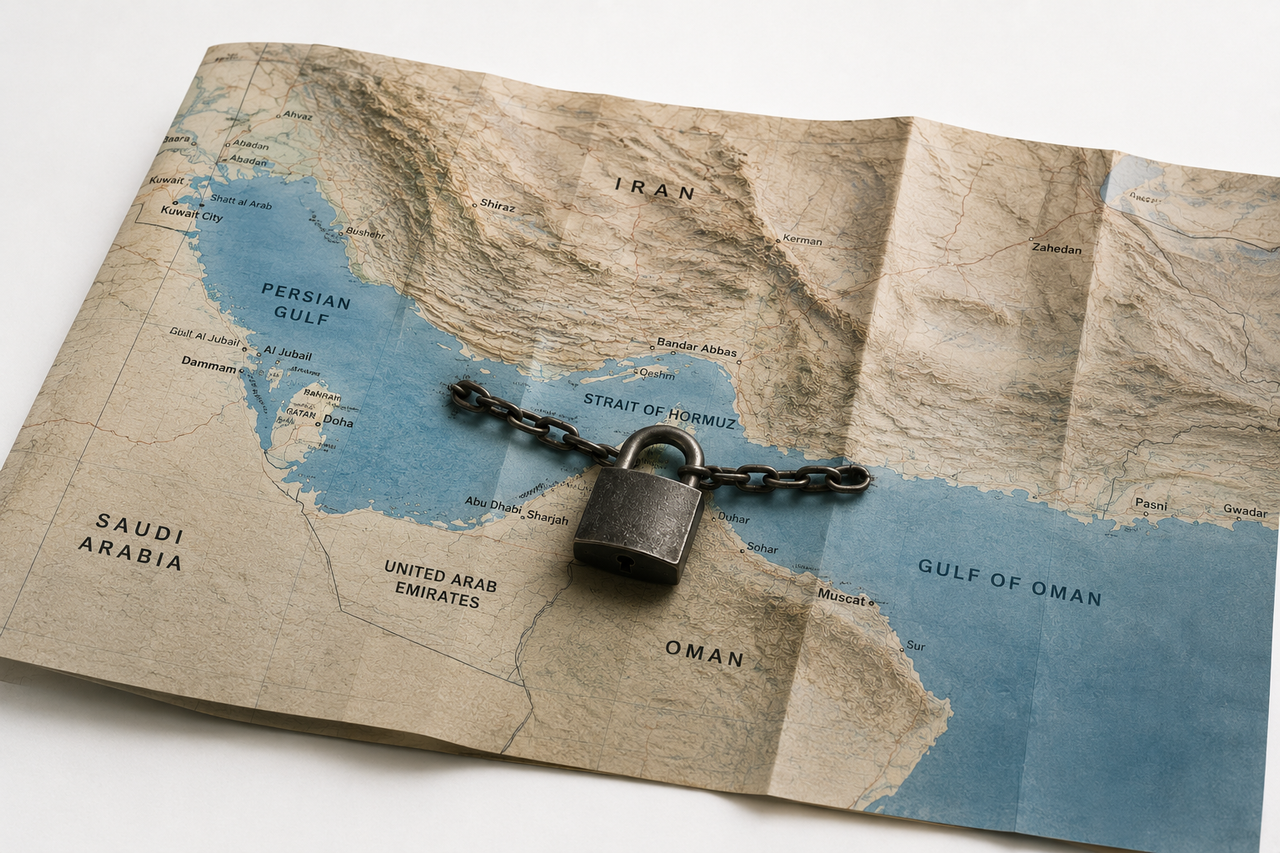
The Global South has been presented with a single narrative about the Iran war: that it is a Western conflict whose costs fall on the developing world. That narrative is incomplete. Iran closed the world's most important energy chokepoint. Iran has destabilised the Middle East for four decades through proxy warfare that the Global South has paid for in elevated shipping costs, disrupted trade and regional instability. China profits from the war while supplying the drones that sustain it. The Meridian makes the strategic case the West has consistently failed to articulate.
There is a comfortable narrative available to the Global South about the Iran war and The Meridian has, in its analysis this month, given it significant space. The narrative runs as follows: the United States started a conflict whose oil price consequences fall on developing economies that had no vote in the decision. The Global South pays $110 Brent crude for a war it did not choose. Small island states face energy crises they cannot resolve. The powerful fight and the powerless pay. This narrative is not wrong. It is incomplete. And its incompleteness serves neither analytical honesty nor the long-term interests of the Global South itself. The uncomfortable companion narrative — the one that the West has handled with remarkable strategic ineptitude and that The Meridian now chooses to state plainly — is this: an Iran that controls the Strait of Hormuz is a permanent tax on the Global South. An Iran whose proxy network stretches from Lebanon to Yemen to Iraq to the Red Sea is a permanent source of the shipping disruption, the regional instability and the elevated risk premiums that developing economies pay every year regardless of whether there is a hot war or not. The question is not whether the Global South suffers from this conflict. It suffers. The question is whether it suffers more from the conflict or from the four-decade alternative that the conflict is attempting to end.
Iran four decades destabilisation Global South proxy warfare Houthis Lebanon Yemen Iraq cost
The Iran war did not begin on 28 February 2026. It began in 1979 and has been prosecuted at varying intensity ever since, through instruments that the Western framing of the current conflict has largely failed to connect to their source. Consider what the past four decades of Iranian strategic behaviour have cost the Global South in concrete terms.
The Houthi campaign in the Red Sea in 2024 and 2025, funded, armed and directed by the IRGC's Quds Force, disrupted one of the world's most important shipping lanes connecting Asian manufacturing to European and African consumers. Container shipping rates through the Red Sea rose by multiples. African ports that depend on these lanes for their import and export flows paid elevated freight costs that passed directly into consumer prices. This was not a consequence of Western policy. It was a consequence of Iranian proxy strategy deployed against global shipping infrastructure that the Global South depends on as much as the West does.
Hezbollah in Lebanon, created and sustained by Iran since 1982, has prevented Lebanon from becoming the functional, prosperous, financially integrated economy that its educated population and geographic position would otherwise support. Lebanon's collapse — its banking system, its currency, its public services — is not purely a consequence of domestic political dysfunction. It is the consequence of a state within a state, armed, funded and strategically directed by Tehran, that has absorbed Lebanon's sovereign capacity and subordinated its institutions to Iranian regional strategy for forty years. The Lebanese diaspora, which includes significant communities in West Africa, in the Gulf and across the Global South, has watched its homeland hollowed out by a proxy force whose patron is in Tehran.
The Yemen war, now in its eleventh year, is the humanitarian catastrophe that receives the most consistent Global South attention and the least honest attribution of its primary cause. The Houthis did not develop their military capacity, their missile technology or their drone capability independently. They developed it with Iranian material, Iranian training and Iranian strategic direction. The famine, the cholera, the destroyed infrastructure and the millions of displaced Yemenis are consequences of a conflict that Iran chose to sustain because the Houthis provide strategic depth and Red Sea leverage at low cost to Tehran and catastrophic cost to Yemen and to the Global South shipping lanes they have weaponised.
The Global South has been paying an Iran tax for four decades. It was paid in elevated shipping costs, in proxy wars that destroyed neighbours, in nuclear programme uncertainty that prevented normal energy market function in the region. The current oil price is not the beginning of that tax. It is the moment the invoice became impossible to ignore.
42 years of proxy state within a state
Worst humanitarian crisis, UN 2024
2024-2025. Global South trade routes disrupted
Since 28 February 2026
China Iran drones double standard Global South cheap oil debt traps Africa exploitation
The most important narrative correction the Global South needs to make concerns China. The Beijing summit that Trump is attending today is being framed by Chinese state media and by a portion of Global South commentary as a moment of Chinese responsible leadership — the grown-up in the room, the stable superpower, the unjudgmental friend. This framing requires the Global South to ignore several facts that are not in dispute.
China is purchasing Iranian oil at a significant discount to the international market price. While the Global South pays $110 Brent crude for the supply disruption that the Hormuz closure has created, China pays substantially less for Iranian crude that moves through the shadow fleet infrastructure described in The Meridian's May 2026 special edition. China is therefore a direct financial beneficiary of the war it is publicly positioning itself to help resolve. It profits from the disruption and offers to mediate it. This is not responsible global leadership. It is arbitrage dressed as diplomacy.
China has supplied drone technology to Iran throughout the conflict. The IRGC's capacity to control the Strait of Hormuz through small craft, drones and robotic ships — the military centre of gravity that has proved so difficult for the United States to neutralise — depends in part on drone technology and components that have flowed from Chinese manufacturers to Iranian military users through supply chains that Chinese government oversight could constrain if Beijing chose to exercise it. China has not chosen to exercise it because a Iran that retains Hormuz control provides China with leverage over the United States and over global energy markets that serves Chinese strategic interests regardless of its cost to the Global South.
On Africa, the picture that China presents as partnership is in documented cases a debt architecture that produces dependency rather than development. Zambia's debt restructuring involved Chinese creditors who held bilateral loans at commercial rates that Zambia's export revenues could not service. Sri Lanka's Hambantota Port, built with a Chinese loan using Chinese contractors, was handed on a 99-year lease to a Chinese state company when the loan could not be repaid. Kenya's Standard Gauge Railway, built by Chinese contractors with Chinese labour using a Chinese government loan, left Kenya with annual debt servicing costs that the railway's revenues cannot cover and with limited technology transfer to Kenyan engineers and workers. These are not isolated cases. They are expressions of a lending model in which the infrastructure serves Chinese strategic connectivity interests and the debt serves Chinese financial interests, while the development benefits fall systematically short of what African governments were promised.
China presents itself to the Global South as an unjudgmental friend. It buys Iranian oil below market while the Global South pays above market. It supplies drones to the country blocking the strait. It builds infrastructure with Chinese workers and leaves African governments with debt they cannot service. These are not the actions of a friend. They are the actions of a sophisticated strategic actor pursuing its own interests while wearing the language of solidarity.
US military capability Iran war restraint not weakness Iraq lesson occupation cost
A recurring feature of Global South commentary on the Iran war is the suggestion that American restraint in not physically seizing the Strait of Hormuz reflects weakness. This reading misunderstands both the military situation and the strategic calculation. Military analysts including Sir Michael Clarke, former Director General of the Royal United Services Institute, have assessed that if the United States moved its carrier strike groups into the Gulf of Oman and fought a physical battle for the Strait, it would win that battle. The US has already destroyed Iran's air force and navy entirely and severely damaged the IRGC and ground forces. The military capability to take the Strait exists and is not in question.
The restraint reflects a calculation about what winning costs. Iraq in 2003 demonstrated that military victory can be achieved in weeks and that the subsequent occupation, reconstruction and stabilisation can consume a decade, trillions of dollars and thousands of lives without producing the stable, functional successor state that justifies the original intervention. The lesson of Iraq is not that American military power is ineffective. It is that military victory and political transformation are different objectives requiring different strategies, and that the gap between them is where the cost of war accumulates. Iran is a country of 87 million people with a functioning state apparatus, a genuine nationalist identity and a population that, whatever its views of the Islamic Republic, would be unlikely to welcome occupation by the force that destroyed its military.
The Global South should understand this distinction because it applies to its own history. The post-colonial states that have fared best are those that achieved political transformation through internal processes rather than external imposition. The states whose transformation was externally imposed have, with few exceptions, produced the instability, the governance failures and the humanitarian costs that the Global South has collectively experienced as the legacy of interventionism. American restraint on Iran is not a failure of capability. It is an attempt to avoid repeating the most expensive lessons of the recent past.
West failing to make case Iran war Global South benefit communication strategy argument
The Western failure in this conflict is not military. It is communicative. The United States and its allies have prosecuted the Iran war without articulating, clearly and consistently, why its resolution serves interests beyond Washington and Tel Aviv. The Global South has been left to conclude — reasonably, given what it has been told — that this is a Western war whose costs it bears and whose benefits it will not share. That conclusion is strategically damaging and factually incomplete.
A Hormuz that reopens under conditions that constrain Iranian capacity to close it again is worth approximately $35 per barrel to every oil-importing developing economy in the world. That is a rough estimate of the war premium currently embedded in the Brent crude price. Thirty-five dollars per barrel multiplied by the import volumes of Sub-Saharan Africa, South and Southeast Asia and the small island developing states of the Indian Ocean and Pacific represents hundreds of billions of dollars of annual economic burden that a resolution of this conflict would remove. The West has not made this argument. It has not commissioned the analysis, published the numbers or directed its communications at the governments and populations who would benefit most from understanding it.
The West has also failed to make the China argument to the Global South. It has not explained, clearly and with specific documented examples, that China's positioning as the Global South's unjudgmental partner coexists with purchasing discounted Iranian oil, supplying Iranian drones, operating debt architectures in Africa that produce dependency rather than development, and maintaining rare earth export controls that threaten the technology supply chains on which the Global South's own digital development depends. These arguments exist. The evidence supports them. They are not being made with the consistency and specificity that would allow the Global South to form an informed view.
The Meridian publishes this editorial not as an endorsement of any military strategy or any government's foreign policy. It publishes it because the Global South deserves the full analytical picture, including the parts that complicate the comfortable narrative. A world in which Iran permanently controls the Strait of Hormuz, in which Iranian proxy networks permanently disrupt the Middle East's development potential, and in which China permanently arbitrages the gap between Iranian discounts and Global South premiums is not a world that serves the interests of developing economies. It is a world that taxes them. The case against that world is the case the West has consistently failed to make. The Meridian makes it here.
Add comment
Comments