Trump's Second Term at Day 74: The Global South Scorecard
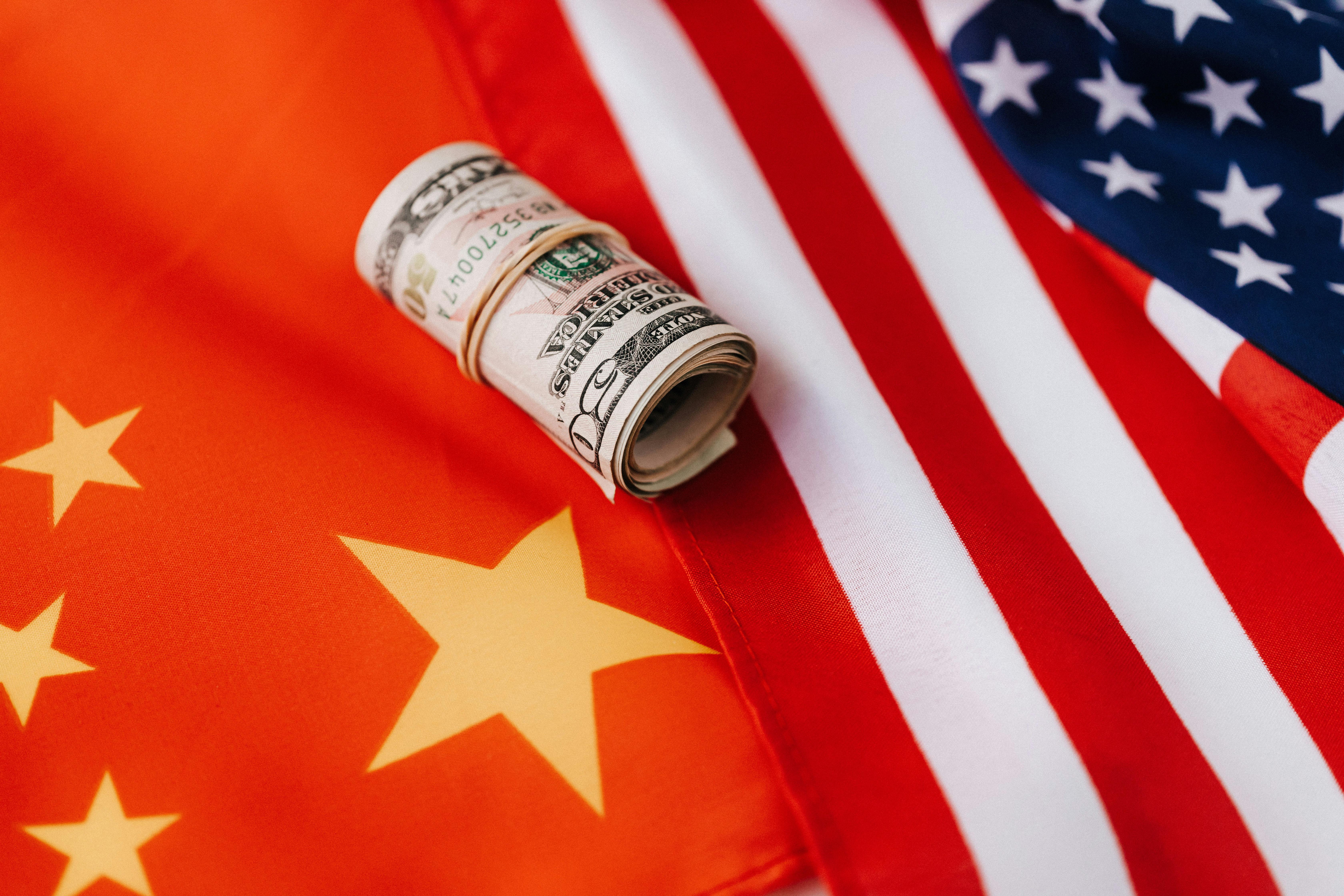
Donald Trump lands in Beijing today for a summit with Xi Jinping that was supposed to happen with the Iran war behind him and a victory to present. The war is not behind him. The ceasefire is on life support by his own description. He is travelling to ask China to lean on Iran to reopen the Strait of Hormuz. The Global South is paying $110 oil. The Meridian Intelligence Desk publishes the scorecard across five dimensions: the Iran war, the China relationship, the Global South, the Western alliance and the domestic economy. The assessment is structural. The numbers are verified. No spin in either direction.
There is a phrase circulating on Chinese social media that translates approximately as Trump nation builder. The implication is not that Trump is building America. The implication is that Trump's actions are building China's national standing. It is a meme. It is also, on the available evidence at day 74 of the second term's most consequential crisis, a reasonably accurate structural description of the geopolitical trajectory that the past months have produced. Trump lands in Beijing today for a summit that was delayed once and that he had originally intended to attend with the Iran war resolved and a military victory to his name. He arrives instead with the Strait of Hormuz still closed, a ceasefire he has himself described as on massive life support, domestic petrol prices above $4.50 per gallon and a request for China to use its relationship with Iran to help reopen the chokepoint that the United States has been unable to reopen through 74 days of military and diplomatic pressure. This is the moment to assess what the second term has actually delivered, across the five dimensions that matter most to the Global South and to the international order that small states depend on for their security and prosperity.
Ceasefire on life support per Trump
Breached last week. Diesel near record
Global South paying the Iran war premium
Political centre of gravity: not achieved
The United States conducted approximately 21,000 attacks on Iran up to 7 April 2026. It destroyed Iran's air force and navy entirely. It severely damaged the IRGC and Iranian ground forces. None of it produced Iranian capitulation. The political centre of gravity strategy — decapitating IRGC leadership, destroying the decision-making architecture, leaving Iran no alternative but to surrender — failed. Defence analyst Sir Michael Clarke, former Director General of RUSI, assessed in his Sky News Day 74 briefing that attacking the political centre of gravity was a failure by 7 April.
Iran retains control of the Strait of Hormuz through small craft, drones and robotic ships. The US military — two carrier strike groups, two marine expeditionary units, a brigade of the 82nd Airborne — is 400 to 500 miles from the strait. Moving that military power into the Gulf of Oman and fighting a physical battle for the Strait would likely succeed militarily. But even a damaged American carrier, even American personnel casualties, would be a political catastrophe that Trump could not survive domestically. Iran has calculated this correctly. The Iranians calculate they can live with the material damage of this war longer than Trump can live with the political damage it is doing, as Clarke observed. That calculation has not been proven wrong.
Operation Freedom, a sixth-generation warfare attempt using drones, missiles and AI to pressurise Iranian Hormuz activity, was tried for one day and stopped. Trump says he may return to it. The side deal model — bilateral arrangements between Iran and individual nations allowing specific vessels to transit — is expanding, implicitly legitimising Iranian control of an international waterway. The ceasefire is on massive life support by Trump's own description. Iran has submitted demands that Trump called garbage. The negotiating gap has not narrowed in 74 days.
Trump's second term opened with Liberation Day — tariffs for all, China in particular. The strategic logic was economic coercion producing Chinese concessions. The outcome was different. China decided it was not going to take it lying down. A tit-for-tat escalation followed that saw tariffs at their height above 125 per cent on both sides. China's retaliation squeezed Trump. So did the US Supreme Court, which struck down parts of his tariff policy. US-China tariffs are now down on both sides. America felt the pain of a trade war. Trump is not delivering on promises to bring down prices. The trade war produced a draw at best and a retreat at worst.
The rare earth leverage has proved decisive. China is almost totally dominant in rare earth element production — the vital components in smartphones, electric vehicles, AI technology and cutting-edge military weaponry. China turned off the taps during the tariff escalation and exposed a structural American vulnerability that no tariff policy can rapidly reverse. It is an ace card and China has not yet finished playing it.
Trump arrives in Beijing in a weaker position than he expected. He travels with the Iran war unresolved and with a request that China lean on its Iranian relationships to help reopen the Strait of Hormuz. As Sky News Asia correspondent Helen-Ann Smith noted from Beijing, America's request to China to lean on its friends in Iran to reopen the strait is not the dynamic Trump had scripted. In the constantly shifting power balance between Washington and Beijing, China saving the day is not a Trump victory. Xi plays the long game. He faces no ballot box. Chinese social media's description of Trump as a nation builder — for China — captures the structural reality of who has benefited most from the past 74 days.
The Global South did not start the Iran war. It did not participate in the tariff escalation. It has no seat at the table in Beijing. But it is paying the costs of all three simultaneously. Brent crude above $100 per barrel means every oil-importing developing economy is transferring wealth to oil producers and trading houses at a rate that their fiscal frameworks were not designed to sustain. JPMorgan's inventory data, published by Bloomberg and analysed in The Meridian earlier this month, projects world oil inventories hitting the operational stress level of 7.6 billion barrels by June 2026 and the operational floor — below which pipelines stop and refineries go offline — by September 2026 if no resolution occurs.
The oil blockade on Cuba has created a humanitarian energy crisis documented by Human Rights Watch, the UN and international media. Fifteen hours of daily blackouts in parts of Havana. Hospitals unable to operate safely. The blockade is a direct instrument of Trump's Don-ro Doctrine asserting US dominance over the Western Hemisphere. Its costs are borne by eleven million Cuban civilians who have no leverage over any of the governments whose decisions determine whether their lights come on.
The Africa Forward Summit in Nairobi opened on 11 May without US engagement, as African heads of state convened with France and European partners to build an economic architecture that explicitly positions Africa as a co-author of the global agenda rather than a recipient of Washington's attention when convenient. China has poured billions into the Global South through its Belt and Road framework and has positioned itself as an unjudgmental friend to nations that feel let down by the United States. The Africa Forward Summit was a data point in that repositioning. It will not be the last.
For small island developing states — Mauritius, the Maldives, Barbados, Fiji — the second Trump term has produced elevated oil prices, dollar strength that raises import costs, and a geopolitical environment in which the two dominant powers are engaged in a conflict whose costs fall disproportionately on those least able to absorb them.
Trump has threatened to pull out of NATO. He has threatened to annex Greenland, a NATO member territory. He has described the alliance in terms that leave European partners uncertain whether the Article 5 mutual defence guarantee means what it has meant for 75 years. European governments have responded not with deference but with strategic autonomy — accelerating defence spending, deepening EU security cooperation and reducing dependence on American security guarantees that can no longer be taken as unconditional.
The pattern of cosying up to authoritarian leaders while undermining democratic alliance partners has produced a specific strategic consequence that Trump may not have intended. It has made China's positioning as a stable, predictable partner more credible by contrast. While Trump disrupts, China casts itself as the grown-up in the room, as Sky News noted from Beijing. Nations that might have previously defaulted to the American alliance framework are conducting their own strategic assessments.
On Taiwan, Trump's strategic ambiguity has introduced doubt where previous presidents maintained clarity. Unlike predecessors who made clear they would defend Taiwan if China attacked, Trump's public statements have left room for uncertainty. Xi Jinping, who has sworn to retake Taiwan by force if necessary, is calculating that uncertainty into his strategic planning. The PLA has never officially fought a war. China does not mind the US being distracted and depleted elsewhere, as Clarke observed. It has its eyes on Taiwan. The Western alliance's credibility as a deterrent to Chinese military ambition in the Pacific is weaker at day 74 of the second term than it was at day 1.
US regular petrol prices breached $4.50 per gallon last week. Diesel is approaching all-time highs. Household sentiment is at record lows even as stock markets have reached record highs — a divergence that reflects the gap between the financial asset owners who benefit from energy sector earnings and defence contractor profits, and the wage-dependent households who pay at the pump and in the supermarket. The Federal Reserve cannot cut interest rates into an oil-driven inflation shock without risking a wage-price spiral. It cannot raise rates further without triggering the recession the real economy is already approaching.
The trade war with China produced higher consumer prices without producing the manufacturing reshoring that was its stated objective. Rolling back decades of outsourcing and reliance on China is not straightforward, as Sky News noted. The Supreme Court's intervention on tariff policy has constrained Trump's primary economic instrument. The Iran war has added a permanent energy price premium that central banks cannot address through interest rate policy because it is a supply shock, not a demand shock. The combination of supply-side inflation, constrained monetary policy and weakened consumer sentiment is an economic environment that will test the second term's political durability.
Trump Xi Beijing summit May 2026 Hormuz Iran rare earth Taiwan what to expect
The summit at which Trump and Xi meet today in Beijing is genuinely consequential. Both say they want a more stable relationship. Real trust in the context of the systemic differences between them may never be possible, as Sky News observed from Beijing. But functional agreements on specific issues are achievable and both sides have incentives for them.
The Hormuz question is the most immediate. Trump needs the strait reopened before the JPMorgan inventory clock reaches its operational floor in September. Xi has the relationships with Iran that could facilitate a resolution. The price China will extract for that assistance — in trade concessions, in Taiwan signalling, in technology transfer restrictions, in rare earth export normalisation — will be the most consequential negotiation of the second term. Whether Trump gets what he needs without giving more than he can afford to give is the central uncertainty of the next 48 hours.
The rare earth question is structural. The US dependency on Chinese rare earth processing is not resolvable through summit diplomacy. It requires domestic investment in processing capacity that takes years to build and billions to fund. What a summit can produce is a pause in the weaponisation of that dependency, a temporary normalisation of export flows, that buys time without solving the underlying structural problem. That is probably the best achievable outcome and it requires Trump to offer something in return that Xi values.
Trump went to Beijing expecting to negotiate from strength. He arrives negotiating from necessity. The difference between those two postures is not merely diplomatic — it determines what a deal costs and who pays for it.
Trump Beijing summit Global South oil price Hormuz Mauritius small island states
For the Global South and for small island states like Mauritius, the Beijing summit matters for one reason above all others: the Strait of Hormuz. Every day the strait remains closed adds to the oil import bill, to the rupee depreciation pressure, to the fiscal stress on governments that have no diplomatic leverage in either Washington or Beijing and no seat at the table where the resolution is being negotiated.
If the Beijing summit produces a Chinese commitment to lean on Iran and a credible pathway to Hormuz reopening, the relief for oil-importing developing economies will be significant and relatively rapid. Brent crude would fall sharply as the risk premium unwound. Import costs would ease. The rupee and other vulnerable currencies would stabilise. The fiscal space consumed by fuel price management would become available for other purposes.
If the summit produces a communiqué of stability and mutual respect but no concrete Hormuz outcome, the inventory clock continues ticking. The operational stress level arrives in June. The operational floor approaches in September. And the Global South continues paying a war premium for a conflict it had no part in starting and no power to end.
The world is watching Beijing. The Global South is watching the oil price. They are, ultimately, watching the same thing.
Add comment
Comments