The Financing Loop: How China Funds Iran's War and Who Pays the Price
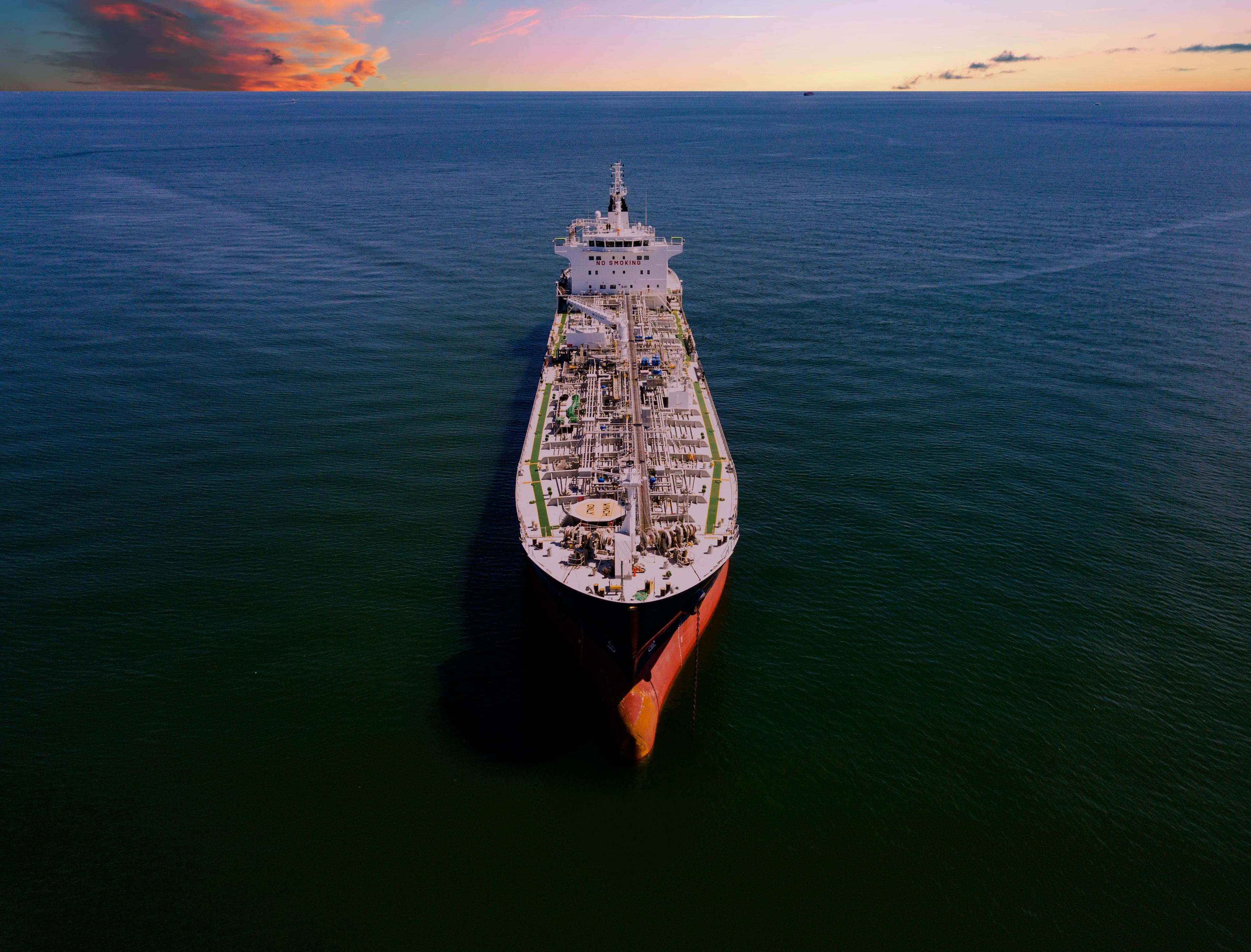
Ninety per cent of Iran's oil goes to China. It is paid for in yuan through a clearing system that bypasses the dollar. Up to $8.4 billion flowed through a secret conduit called Chuxin in 2024 alone. The IRGC controls approximately 50 per cent of oil export revenue. Iran has conditioned safe passage through the Strait of Hormuz on yuan-denominated settlement. The Global South pays $110 Brent while China pays a discounted price for the oil funding the blockade. The Meridian Intelligence Desk traces the financing loop — every step sourced to a named primary institution — and asks the question that the Beijing summit has not answered: is China mediating this war or sustaining it?
When President Trump arrived in Beijing this week to ask President Xi Jinping to use China's relationship with Iran to help reopen the Strait of Hormuz, he was asking the architect of the system that keeps the strait closed to dismantle his own construction. The China-Iran financing loop — the architecture of oil purchases, covert payment conduits, yuan settlement and shadow fleet logistics that has sustained Iran's economy through 74 days of war and 66 days of Hormuz closure — is not an accident of markets or a consequence of sanctions evasion by private actors beyond Beijing's control. It is a state-designed system operated through Chinese state-owned enterprises, a Chinese state insurer, a Chinese state clearing network and a Chinese state strategic partnership committing $400 billion over 25 years. It is the financial backbone of the Iran war. And China is its architect, its operator and its primary beneficiary.
China Iran oil payment Chuxin Sinosure Zhuhai Zhenrong shadow fleet how it works
US Energy Information Administration 2025
Western officials cited by WSJ and Iran Watch
Centre for Strategic and Contemporary Research
Comprehensive Strategic Partnership 2021
IRGC Iran oil revenue 50 percent war funding Hormuz drones proxy network
The connection between Chinese oil purchases and Iranian military capacity is not indirect or theoretical. The Islamic Revolutionary Guard Corps reportedly controls approximately 50 per cent of Iran's oil export revenue. Iran exported approximately $43 billion worth of oil in 2024, with around 90 per cent going to China according to US Energy Information Administration data. Fifty per cent of $43 billion is approximately $21 billion per year flowing to the IRGC from oil sales to China. That revenue funds the IRGC's Quds Force proxy operations across Lebanon, Yemen, Syria and Iraq. It funds the ballistic missile and drone programme that has given Iran the capacity to attack UAE infrastructure and threaten Gulf shipping. It funds the small craft, drone and robotic ship capabilities that control the Strait of Hormuz at a cost far below what it would take the United States to dislodge them. The IRGC's capacity to sustain the Hormuz blockade for 74 days — against the world's most powerful military — is funded directly and primarily by Chinese oil purchases routed through the Chuxin-Sinosure conduit and settled in yuan through CIPS.
The Treasury Department intensified sanctions on vessels and companies involved in Iranian oil shipments throughout 2025, but the measures have not significantly reduced oil flows. Neither Sinosure nor Chuxin currently faces US sanctions. The architecture has been specifically designed to keep its critical nodes outside the reach of American financial enforcement while maintaining plausible deniability for the Chinese state. Beijing's Foreign Ministry told the Wall Street Journal it was unaware of the Chuxin arrangement and opposed illegal unilateral sanctions. That denial is on the public record alongside the documentary evidence of the system's operation.
The IRGC controls the Strait of Hormuz with drones and small craft. Those assets are funded by oil revenue. That revenue comes from China. China sits at the centre of the financing loop that makes the blockade economically sustainable for Iran. That is not an allegation. It is the documented architecture of the system.
Iran yuan Hormuz passage condition renminbi oil settlement dollar bypass petrodollar
The financing loop has acquired a geopolitical dimension that goes beyond oil trade. An Iranian government official told CNN that tankers can receive permission to transit the Strait of Hormuz if they agree to sell oil in China's currency — the renminbi — rather than US dollars. Iran has made yuan-denominated settlement a condition of access to an international waterway that international maritime law defines as open to innocent passage by all nations. This is not a market preference. It is coercion — the weaponisation of a chokepoint that controls approximately 20 per cent of global oil supply and 17 per cent of global LNG to advance a currency agenda that serves Chinese strategic interests.
The petrodollar system — the arrangement under which global oil is priced and settled in US dollars, with proceeds recycled into US Treasury bonds — has underpinned American financial dominance since the 1974 agreement between Washington and Riyadh. In 2025, roughly 21 million barrels per day transited the Strait of Hormuz at an average price of $69 per barrel before the war, totalling approximately $530 billion per year in oil value. A significant share of this has traditionally been settled in dollars and reinvested in US financial assets. Harvard economist Kenneth Rogoff has warned that if Iran and China succeed in establishing yuan-denominated Hormuz passage as the norm, it will encourage countries to diversify away from the dollar financial system to protect themselves from being held hostage to US financial sanctions. The yuan becomes the permission slip for access to the world's most important energy chokepoint. Countries that want their tankers through the strait learn to hold renminbi. The dollar's structural role in energy markets erodes.
China Iran oil discount Global South war premium Brent $110 arbitrage
The arithmetic of who benefits from the Iran war's oil price consequences is straightforward and has not been stated plainly enough in mainstream coverage. China purchases Iranian crude at a discount to international benchmark prices — typically $5 to $15 per barrel below Brent, according to multiple market analyses. The Hormuz closure has pushed Brent crude above $110 per barrel, adding a war premium of approximately $35 per barrel above pre-war levels. The Global South — every oil-importing developing economy from Mauritius to Kenya to Pakistan to the Philippines — pays the full $110 per barrel war-premium price for every barrel it imports from non-Iranian suppliers.
China pays perhaps $95 to $105 per barrel for Iranian crude — a discount to an already elevated benchmark. China is therefore paying significantly less per barrel than the Global South for the oil that keeps its economy running, while the supply disruption that elevated the benchmark price was created by Iran and is sustained by Chinese purchases and drone supply. The transfer of wealth is running in two simultaneous directions: from Global South oil importers through the elevated price to Iran, and from Iran through discounted oil sales to China. China sits at the centre of this flow, receiving the oil at discount, enabling the disruption through its purchases and its silence on drone supply, and profiting from the war premium paid by the economies least able to afford it.
China buys the oil that funds the blockade at a discount. The Global South pays the war premium the blockade creates. This is not a side effect of the China-Iran relationship. It is its operating logic.
China Iran 25 year strategic partnership $400 billion investment energy 2021
The Comprehensive Strategic Partnership signed between China and Iran in 2021 is the overarching framework within which the Chuxin-Sinosure conduit, the yuan settlement and the shadow fleet logistics operate. It commits China to invest approximately $400 billion in Iran's energy, banking, infrastructure and technology sectors over 25 years in exchange for a stable, heavily discounted crude oil supply. The partnership was signed during the Trump administration's maximum pressure campaign against Iran — a deliberate Chinese strategic response to US sanctions pressure, designed to provide Iran with an economic lifeline that made it more durable in the face of American financial warfare.
The 25-year horizon of the partnership is strategically significant. It was not designed for the current war. It was designed for the decades-long contest between the United States and Iran over the nuclear programme, regional influence and the Strait of Hormuz. China's $400 billion commitment was an investment in Iranian resilience — a bet that Iran could outlast American maximum pressure and that China's patient, long-term economic engagement would produce strategic returns in energy security, regional influence and dollar system erosion that far exceeded the $400 billion outlay. The current war is not a deviation from that strategy. It is its most acute expression.
Trump Beijing summit China Iran mediation Hormuz oil financing loop dismantling
Trump arrived in Beijing asking China to lean on Iran to reopen the Strait of Hormuz. That request requires China to use its relationship with Iran — the relationship built through the $400 billion partnership, the Chuxin-Sinosure conduit, the yuan settlement architecture and the 25-year strategic investment — to pressure Iran into concessions that would reopen a strait whose closure has been economically beneficial to China. China has been buying discounted Iranian oil. Its CIPS transaction volumes have surged since the war began. Its state insurer and state-linked financial vehicles are sustaining Iran's sanctions-evasion architecture. And Trump is asking Beijing to pressure Tehran to end an arrangement that is generating billions in discounted energy and advancing the yuan's role in global energy settlement.
The price China will extract for any genuine mediation pressure on Iran will reflect the value of what China is being asked to give up. It will not be a small price. It will involve trade concessions, technology transfer restrictions, Taiwan signalling or rare earth normalisation — or some combination of all four — that the Trump administration may find it politically difficult to pay. Whether the Beijing summit produces genuine Chinese pressure on Iran or produces a communiqué of stability that leaves the financing loop intact will be the most consequential test of the summit's substance. The Global South, paying $110 per barrel for every tanker that reaches its ports, has no seat at that table. It has no leverage over either party. It pays the price of whatever arrangement the two powers reach — or fail to reach — in Beijing.
Add comment
Comments