The Institution That Could Not See: Gérard Sanspeur's Indictment of a Decade of Banking Supervision Failure
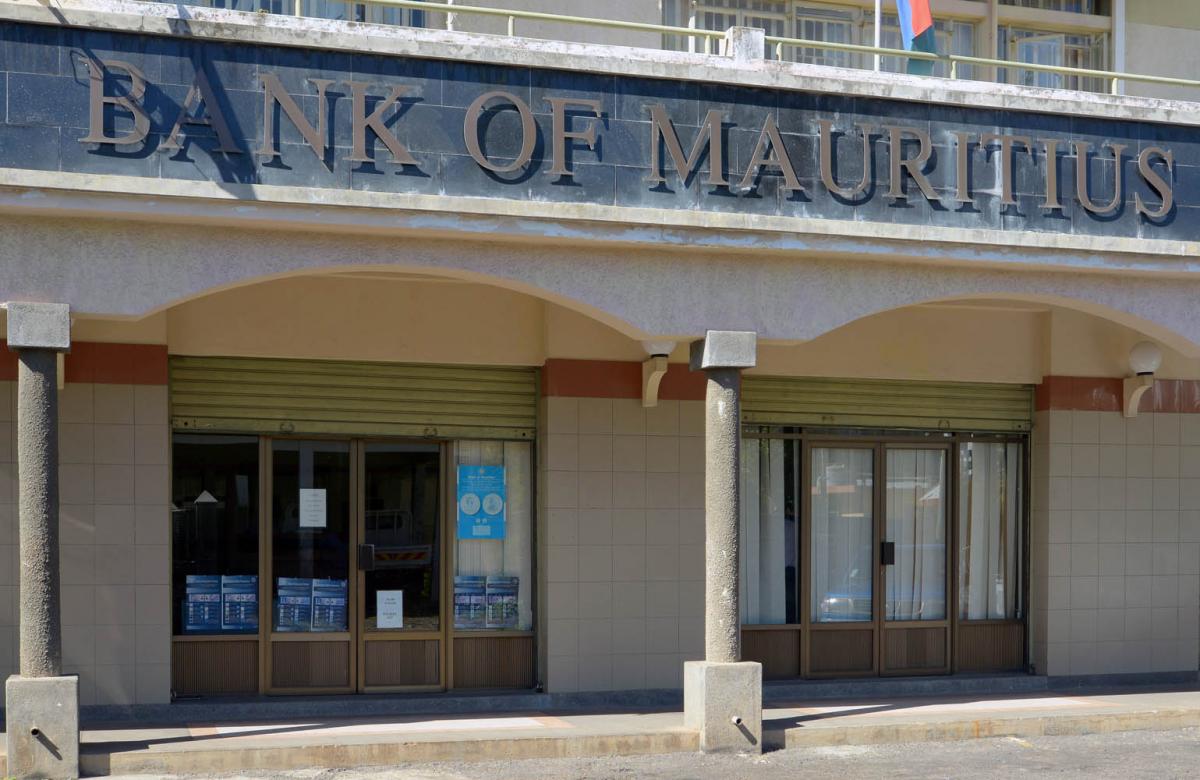
Rs25 billion in toxic loans, write-offs and accumulated losses across four financial institutions. Silver Bank with 97.6 per cent non-performing loans. SBM writing off Rs14.34 billion. MauBank with negative equity of Rs2.95 billion. The Development Bank of Mauritius with a degraded portfolio. The Bank of Mauritius held 181,435 quarterly data points from commercial banks and produced no systemic intervention. Gérard Sanspeur, former Deputy Governor of the Bank of Mauritius, has published the most important institutional critique of the central bank in its history. The Meridian Intelligence Desk reports what it says — in full and with full credit to its author.
There are two kinds of institutional failure. The first is the failure of competence: an institution that lacks the skills, the tools or the resources to perform its function. The second is the failure of architecture: an institution that has all of the above and still cannot convert information into action, signal into intervention, data into decision. The first kind is relatively easy to diagnose and address. The second kind is far more dangerous, because it persists invisibly behind the appearance of normal institutional functioning. The reports circulate. The committees meet. The dashboards fill. The procedures are followed. And the institution, from the outside, appears to be working. Inside, it has lost the capacity that justifies its existence. This is the failure that Gérard Sanspeur, former Deputy Governor of the Bank of Mauritius, has described in a published analytical essay that The Meridian considers the most significant piece of institutional self-examination produced by anyone connected to Mauritius's financial regulatory architecture in a generation. The Meridian reports its contents, its arguments and its implications in full.
Restrictions imposed May 2022. Lifted 17 days later despite documented inconsistencies
Accumulated losses erased from balance sheet under BoM supervision
Constituted under continuous BoM observation and quarterly reporting
USD 3 million World Bank Risk-Based Supervision framework. Saw nothing systemic
Bank of Mauritius risk based supervision 181435 data points Silver Bank SBM MauBank NPL failure
Sanspeur opens his analysis with the observation that Prime Minister Navin Ramgoolam's parliamentary statement citing Rs25 billion in losses across four institutions acted as a brutal revelation of the real quality of Mauritius's central bank. But he immediately redirects the inquiry from the diagnosis to something more fundamental: the architecture that made the diagnosis possible in the first place.
The Bank of Mauritius invested USD 3 million in a Risk-Based Supervision framework developed with the World Bank. This system collects 181,435 data points quarterly from commercial banks, covering capital ratios, exposures, risk concentrations, liquidity positions, credit portfolios, regulatory reporting, financial statements and prudential data. The tools existed. The data circulated. The reports generated automatically. The institution had everything a modern banking supervisor requires to identify systemic risk in its supervised entities. And yet Silver Bank accumulated a 97.6 per cent non-performing loan ratio. SBM wrote off Rs14.34 billion. MauBank developed negative equity of Rs2.95 billion. The Development Bank of Mauritius accumulated a degraded portfolio. All of this happened under continuous quarterly observation, with 181,435 data points flowing into the supervisory system every three months.
Sanspeur states the diagnosis with precision: the Bank of Mauritius's supervision system does not suffer from a shortage of data. It suffers from something else entirely: the incapacity to transform information into institutional intelligence. The central bank accumulated mountains of information and remained blind to the most important signals within it. This is not a failure of technology. It is not a failure of data collection. It is a failure of the institutional mechanism that should convert data into action, namely the escalation systems, the internal controls, the quality assurance processes and the cross-sectional analytical capacity and the ability to transform an alert signal into a rapid corrective intervention.
The system saw. The institution did not act. Then, in the case of Silver Bank, the institution acted and reversed its own action seventeen days later. That is not a data failure. That is an institutional failure of a more fundamental kind.
Silver Bank Mauritius 97.6% NPL inspection restrictions lifted 2022 Bank of Mauritius supervision failure
The Silver Bank case is the most forensically precise illustration in Sanspeur's analysis. In May 2022, a Bank of Mauritius inspection of Silver Bank revealed serious deficiencies: the absence of credit evaluation, unregistered guarantees and conflicts of interest. On 23 May 2022, the BoM imposed restrictions on Silver Bank's operations, an institutional response that indicated the supervisory system had identified a problem and was acting on it. Seventeen days later, on 9 June 2022, those restrictions were lifted, despite what Sanspeur describes as documented significant inconsistencies still present in the institution. By the end of 2022, Silver Bank had extended Rs6.5 billion in new loans, representing new lending extended to an institution that the supervisory authority had found, just months earlier, to be fundamentally deficient in its core credit processes.
Sanspeur's conclusion from this sequence is the most important analytical contribution in his essay. The system did not fail to see the problem. The inspection identified it. The restrictions demonstrated institutional recognition of it. The lifting of those restrictions seventeen days later, despite persistent documented inconsistencies, is not a data failure or a technical failure. It is the institutional failure that Sanspeur identifies as the defining characteristic of an organisation that has progressively lost its capacity to act on what it sees. The procedures were followed. The inspection was conducted. The report was produced. The restrictions were imposed. And then the institutional mechanism that should have sustained the corrective action failed, allowing Rs6.5 billion in new loans to flow into a bank with a 97.6 per cent non-performing loan ratio.
institutional failure banking supervision escalation mechanisms internal controls quality assurance Bank Mauritius
Sanspeur addresses directly the question that his analysis inevitably raises: how does a system constructed precisely to identify banking risk become blind to the risk it is meant to supervise? His answer is not a simple attribution of incompetence or corruption. It is a more sophisticated institutional diagnosis that deserves to be reproduced in full analytical detail.
Large institutions do not always fail because of a lack of technical competence. They fail because they lose the mechanisms that allow competence to produce consistent results. An institution can be staffed by qualified professionals and still develop structural weaknesses through the progressive failure of its escalation mechanisms, the degradation of its internal control systems, the erosion of its quality assurance processes and the loss of cross-sectional analytical capacity. When these mechanisms degrade, the institution's surface appearance of functioning remains intact. Reports circulate. Meetings are held. Dashboards are populated. Hierarchies are maintained. The procedures subsist. But the institution's fundamental capacity to see has been lost. The data arrives and is processed. The alerts fire and are noted. The reports are produced and filed. And the institution does not act with the urgency and precision that its mandate requires.
This is the specific diagnosis Sanspeur applies to the Bank of Mauritius's supervisory function over the decade of failures that produced the Rs25 billion across four institutions. Not a single dramatic failure. Not a deliberate concealment. A progressive institutional degradation of the mechanisms that convert supervisory data into supervisory action, occurring invisibly behind the appearance of normal functioning and producing catastrophic outcomes that were only visible in aggregate after the fact.
Mauritius Bank supervision Ramsamy Chinniah Sudha Hurrymun Urvashi Chuttarsing-Soobarah parliamentary accountability
Sanspeur raises what he describes as a more delicate question, one that goes directly to the governance of the reform process now being undertaken in response to the Prime Minister's parliamentary disclosure. Three names were cited in Parliament as having exercised supervisory responsibilities during the period of the documented failures: Ramsamy Chinniah, Sudha Hurrymun and Urvashi Chuttarsing-Soobarah. Sanspeur makes clear that his question is not one of individual culpability. It is a question of institutional recollection and the limits of self-examination.
Can an institution fully understand its own failures when those who participated in the functioning of the system are also called upon to participate in its diagnosis? Can an inquiry effectively examine decisions that were taken, validated or allowed to pass by those conducting the inquiry? This is not a novel institutional governance question. It is the standard conflict of interest problem that applies to any institution asked to investigate itself. Sanspeur raises it not to assign blame but to identify a structural constraint on the reform process: the people best positioned to explain why the system failed to see what it should have seen may be precisely the people whose institutional involvement makes objective self-examination most difficult.
Bank of Mauritius reform Reserve Bank India expert restructuring institutional theatre Sanspeur analysis
Sanspeur identifies three announced reform measures in response to the Rs25 billion disclosure: the engagement of an expert from the Reserve Bank of India, promised legislative revisions and a restructuring of the supervisory architecture. He does not oppose these measures. He warns about the conditions under which they become what he calls institutional theatre.
If the RBI expert reports to those who supervised during the decade of failures, if the restructuring is conducted by those who structured the failing system, if the inquiry is supervised by those it should examine, then the announced measures will produce the appearance of reform without the substance. The buildings will be rearranged. The titles will change. New frameworks will be announced. And the underlying mechanisms that produced the 181,435 data points that saw nothing, namely the escalation failures, the internal control degradation and the quality assurance erosion, will persist beneath the new architecture, waiting for the next Silver Bank.
The reform that Sanspeur calls for is not organisational. It is diagnostic. A genuine reform begins not when an institution acknowledges its errors but when it understands precisely why it did not see them coming. The Rs25 billion belongs to the past. The causes that produced it, specifically the escalation mechanisms that failed, the internal controls that degraded and the analytical capacity that atrophied, belong to the present. As long as they remain in the present, the next billions are, in Sanspeur's words, only a question of time.
The Rs25 billion belongs to the past. The causes that produced it still belong to the present. And as long as they remain there, the next billions are only a question of time. Gérard Sanspeur, former Deputy Governor, Bank of Mauritius
Bank of Mauritius institutional reform accountability financial supervision Mauritius 2026 analysis
Sanspeur's analysis deserves to be read in full by every person with a stake in Mauritius's financial system, which includes every Mauritian citizen whose savings are held in a bank supervised by the Bank of Mauritius, every business whose access to credit depends on the health of the banking system and every investor whose confidence in Mauritius as an international financial centre rests on the credibility of its regulatory architecture. The Meridian gives him full credit for the courage and precision of his analysis.
The connection to The Meridian's broader analytical project this month is direct. The monetary debate about who printed what in 2020, addressed in our response to Forum Sitwayin, is a debate about decisions made in a crisis. The supervisory failure Sanspeur documents is a failure that occurred across a decade of normal functioning, in the absence of any external shock, with full access to all the data a modern risk-based supervisory framework provides. It is the institutional expression of the municipal thinking mindset The Meridian has identified throughout this edition: the preference for the appearance of functioning over the substance of it, the accumulation of data without the institutional will to act on its implications, and the management of an institution's surface reputation at the cost of its core function.
The Bank of Mauritius is not a municipal institution. It is the sovereign financial authority of a small island state that positions itself as a credible international financial centre. The Rs25 billion documented in Parliament and analysed by Sanspeur represents a supervisory failure of a scale and duration that is incompatible with that positioning. The reform that follows must be, as Sanspeur argues, diagnostic before it is organisational. The Meridian will continue to report on whether it is.
Add comment
Comments