How Tourism Captured the Mauritian Coast
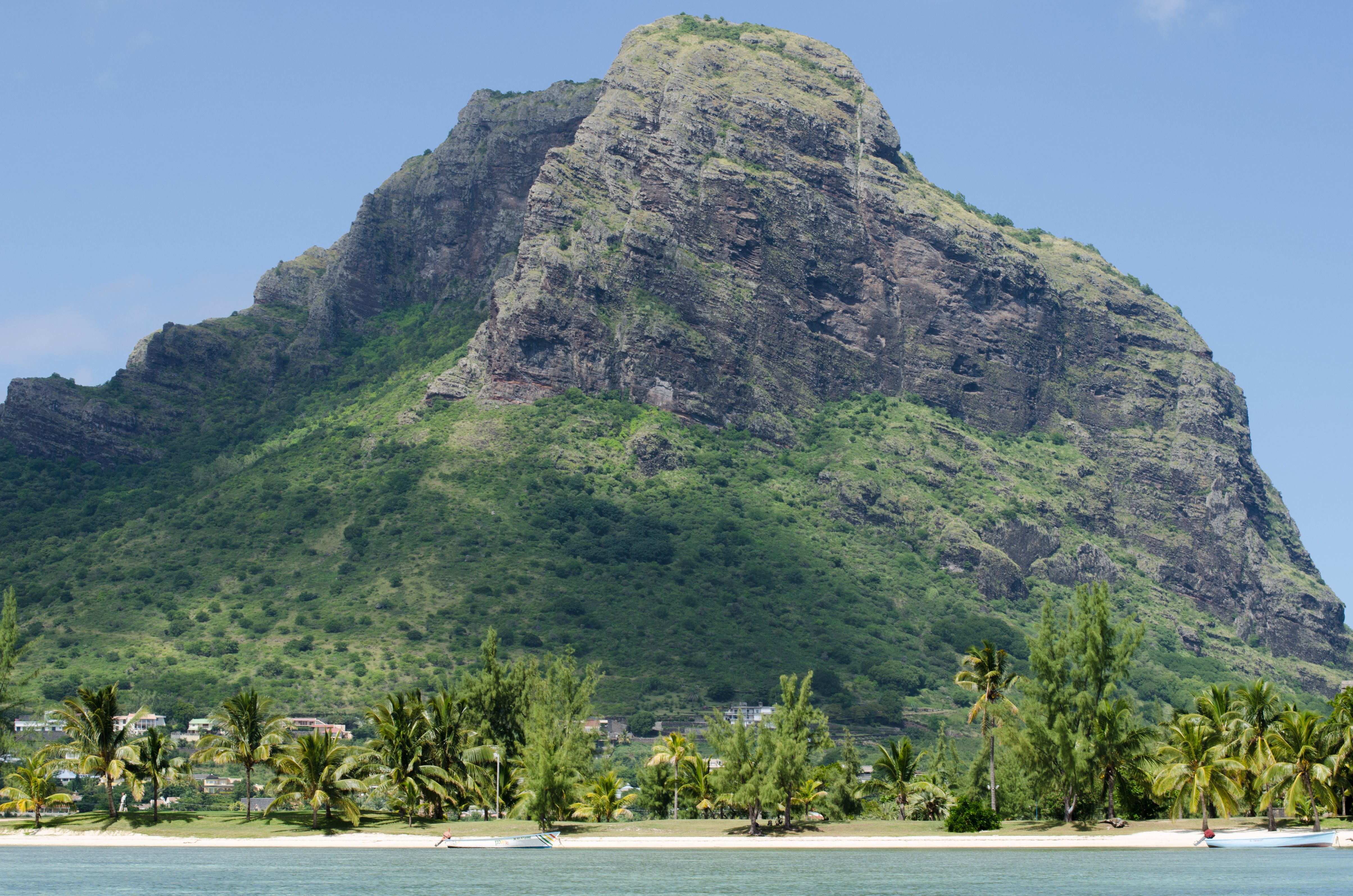
Tourism's defenders begin with the headline figures, and for good reason. Tourist arrivals reached 1,436,250 in 2025, up 3.9 percent on 2024, while gross tourism earnings rose to Rs 103.35 billion, the highest nominal level on record. On the surface, that looks like a decisive vindication of the sector. But those numbers prove only scale, not sovereignty. A country can host more visitors and earn more rupees while remaining dependent on foreign demand, airline economics, imported inputs and a structurally weak domestic currency. The real question is not whether tourism is large. It is whether it is deep enough to justify how much land, policy attention and structural dependence Mauritius has built around it, and whether the model can continue to ask so much of the State while delivering so little command over its own conditions.
Tourism in Mauritius is usually described in the language of beauty, earnings and international appeal. The sector is said to bring foreign exchange, jobs and prestige to a small island that learned how to sell itself to the world. That story is not entirely false. But it is incomplete in exactly the way official narratives tend to be. Tourism did grow. Earnings did rise. Visitor numbers recovered strongly after the pandemic collapse of 2020 when arrivals fell by over 80 percent from the 1.4 million pre-pandemic level. Yet none of that settles the deeper structural question. What kind of economic architecture was built around that recovery, and who was asked to carry its hidden costs?
The answer is less flattering than the brochures suggest. Mauritius did not merely build a tourism sector. It built a tourism-state system: publicly marketed, publicly regulated, publicly trained and, when crisis came, publicly cushioned. The island receives foreign exchange and international visibility, but not necessarily enough productive depth, wage strength or domestic control to justify the scale of dependence that has accumulated around the sector over decades.
Tourism did not merely place hotels on beaches. It helped reorganise premium land around exclusion, controlled access and foreign-facing value. In a small island economy, land is not a decorative asset. It is the fixed base from which housing, food systems, public space, transport, leisure and future industry must all operate. When too much of the best coastline is absorbed by resorts, villas and gated developments, the issue is no longer hospitality alone. It becomes a question of national allocation: who owns what, who accesses what, and who is effectively priced out of the island's most valuable geography.
That is why the sector must be read not only as an industry, but as a territorial system. The coast has increasingly been treated as a premium corridor of value rather than a shared civic inheritance. What appears as development from a distance can look, up close, like enclosure: land reorganised to serve visitors, investors and asset owners more than the society that lives beside it. This process did not happen by accident. It was enabled by policy, planning decisions, integrated resort schemes and a development philosophy that consistently treated coastal land as an asset to be monetised rather than a commons to be governed.
The Mauritian coast was not only sold as a destination. It was reorganised as an economic frontier in which exclusion, premium land value and foreign-facing use increasingly displaced broader national possibility.
Vayu Putra · The Meridian · April 2026The defence of tourism in Mauritius usually begins with the private sector. Hotels invest. Tour operators sell. Visitors arrive. Foreign exchange comes in. But that story is too clean. The budget shows something more revealing: tourism in Mauritius does not simply run on private demand. It is also publicly maintained at significant and continuing cost.
In 2025-26, the Ministry of Tourism is budgeted at Rs 901 million, of which Rs 122 million goes to policy and strategy, Rs 159 million to regulation and control, Rs 541 million to destination promotion and Rs 79 million to hospitality training. That means roughly 60 percent of the ministry's budget is devoted to promotion alone, while training receives less than one-tenth of the total. The republic is not merely benefiting from tourism. It is actively stage-managing the conditions through which the sector continues to reproduce itself, at public expense, year after year.
The spending pattern reveals more than the existence of the budget lines themselves. Mauritius devotes far more to destination promotion than to building the human and institutional structure beneath the sector. That is not a minor administrative detail. It is a philosophy of growth, and not a particularly sophisticated one. A country that invests primarily in marketing its existing appeal is managing its reputation rather than deepening its economy.
The mismatch is especially revealing because the Ministry itself identifies a shortage of local skilled labour in the tourism sector as one of its core strategic challenges. Yet the budget allocates Rs 541 million to promotion and Rs 79 million to hospitality training. In other words, the State spends approximately seven times more on projecting paradise abroad than on deepening the human capital base that must deliver that experience on the ground. A sector that cannot fill its own skilled labour needs with Mauritian workers, and therefore increasingly imports migrant labour at the lower end of the pay scale, has a structural problem that marketing will not solve.
Mauritius has not underinvested in selling paradise. It has underinvested in making paradise economically meaningful for Mauritians. The island has spent decades perfecting the image of a destination while underbuilding the wage floors, skill pathways and labour conditions of the people who must sustain that image in practice.
The problem is not that Mauritius promotes itself. Every serious destination does, and visibility requires sustained investment. The problem is that the structure of spending appears increasingly misaligned with how modern travel decisions are actually made, and therefore with how promotion spending actually converts into bookings.
The Rs 541 million promotion envelope is largely channelled through the Mauritius Tourism Promotion Authority. The visible performance indicator attached to that spending is the number of fairs and road shows conducted, rising from 25 to 28. That is revealing because it measures promotional activity rather than promotional outcome. The State is counting events, not booking conversion rates, not cost per acquired visitor, and not return on investment by market.
A holiday to Mauritius is rarely committed to impulsively inside a conference hall. Visitors do not usually decide then and there. They return home, discuss costs, compare destinations, check flights, study hotel options, watch video content, read reviews and convert later through digital channels. The real booking journey is overwhelmingly online even when the promotional ritual remains physical and event-driven. Road shows are occasional. Booking journeys are continuous. If the MTPA is measuring fairs and road shows as outputs, it may be measuring the wrong things entirely.
The implied spending per event runs at roughly Rs 19.3 million across 28 events if the promotion budget were distributed evenly, which it is not. But even as an order-of-magnitude figure, it signals an expensive architecture in a world where destination choice is shaped by search, social media, review platforms, video and digital presence rather than by occasional trade-circuit appearances. Mauritius is not an unknown destination struggling to be discovered. It is already established. The challenge is not basic visibility. It is conversion efficiency, perceived value and price competitiveness. The island may not be under-promoting itself. It may be over-administering promotion.
This leads to a second contradiction that promotion spending cannot address. Mauritius does not suffer only from a visibility problem. It also suffers from an access problem. Flights remain expensive. Route competition is limited relative to competing Indian Ocean destinations. Regional connectivity across the Indian Ocean archipelago is still weaker than it needs to be for a destination that aspires to deeper market penetration across Africa, the Middle East and Asia. Even the most sophisticated digital campaign cannot solve an access structure that remains narrow, costly and fragile in the face of any airline route change or geopolitical disruption.
The current promotional logic therefore appears incomplete at a structural level. Mauritius may be overspending on visibility while underinvesting in the conditions that make access to that visibility affordable and reliable. The republic is still trying to perfect the invitation while the journey to accept it remains too costly for too many potential visitors in its most important growth markets.
The fiscal picture is more ambiguous than the sector's advocates imply. The budget does not present one clean line called tourism revenue. Government receipts are fragmented across taxes, fees and passenger charges. The clearly identifiable tourism-specific revenue lines for 2025-26 include Rs 130 million from Tourist Enterprise Licences and Rs 775 million from the new Tourist Fee, giving a narrow tourism-specific total of approximately Rs 905 million. That is almost exactly the same size as the Rs 901 million Ministry of Tourism budget, which means on a narrow reading the sector approximately pays for its own direct public administration. Nothing more.
If the broader Passenger Fee on Air Tickets of Rs 3.760 billion is included, the public take looks considerably stronger. But that line is not purely a tourism charge. It applies to all air passengers and captures a broader aviation levy that would exist whether Mauritius had a tourism industry or not. The point stands: tourism is a revenue contributor, but the budget does not demonstrate that it is a surplus generator that easily justifies the full scope of land use, public promotion, regulatory management and crisis support that the State has organised around it.
Tourism earnings can rise in nominal terms while domestic life becomes harder. That is one of the most structurally important contradictions in the Mauritian model, and one that the headline figures consistently obscure. A weaker rupee can make the island appear more price-competitive to visitors paying in euro, pound or dollar, and it can inflate tourism earnings in domestic-currency terms when converted from foreign receipts. But in an import-dependent economy, the same monetary weakness also raises the local cost of imported fuel, food, equipment, medicines and household essentials for the residents who must live inside the island year-round.
That is why record nominal earnings do not settle the distributional question. Tourism may look stronger in the external accounts while ordinary life becomes more expensive inside the island. A cheap destination and an expensive domestic life are not contradictory outcomes. They are two faces of the same monetary reality. In Mauritius, that is not an accidental side effect of success. It is increasingly one of the defining structural truths of a growth model built around a foreign-facing sector in a currency that remains persistently weak.
The pandemic exposed the sector more clearly than any policy speech or promotional brochure ever could. When borders closed and visitor revenues collapsed by over 80 percent in 2020, tourism did not simply absorb the consequences of its own external exposure. The wider State and monetary system moved to cushion the blow. Wage support schemes, extraordinary credit facilities and fiscal interventions helped major operators survive a crisis that, in a purely market-disciplined world, would have imposed far heavier losses on private shareholders and lenders.
That fact matters because it reveals how the structure really operates under stress. When the sector prospers, success is celebrated as commercial achievement, entrepreneurial vision and the reward of private investment. When it breaks, risk is socialised into the public realm. Mauritius did not merely rescue hotels in 2020. It revealed who ultimately carries the downside when the model fails: the taxpayer, the monetary system and the State balance sheet.
When profits are good, the sector belongs to its investors. When crisis arrives, the risk belongs to everyone. That asymmetry is not an accident. It is the structure.
Vayu Putra · The Meridian · April 2026This is not an argument against emergency support in principle. It is an argument for institutional honesty. A sector that occupies prime coastal land, shapes national branding and claims strategic centrality cannot also be treated as a purely self-sustaining private triumph if, when crisis comes, it depends on wider society to survive. The 2020 rescue was necessary. What was missing was the structural conversation about why a sector of this strategic centrality had not been required to contribute more to the resilience buffers it would eventually draw upon.
Tourism is often defended as a foreign-exchange machine, and that is not imaginary. The sector matters materially to the external accounts. It brings in hard currency at scale. The average length of stay has lengthened. Earnings have crossed symbolic nominal thresholds. But foreign exchange is not the same thing as economic sovereignty, and the conflation of the two is one of the persistent errors in how Mauritian development success is narrated.
Mauritius does not control foreign household incomes, airline pricing, fuel costs, geopolitical calm or the reputational cycle that shapes travel demand. It does not fully control the import bill beneath the tourism product itself, which includes foreign food and beverage inputs, imported equipment, international staff and energy whose cost is set in markets that take no instruction from Port Louis. The island earns, but it does not command. That distinction matters analytically. A country can generate revenue from a sector while remaining deeply exposed to forces it cannot influence. Tourism helps stabilise the external accounts, but it does not free the island from dependence. It makes the dependence manageable. That is not the same thing as resolving it.
The tourism story in Mauritius can no longer be separated from the property story. Bank of Mauritius data show that in 2024, real estate activities were the major recipient of gross direct investment inflows into the country, much of it channelled through property development and integrated resort schemes. This is not a peripheral detail. It is central to understanding what the sector has become.
The coast is no longer only a place where visitors stay temporarily. It has become a corridor of long-duration asset capture, in which international buyers acquire permanent or semi-permanent property rights over some of the island's most valuable geography. Once tourism merges with high-end property development at scale, the island stops simply selling experiences and begins selling access to territory itself. That changes the social meaning of the model entirely. Asset price inflation can make a coastline appear richer in capital terms without making the society that lives beside it stronger in distributional terms. Mauritius risks mistaking the monetisation of place for the deepening of its economy.
The defence of tourism frequently rests on employment. The sector creates jobs, the argument runs, and jobs are good. But jobs alone are not a sufficient defence of a model. The relevant question is what kind of labour market and economic future the sector helps organise for the population that must live within it.
If the State helps market the destination, regulate the industry and train the workforce, then it must also answer the harder question: why does so much of the structure still feel designed around low-cost serviceability rather than durable national advancement? The Ministry identifies a shortage of locally skilled labour as a core sector challenge, yet spends seven times more on promotion than on training. Mauritians who reject low-wage hospitality work are not being lazy. They are being economically rational. When skilled Mauritians calculate that civil service employment, FinTech or emigration offer better returns to their labour than entry-level hospitality, that calculation reflects a genuine failure of the sector to make itself economically attractive on terms compatible with a dignified life on this island.
The tourism model in Mauritius rests on an ecological base that is becoming harder to take for granted. The World Bank's 2026 Country Climate and Development Report identifies tourism and fisheries among the sectors facing the most direct climate risk in Mauritius, and notes that one-third of the population lives in coastal areas that face increasing exposure to sea-level rise, storm surge and ocean warming. That means the same shoreline that has been reorganised around resorts, villas and premium property value is also one of the country's most significant lines of physical vulnerability.
A development model that continues to concentrate investment in premium coastal assets while climate pressure on those assets rises is not diversifying risk. It is concentrating it. The model is exposed twice over: commercially on foreign demand it cannot command, and ecologically on a coast it cannot protect indefinitely from forces it did not cause and cannot fully reverse. Both forms of exposure are structural. Neither will be resolved by a marketing campaign or a new resort development.
This article examines tourism not as a simple visitor economy but as a system of land use, fiscal support, labour formation, climate exposure and externally determined earnings that has been constructed with significant and continuing public subsidy.
Its central argument is that Mauritius built a tourism-state machine that brings receipts and prestige, but not enough sovereignty, wage depth, resilience or social distribution to justify the full scale of dependence that has formed around it over five decades.
The tourism system in Mauritius does not move alone. It moves with other forces: property capital, public promotion machinery, labour formation policy, import dependence, exchange-rate dynamics and political caution about restructuring anything that earns foreign exchange. Each reinforces the others. Hotels normalise the coast as premium territory. Property schemes deepen exclusion and asset lock-in. The State sells the image and absorbs the training cost. Currency weakness flatters the foreign-facing revenue numbers. Climate risk accumulates beneath the physical base of the entire system.
That is why the wolf pack metaphor holds analytically. The pressure on Mauritian society is not delivered by a single actor with a single intention. It is delivered by a coordinated structure whose components each benefit from the arrangement and collectively resist the reform that would cost any of them something. Hotels did not set out to capture the coast. Property developers did not set out to distort national land allocation. The State did not set out to underinvest in training. But the cumulative result of each pursuing its rational interest within an unreformed system is a tourism-state complex that earns foreign exchange while asking more of the country than the earnings justify.
Mauritius did not simply invite visitors. It reorganised itself around them. And it is still paying for that reorganisation in ways the earnings figures do not record.
Tourism in Mauritius is not a fiction. It is a real sector with real receipts, real arrivals and real macroeconomic weight. But importance is not the same as innocence. The republic has asked too much of tourism as a model while normalising too many of its structural distortions: land capture, public promotion at seven times the training budget, shallow wage spillovers, socialised crisis risk, and commercial dependence on forces set in foreign capitals. The record earnings of 2025 prove that the model still works at scale. They do not prove that it works for Mauritians.
The question is no longer whether tourism matters. It clearly does. The question is whether Mauritius has allowed tourism, coastal property and the tourism-state complex to matter on terms too narrow, with sovereignty too thin and with social distribution too weak, for too long. The sector will not reform itself. The structure benefits too many established interests in its current form. Reform, if it comes, will have to be chosen deliberately, against institutional resistance, by a government willing to ask what the coast is actually for.
Mauritius built one of the world's most recognisable island brands. The question it has not yet answered honestly is whether the island beneath that brand has been organised to serve its visitors or its citizens. Those are not necessarily the same thing, and in Mauritius, they are increasingly not.
April 2026 · Political Economy · Mauritius Investigation