How Mauritius Turned to the Sea as a New Frontier of Growth
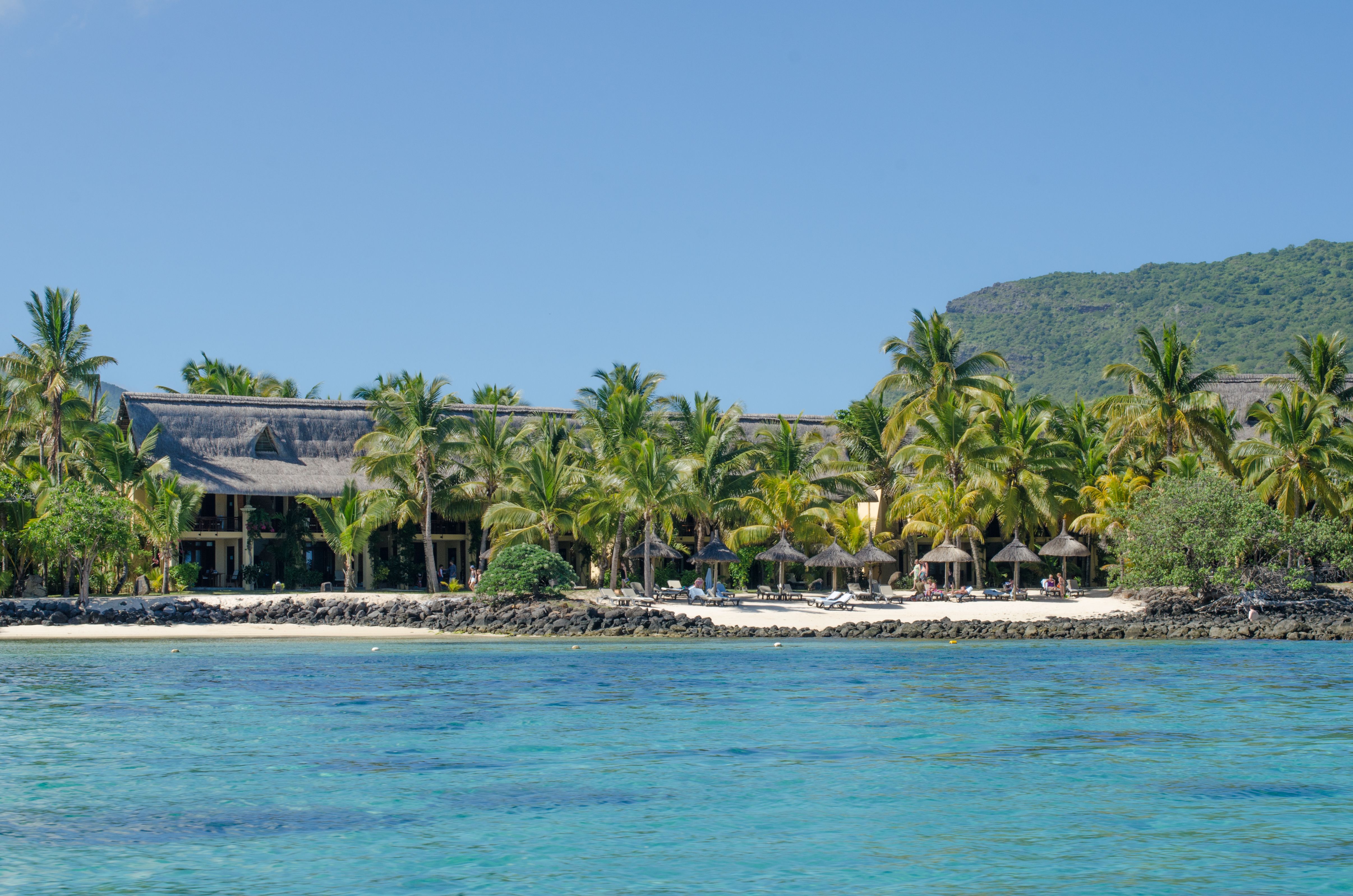
Mauritius has long regarded the sea as scenery, route and border. It now wants to treat it as strategy. The ambition is understandable and, in its broad conception, correct. The republic's maritime space extends to roughly 2.3 million square kilometres, making it an ocean state on a scale wildly disproportionate to its physical land area of approximately 2,040 square kilometres. For a small island with limited domestic resources and a structural dependence on imports, the blue economy promises something psychologically and politically powerful: a frontier larger than any physical constraint the island can imagine, and one that no larger regional power can simply appropriate through scale. Every government since independence has eventually turned toward the sea as the next great horizon for national strategy, partly because the sea is genuinely there and genuinely large, and partly because the land has increasingly run out of easy answers.
Officially, the blue economy now accounts for around 10.3 percent of GDP, excluding coastal tourism, and supports approximately 10,000 direct jobs in non-tourism marine activity. Those are real numbers and they give the sector genuine macroeconomic weight. But a forensic reading of what the blue economy actually is, who controls its most important components, and what climate risk now threatens its physical foundation suggests something harder than the official framing acknowledges. Mauritius has built a commercially meaningful maritime position without yet building full maritime command. Port Louis acts as a transshipment and bunkering hub for traffic generated by foreign logistics chains. The seafood industry processes significant volumes of fish and tuna, but much of the catch originates from foreign industrial fleets operating across the wider Indian Ocean, not from a sovereign Mauritian domestic fishing industry of comparable scale. Marine fuel sales generate real revenue, yet the fuel itself is entirely imported and resold under conditions set by the global oil market. And the entire ocean-facing model now sits under a climate threat that the World Bank's February 2026 Country Climate and Development Report quantified at up to 4 percent of GDP in losses by 2050, requiring $5.6 billion in adaptation investment over 25 years to prevent.
The ocean promise is real because the geography is real. But it remains considerably more exposed, more externally conditioned and less sovereign than the political language that surrounds it typically allows.
Every major phase of the Mauritian economy has carried a frontier myth. Sugar was once the organising pillar around which everything else was arranged. Then came export manufacturing, with the EPZ as the emblem of post-colonial industrial ambition. Tourism followed as the foreign-exchange engine. Offshore finance arrived as the light, modern alternative to physical production. The blue economy is the newest horizon in this sequence: an attempt to transform geographical scale into strategic leverage and maritime jurisdiction into national productive capacity.
The scale is what gives the idea its political force. Mauritius governs an Exclusive Economic Zone of roughly 1.9 million square kilometres, supplemented by a Joint Management Area of approximately 396,000 square kilometres shared with Seychelles in the southern Indian Ocean. This gives the republic a total maritime governance area of roughly 2.3 million square kilometres, making its ocean territory approximately 1,150 times larger than its physical landmass. Few statistics in the entire Mauritian economic narrative do more to capture the imagination and dramatise the potential. In a world increasingly focused on deep-sea resources, maritime trade routes and ocean governance, a state that controls that much water has genuine strategic assets to work with.
But size is not sovereignty. A large ocean space can remain weakly measured, thinly captured in economic terms and only lightly governed in practice. The EEZ confers rights to resources within the zone. It does not automatically confer the fishing capacity to harvest them, the industrial infrastructure to process them at scale, the maritime surveillance capability to police them, or the scientific and technological base to understand and exploit deep-sea resources. That is why the blue economy requires harder analytical scrutiny than the strategic mapping of maritime zones typically provides.
Mauritius has maritime scale on the map. The harder question is how much of that scale has been converted into genuine domestic command over the resources, the infrastructure and the value chains within it.
Vayu Putra · The Meridian · April 2026The first structural weakness of the blue economy is not maritime but statistical. Mauritius speaks confidently about its ocean future, yet the marine economy remains less precisely measured than one would expect from a state claiming it as a primary growth frontier. Definitional inconsistencies persist between what counts as the core industrial blue economy and what belongs to the broader coastal economy that includes beach hotels, water sports and marine-facing tourism. The 10.3 percent GDP estimate used in the stricter official framing excludes coastal tourism, and that is the analytically cleaner figure because it attempts to capture what Mauritius is claiming as substantive industrial and logistical marine depth: ports, bunkering, fishing, seafood processing, ocean surveillance, marine services and related activities. Once coastal tourism is included, the percentage rises and the headline sounds more impressive, but the conceptual precision weakens significantly.
This is not a technical accounting quibble. It is a political observation. A frontier that is weakly measured is easy to celebrate and difficult to audit. It is hard to hold governments accountable for the development of a sector whose boundaries are not precisely defined and whose contribution to national income cannot be cleanly separated from adjacent activities. Mauritius may possess the geography of an ocean state, but it still lacks a fully consolidated ocean balance sheet that could tell a sceptical reader exactly what the sea is contributing, what it is costing and what the trajectory of sovereign capture looks like over time.
Port Louis is unquestionably the strongest pillar of the marine economy. It handles 99 percent of Mauritius' external trade in goods, with container throughput of approximately 560,000 TEU annually. The island sits beside one of the Indian Ocean's primary South-South maritime corridors, through which approximately 30,000 vessels pass each year, and its geographic position between Asia, Africa, the Middle East and the European trade routes gives it natural transshipment logic that no domestic policy could have manufactured. Geography, in this respect, is genuinely and demonstrably on Mauritius' side.
But geography alone does not create deep maritime sovereignty or command. A port can move containers, sell services and intermediate global trade without ever becoming a first-rank maritime power in the sense that the port's owners, its logistics architecture, its insurance frameworks and its arbitration systems are domestically controlled. The difference between a useful port and a commanding maritime centre lies in the density and depth of the ecosystem built around the port. The world's great maritime systems do not only move boxes. They integrate marine finance, ship management and ownership, maritime insurance, legal arbitration, ship repair and maintenance, classification and certification services, crew management, navigation data and a dense professional and institutional layer that collectively gives the port city strategic leverage beyond the physical act of loading and unloading cargo.
On that harder test, Port Louis remains useful rather than dominant. The Competition Commission's 2024 review of the port infrastructure identified real efficiency gaps. Crane productivity of 21.6 moves per hour remains below the global benchmark for a competitive transshipment hub. Dwell times are above those of more serious transshipment rivals in the wider Indian Ocean region. Mauritius therefore occupies a valuable and potentially strategic maritime position that its geography has provided, without yet having fully converted that position into the kind of deep institutional and industrial ecosystem that would make the position genuinely sovereign and defensible against the competitive pressure of larger and better-capitalised port operators.
Few components of the blue economy illustrate the structural contradiction more clearly than marine bunkering. Mauritius has successfully built a marine-fuel supply business by positioning itself beside the busy shipping lanes that pass through the western Indian Ocean, and by investing in the storage, logistics and commercial infrastructure required to supply vessels in transit. In 2023, bunker fuel sales reached 509,002 tonnes, generating revenue of more than $500 million. The government's stated ambition is to scale this toward one million tonnes annually within the medium term, which would materially increase both the revenue contribution and the strategic significance of the bunkering operation.
That is a commercially meaningful achievement that reflects genuine logistical organisation and geographic advantage. But bunkering also reveals the structural limit of the blue economy as currently constituted with unusual precision. Mauritius does not produce the fuel it sells. It imports marine fuel from external suppliers, stores it at the port, and resells it to foreign vessels at a margin that reflects its geographic position and the quality of its logistics. The value added is real, but its character is that of a trading and logistics intermediary rather than a sovereign energy or industrial producer. The republic earns from traffic it does not generate, using fuel it does not produce, for ships that belong to operators it does not control, transiting routes whose commercial logic is determined by global supply chains well beyond Mauritian influence.
Marine bunkering is profitable and logistically well-organised, but it is not evidence of full maritime industrial power. Mauritius is monetising its strategic geographic position by intermediating a global commodity flow. That is a legitimate and valuable activity. But it is structurally closer to strategic toll-taking than to the sovereign command of an energy or maritime industrial system.
The seafood sector is the other major success story of the Mauritian blue economy, and it is a more complex case than bunkering because the value-added contribution is more substantive and the employment base is more significant. Mauritius exported approximately 92,900 tonnes of fish and seafood in 2023, generating export value of more than $530 million. The island has built canning, processing and cold-chain infrastructure that gives it genuine industrial capacity in this space, and the sector creates real jobs in processing facilities that represent industrial employment of a kind the Mauritian economy increasingly struggles to sustain in other areas.
But the structure of the seafood sector matters as much as its headline figures. Mauritius is a significant processing and export node in the Indian Ocean tuna economy, but not primarily a sovereign catching power of comparable scale. A substantial proportion of the tuna and related fish that flows through Port Louis and into Mauritian processing facilities is linked to foreign industrial fishing fleets operating under licence arrangements across the wider Indian Ocean. The European Union tuna fleet and Asian fishing operators are central to this supply. The EU fisheries protocol that gives EU vessels access to Mauritian waters pays approximately 725,000 euros per year into an arrangement through which Mauritian waters and port facilities are used to support catches worth many times that figure. The island captures value at the processing and export stage of a chain whose most capital-intensive and technologically sophisticated components, namely the catching and the fleet ownership, remain outside its domestic control.
This does not make the seafood sector meaningless or unworthy of development. It makes its sovereignty conditional. Mauritius has built a successful and valuable node in a transnational seafood supply chain. What it has not built is a fully autonomous marine protein system in which Mauritian-owned vessels, Mauritian industrial fishing capacity and Mauritian downstream processing together constitute a vertically integrated and domestically commanded industry. The distinction between those two things is the distinction between participating in someone else's ocean economy and commanding one's own.
The strict blue-economy accounting excludes coastal tourism, and that exclusion is analytically correct because it keeps the industrial and logistical marine economy conceptually separate from the hospitality and leisure use of the coast. But the separation in the accounts does not erase the conflict on the ground between different claims on the same physical coastline. Resorts, luxury property, integrated resort schemes and tourism-led coastal development dominate much of the most valuable shoreline. That creates a direct and frequently unacknowledged tension between two competing visions of what the coast is for: maritime sovereignty as productive public infrastructure on one hand, and the coast as premium private leisure territory on the other.
For artisanal fishers and coastal communities whose livelihoods depend on access to nearshore fishing grounds, mooring spaces and beach landings, this tension is not abstract. It is expressed in access restrictions, rising land values that push fishing families away from the water's edge, and a gradual reorganisation of the coastal economy around visitor-facing and property-facing value rather than productive marine use. The blue economy cannot be fully understood through ports and seafood export statistics if the physical coastline that frames and supports the entire maritime system is being progressively organised around exclusion, premium access and tourism land values rather than a broader public and productive marine future.
The most serious and least acknowledged constraint on the ocean promise is ecological. On 19 February 2026, the World Bank's Country Climate and Development Report for Mauritius delivered the most precise quantification yet of the climate risk the island faces. The report found that Mauritius is exposed to outsized climate impacts, that inaction could reduce GDP by up to 4 percent by 2050, and that protecting the coastal and ocean-facing economy will require approximately $5.6 billion in adaptation investment over the next 25 years. That implies an annual adaptation funding requirement of roughly $213 million, which must be found from a combination of domestic fiscal resources, development finance and international climate funding mechanisms that remain uncertain in both scale and availability.
This is the structural constraint beneath the maritime rhetoric. The blue economy may generate real revenue today through bunkering, seafood processing and port services. But the physical system that supports all of these activities, including the reefs that protect the lagoons, the lagoons that moderate wave energy on the coast, the coastal infrastructure that links the port to the national economy, and the wider ecological health of the EEZ, is under accelerating stress from sea-level rise, ocean warming, coral bleaching, storm intensity and changing current patterns. Protecting that system is not optional if the blue economy is to remain viable beyond the near term. It is a prerequisite for everything the blue economy claims to promise. And its cost is now formally quantified at a scale that the island's public finances, carrying a deficit of 9.3 percent of GDP and a debt ratio already exceeding the statutory ceiling by 26.5 percentage points, cannot easily absorb without external support.
The blue economy is not only a question of what Mauritius can extract from the sea. It is also a question of whether the republic can afford to defend the coast and the marine system that make that extraction possible. The World Bank has now put a number on that question. The number is $5.6 billion. The fiscal room is not there.
Vayu Putra · The Meridian · April 2026Mauritius has built a blue economy that is commercially meaningful, strategically positioned and genuinely present in the national accounts. But it has not yet built one that is fully sovereign in the sense that matters for long-run development. The ships using the port are largely foreign. The fuel sold in bunkering is entirely imported. A large and critical share of the seafood export machine depends on fish caught by foreign industrial fleets operating under arrangements that Mauritius participates in but does not command. The capital required to climate-proof the entire physical system far exceeds the domestic fiscal resources available without sustained external support. The measurement framework for the sector remains imprecise. The coastal territory that frames the maritime economy is increasingly organised around private and tourism-facing value rather than broad productive marine use.
The pattern is consistent with the broader series thesis: Mauritius has built positions in sectors whose essential terms are set elsewhere. In the blue economy, the essential terms include the ownership of the fishing fleets, the direction of global shipping logistics, the price of marine fuel, the rules of international fisheries access and, above all, the trajectory of global climate change that threatens the ecological system on which the entire model rests. The ocean is vast and the geography is genuinely favourable. But geography does not resolve the sovereignty question. It only makes the question worth asking more urgently.
This article is the fifth and final pillar in The Meridian's Mauritius investigation series. It examines the blue economy not as a celebratory frontier, but as a structural case of maritime scale without full sovereignty: geographically credible, commercially real, and constrained by external dependence, measurement gaps and a climate adaptation bill that puts the entire model under long-term financial pressure.
Together the five pillars share a common thread: Mauritius earned foreign exchange across sugar, textiles, tourism, offshore finance and the ocean economy without ever fully commanding the essential terms of any of them. The State budget absorbed what the model itself could not resolve. The question the series raises is whether Mauritius can yet choose a different path before the accumulated fiscal cost of that model makes the choice for it.
The blue economy should not be dismissed. Mauritius would be strategically negligent to ignore the sea, and no serious analysis of the island's economic future can exclude the maritime dimension. Ports, seafood processing, bunkering, marine services and the geographic advantage of the Indian Ocean position all matter and all represent real productive activity. But the republic must be more honest than its promotional literature typically allows about what it has actually built. Much of the current ocean economy is built on intermediation rather than command, on position rather than sovereignty, and on external traffic rather than domestic industrial depth.
The ships are not Mauritian. The bunker fuel is not Mauritian. Much of the export seafood chain begins beyond the reach of Mauritian domestic fishing capacity. The coast that frames the entire maritime economy is increasingly captured by private and tourism-facing use rather than broad public and productive marine purpose. And the climate bill required to keep the whole system physically viable over the next 25 years stands at $5.6 billion, against a fiscal position that is already beyond its own statutory limits and has no obvious mechanism for generating that scale of adaptation investment from domestic resources alone.
Mauritius has not yet built an autonomous ocean power. It has built a profitable maritime tollbooth in a strategically favourable location. Whether that tollbooth can evolve into genuine ocean sovereignty, through deeper domestic fishing capacity, vertically integrated seafood command, advanced maritime services, serious climate resilience investment and a coastal governance regime that serves the productive marine economy rather than tourist and property interests, is the defining maritime question the republic now faces. Geography has given Mauritius the question. Policy must now determine the answer.
April 2026 · Political Economy · Mauritius Investigation