Lagos Floods 2026: Why 33 States Are at Risk and What the Government Is Not Telling You
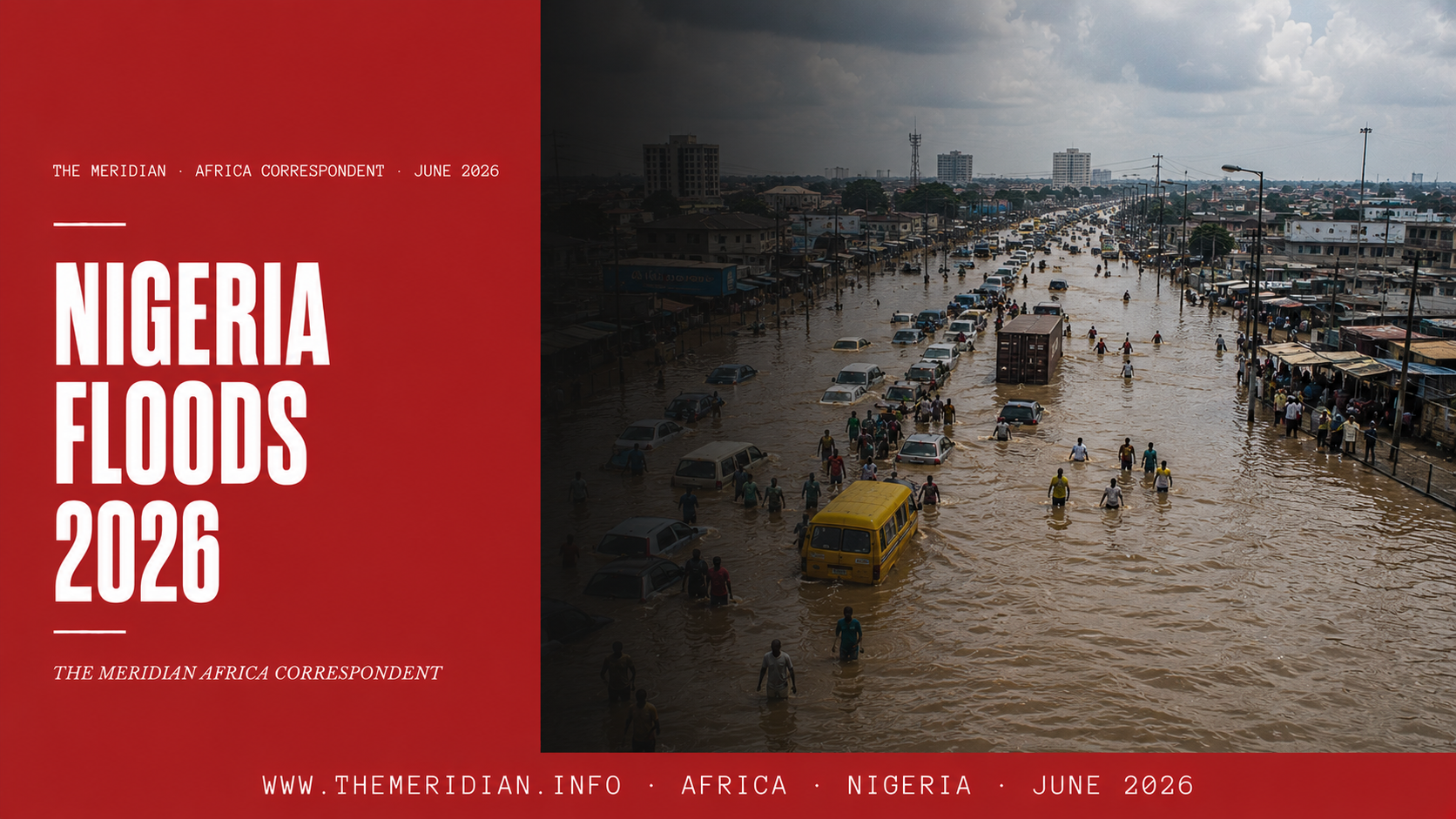
The National Emergency Management Agency has officially flagged 33 of Nigeria's 36 states as high-risk flood zones for the 2026 rainy season. Over 14,000 communities face severe displacement risk. The Nigerian Meteorological Agency has forecast above-normal rainfall across the Niger Delta, the Middle Belt, and the northwest. Early rains are already producing flash floods in Lagos. And the question every Nigerian is now searching -- will 2026 be worse than 2022 -- does not have a reassuring answer. What the government is not telling you is why the floods keep coming, who is supposed to stop them, and where the money allocated to do so has gone.
The 2022 Nigerian floods were the worst in a decade. Flooding across 34 states displaced approximately 1.4 million people, destroyed an estimated 440,000 hectares of farmland, and caused economic damage that international assessors placed at over $9 billion. The federal government declared a national disaster. Emergency funds were released. Promises were made. Three and a half years later, NEMA is warning that 33 states face severe risk in the 2026 rainy season -- one fewer than 2022 -- and the infrastructure that failed in 2022 has not been materially upgraded. The question is not whether Nigeria will flood in 2026. It will. The question is whether anyone in authority can explain why the same communities keep flooding every year and nothing structurally changes between seasons.
NiMet's 2026 Seasonal Climate Prediction identifies thirteen states as facing longer-than-normal rainy seasons with above-average rainfall intensity. These states include Kano, where NEMA has separately identified 178 communities at moderate-to-high risk this week alone. They include the Benue and Niger river basin states -- Kogi, Anambra, Delta, Bayelsa -- which bear the brunt of the annual Lagdo Dam release from Cameroon. And they include Lagos, where early June rains are already producing the Lekki flash floods that residents are tracking in real time on social media because official early warning systems are not reaching them fast enough.
The Lagdo Dam factor is one of the least-discussed and most consequential variables in Nigerian flood risk. Located in northern Cameroon, Lagdo Dam releases water into the Benue River during heavy rainfall periods. When those releases coincide with Nigeria's own rainy season peak -- as they did catastrophically in 2022 -- the Benue and Niger rivers overflow simultaneously, producing the kind of multi-state inundation that displaces over a million people in a matter of weeks. Nigeria has known about this variable for decades. It has not built the upstream retention infrastructure or cross-border water management framework that would give communities downstream more than a few days of warning before the water arrives.
Lagos is not at risk from Lagdo Dam. Its flood vulnerability is entirely self-generated and entirely preventable. The Lagos metropolitan area houses over twenty million people. Its water drainage system was designed and largely built for a city of roughly 600,000 -- the population of the colonial and early post-independence era. The infrastructure has not been comprehensively upgraded to match the city's actual population. Every major rainy season overwhelms it.
The specific areas most searched by Lagos residents right now -- Lekki, Ajah, Surulere, Mushin, Ikorodu, Festac -- are not flooding because of exceptional rainfall. They are flooding because blocked drainage channels, encroached floodplains, and inadequate stormwater management infrastructure guarantee that ordinary rainfall produces extraordinary inundation. The Lagos State government has announced drainage clearance programmes in every budget for the past decade. The drains remain blocked. The residents remain at risk. And the Lekki flash flood searches continue to trend every June.
Lagos is not flooding because of climate change alone. It is flooding because a city of twenty million people is being managed with drainage infrastructure designed for a city of 600,000. That is not a climate problem. It is a governance problem.
NEMA's warnings are increasingly specific. The identification of 178 communities in Kano at moderate-to-high risk this week is a level of granularity that represents genuine progress in Nigeria's early warning architecture. NiMet's seasonal prediction, now published in advance of the rainy season, gives agricultural planners, logistics companies, and state governments a window to prepare that did not exist a decade ago.
What the official warnings do not say -- and what no government communication has said clearly -- is which specific communities in Lagos, Kano, Benue, and the thirty other flagged states have received physical flood mitigation infrastructure since 2022. Which drainage channels have been cleared. Which embankments have been reinforced. Which roads in flood-prone wards have been elevated. Which evacuation routes have been prepared and communicated to residents. The warnings tell Nigerians where the risk is. They do not tell them what has been done to reduce it. That silence is the governance story beneath the climate story.
As The Meridian documented in its investigation into Nigeria's Ecological Fund, the federal government constitutionally allocates three per cent of the Federation Account specifically for ecological protection, flood mitigation, and environmental infrastructure. This allocation -- drawn from oil revenues and distributed to states and local governments monthly -- represents hundreds of billions of naira annually. The accountability trail between disbursement and physical infrastructure is almost impossible for ordinary citizens to follow. Our Ecological Fund investigation asked where that money goes. The 2026 flood warnings are the answer.
The honest answer to Nigeria's most-searched flood question is: it depends on variables the government cannot fully control and variables it absolutely can.
The variables outside government control are the Lagdo Dam release schedule, the total rainfall volume delivered by the Atlantic monsoon system, and the precise timing of when peak rainfall coincides with peak river levels. If the 2026 season produces a Lagdo release coinciding with above-normal domestic rainfall -- as 2022 did -- the outcome could rival or exceed 2022's displacement figures regardless of what any government does between now and October.
The variables within government control are the ones that have not changed since 2022. Drainage maintenance is a government choice. Floodplain encroachment enforcement is a government choice. The deployment of Ecological Fund allocations for physical infrastructure rather than administrative costs is a government choice. Early warning dissemination at the community level is a government choice. None of these require waiting for the rains. All of them should have been addressed in the three and a half years since 2022. The NEMA warnings for 2026 suggest that many of them were not.
The annual Nigerian flood cycle follows a pattern so consistent it has become predictable to the day. NiMet forecasts the season. NEMA issues warnings. The rains arrive. The drains overflow. Communities flood. Emergency responses are mobilised. Funds are released. Promises are made. The rains end. The infrastructure remains unchanged. The following year, NiMet forecasts the season again.
This cycle is not inevitable. It is a governance choice that has been made, implicitly, every year for decades. The drainage infrastructure that would prevent Lagos from flooding is buildable. The embankments that would protect Benue communities from Lagdo releases are engineerable. The early warning systems that would give 14,000 communities meaningful preparation time are deployable. The Ecological Fund that is supposed to finance all of this is constitutionally mandated and monthly disbursed.
The question Nigerians are asking -- will 2026 be worse than 2022 -- has a structural answer that no seasonal forecast can provide. It will be as bad as the governance that preceded it. And by every available measure, the governance that preceded the 2026 rainy season looks very much like the governance that preceded 2022. The floods are coming. The accountability question is whether anyone will ask, when they do, why the money that was supposed to stop them did not.
Add comment
Comments