Africa's New Partners: Ethiopia at 10% and What the Korea Accord Means for the Continent
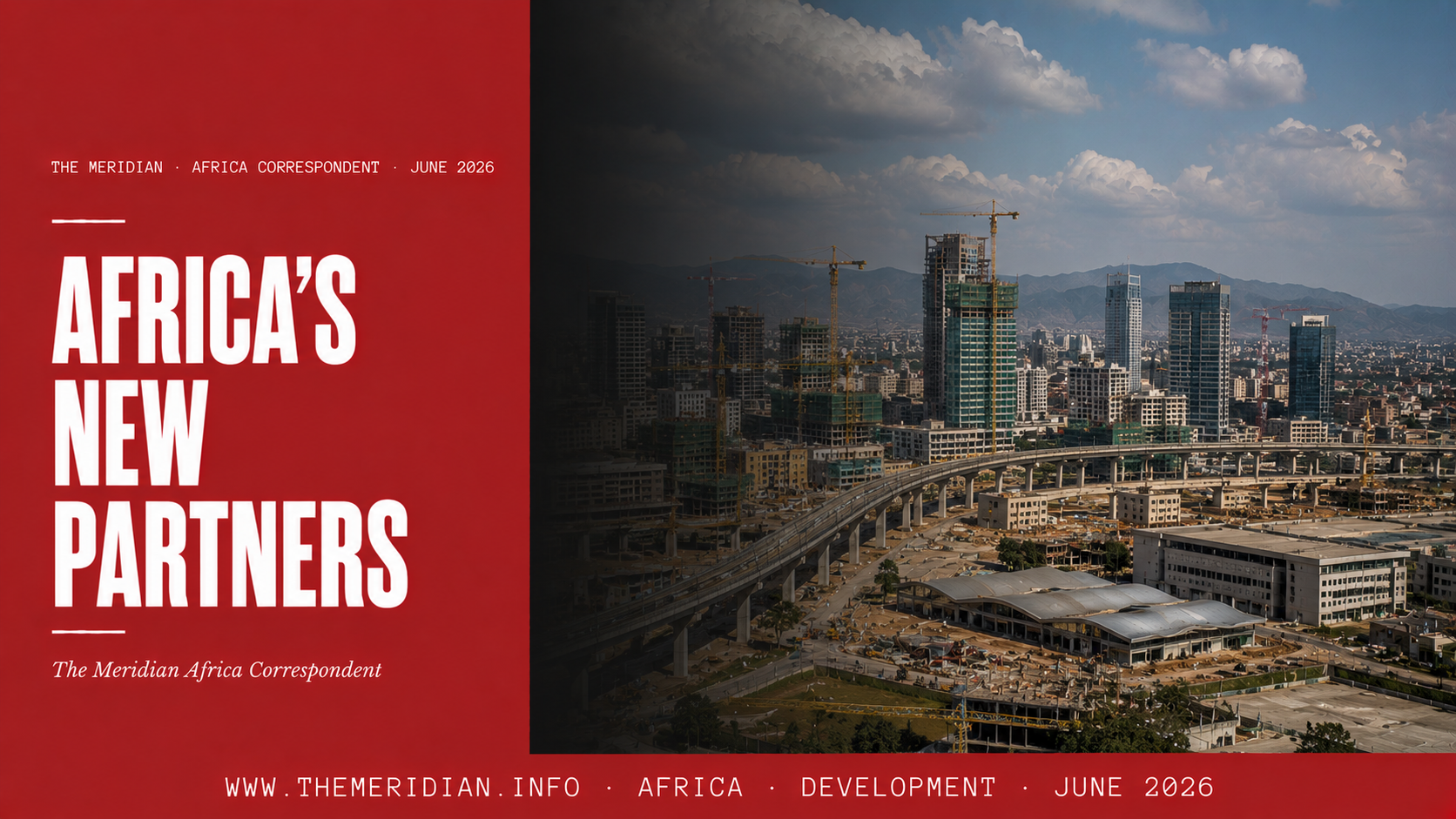
Two data points have cut through the prevailing narrative of African economic stagnation in June 2026. Ethiopia is charting a 10 per cent GDP growth trajectory -- one of the fastest on the planet -- not through resource rents or extractive windfalls but through deliberate structural investment in infrastructure, hydroelectric capacity, and a radical national pivot toward electric vehicles. And the 2026 Korea-Africa Foreign Ministers' Meeting and Business Forum, concluded in Seoul this month, has signalled a massive strategic pivot by South Korea into African industrial ecosystems on terms that look nothing like the Western charity model or the early iterations of China's Belt and Road Initiative. Taken together, these are the leading indicators of a new geopolitical architecture for African development.
The standard analytical framework for African growth confuses two fundamentally different phenomena. When Central African oil states post high single-digit GDP figures, the growth is almost always an artefact of enclave economics -- offshore rigs pumping crude into foreign tankers, generating billions that never diffuse into the domestic working class, producing a statistical headline that has no relationship to household living standards. Ethiopia's 10 per cent growth in 2026 is structurally different. It is not a resource rent. It is the deliberate, accumulated outcome of a developmental state model that has continuously forced capital into heavy infrastructure, hydroelectric capacity, and structural economic transformation despite severe internal political volatility. Understanding why it is different is the analytical key to understanding what it means for the continent.
The Grand Ethiopian Renaissance Dam on the Blue Nile is the most visible symbol of Ethiopia's developmental state model. With an installed capacity of over 5,150 megawatts, it is the largest hydroelectric project in Africa. The dam is not simply an infrastructure achievement. It is a macroeconomic strategy: generating cheap, renewable energy at scale to power an industrial base that does not yet fully exist but is being deliberately constructed. The energy is the precondition for the manufacturing, not the other way around. This sequencing -- build the infrastructure first, then attract the industrial investment it enables -- is precisely what distinguishes the developmental state model from the passive commodity export model that dominates most of sub-Saharan Africa.
The most radical single policy decision in Ethiopia's 2026 economic programme is the ban on the import of internal combustion engine vehicles. This is not an environmental gesture. It is a geopolitical manoeuvre. By mandating a full national transition to electric vehicles, Ethiopia simultaneously creates domestic demand for EV technology, reduces its dependence on imported petroleum, and positions itself as an indispensable partner for any industrial power seeking to build out an African EV supply chain. The ban forces the question: who will supply Ethiopia's EV market? The answer to that question is the answer to who becomes Ethiopia's primary industrial partner for the next generation.
Official Development Assistance tied to IMF structural adjustment conditions. Humanitarian funding that builds dependency rather than capacity. Trade relationships that keep African states as raw commodity exporters. Now collapsing: ODA fell 23.1% in 2025, the sharpest contraction on record.
Belt and Road Initiative: sovereign infrastructure financed through Chinese state loans, built by Chinese contractors, sometimes staffed by Chinese workers. Infrastructure is real and valuable. The debt burden and limited technology transfer have constrained the sovereignty benefits for host nations.
South Korea's 2026 "Africa+" strategy departs from both models. Seoul has identified a structural vulnerability in its own economy that makes genuine partnership in Africa a national security imperative: South Korea is a premier industrial power that is almost entirely dependent on imported energy and critical minerals. The era of simply purchasing raw commodities from African mines at suppressed prices is ending as African states build the institutional capacity to demand local value addition. Seoul has recognised this shift and chosen to get ahead of it rather than resist it.
The June 2026 Korea-Africa Foreign Ministers' Meeting in Seoul demonstrated that Korean conglomerates -- Samsung, LG, and Hyundai among them -- are prepared to pay the premium required to secure long-term supply chain access on terms that include genuine technology transfer. The "K-Tech Towns" concept emerging from the Seoul summits represents the most concrete expression of this pivot: bespoke industrial hubs built on the African continent, designed to align South Korea's technological capacity with Africa's demographic scale and critical mineral endowment. This is not a charitable arrangement. It is a strategic calculation that Korean industrial competitiveness in the EV and semiconductor era depends on securing reliable, locally processed African mineral supply chains. The leverage is real and African states are beginning to use it.
Korea needs Africa's minerals more than Africa needs Korea's consumer goods. That shift in leverage is the structural change that makes the 2026 Seoul partnership different from everything that preceded it. African states that recognise this and negotiate accordingly will capture value that previous generations could not.
The intersection of Ethiopia's EV mandate and South Korea's battery and semiconductor dominance represents the precise mechanism required to break what The Meridian has previously termed the Low-Wage, Low-Skill Trap. When foreign direct investment extracts raw lithium, cobalt, or nickel and ships it out unprocessed, the domestic workforce is confined to low-wage, high-risk manual extraction labour. The value addition -- refining, component manufacturing, battery assembly -- happens elsewhere, and the economic rents flow elsewhere with it.
The Korea-Africa framework emerging from the 2026 Seoul summits explicitly incorporates ex-ante conditionalities that mandate beneficiation and component manufacturing within African industrial parks as a condition of mineral supply agreements. When African states enforce these conditions, the consequence is a forced transfer of skills. Local workers transition from informal artisanal mining to mechatronics, cleanroom operations, quality assurance, and supply chain logistics. This is not philanthropic workforce development. It is the market-driven consequence of Korean conglomerates needing processed minerals rather than raw ore, and accepting the cost of building the processing capacity in Africa as the price of supply chain security.
The least-discussed and most structurally significant element of the Korea-Africa partnership is digital infrastructure. A foundational mechanism of the extractive economic cycle is capital arbitrage -- the use of opaque accounting, transfer pricing manipulation, and porous trade frameworks by multinationals to repatriate profits offshore, systematically starving the host nation's treasury. This is not a theoretical risk. It is the documented mechanism through which African states lose tens of billions of dollars annually to illicit financial flows despite hosting some of the world's most profitable extractive operations.
South Korea is systematically exporting its sovereign digital infrastructure to African partner states. The UNI-PASS e-customs system and the KONEPS digital government procurement framework -- both developed for the Korean state -- are being transferred to African counterparts as core components of the partnership architecture. When trade flows and customs are digitally transparent and auditable, the capacity of multinationals to manipulate transfer pricing is materially reduced. The data trail closes the arteries through which capital escapes. This is domestic resource mobilisation not through aggressive tax enforcement but through digital governance -- the same direction the African Tax Administration Forum's 2026 work plan is pursuing, and a direct complement to it.
Ethiopia's 10 per cent growth and the deepening Korea-Africa industrial integration are not separate stories. They are the same story told from two perspectives. From Addis Ababa: a developmental state that built the infrastructure, mandated the EV transition, and created the conditions that make it an indispensable partner for industrial powers seeking supply chain security in the electric age. From Seoul: an industrial power that has recognised its structural dependence on African critical minerals and chosen to secure access through genuine partnership -- technology transfer, joint ventures, and digital governance -- rather than the extractive contracts that characterise the previous era.
The African states that will benefit from this emerging architecture are those that negotiate with the clarity that Korea's desperation for supply chain resilience gives them genuine leverage. The conditional is important: the leverage exists only if it is used. Signing the same parasitic contract in Korean rather than English or French changes nothing. Mandating local processing, technology transfer, and digital transparency as preconditions for access changes everything.
The future of African structural growth will not be funded by the shrinking aid budgets of the Global North. It will be built in the manufacturing hubs, industrial parks, and EV supply chains constructed in partnership with the industrial powers of the Global East -- on terms that African states have the leverage to set, if they choose to use it. Ethiopia has chosen. The continent is watching.
Add comment
Comments