The Ayatollah Is Dead, the Petrol Sermon Begins
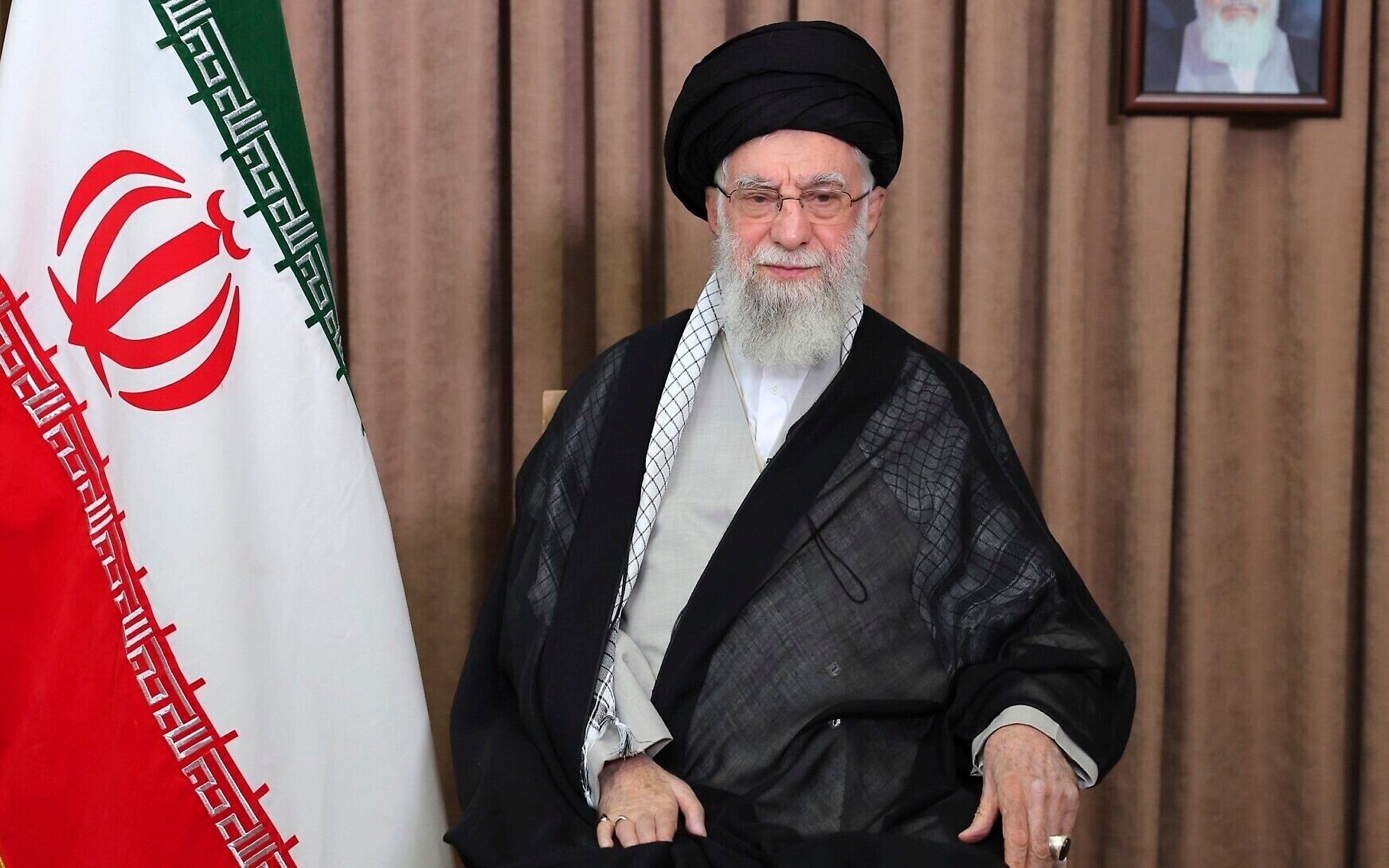
Khamenei is dead. The Strait of Hormuz is closed. Oil markets are sweating. And in Mauritius, the citizen is being prepared for another sermon at the pump — one litre of solidarity at a time. Jim Browning dissects the anatomy of Mauritius's fuel price structure, the political theatre that surrounds it, and the very specific levers the government has chosen not to use.
The war did not begin because Israel and the United States suddenly developed a hobby for fireworks over Tehran. Their stated case was that Iran's regime had spent years pushing a nuclear programme that alarmed its enemies, expanding its missile capability, and financing armed allies and proxies across the region, while its Supreme Leader, Ayatollah Ali Khamenei, presided over a system that had become synonymous with repression at home and confrontation abroad. Reuters reports that Khamenei was killed in joint US and Israeli strikes at the end of February 2026, and that Washington and Jerusalem framed the operation as necessary to cripple Iran's command structure and reduce what they saw as a growing threat to the region and to their own security. Reuters also describes Khamenei as the architect of an iron fisted rule marked by crackdowns, executions after protest movements, and support for militant partners across the Middle East.
That is the part many people prefer not to dwell on when they begin performing grief as though the man were a misunderstood village elder who spent his life distributing sweets to children and whispering poetry to pigeons. What is also shocking is that there are individuals selling the Iranian flag in Mauritius and others openly showing their support for the defunct leader on social media. There is, of course, a legitimate moral argument against assassination, against escalation, and against turning the Middle East into a wider inferno. But there is a difference between opposing a method and bleaching the record of the man who died. It is reported that after Khamenei's death, some Iranians mourned him while others celebrated in the streets. That alone should have been enough to inject a little sobriety into the international sentimentality. When a ruler's own people are split between grief and relief, one might reasonably conclude that he was not exactly running a Scandinavian book club.
And yet, what is so telling, and frankly so depressing, is how quickly some people, including some in Mauritius, instinctively frame the matter first through religious identity rather than political reality, therefore, selling the Iranian flag and others openly showing their support for the defunct leader on social media. The dead man becomes, in their eyes, a Muslim leader before he is recognised as an authoritarian ruler. The outrage becomes selective. The sympathy becomes tribal. The crimes become background decoration. The Iranians who suffered under him become strangely invisible, while the ruler who oversaw their suffering is polished into a martyr because he died at the hands of powers they already dislike. That is what is so unsettling. Not that people are uneasy about war, which is perfectly understandable, but that they can be so intentionally incurious about the brutality of a regime simply because the corpse at the centre of the story belongs to the "right" camp of grievance. Reuters' reporting makes clear that many Iranians themselves did not view his death as a civilisational tragedy. Some saw it as the fall of a dictator. That should matter.
Mauritius has once again been invited to perform its favourite national ritual: smiling bravely while being told to pay more for the privilege of being governed. A war erupts thousands of kilometres away, oil traders start sweating into their spreadsheets, and before the smoke has properly cleared over the Gulf, the Mauritian citizen is already being briefed on the virtues of "solidarity". In our political theatre, solidarity rarely means the State tightening its own belt. It usually means the public is asked to loosen its last notch. This is especially rich in a country where the present government came to office wrapped in the language of restoring democracy, rebuilding trust, improving governance, and reviving institutional credibility. Those were not stray campaign whispers. They were written into the Government Programme itself. The government said its very first mission was to reconstruct democracy, restore good governance, and reinstate the independence of public institutions. Mauritius was even described by the same government as a country downgraded in global indices because of poor governance. That is quite a preface for a leadership now preparing the public mind for possible higher fuel pain.
To be fair, the conflict itself is real, and so is the danger. This is not merely a lovers' quarrel between states issuing stern press releases and then going home for tea. The US and Israeli strikes on Iran, retaliatory threats, disruption to shipping, and a jump in oil prices as markets focused on the Strait of Hormuz. So yes, there is a serious geopolitical shock. Yes, Mauritius is vulnerable. No, that still does not mean every future increase must be treated as an act of God engraved on stone tablets. That is where the Mauritian magic trick begins. Step one, point solemnly at the Middle East. Step two, say "international situation". Step three, hope nobody opens the actual fuel price structure and notices that the pump price is not simply the world price with a Mauritian emphasis.
The official numbers tell a much more awkward story. As of 2 March 2026, the Petroleum Pricing Committee kept mogas at Rs58.45 per litre and gas oil at Rs58.95 per litre. For mogas, the calculated increase was only 1.11 per cent, which under the regulations is too small to trigger a rise. For gas oil, the calculation actually pointed to a decrease, but the State Trading Corporation said the Price Stabilisation Account for diesel was in deficit by about Rs2.0 billion, so the decrease was not passed on. In other words, the citizen is being asked to show solidarity in a system where rises can be blocked by law if too small, but falls can also be blocked if the account is empty. That is not a market. That is a morality play with accounting notes.
When oil rises abroad, we are told reality has arrived. When oil falls abroad, reality seems to miss the boat to Port Louis.
And then comes the glorious anatomy of the petrol pump, that little altar where every motorist worships against his will. The official structure shows that the retail price is not just the imported fuel. For mogas on 2 March 2026, the CIF import component was Rs26.0706 per litre. Then came excise duty of Rs9.87, the Road Development Authority contribution, the Rodrigues contribution, the storage facilities contribution, and a Rs7.20 contribution to subsidise LPG, flour and rice, followed by STC operational expenses, wholesale margins, VAT, and retail margin. By the time this official procession is done, the litre that began at just over Rs26 lands on the forecourt at Rs58.45. Diesel follows the same liturgy. So, when politicians stand before the nation speaking as if pump prices are nothing more than innocent reflections of the international market, one is entitled to ask whether they are describing petroleum economics or reciting folklore.
This is also why the old Mauritian complaint refuses to die: when oil rises abroad, we are told reality has arrived. When oil falls abroad, reality seems to miss the boat to Port Louis. The official mechanism itself explains much of the irritation. The STC says small changes below the threshold are not passed through and that a decrease requires funds in the Price Stabilisation Account. It is why local prices can remain stubborn even when international prices soften. It is also why Mauritians often feel that global pain is imported with great efficiency, while global relief is detained at customs pending administrative reflection.
There is also a more political irony here. This government was voted in after promising a return to seriousness, discipline, and trust. It sold itself as the adult in the room, the corrective to years of governance decay. Very well then. If that is the standard, the country is entitled to expect more than vague appeals to solidarity. It is entitled to transparent arithmetic. Show the reference prices. Show the freight assumptions. Show the insurance costs. Show the tax take. Show the PSA position product by product. Show the options considered before even hinting at another burden on households already financing everybody else's competence. The Government Programme is not a decorative bookmark. It is a promise on paper.
And let us not pretend Mauritius buys Iranian petrol and is therefore chained helplessly to Tehran's tap. The island's exposure is mostly indirect. The State Trading Corporation imports petroleum products used in Mauritius, and the vulnerability comes through benchmark prices, freight, insurance, exchange rates, and the wider Gulf shipping route. In other words, Mauritius does not need to sip directly from an Iranian barrel to feel the tremor. It only needs to be a small import dependent island, which it is. That part is genuine. But because the exposure is indirect, the State still has room to manage the domestic transmission of the shock. The problem is not that government has no tools. The problem is that governments often speak as if tools are decorative items to be admired and never used.
If the Prime Minister truly wanted to protect Mauritians instead of warming them up for another sermon at the pump, there are several technical levers available. Firstly, he could temporarily reduce or suspend part of the tax and contribution stack on fuel, especially the layers that inflate the final price well beyond the import cost. A time limited adjustment of excise or specific parafiscal contributions would cushion the consumer immediately. Secondly, he could recapitalise the Price Stabilisation Account in a transparent way rather than using its deficit as a one way gate that blocks decreases and later presenting an increase as destiny. Thirdly, he could publish a quarterly fuel stabilisation report, independently auditable, showing tanker costs, exchange rate assumptions, and the exact composition of the pump price. Fourthly, he could use targeted relief for public transport operators, delivery fleets, fishermen, and essential services, so that any upstream shock does not spread lazily into food and basic commodity prices. Lastly, he could accelerate procurement diversification and negotiate supply terms with a view to freight resilience rather than simply waiting for international markets to decide the social mood in Curepipe, Triolet, and Mahébourg. All of that is policy. None of it requires divine intervention.
He could go further. He could ring fence part of customs or excise revenue during price spikes and treat it as a temporary consumer shock buffer. He could expand support for bus operators and critical logistics in exchange for fare and freight discipline, so that fuel volatility does not become a free for all excuse for every wholesaler to add a few rupees here and there. He could also use the bully pulpit properly, not to lecture people about sacrifice, but to warn importers and retailers that any unjustified opportunistic price increase will be scrutinised. The Prime Minister cannot stop a war in the Gulf, but he can stop every local opportunist from behaving as though Khamenei's death has mysteriously altered the cost of every cabbage, onion, and bottle of oil before a single revised invoice has even landed in Port Louis.
In Mauritius, even fuel is not just fuel. It is civic education. It teaches the population that international conflict may start abroad, but the invoice always seems to find its way home.
And if he wishes to be remembered as a statesman rather than a national announcer of unavoidable inconvenience, he should understand one simple truth. Mauritians are not children or as it was screamed during the recent election "Mauritians are not beggars". They know external shocks are real. They know islands do not float outside the world economy. What they resent is the familiar pattern in which the public is asked for patriotism while the State offers procedure, opacity, and pious sorrow. They are asked to be resilient while official structures remain padded with levies, cross subsidies, deficits, and institutional fog. In that atmosphere, "solidarity" starts sounding less like national unity and more like a refined instruction to suffer quietly.
So yes, the war is real. Yes, the risk to oil prices is real. Yes, Mauritius is exposed. But the truly Mauritian part of the story begins after those facts. It begins when the political class takes a global crisis and presents it as a domestic inevitability, as though the pump price were set by the weather, the moon, and ancient prophecy. It begins when a government elected on promises of integrity and trust asks the public to prepare itself before showing, in full and painful detail, what exactly it has done to prevent the rise it is already narrating. And it culminates in the most polished joke of all: the citizen who already pays tax, levy, subsidy, VAT, margin, and mismanagement is invited to prove his patriotism one litre at a time. In Mauritius, even fuel is not just fuel. It is civic education. It teaches the population that international conflict may start abroad, but the invoice always seems to find its way home.
Add comment
Comments