The Travelling Boardroom Meets the Silent Empire
America arrived in Beijing with a travelling boardroom. China arrived with the keys to the storeroom. That, stripped of the diplomatic perfume, was the summit. Jim Browning delivers a forensic account of what was gained, what was avoided and what the silence after the handshake actually meant.
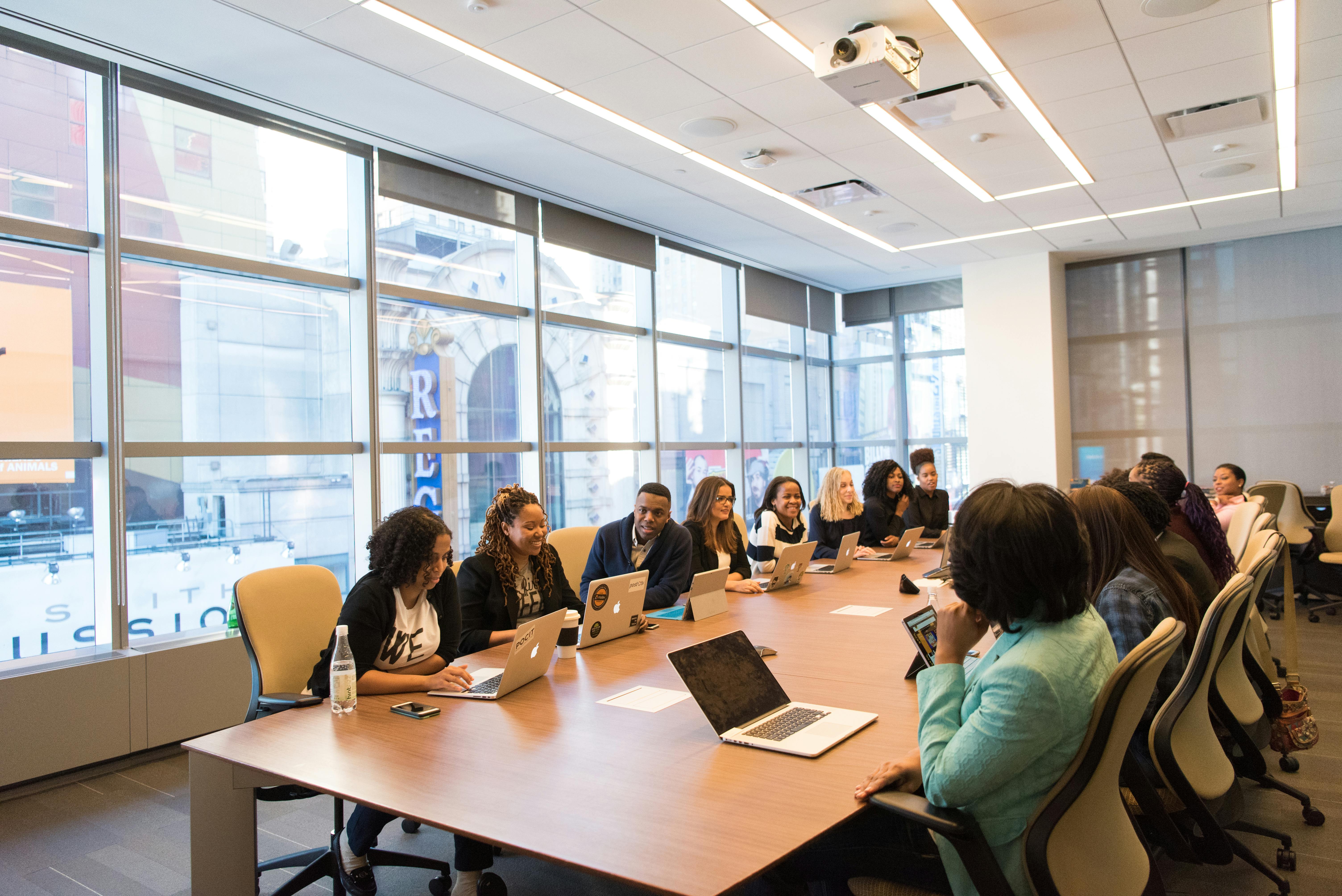
Trump did not merely bring officials. He brought the corporate priesthood. The names around this visit and the related meetings read like a roll call from the boardrooms that quietly run the modern world: technology, finance, aviation, payments, manufacturing and artificial intelligence. Reuters reported high level business engagement involving figures and firms linked to Boeing, GE Aerospace, Qualcomm, Cargill, Visa, Goldman Sachs and Citigroup. The wider public narrative also placed names such as Elon Musk, Tim Cook, Larry Fink, Jamie Dimon and Jensen Huang in the orbit of the summit. So let us not insult our intelligence by calling this only diplomacy. This was Wall Street, Silicon Valley and American industrial power being marched into China like a luxury exhibition of American dependence.
It looked powerful. It was meant to look powerful. Nothing says global leadership quite like flying in billionaires whose companies are richer than many sovereign states, then pretending everyone is there to discuss peace, friendship and mutual respect over tea. But America was not in Beijing for tea, and that too not flying with any commercial airline; but with AirForce One. America wanted something else. It wanted Iran. More precisely, Washington wanted China to use its influence over Tehran, help keep the Strait of Hormuz open, calm oil markets and stop another foreign crisis from becoming a domestic political migraine. Reuters reported that Trump said Xi agreed Iran must reopen the Strait, but there was no visible sign that China had committed itself to pressuring Tehran in any concrete way. In ordinary language, that means the headline smiled while the substance quietly left through the cracks on the walls of "negotiations".
And this is where the pretty speeches begin to collapse. China is not some innocent bystander in the Iran equation. In 2025, China bought more than 80 per cent of Iran's shipped oil, averaging around 1.38 million barrels per day, according to Kpler data reported by Reuters. That represented about 13.4 per cent of China's seaborne crude imports. So when people say Beijing has leverage over Tehran, this is not academic theory. This is oil, barrels, tankers and money.
Washington arrived with corporate muscle. Beijing arrived with leverage. There is a difference.
America brought people who can build electric cars, sell iPhones, move money, finance industries and design chips. China brought the minerals without which much of that technological sermon becomes considerably less impressive. Rare earths are the quiet foundation under the loudest technologies. Fighter jets, electric vehicles, drones, satellites, artificial intelligence hardware, wind turbines and advanced electronics all depend on them. Reuters has reported that China produces more than 90 per cent of the world's processed rare earths and rare earth magnets. Beijing has also tightened export controls, including in 2025, reminding the world that supply chains are not moral essays. They are pressure points. This is the uncomfortable joke in modern geopolitics. America designs the dream. China often processes the material that allows the dream to exist. It is difficult to shout "America First" when the supply chain quietly whispers "China, actually".
Then came the theatre of victory. Trump could point to useful headlines. He spoke of major aircraft purchases involving Boeing, with hundreds of aircraft and engines being discussed. On television, this sounds enormous. In a campaign clip, it looks even better. Yet China's Commerce Ministry later described the summit deals as preliminary, with no specific final details on several commitments. In normal language, that means the cheque amount was celebrated before it had properly cleared. Agriculture was also placed on the table, as it always is when America wants to show that the farmer has not been forgotten behind the billionaire parade. There was talk of Chinese purchases worth "double digit billions" over the next three years, with soybeans again at the centre of the discussion. Fine. Useful. Politically convenient. But useful is not the same as transformational.
Then came the beef story, which almost deserves its own comedy section. Hundreds of US beef plants appeared to regain access to the Chinese market after more than 400 had lost eligibility over the previous year. Again Reuters reported that licences were again showing problems on Chinese customs records. So even the beef victory arrived hardly medium rare, almost raw; badly plated and with a question mark beside it. And while all this was happening, China received something far more valuable than a statement. It received the photograph. The image of America's most powerful business figures physically present in Beijing, smiling, meeting, discussing and signalling to the world that whatever politicians say on campaign stages, American capital still wants China. That picture alone was worth half the communiqué.
Beijing also gained language it can reuse. Xi pushed the idea of a constructive China US relationship of strategic stability, which sounds harmless enough until one translates it from diplomatic language into plain English. It means: lower the temperature, keep the money moving, manage the rivalry and make Washington treat Beijing as a power it needs, not a villain it can simply scold. Quite elegant, really. No shouting. No dramatic table banging. Just China sitting there, smiling politely, while America's corporate class demonstrates that decoupling is a wonderful slogan until someone checks the balance sheet.
But the most important part of the summit was not what was announced. It was what was avoided. China made no clear public promise to stop buying Iranian oil. No deadline to pressure Tehran. No concrete guarantee on Hormuz. No serious retreat on rare earth leverage. No public concession on Taiwan.
Xi gave enough for Trump to leave with headlines. He did not give enough for Trump to claim control.
And that is the difference between diplomacy and theatre. Then there was Taiwan. Not loudly mentioned. Not openly traded. Not dramatically resolved. But absolutely present. Taiwan was the ghost at the banquet, the file left closed on the table, the word everyone knew mattered precisely because no one wanted to say too much. Reuters reported that, after the summit, Taiwan pressed the case for US arms and reiterated that arms sales remain a cornerstone of regional peace. The Associated Press also reported anxiety after Trump described Taiwan as a negotiating chip, with concerns over whether Taiwan could be used in broader bargaining with Beijing. That is not background noise. That is a warning wrapped in diplomatic silk.
Taipei had every reason to watch nervously. One small change in American language can alter decades of diplomatic balance. In February 2025, Reuters reported that the US State Department removed wording from its website saying Washington did not support Taiwan independence, a change welcomed by Taiwan and criticised by Beijing. In this game, a sentence is not just a sentence. It is policy. It is deterrence. It is reassurance. It is panic, depending on where one is standing. So after two days, what did the world actually see?
America arrived with billionaires to show strength. China arrived with pressure points to show power. America wanted help with Iran. China offered politeness. America wanted business wins. China offered possibilities. America wanted stability. China offered language. America wanted reassurance. China offered photographs. And Taiwan was left reading the silence like a legal document. This was not a summit where one side won everything and the other left empty handed. That is too simple, and geopolitics is rarely that generous. America got headlines. China got time. America got optics. China got leverage preserved. America got the appearance of momentum. China got the luxury of giving very little away while looking constructive.
That, perhaps, is the real art of Beijing. Smile for the cameras. Praise stability. Offer cooperation. Sign as little as possible. Then let the other side explain to its voters why the grand performance did not quite produce the grand result.
Trump brought billionaires. Xi brought rare earths, Iranian oil leverage and Taiwan. One side arrived with the world's most expensive guest list. The other arrived with the world's most inconvenient facts.
And as always in diplomacy, the loudest part was not the handshake. It was the silence after it.
Add comment
Comments